For decades, human activities like construction, farming, and logging were the main forces changing the U.S. landscape.
But a NASA-funded study using nearly 35 years of Landsat satellite data found that natural disturbances such as wildfires, hurricanes, droughts, and severe storms are increasing, while human-driven land disturbance is declining.
The findings suggest that nature is playing an increasingly larger role in reshaping the American landscape.
These unusual hills in Kazakhstan are known as the “Tiramisu Mountains.” Layers of red rock and white chalk, shaped by erosion over millions of years, make them resemble a giant slice of cake.
Can the US really win a prolonged war against Iran?
Why some think America loses anyway:
• Brent crude: $72 → $138 peak (+90%)
• Oil stayed near $90–105+ even after spikes
• Gas prices crossed $4/gallon nationally
• Strait of Hormuz carries ~20% of global oil
• Up to 9 million barrels/day disrupted
• S&P 500 saw repeated sell-offs & volatility spikes
• Inflation fears returned after recent cooling
• Recession odds rose to ~32% in some forecasts
• Gold surged as investors sought safety
• Airline, shipping & transport stocks weakened
• Global shipping costs jumped sharply
• Supply chains faced renewed disruption
• Manufacturing costs increased
• Consumer confidence weakened
• Retail spending slowed
• Military spending surged
• Federal deficit pressure increased
• Interest-rate cuts became harder
• Stagflation risks returned
• Economic growth forecasts were downgraded
• Investor confidence weakened
• Global trade slowed
• Energy markets faced historic disruption
The real question isn't whether the US can win militarily.
It's whether any modern economy can absorb a long energy shock without paying a heavy price at home.
[The figures above are based on reported 2026 oil-market disruptions, including Brent crude reaching as high as $138/barrel, national U.S. gasoline prices crossing $4/gallon, and the Strait of Hormuz carrying roughly 20% of global oil flows.]
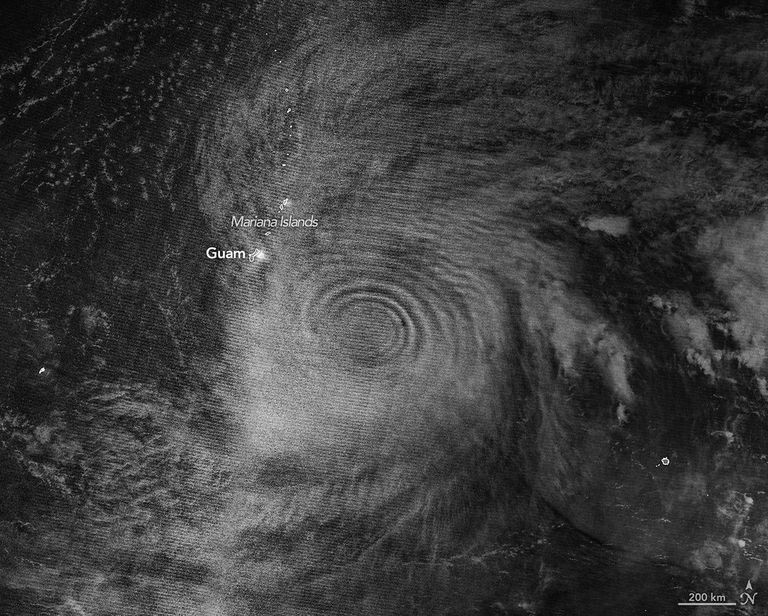
@makotokawazu Powerful typhoons don't just affect Earth’s surface, they send gravity waves over 80 km into the upper atmosphere.
Even Typhoon Jangmi is pushing energy toward the edge of space.
https://t.co/XuTFwt4V8v
Did you know a super typhoon can affect the atmosphere more than 80 km above Earth?
When Super Typhoon Sinlaku rapidly strengthened into a Category 5-equivalent storm in April 2026, satellites detected giant atmospheric gravity waves rippling upward into the mesosphere.
These waves were created by powerful thunderstorm towers around the typhoon's eye, acting like a stone dropped into a pond, except the ripples traveled through the atmosphere.
It's a reminder that extreme weather doesn't just impact the ocean and land below; it can send energy all the way to the edge of space.
Did you know a super typhoon can affect the atmosphere more than 80 km above Earth?
When Super Typhoon Sinlaku rapidly strengthened into a Category 5-equivalent storm in April 2026, satellites detected giant atmospheric gravity waves rippling upward into the mesosphere.
These waves were created by powerful thunderstorm towers around the typhoon's eye, acting like a stone dropped into a pond, except the ripples traveled through the atmosphere.
It's a reminder that extreme weather doesn't just impact the ocean and land below; it can send energy all the way to the edge of space.
Fun fact: ☄️
A rock in space is a meteoroid.
The bright streak we see in the atmosphere is a meteor.
If part of it survives and reaches the ground, it's a meteorite.
If the Boston flash was a meteor, this is where it fits in the journey.
The flash density product really shows this anomalous "flash" which is pretty distinctive of a bolide/meteor reentry. east of Boston. This is the likely source of the loud boom/explosion.
@sentdefender Fun fact: ☄️
A rock in space is a meteoroid.
The bright streak we see in the atmosphere is a meteor.
If part of it survives and reaches the ground, it's a meteorite.
If the Boston flash was a meteor, this is where it fits in the journey.
@NStewWX If a weather satellite can detect a meteor, what else can it detect that it wasn't designed to find? ☄️
Sometimes the most interesting discoveries happen when we look at familiar data in a new way.
https://t.co/69gHGKxp7B
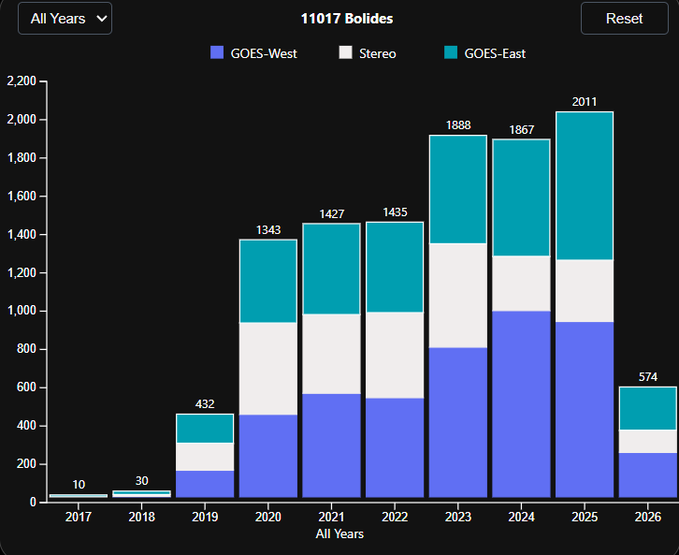
Could a weather satellite detect a meteor?
Yes.
When a large meteor enters Earth's atmosphere, it creates a very bright flash called a bolide. Some bolides can also cause loud booms and powerful shockwaves.
NASA and NOAA use the GOES Lightning Mapper (GLM) to detect these flashes. The instrument was built to track lightning, but it can also spot bright meteors from space.
📊 The increase in detections shown in this chart is mostly due to better satellites, not because more meteors are hitting Earth.
Could a weather satellite detect a meteor?
Yes.
When a large meteor enters Earth's atmosphere, it creates a very bright flash called a bolide. Some bolides can also cause loud booms and powerful shockwaves.
NASA and NOAA use the GOES Lightning Mapper (GLM) to detect these flashes. The instrument was built to track lightning, but it can also spot bright meteors from space.
📊 The increase in detections shown in this chart is mostly due to better satellites, not because more meteors are hitting Earth.
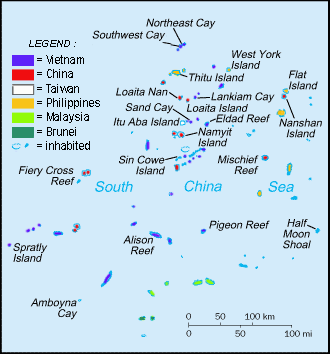
Could the next major conflict begin over a few tiny islands in the South China Sea?
The Spratly Islands are tiny islands and reefs in the South China Sea claimed by multiple countries.
Why do they matter?
They sit near major shipping routes and may contain valuable fishing grounds, oil, and natural gas.
Despite their small size, they are at the center of one of the world's most important territorial disputes.





![StateofMind_02's tweet photo. Can the US really win a prolonged war against Iran?
Why some think America loses anyway:
• Brent crude: $72 → $138 peak (+90%)
• Oil stayed near $90–105+ even after spikes
• Gas prices crossed $4/gallon nationally
• Strait of Hormuz carries ~20% of global oil
• Up to 9 million barrels/day disrupted
• S&P 500 saw repeated sell-offs & volatility spikes
• Inflation fears returned after recent cooling
• Recession odds rose to ~32% in some forecasts
• Gold surged as investors sought safety
• Airline, shipping & transport stocks weakened
• Global shipping costs jumped sharply
• Supply chains faced renewed disruption
• Manufacturing costs increased
• Consumer confidence weakened
• Retail spending slowed
• Military spending surged
• Federal deficit pressure increased
• Interest-rate cuts became harder
• Stagflation risks returned
• Economic growth forecasts were downgraded
• Investor confidence weakened
• Global trade slowed
• Energy markets faced historic disruption
The real question isn't whether the US can win militarily.
It's whether any modern economy can absorb a long energy shock without paying a heavy price at home.
[The figures above are based on reported 2026 oil-market disruptions, including Brent crude reaching as high as $138/barrel, national U.S. gasoline prices crossing $4/gallon, and the Strait of Hormuz carrying roughly 20% of global oil flows.]](https://pbs.twimg.com/media/HJtlK6Ha4AA9tUI.jpg)