It's time for BU Giving Day 2025! ♥️ If you're interested in supporting the Stepp Lab this year, the link to donate is in our bio. We greatly appreciate any and all contributions, and we are immensely grateful for all of the support you all give us and our work year-round! ✨
With my graduation about a week away, I figured it was time to reveal what my plans are after FSU. I’m so excited to announce that I am heading to Boston!
I will be joining the @SteppLab at Boston University as a postdoc! I cannot wait!
With my graduation about a week away, I figured it was time to reveal what my plans are after FSU. I’m so excited to announce that I am heading to Boston!
I will be joining the @SteppLab at Boston University as a postdoc! I cannot wait!
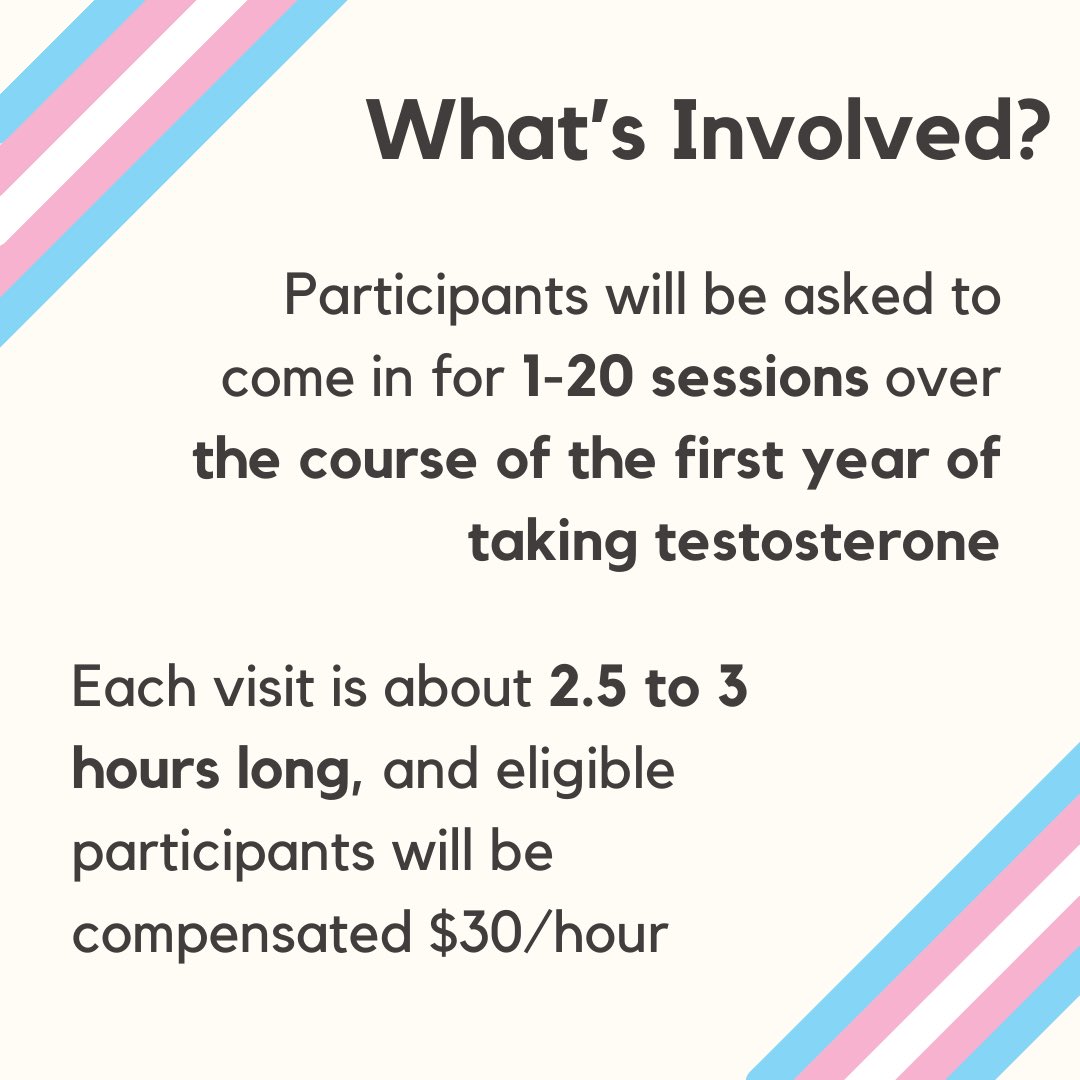
The Stepp Lab is recruiting gender diverse adults (aged 18-50) to take part in a voice research study over their first year of taking testosterone. All individuals seeking testosterone hormone replacement therapy for the first time are encouraged to contact us!
Participants will be asked to come in for up to 13 in-person visits over the first year of taking testosterone and will be compensated $30/hour.
Anyone interested in participating can contact us at [email protected] / 617-358-1395!
🌟Meet our @buslhs PhD students 🌟
First up, @dariadragicevic, a student in our @SteppLab is interested in understanding longitudinal speech changes in people with Parkinson’s disease ➡️
https://t.co/e9LI5Tbvuu
🌟Meet our @buslhs PhD students 🌟 Kimberly Dahl, a student in our @SteppLab, is researching voice perception, speech motor control, and voice and gender ➡️
https://t.co/xz6RUIfuAP
We also found that how people responded to pitch errors in running speech did not relate to their responses in sustained vowels (“aaaah”). This raises the question: do we truly capture speech motor learning as it occurs in meaningful speech by having people sustain vowels?
New work in @ASHAJournals by @stepplab@buslhs doc candidate Kimberly Dahl, with coauthors M Díaz Cádiz, @jennifermzuk, @guentherlab, & @carastepp, finds that speakers correct pitch errors, even when those errors do not disrupt the meaning of a sentence https://t.co/EDAA8TKuSm
#ICYMI@buslhs Professor Cara Stepp has established a connection between hearing impairment and vocal hyperfunction. Read more 👀⬇️
https://t.co/I7o4blWSo2
❗️New publication alert! ❗️Here’s a brief summary of a new article by Stepp Lab alumni Rachel Norotsky on implicit racial bias in auditory-perceptual evaluations of dysphonic voices 🗣🧠
These findings suggest a minimizing bias in dysphonia evaluation of Black patients with voice disorders and contribute to the understanding of how a patient’s race may impact their visit with a clinician