Como judeu, eu vejo o que muita gente finge não ver: uma boa parte do mundo odeia o cristianismo, fora e principalmente dentro da própria civilização ocidental, e ao mesmo tempo, vive inteiramente dos frutos que ele produziu.
Zomba da fé, ataca a Igreja e tenta calar qualquer voz cristã, mas não abre mão de nada do que o cristianismo construiu. Quer o benefício sem a crença, quer a colheita sem reconhecer quem plantou.
Olham para as grandes catedrais e falam em gênio humano, em engenharia, em arte. Notre-Dame, Westminster, São Pedro, Colônia. Esquecem, de propósito, o essencial: aqueles edifícios não foram feitos para turista nem para vaidade. Foram erguidos para Deus, por gente que acreditava estar construindo para a eternidade. Tire o cristianismo e o que sobra é casca bonita. Bonita, vazia e, no fundo, mentirosa.
O mesmo acontece com o resto.
O hospital moderno não saiu de nenhuma filosofia ateia, saiu de mosteiros que cuidavam de doentes quando o mundo pagão os abandonava na rua, saiu de missões que abriram enfermarias onde ninguém mais tinha interesse, saiu da ideia, hoje tratada como óbvia, de que toda vida tem valor. Sem o cristianismo, essa ideia simplesmente não existia. O doente era descartado. Ponto.
As primeiras universidades da Europa foram fundadas e dirigidas pela Igreja. Oxford, Cambridge, Paris, Bolonha. Existiam para a glória de Deus, não para produzir diplomados que hoje desprezam a própria origem. A alfabetização do povo comum também veio daí. Hoje se celebra a educação e se cospe em quem a tornou possível.
Leis, direitos, dignidade humana, a ideia de que o governante responde a algo acima de si: nada disso caiu do céu, cresceu em solo cristão. Remova esse solo e o que resta é poder, corrupção e caos. Não é teoria. É o que a história mostra toda vez que se tenta.
O mundo esconde a origem porque admiti-la obriga a admitir que o cristianismo foi, e ainda é, uma força civilizacional poderosa. Então reescrevem a história. Chamam de progressismo, de humanismo, de qualquer coisa, menos do que realmente foi. É mais confortável mentir do que reconhecer a dívida.
Querem o fruto e matam a árvore.
Uma árvore não sobrevive com a raiz odiada e cortada.
Eu, como judeu, sei o preço de viver numa civilização que esquece seus fundamentos. O Ocidente ainda se sustenta sobre uma herança cristã que insiste em insultar. Desfruta de morais que não criou, de instituições que não inventou e de uma ordem que não sabe mais justificar. Se essa ordem ruir de vez, e acredite esta possibilidade existe, não vai ruir só para os cristãos.
Vai ruir para todos nós.
Having spent a long time watching Elon Musk, and having talked with him, I believe I understand what he understood before almost anyone else. And it's something every one of us needs to understand now.
Western civilization is not one civilization among many. It is the one that gave the world freedom of thought, modern science and the dignity of the individual. And it is under attack. Not by peoples, but by ideologies that want it dead.
If it dies, the world will not become more just. It will become poorer, more brutal and darker. For everyone, including those who hate it.
Why? Because civilizations are not interchangeable. We were told that any culture could be blended with any other, like mixing colors, and that the result would always be harmonious. It isn't true. A society where women are equal to men cannot coexist without friction with a worldview in which a woman's testimony is worth half a man's. A society where you can criticize God, change your religion or have none cannot absorb, without fracturing, a worldview in which apostasy is paid for with your life.
Every people has its own genius and moves at its own pace. But not all values are equal, and you cannot build a nation on laws that contradict each other. Saying so is not racist. Racism is about blood. I am talking about laws, customs and values. And those values belong to no race: a Japanese, a Senegalese or an Iranian can make them his own, and millions have. That is exactly why they are worth defending.
Let's remember where they come from.
It all begins in Greece. In Athens, for the first time, men decide that truth does not descend from a throne but is sought through reason, and that a city governs itself through debate. Socrates chooses death rather than give up thinking freely. At Salamis, a handful of free cities stops the greatest empire in the world.
Then comes Rome. Rome invents law that binds everyone, the citizen who holds rights, the Republic. And one immense idea: you can become Roman without being born Roman. You become Roman by adopting its laws.
Christianity adds the most revolutionary idea in history: every human being, slave and emperor alike, has infinite worth.
Then France. The cathedrals, those ships of stone our ancestors built over centuries for descendants they would never see. Descartes, Pascal, Voltaire. The Declaration of the Rights of Man. And Napoleon, who gives France the Civil Code, the lycées, and one simple principle: careers open to talent. Murat, the son of an innkeeper, ends up a Marshal of the Empire and King of Naples. The Civil Code spreads across much of Europe and still shapes the law of dozens of countries today.
And this civilization goes on to abolish slavery, which had been practiced on every continent since the dawn of time, to push back the plague, smallpox and the night itself, and to set foot on the Moon.
Peoples of the West, be proud of this history. Proud does not mean blind. Every civilization has committed crimes: conquest, slavery, war. Ours is the one that went furthest in examining its own faults, to the point of abolishing what it had once practiced. This capacity to question itself is its greatest strength. And that is exactly the strength now being turned against it.
Because for decades, this magnificent system has been getting hacked. Not by an army. By an alliance of two forces that have nothing in common except one enemy: us.
The first is communism. It lost the economic war, lost the Cold War, lost history's verdict with its tens of millions of dead. But it never lost the universities. It survived by changing costumes: class struggle became the struggle of the oppressed against their oppressors, and the West was declared guilty of everything. It taught our children to be ashamed of their ancestors, their borders and their culture. It is the root cause, because before you can bring down a civilization, you have to take away its will to defend itself.
The second is political Islam. I am not talking about Muslims, many of whom came here precisely to escape this ideology and are its first victims. I am talking about a political project that wants to place religious law above civil law. It has no doubts. It feels no shame. It rushes into the void the first one dug.
One disarms. The other advances.
And let no one on the left believe they will stay in control. History has already staged this play. In 1978, Michel Foucault was enthusing over the Iranian revolution. Iran's communist party, the Tudeh, backed Khomeini and called on Iranians to vote for his Islamic constitution. By 1983, its leaders had been arrested, the party banned, and its chiefs paraded on television to confess their “crimes.” In 1988, thousands of political prisoners were executed, communist activists among them. The second always ends up devouring the first. Useful idiots are only useful for a while.
So here is my call to every Western people. To the French, the Italians, the Poles, the Germans, the Spanish, the Americans, to all of you.
We are at a turning point. What we do in the next ten years will decide what our grandchildren are allowed to say, believe, write and love.
I am not asking you to die for the West. I am asking you for something harder: to live for it.
Learn its history and pass it on. Have children. Speak without fear, even when they call you every name in the book. Vote, get involved, run for office. Build companies, schools, factories, families. Refuse the shame they are trying to inject into you. And stop surrendering anything that makes us who we are: freedom of thought, equality before the law, the dignity of every person.
The historian Arnold Toynbee understood it: civilizations are not murdered, they commit suicide. And those who think they can let the West fall without paying the price should remember the Iranian communists. They helped tear down what they despised, and then they were next.
The Greeks at Salamis were outnumbered. They won because they knew what they were defending. We are the heirs of Athens, Rome, Notre-Dame and the Civil Code. It is no accident that the rockets that will carry humanity to Mars are being built in a free civilization.
It is time to prove ourselves worthy of what we were given.
The West is worth defending. And no one will defend it for us.
A tower controller in Columbus watched her plane disappear into the sky and muttered into his radio: "Well, I guess that's the last we'll hear from her." It was March 19, 1964, and Jerrie Mock, a 38-year-old housewife with 750 hours of flight time, was attempting something that had killed Amelia Earhart. Nobody expected her to come back alive.
But Geraldine "Jerrie" Mock did come back. Twenty-nine days later, she touched down in Columbus in her Cessna 180, becoming the first woman to fly solo around the world. The crowd that greeted her numbered 5,000. The governor was there. She had done what Earhart could not.
What makes this story even more remarkable is how completely she vanished from history. While Earhart's name is spoken in reverence, Mock's achievement was swallowed by time. The press called her "the flying housewife," a diminishing title that somehow made her extraordinary feat seem ordinary. She never sought the spotlight anyway. "The kind of person who can sit in an airplane alone is not the type of person who likes to be continually with other people," she once said.
Mock was seven years old when she first flew and knew instantly what she wanted to do with her life. At Ohio State, she was the only woman in aeronautical engineering, and she silenced her male classmates by acing a chemistry exam they all failed. But this was 1945, and a woman's place was not in the sky. She dropped out, married, raised three children, and waited. When boredom finally drove her to mention the idea to her husband, he joked: "Maybe you should just fly around the world." She took him seriously.
The flight nearly killed her more than once. She landed at a secret Egyptian military base and was surrounded by armed soldiers. An antenna wire caught fire over the Libyan desert, burning dangerously close to her fuel tank. In Saudi Arabia, a crowd of men refused to believe a woman had piloted the plane until someone climbed up to look in the cockpit and confirm there was no man hiding inside.
Jerrie Mock passed away in 2014 at 88, never quite believing her own legend. She had simply wanted, as she said, "to have a little fun in my airplane" and to see the world's oceans, jungles, deserts, and people. She did that. And in doing so, she proved that sometimes the greatest achievements belong to those history forgets.
Note there has never been a feature film, biopic, or major documentary about Jerrie Mock or her 1964 flight.
Just Saying?
What an interesting read...........
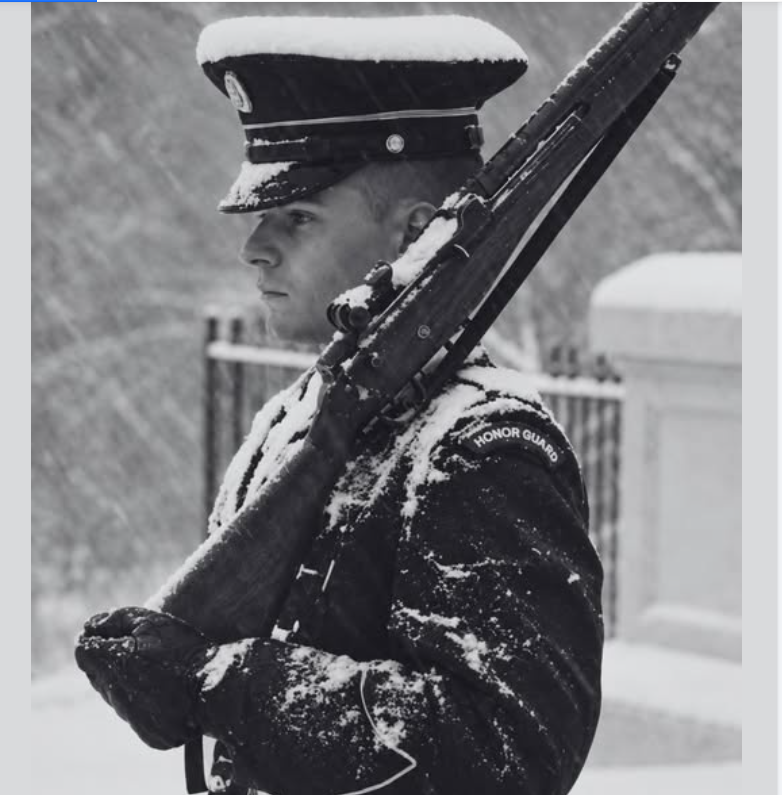
On Jeopardy the other night, the final question asked: “How many steps does the guard take during his walk across the Tomb of the Unknown?”
All three contestants missed it.
Tomb of the Unknown Soldier
1. How many steps does the guard take during his walk across the Tomb and why?
He takes 21 steps — symbolizing the 21-gun salute, the highest military and foreign tribute.
2. How long does he pause before turning to walk back and why?
He waits 21 seconds, again in honor of the same tradition.
3. Why are his gloves damp?
They are lightly moistened to ensure he never loses his grip on his rifle.
4. Does he keep his rifle on the same shoulder, and if not, why?
He always carries it on the shoulder farthest from the Tomb. After each crossing, he performs an about-face and moves it to the outside shoulder.
5. How often are the guards changed?
Every 30 minutes, 24/7, 365 days a year.
6. What are the physical requirements for a Tomb Guard?
Applicants must be between 5'10" and 6'2" and have a waist no larger than 30".
Other expectations of the Guard:
They devote two years to the Tomb, live in the barracks beneath it, and must refrain from drinking alcohol on or off duty for the rest of their lives.
They can never swear in public or dishonor the uniform or the Tomb.
After two years, they earn a wreath pin signifying their service — fewer than 400 are currently worn.
If they violate the code, they must relinquish the pin.
Their shoes have thick soles to protect against extreme temperatures and metal heel plates that create the crisp click when they halt.
Uniforms must have zero wrinkles or lint and are inspected in a full-length mirror.
For the first six months, guards do not speak to anyone and do not watch television.
Their off-duty time is spent studying the 175 notable individuals buried at Arlington National Cemetery, memorizing who they are and where they rest.
Among them: President Taft, Joe E. Lewis, and Audie Murphy, the most decorated WWII soldier.
Every guard spends five hours daily preparing their uniform.
ETERNAL REST GRANT THEM, O LORD, AND LET PERPETUAL LIGHT SHINE UPON THEM.
When Hurricane Isabel approached Washington, D.C. in 2003, Congress shut down for two days. The guards were offered permission to suspend duty due to danger.
They replied: “No way, Sir!”
Drenched and marching through the storm, they insisted that guarding the Tomb is the highest honor, not just a task.
The Tomb has been continuously guarded — day and night — since 1930.
God Bless and Keep Them
I don’t often encourage sharing posts, but I would be honored if this one reached as many people as possible. We should always feel proud of the men and women who serve, wherever they are stationed.
Duty – Honor – Country
IN GOD WE TRUST — with Herbert F Wieland.
A TV channel interviewed George Mustas, Bob Uecker’s childhood friend and went on to say that Pat Murphy isn’t the only one getting messages from Ueck. I actually got one the other day. I asked:
George: How’s it going up there?
Bob: He said great. I got some good news and some bad news.
George: What’s the good news?
Bob: We play ball everyday up here
George: Well what’s the bad news?
Bob: you’re pitching tomorrow.
I can see why these two were friends for so long. Best thing you’ll watch today.
In 1987, Patrick Stewart refused to unpack his suitcase for six straight weeks.
My throat still tightens every time I read why.
Every Hollywood insider told the 47-year-old British stage actor that Star Trek: The Next Generation would be a disaster. Even his closest friend, Ian McKellen, begged him not to throw away his Shakespearean career on a television gamble.
Stewart kept his bags packed by the door, waiting to be fired and sent home to London.
That "six-week failure" lasted 36 years.
Watching him late at night here in Japan, we saw something Hollywood never expected.
In Japan, we call this quiet, unbreakable spirit "Fudoshin," an immovable heart under fire.
Most action heroes scream and fire weapons to look strong.
Captain Picard never needed to raise his voice.
Born into deep poverty in Yorkshire, terrified of a violent home, he left school at age 15 and lost all his hair by 19, convinced his life as an actor was over before it began.
Yet one English teacher, Cecil Dormand, handed that frightened 12-year-old boy a copy of Shakespeare, said "Read it out loud," and secretly paid for his first drama course.
Never forget what happened decades later.
On the morning Queen Elizabeth II knighted him as Sir Patrick Stewart, he invited that same retired schoolteacher to sit beside him at his knighthood luncheon.
No suitcase left unpacked.
No rage on the bridge.
Just a cup of Earl Grey tea, a tug of his uniform, and three quiet words that commanded the galaxy:
"Make it so."
He passed away at 86 surrounded by live music, prayer, tears, and laughter.
And this December, in Avengers: Doomsday, Professor X will grace the screen one final time.
A boy who thought he wouldn't last six weeks in Hollywood gave the world an eternity of nobility.
From Japan, with tears and our deepest salute:
Thank you, Captain. Engage. ✨🖖🇯🇵
In 1992, current Milwaukee Brewers manager Pat Murphy found himself seated next to Muhammad Ali.
So he asked him: "Where did all the bragging come from? Were you always like that?"
Ali leaned over and said quietly:
"I was scared to death."
Three decades later, Murphy just led the Milwaukee Brewers to a World Series championship.
That Ali quote stuck with him, he realized:
"We all are (scared). Who we kidding. Fear is part of it. If you learn to use it like fire, it can do a lot of great things. If you don't, it can burn your house down."
Too often, we walk around with this idea that the best performers aren't scared. That they are relentless, alphas, who bulldoze through whatever they're feeling.
It's BS. The greatest of all time felt fear. We all do. The point is how do we navigate and channel it. Feeling fear and knowing what to do with it are different things.
For much of his early career he coached the other way entirely: hard, blunt, and, by his own account, driven by his focus on himself. He had real success with it, until he was forced to resign as a college coach in 2009.
Then he went through a litany of minor league jobs.
Along the way, with help from journaling and counseling he started to fundamentally change how he coached. One of the catalysts was becoming a parent.
"And I started thinking about it like, every kid I coach is somebody's Kai Joseph. You know what I mean? Every kid I coach, they have parents who love their kid the way I love my kid...
Wow, I've got to be a little mindful how I treat these guys."
He eventually landed on a different definition of success:
"This profession isn't about the wins and losses. This profession is about, how do I impact this person?"
You can see that switch in how he's guided the Brewers to become the best team in baseball. It was there when he didn't go to his closer in a save opportunity, as Trevor Megill said, "We’re not here for egos, we’re here to win a ring.”
It's there in his coaching philosophy for the team: He calls it love and discipline. In that order...not too dissimilar from how you parent...
The Brewers are the World Series Champions.
They did it with a closer who checked his ego, a first baseman nearly retired but returned for health insurance, and a manager who had to let go of the way that led him to early success and rebuild how he coached.
In the actual arena, performance is messy. It's not the cheap slogans we're sold online.
We're all afraid, even the greats. You have to figure out how to direct it. You have to care, but not so much that it feels life and death. You need discipline, but it's got to be founded on love.
And sometimes you need a 67 year old coach who was a tyrant, let go, and had to find a new path...to lead a small market team to the top of the MLB.