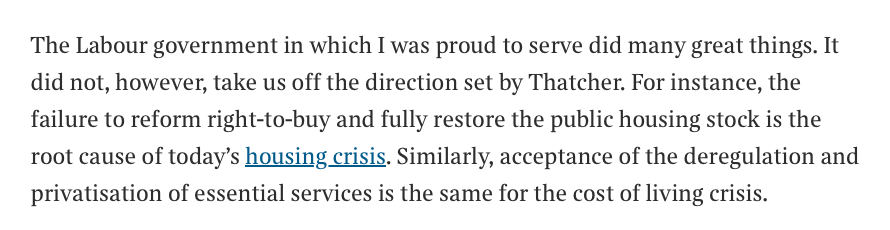
We see here an example of what @jo3hill calls 'everythingism' or @ezraklein 'everything-bagel liberalism' – nice-sounding obligations have been piled on housebuilders until the accumulated weight has crushed the sector, resulting in rising homelessness and housing poverty.
UK tax has gone up significantly over the last 25 years
But the tax paid by the average UK worker has not
This apparent miracle was achieved by taxing “other people”: higher earners, capital, property, banks, etc
The strategy has run out of road
A 🧵 on what happens next.
@kelvmackenzie@jayneyb808 There should not be 2 tier policing. However, the DEI training only occurred because of multiple instances of young black men being dangerously, and sometimes fatally, treated by officers.
Black people are
9 times more likely to be stopped & 7 times more likely to die following police restraint
Twice as likely to be arrested on SAME EVIDENCE
There have been 800+UK Chief Constables,1 was Black
There is a Race issue in Policing & it ain’t the one being protested over
@DuncanBannatyne@Vocal_GenX No, but Scots have been walking round with the sgian dubh for centuries without incident. Do we ban those? The knife used in this horrible case was neither a ceremonial one nor used for a legitimate purpose, so I am not sure an obvious case has been made for a change in the law.
Today, the London Underground is paralysed by strikes as one of the transport unions demands that London 'Make every weekend a long weekend', with their staff allowed to work four days a week for the same generous pay. Two points of context:
1. In 2023, the last Government created powers to require 40% service during strikes, as is the case in France, Germany, Italy, Spain, Portugal, Switzerland and elsewhere. (In New York, transit strikes are simply banned.)
Unfortunately the current Government abolished these powers upon coming to office, leaving TfL (and thus the people of London) almost powerless to resist these rent-seeking antics.
Any future government can easily largely end London's transport strikes by simply reinstating a version of these powers.
2. Notice that the DLR, the London Overground, Thameslink and the Elizabeth Line are unaffected by the strikes. This is because TfL (a greatly underrated organisation) does not employ their staff: it contracts with a concessionaire, which then actually staffs the trains. This somewhat byzantine arrangement has been astonishingly successful in preventing strikes on the old Underground lines from spreading to the newer systems.
It is vital that policy be maintained and extended as TfL takes over more suburban railways in the future.
Very important contribution from @Jeremy_Hunt on growth. Particularly no 7 on self-funding development corporations to build the infrastructure the country so desperately needs to boost productivity. @dsmitheconomics
Join us at The Gurkha Museum this summer for two exciting Family Days on 5 August and 26. Enjoy a fun and engaging day for all the family while exploring the fascinating history and stories behind the exhibition.
https://t.co/R7q6X5y3TS
#Winchester#Museum#Gurkha#Hampshire
Gurkha Day at Sir Harold Hillier Gardens brought vibrant Nepalese music, dance, and remembrance to the Chautara once again. A proud celebration of culture, heritage, and community.
#Hilliergardens#Gurkha#Nepal#Culture#Nepalese
I know he's playing to the crowd but this from Burnham is utterly wrong, and quite alarmingly so in what it suggests about the quality of his thinking.
If the Burnham critique of Blair was he was silent on inequality, then the critique of Burnham’s essay in The Times is how poorly it understands the drivers of economic growth. His diagnosis is that good growth stems from (local) control of economic essentials.
I’m afraid tight control of the planning system has led to UK building houses at half the rate of the G7 - fuelling rent inflation. Control of low pay rates has accelerated the rise of youth unemployment and NEETs (Milburn Report). Control of energy permissioning has led to the highest electricity costs in the IEA, and control of capital allocation has shrunk bank lending to the economy to the lowest in 30 years.
The problem is that all these started off as noble microeconomic aims (preventing urban sprawl, reducing in-work poverty, net zero, reducing risky lending), justifying tight control, that have combined/ run too far to now create a huge macroeconomic headwind in the form of elevated inflation and stagnant per capita growth.
I get it, Burnham must knock on 1000s of doors in and around Manchester and be told that voters don’t feel they have any control over their economic conditions. Hell, this was why “take back control” was such a seductive soundbite a decade ago.
The argument to take to the country could be we will be a centre-left govt that enables much faster delivery of housing, pluralism of energy, and reduced frictions to deploying capital. And make it much easier to employ young people. And that, in turn, will reduce inflation in key staples/ raise living standards.
That argument isn’t being made from Makerfield it seems.
@NickCohen4@LizWebsterSBF Tony Blair did not say he was indulging him, but stating the clear fact that the US electorate twice voted for Trump. That should not be hard to accept.
The opposite is true. The welfare crisis is as big as it is because so many of those in power genuinely think there's no crisis. They see it as "moral panic".
If you don't panic at the Neets / surge in sickness benefit, you're not paying attention.
Labour reformers know better.
A civil war in Labour is what the country needs as the it isn't functioning by being led by a coalition that is trying not to upset such polarised factions.
Andrew Marr: Tony Blair's intervention could spark a Labour civil war
The most intense policy pressure is now on Ed Miliband, field commander of the soft left, over net zero: Blair has made it clear that Blairite support for the Prime Minister depends upon ripping the policy to pieces and Starmer appears to be in the mood these days to do whatever is necessary to bolster his position.
Blair is coming in these dangerous times to whip things up, not to calm them down. From his own point of view, philosophically frustrated, perhaps he’s right. But what about the politics? He says the Labour party is playing with fire and the country’s future. If so, is a full out ideological fight, the right response?
https://t.co/MQfbTLRClt
Streeting and Burnham's responses to Blair are equal parts infuriating. Blair's point isn't that you should ignore inequality, it's that you can't do any of the things that solve inequality if the economy isn't growing.
Tony Blair is possibly the only person on earth that makes people instantly reach for the dislike button whilst secretly knowing deep inside that he’s absolutely right and no one has come anywhere near his level of seriousness since.
Yes, I get it, you all hate Tony Blair etc you’ll find loads to disagree with here I’m sure - but the quality of analysis of our problems and what any potential leader ought to be thinking about if they want to solve them puts this essay light years ahead of what any current contender for national leadership has offered. Anyone who wants to be an effective prime minister (including the current one) should read it