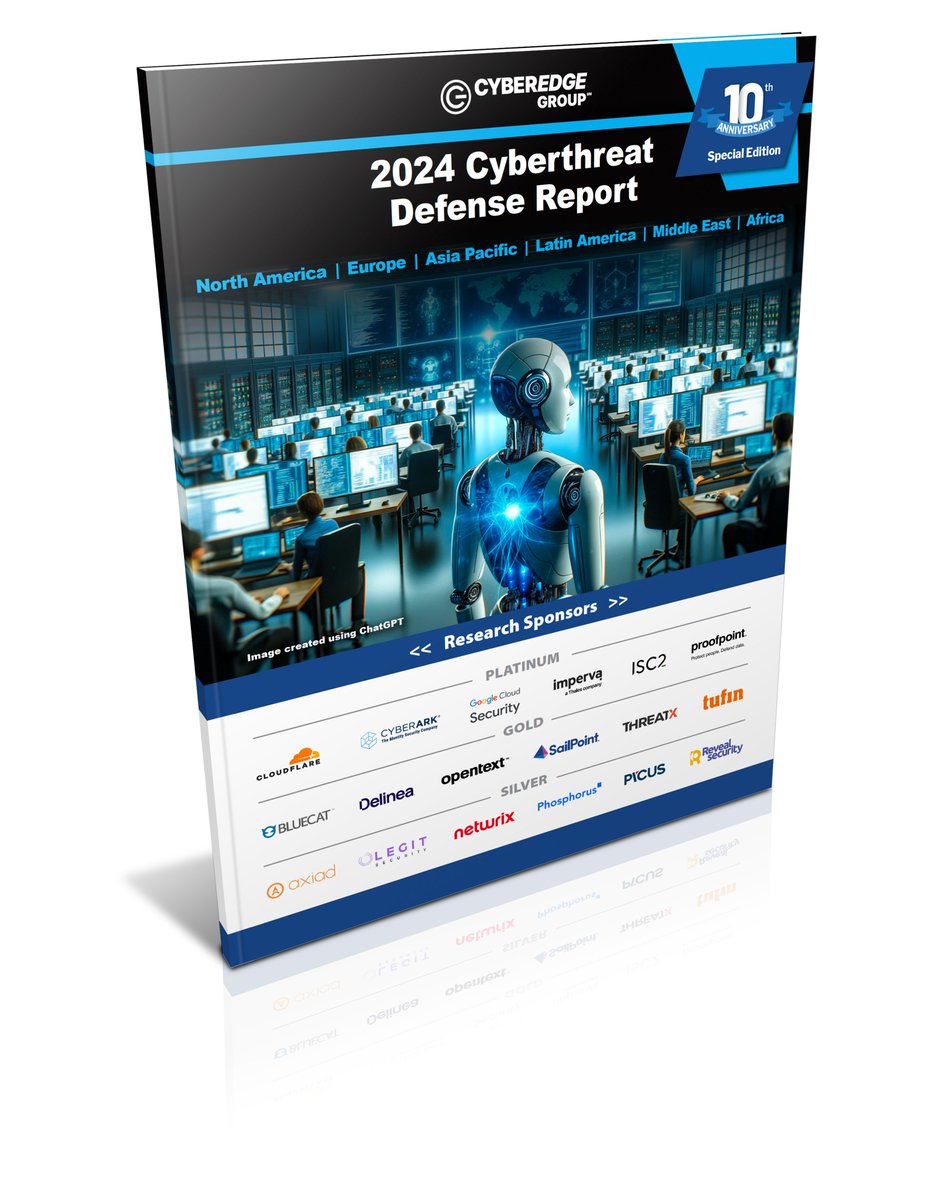
@CyberEdgeGroup just released the 2024 Cyberthreat Defense Report (CDR) and the results are in! 1,200 security professionals from 17 countries were surveyed about the threats they face and how they're mitigating their risk. Download your copy now! https://t.co/vnNUYHAFbQ #2024CDR
Webinar. Live. Tomorrow.
Wednesday June 10th at 10am PT / 2pm ET
Krissy Camacho, who wrote a book on this subject, and I will spend one hour discussing how to actually figure out why deals go the way they do, instead of settling for a one-line guess in the CRM.
Spend an hour with us and you’ll walk away with a 3-step win/loss framework you can put to work the same week.
Plus Q&A, so bring your questions.
Reg link: https://t.co/6Co7WVneK2
I've sat in a lot of pipeline reviews over the years. The one that stuck with me went like this: we lost a six-figure deal, and three people gave three different reasons for why. All of them confident. None of them based on a single conversation with the buyer.
That's the strange thing about win/loss in our industry. We'll instrument everything else, but the actual reason a CISO chose someone else usually gets filed under "they went cheaper" and forgotten.
It's rarely the whole story. And getting it wrong costs more than the deal itself, because that same wrong reason often shapes a quarter of messaging and targeting.
So on June 10 I'm sitting down with Krissy Camacho, who wrote the book on this, to talk through how to build a win/loss program that holds up: what to capture, how AI actually helps without taking over the judgment call, and how to turn it into decisions your team can use.
If you've ever left a pipeline review unconvinced by the official reason, this one's for you.
Register here: https://t.co/8Kf04ApVes
Webinar reminder. Today at 10am PT / 1pm ET.
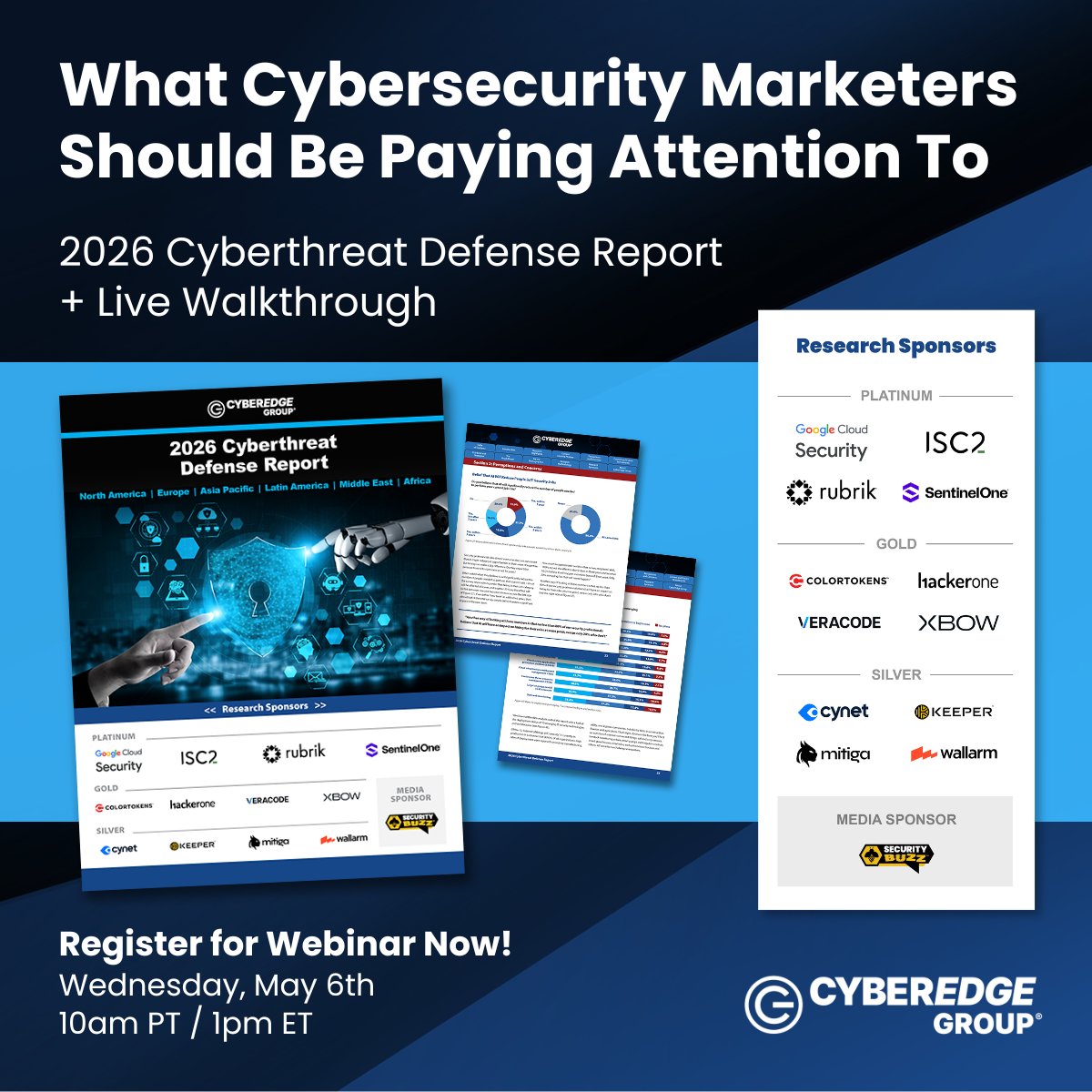
I'm breaking down insights from the 13th annual Cyberthreat Defense Report in a webinar for cybersecurity marketers.
Bring your questions. Win a $100 Amazon gift card.
👉 https://t.co/f4TWdr0qMV
#CDR2026#CybersecurityNews #Cybersecurity
Webinar prep this morning. A couple of CDR stats I'm wrestling with, and I think cybersecurity marketers should be wrestling with too.
64.1% of organizations got hit with ransomware last year. Of those, 55.0% paid (up from 40.7%). Of those who paid, 60.8% recovered their data (up from 54.3%).
The first reading is grim. Payment rates are up, the criminal economics are working, victim organizations are concentrating in healthcare, retail, manufacturing and the 500-10,000-employee mid-market.
The second reading complicates the first. Recovery rates went up because attackers are honoring decryption more reliably, which is itself evidence the ransomware industry has matured into something that looks more like extortion-as-a-service than smash-and-grab.
The implication for marketers: most ransomware messaging in market right now is built on a 2023 threat model. The category needs a narrative refresh, and the data in this report is the starting point.
What should the cybersecurity industry make of this? I have thoughts, and I'll share them on Wednesday at 10am PT / 1pm ET.
Free, 45 minutes plus Q&A, bring your questions. One attendee takes home a $100 Amazon gift card.
Download the report: https://t.co/O4ntTu5R8H
Register for the webinar, where I'll be presenting: https://t.co/gi0L958yRe
#CDR2026 #CybersecurityMarketing #B2BMarketing
I'm running a webinar next Wednesday to walk through the 2026 CDR findings, and I want to flag what I'm planning to spend most of the time on for the cybersecurity marketers in this audience.
May 6th @ 10am PT / 1pm ET.
The report has 65+ pages of data. The webinar isn't a recap. It's the discussion of what surprised me, what I'd push back on, and where this year's data should change how vendors are positioning into the security buyer.
Three things I'll be focusing on:
1. The AI workforce findings, broken out by region and industry. Singapore, Spain and the USA all expect significant near-term hiring impact (50%+); China, South Africa, Mexico, Brazil and Canada sit at 37% or lower. Useful for region-specific demand gen and persona work, because the headline number obscures who is actually feeling the pressure.
2. The LLM-security ranking. We didn't expect proprietary LLMs to top the list of 14 components for security posture concern. I want to talk through why I think respondents put it there, and what it means for vendors building messaging in the AI security category.
3. The ransomware payment shift. 40.7% to 55.0% in a single year is a step change, not a trend. Something specific happened, and recovery rates climbing alongside it (54.3% to 60.8%) tells you what. Useful for anyone whose 2026 ransomware narrative is still framed around "pay and pray."
Free, plus one attendee will win a $100 Amazon gift card. 45 minutes plus Q&A. Bring questions.
Download the report: https://t.co/uzzFPaCxZ4
Register for the webinar, where I'll be presenting: https://t.co/bz2cJn7M2N
#CDR2026 #CybersecurityMarketing #B2BMarketing
One stat from yesterday's report release I want to come back to, because it's getting under-discussed by cybersecurity marketers.
52.9% of organizations now have a board member chairing or sitting on the cyber risk assessment committee. Three years ago that number was 43.1%. Cyber has finished its long migration from "the server room" to "the boardroom."
The implication for marketing is concrete. Your buyer in 2026 isn't only the CISO. It's the CISO with a board sponsor asking quarterly questions about ransomware readiness, AI governance, and quantum-readiness timelines (93.5% of orgs are now actively prepping for the latter, by the way).
Two readers, two different sets of questions. A one-pager that lands with the security team often falls flat at the board layer. A board-ready briefing usually feels too thin for the technical evaluator.
If your campaign architecture, content library, and sales enablement assets are still built for a single-stakeholder journey, this is the highest-leverage thing to revisit before mid-year planning.
Download the report: https://t.co/WIcIQbeEX9
I'm walking through the findings live on May 6th: https://t.co/NUqAYAneFU
#CDR2026 #CybersecurityMarketing #B2BMarketing
The 2026 Cyberthreat Defense Report is live today. 13 editions in, and this is the most useful one we've published for cybersecurity marketers specifically. Three findings worth flagging:
For ICP and demand gen: 80% of security pros expect AI to significantly reduce headcount on their team. 46% expect it within two years.
For AI security positioning: Proprietary LLMs scored lowest of 14 IT components for security posture (3.94 of 5). Most vendor messaging stops at prompt injection. The harder conversation is model governance and runtime drift.
For ABM and enterprise campaigns: Board involvement in cyber risk hit 52.9%, up from 43.1% three years ago. The buying committee has expanded.
Huge thanks to the 12 sponsors who funded this year's research and kept it free for the industry: @Google, @ISC2, @rubrikInc, @SentinelOne, @ColorTokensInc, @Hacker0x01, @Veracode, @Xbow, @Cynet_Security, @keepersecurity, Mitiga, and @wallarm.
Download the report: https://t.co/M7oZMedHmP
I'm walking through the findings live on May 6th: https://t.co/9dhDymZUT2
#CDR2026 #CybersecurityMarketing #B2BMarketing
Reminder: content syndication webinar tomorrow.
Joining me + @CyberMSociety and our powerhouse panel:
Chris Mitchell of @Google, Katie Daniel of @BlueVoyant, and Christina Kazle of @ISC2
Real operators. Real programs.
If you could ask them one question - what would it be?
🔗 https://t.co/8Ble84UOKr
A lot of cybersecurity marketers have written off content syndication after one bad campaign.
I get it.
But there’s a big difference between running a campaign and running the right one.
Talking through what’s working right now in a webinar on April 14
(with the @CyberMSociety)
👉 What’s your experience been?
🔗 https://t.co/SbcuEk8VBZ
Heading to @OneRSACnext week?
A bunch of the @CyberEdgeGroup team will be around San Francisco meeting with cybersecurity marketers, catching sessions, and probably drinking too much coffee.
If you're attending too, it would be great to connect in person.
What’s your RSA schedule looking like?
Book some face time with us here: https://t.co/tS9LrkHwGY
Cybersecurity webinars take real effort to produce.
Speakers. Promotion. Moderation. Technology.
But too often they’re treated as one-time events.
The smartest teams turn them into long-lived assets: clips, blog content, follow-ups, and on-demand resources.
Reality #7.
#CybersecurityMarketing
Here’s the full breakdown of all 7 realities.
https://t.co/tXKtbIyDvt
Not all cybersecurity webinars are meant to do the same job.
Some build awareness.
Some deepen engagement.
Some surface buying signals.
Different roles in the buyer journey require different KPIs.
Reality #6: Context shapes measurement.
How does your team separate pipeline influence from pipeline impact?
#CybersecurityMarketing
Here’s the full breakdown of all 7 realities.
https://t.co/As9wpuPl3P
Anyone who has run a webinar program knows how quickly things can go sideways.
Broken links.
Audio glitches.
Speakers struggling to connect.
Execution matters.
Scaling cybersecurity webinars requires operational capacity across many moving parts.
Reality #5.
What do you prioritize most in a webinar platform?
#CybersecurityMarketing
Here’s the full breakdown of all 7 realities.
https://t.co/87c3jOVauS
Attention during a webinar is fragile.
Slow pacing.
Slides being read aloud.
No interaction.
And attendees quietly drift back to email.
The best webinar programs design engagement into the session from the start.
Reality #4.
What keeps you engaged in a technical webinar?
#CybersecurityMarketing
Here’s the full breakdown of all 7 realities.
https://t.co/qmG0FBDUS4
Marketers often debate whether webinars should be live or simulive.
Both formats have advantages.
Live sessions maximize interaction.
Simulive reduces risk and scheduling pressure.
Strong programs choose the format that fits the goal of the session.
Reality #3.
Which format has worked best for you?
#CybersecurityMarketing
Read all 7 realities here:
https://t.co/8GH2YFmkvd
One quiet truth about cybersecurity webinar marketing:
Most invitations get deleted without being opened.
Not because buyers don’t value webinars.
Because the topic doesn’t feel immediately relevant.
When the topic aligns with active research, registrations follow.
Reality #2: Topic relevance drives registration.
#CybersecurityMarketing
https://t.co/Uxf7MBeKdX
Excited to share that my episode with Breaking Through in Cybersecurity Marketing Podcast is out now! We had an amazing conversation about AI-powered spear phishing, deepfake fraud, and how generative and agentic AI are being integrated into security platforms.
Podcast title: How AI Is Influencing Security Buying Decisions: What Marketers Should Know
I enjoyed chatting with Gianna Whitver thanks to Cybersecurity Marketing Society for having me on the show! 🙌
Listen here:
N2K | Cyberwire: https://t.co/RFi1Q4kezX
Spotify: https://t.co/eSOpY5jr3J
Apple Podcasts: https://t.co/uCHsAR0Sw0
Watch it here:
https://t.co/R1kedrFrEh
#Podcast #NewEpisode #ListenNow
Webinar Tomorrow
Cybersecurity buyers are consuming more content - and trusting less of it
Content That Converts in 2026. 1pm ET / 10am PT
Practical ideas for cybersecurity marketers who want content that actually converts
🎁 $100 Amazon gift card
👉 https://t.co/EyYXEgGgEO