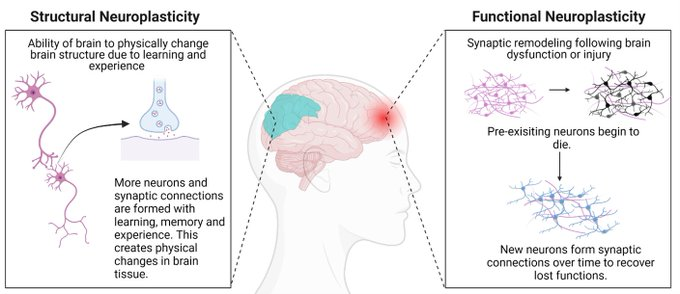
Your kid's piano teacher was reshaping their brain. A Harvard-led team tracked children from age 6 to 9 and found that kids who practiced an instrument at least 2.5 hours a week grew the corpus callosum (the cable connecting the left and right halves of the brain) by about 25% in the region that handles movement planning. Kids who practiced less or quit showed zero growth there.
USC ran a separate study starting in 2012 that followed children from low-income LA neighborhoods. One group learned violin through the LA Philharmonic's youth orchestra program. A second did soccer. A third had no structured after-school program. Two years in, only the music group showed brain changes: stronger white-matter connectivity, faster maturation of auditory processing, and greater activation in networks involved in decision-making and impulse control. The soccer and no-program groups looked the same on brain scans.
A randomized trial at the University of Toronto tested 144 six-year-olds assigned to keyboard lessons, voice lessons, drama, or nothing for a full school year. The music kids gained about 7 IQ points on average. Drama and no-lessons kids gained 4-5. That roughly 3-point gap showed up across every subtest, including reading and math.
Now the language side. Bilingual kids outperform monolingual kids on task-switching tests (jumping between different sets of rules quickly), and it holds regardless of which second language they speak. Brain scans of nearly 1,300 children and young adults from a 2021 Georgetown and University of Reading study showed that bilinguals kept more grey matter (the layer where the brain's processing cells live) as they grew up than kids who spoke one language.
The long game is where this gets serious. A 2025 Monash University study of 10,893 Australians over 70 found that people who regularly played an instrument had 35% lower odds of developing dementia. Bilingualism shows an even sharper effect. Studies across India, Canada, and the US consistently find that bilingual adults develop dementia symptoms 4 to 5 years later than monolingual adults. A 2024 door-to-door survey of 1,234 people over 60 in Bengaluru, India, found dementia in 4.9% of monolinguals and just 0.4% of bilinguals.
Both piano and a second language work through a similar mechanism. They force the brain to manage competing systems at once, left hand versus right hand, one language versus another. That constant switching strengthens the frontal regions responsible for planning, focus, and filtering distractions, building what neurologists call cognitive reserve: a buffer that lets the brain keep working even as age-related damage accumulates.
Those parents running their kids between piano on Tuesdays and Mandarin on Thursdays were basically running a two-front neuroplasticity program without knowing it.
Absolutely true. Everything boils down to repetition and removing consciousness from the task. You should repeat something so much that you don't even think about doing it, to the point where you have to put in effort not to do it. Just like you don't think to walk; you just walk. Thinking is only needed to stop. You find learning difficult because you are conscious about it, and consciousness is the biggest enemy in trying anything.
Why? Because the things we most need to learn, like driving, swimming, or starting a new job, are the ones that make us afraid. Consciousness shines a spotlight on that fear, making you hesitate, overthink, and tense up. While consciousness gives you awareness, it is best suspended when you want to learn anything new.
You don't have to fight against the enemy or the task at hand. You only have to fight your reluctance and hesitation. Fear fades when action becomes automatic.
Consistency will change your life.
Consistency will change your life.
Consistency will change your life.
Consistency will change your life.
Consistency will change your life.
Consistency will change your life.
Consistency will change your life.
I fell in love with this quote:
"No matter your age, you'll always wish you started younger, but today is the youngest you'll ever be. So start today."
Repetition rewires the brain.
Repetition rewires the brain.
Repetition rewires the brain.
Repetition rewires the brain.
Repetition rewires the brain.
Repetition rewires the brain.
Repetition rewires the brain.
Aucun parent ne mérite d’enterrer son enfant, encore moins à cause d’un détraqué mental qui circule dans la société, prenez soin des vôtres , et courage à toute ces familles endeuillées. 🕊️