@LonglivHumanity@BikoKonstantin1 Gotta admit the probability is getting more n more real for the downside
Do you own property in geelong? I have had for 10 year, council val went backward in the last 5 years :)
Which investor will be there to buy some of the 40% renters surburb, with their servicing 30% down?
Ok, here is a view you might find of interest:
Let's assume the Australian housing market is indeed adjusting to the new property tax changes.
Let's assume it is indeed investors showing less interest in the market.
Now could one 'model' this change of interest?
I think you can.
It can be modelled based on one more assumption - investors are rational and will only be interested in buying into the market once again if the acquisition rental yield rises to a point where it completely compensates them for the loss in the tax benefits.
However, this assumption forgets there may be a transition of renters turning themselves into FHBs.
And it also forgets we are going into these tax changes with a rental shortage, driven in large part by surging population growth.
It also assumes everything else is equal, such as stable interest rates. But they are not stable and one can convincingly argue the housing market is correcting now due to the recent rises in the cash rate.
However, if you were to just keep everything else equal for one moment, I estimate investors will demand acquisition rental yields rise between 0.5% to 1.5% for houses and 0.2% to 0.9% for units (variation reflects different assumptions on tax, growth and holding period - and note the yield change on units wouldn't need to be as high, as units tend not to deliver as much capital growth as houses, which makes the new CGT regime less punitive on them).
Now if you are still with me and in broad agreement with my assumptions and caveats, having yields rise means prices come down and/or rents go up. Most likely a bit of both.
Here is a table (below) I have created that models this out based on proportional changes. E.g. rents and prices equally adjust; more impact on housing prices than rents etc.
One more assumption - this happens over a two-to-three-year period for the rent-led component, and possibly longer if FHB substitution does part of the work.
And I think the adjustment will be close to evenly split between prices and rents.
And the yield gap between houses and units will narrow materially - currently around 1.1%, on my central estimate compressing to around 0.65%. That actually runs against the usual presentation of units as the yield play. In this package they come out structurally more robust than houses, because most of the hit is the CGT change, and units' lower historical capital growth makes that change less punitive.
I'll be tracking SQM's asking-rent series through 2026 to see which path the market takes. If it holds at +7% or accelerates, the rent-led adjustment is dominant. If it cools meaningfully, FHB substitution is doing more of the work and the price leg becomes more important.
Happy to hear your views.
@GregLucas07@MarkoMatvikov If you re truly negative when you rent out yes, of course you can do that
But only fit people that actuallt have money to go out and buy again..
Or else you rent and extract that arbitrage
@GibberCapital@MarkoMatvikov Hmm
1. Unless you bought in the last 4 years, when you rent out you re likely wont be negative to begin with
2. With kid, not easy to relocate
3. Conveyancer and REA wont risk their license on your purchase
$USAR - Narrative is about as obvious as you can get. Rare earth prices are exploding, AI and semis are exploding, and you need them for both. First major year of revenue starts this yea, forecast ramps up to billions in 3 years. Wouldn't mind lower prices, wouldn't mind ATHs.
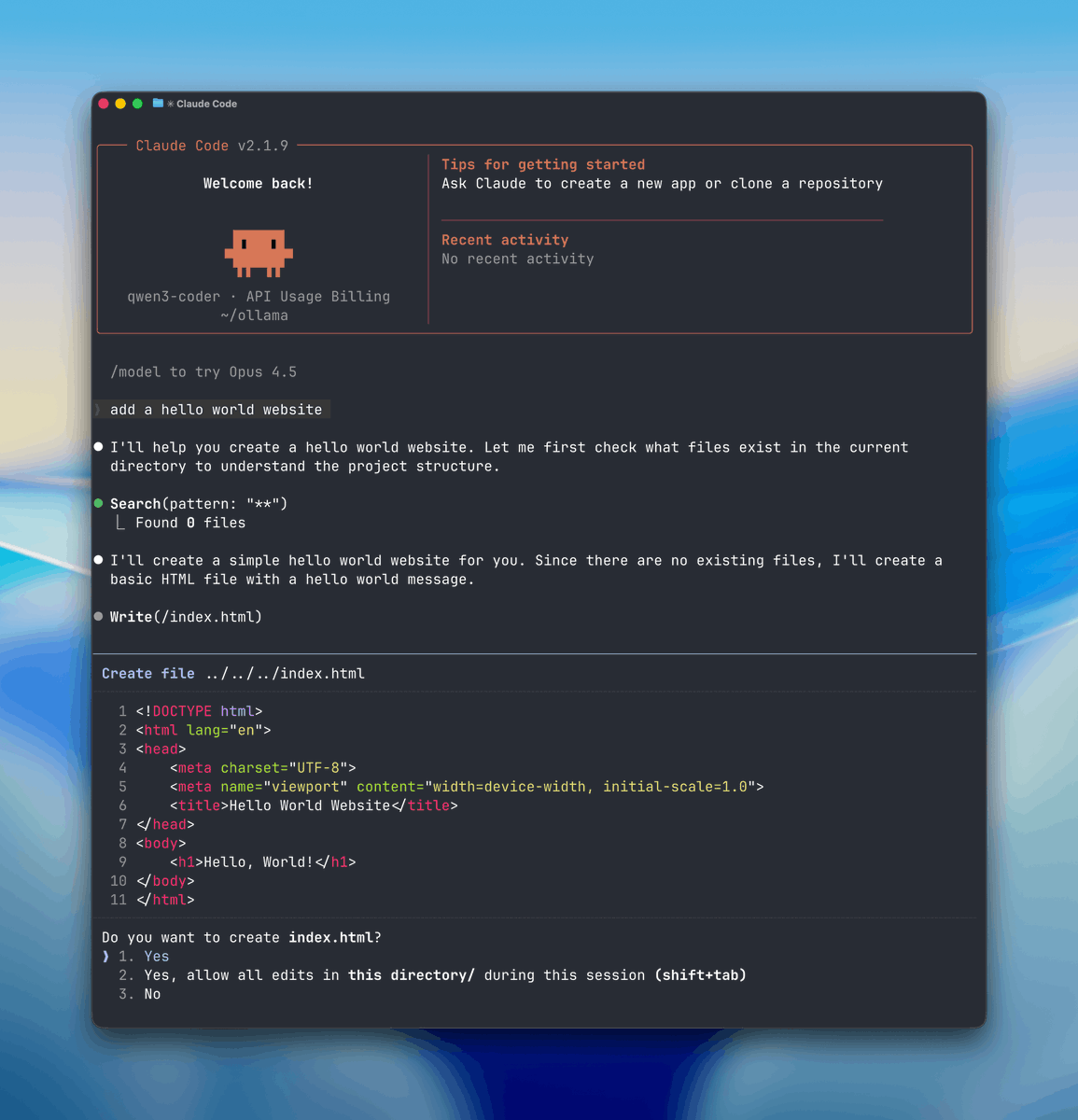
🚨BREAKING: You can now run Claude Code for FREE.
No API costs. No rate limits. 100% local on your machine.
Here's how to run Claude Code locally (100% free & fully private):
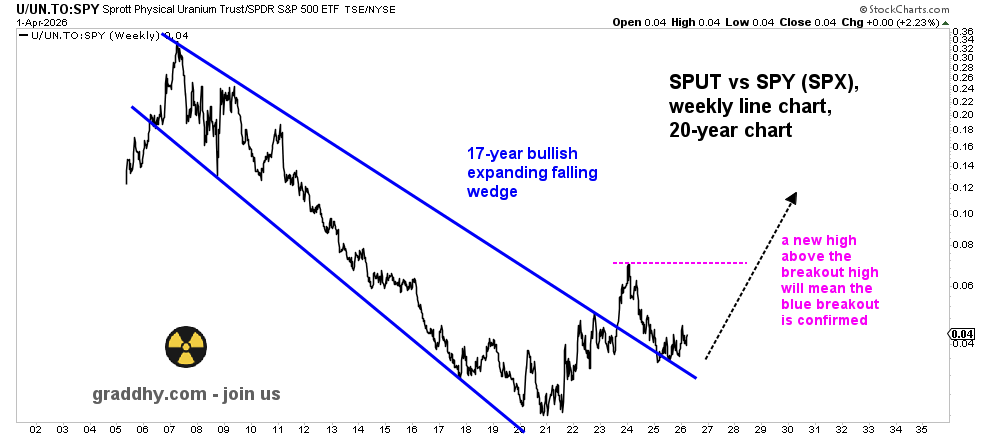
Uranium miners did 580% in its baby bull move.☢️
The 2nd bull move is so far 228% in the making.
And now, the chart below shows that the uranium price proxy vehicle "SPUT" has broken out and backtested vs the general stock market (SPX). A very stylish and beautiful setup indeed.
Also, as posted previously, the uranium ETF URA is in huge breakout-mode vs SPX, from a very symmetrical, blue, bullish 9-year inverse head & shoulders pattern.
This is big, since it means that the uranium sector will now outperform the stock market going forward.
This glorious commodities bull market will be the greatest opportunity in your lifetime to get out of the rat race.
As said now since called the commodities lows 6 years ago
=> DO NOT MISS IT! #uranium
Caught all major lows & highs on the service for uranium since calling the 2020 bear market low in real-time. Try doing that without charts!☢️
Means we also caught the Trump tariff lows back in April 2025, which was the backtest for the chart below
=> technicals done right means you can catch the very lows (regardless of what others say about that, it is very doable).
And down the road, commodities will be the only game in town.
#joinus at https://t.co/dZoc2yuE1z for real guidance during the whole bull market
Go with the service that has, actually, been on track all along.
Following the right people is absolutely vital.
If you're not using Claude in 2026, you're falling behind - fast.
I switched from ChatGPT to Claude earlier this year, and I literally can't go back.
This video will change how you use AI forever.
My Ultimate Beginners' Guide to Switching to Claude (in <15 minutes):
Breaking news: The CEO who created Claude just published a 38-page letter to all of humanity.
Dario Amodei mapped out exactly which careers will survive AI and which won't.
No hype. No doomsday. Just the coldest, most specific prediction any AI leader has ever made.
But page 29 contains a reasoning framework that transforms AI from what will replace you into your greatest unfair advantage.
Here are 9 prompts from Claude based on Amodei's methodology that will put you years ahead of everyone who didn't read this: