Editorial Director, Gemini Notebook and Google Labs. Author of 14 books. Latest: The Infernal Machine. Speech inquiries email: wesn at leighbureau dot com
I’ll admit that I read thus quickly as announcing an even newer book called The BREAKUP WITH GRAYDON CARTER, which no lies I would read in a heartbeat. But a discussion of the brilliant Breakup in conversation with Grayson would also entertain. @kbandersen have you told the story of the notebook test we did with that early draft? That was meaningful, I think.
Anybody in or near NW Connecticut this Saturday, I'll be talking about my new novel The Breakup with Graydon Carter at House of Books in Kent. And signing copies. (We'll also chat about Spy, the magazine we co-founded.)
Join us! 4 pm 10/10. RSVP here: https://t.co/ZcmaDDY4yk
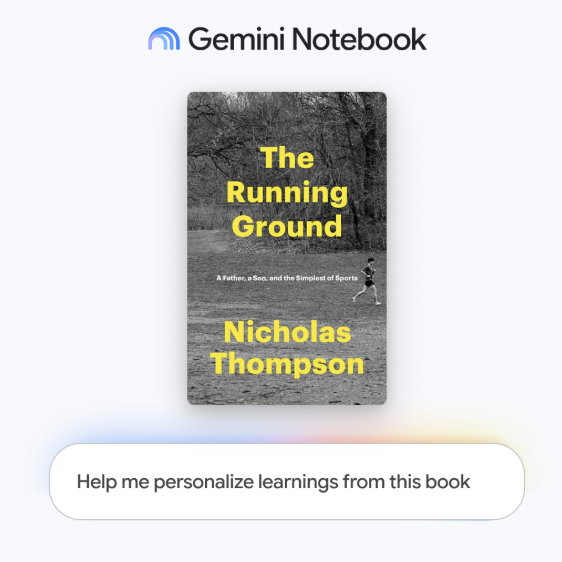
The Running Ground contains such an extraordinary personal narrative that it should be read start-to-finish in addition to exploring all the amazing new AI uses that @nxthompson describes here. But that's the beauty of Expert Intelligence in @Gemini_Notebook: you can do both!
I am thrilled to say The Running Ground is now live on Google’s new Expert Intelligence feature in @Gemini_Notebook. This means you can buy my book and upload it to Gemini Notebook, and then access all sorts of materials related to my running: my training logs, research papers I’ve read, podcast interviews I’ve done, and essays I’ve written. You can ask about everything from how to train the way I did when I ran my 2:29 marathon to my opinion on diet and recovery—and it pulls directly from these sources. I am fascinated by how AI is going to change the way we read and interact with books, and this program is a very neat example of where we might be heading. @stevenbjohnson.
Here’s the US version of the notebook: https://t.co/ef7ss7n32d
And the international version: https://t.co/cy3HZxjC1h
One driver behind @Gemini_Notebook’s growth—now #9 in overall users among all AI web apps—is the team’s investment in making Notebook the most advanced tool for managing the knowledge you need to do your best work with AI.
Just in the last five months we’ve launched…
Auto-Label Sources. Automatically group large source collections by topics, which you can then manually modify. (Or sort by date, kind, or name.) Effectively a version of Mind Maps that helps you keep your sources organized, and makes it easy to focus on the model on a subset of sources when you need to.
Student Notebooks In Classroom. Teachers can create template notebooks for their classes, pre-populated with the semester’s assignments, and then students can create their own notebook based on that template and add their own notes, sources, quizzes, and more. Subsequent source additions from the teacher get automatically reflected in all student notebooks.
In-Chat Research Agent. Part of our complete overhaul of the Notebook architecture that we launched in June, you can now trigger research queries directly from chat to explore information not contained in your sources. The research agent knows your conversation history and current state of your sources, so you can use open-ended research prompts like, “Determine what information I’m missing to complete this project and go track down that knowledge.” As always, you can choose which of the retrieved sources you want to add to your collection.
Copy Notebook and Collections. Two of our most-requested features. You can now easily create template notebooks with commonly-used source collections and then copy them for a new project. Or you can organize your notebooks into collections — like folders — to manage your Notebook front door.
Interactive Reports. A stunning new way to get the big-picture view of the contents of a notebook, organizing the information into a multi-section overview with recommended studio artifacts at the end of each section: infographics, slide decks, mind maps, culminating in a final quiz. We built this in partnership with Google’s Learning Frontiers team and so it’s optimized for classroom notebooks, but these reports are useful for sharing any kind of knowledge base.
Audio Capture on Mobile App. You can now use the built-in microphone on your phone to record audio (and automatically transcribe) as a source in any notebook. Great for recording a lecture at school, meeting transcripts, or capturing on-the-go thoughts that you want to revisit later.
Expert Intelligence. A major new cross-Google framework that allows you to bring a wide variety of paywalled content into Notebook (and soon other applications), starting with over 100K books from the Play Books store. (We’ve also added ePub support for public domain ebooks as well.) Add expert advisors to any notebook—like Eric Ries on product strategy, Annie Duke on decision-making, or Steven Pinker on writing—and get high-quality, opinionated feedback on your projects. Much more coming from this initiative in next few months.
Notes as sources. Historically Notebook kept your own notes in the Studio panel with audio overviews, slides decks, etc. If you wanted the model to be aware of your notes, you had to manually convert them into sources, which then created an awkward duplicate version of the same note in both the Sources and Studio panels. Starting this week, notes are treated as editable sources which enables all sorts of amazing new knowledge work applications: “create a quiz based on my recent notes,” or “review my notes and suggest a structure for chapter three.”
And those are just some of my personal favorites in the context management sphere — the full list is even longer. (We’ve got more coming in 2026 too.)
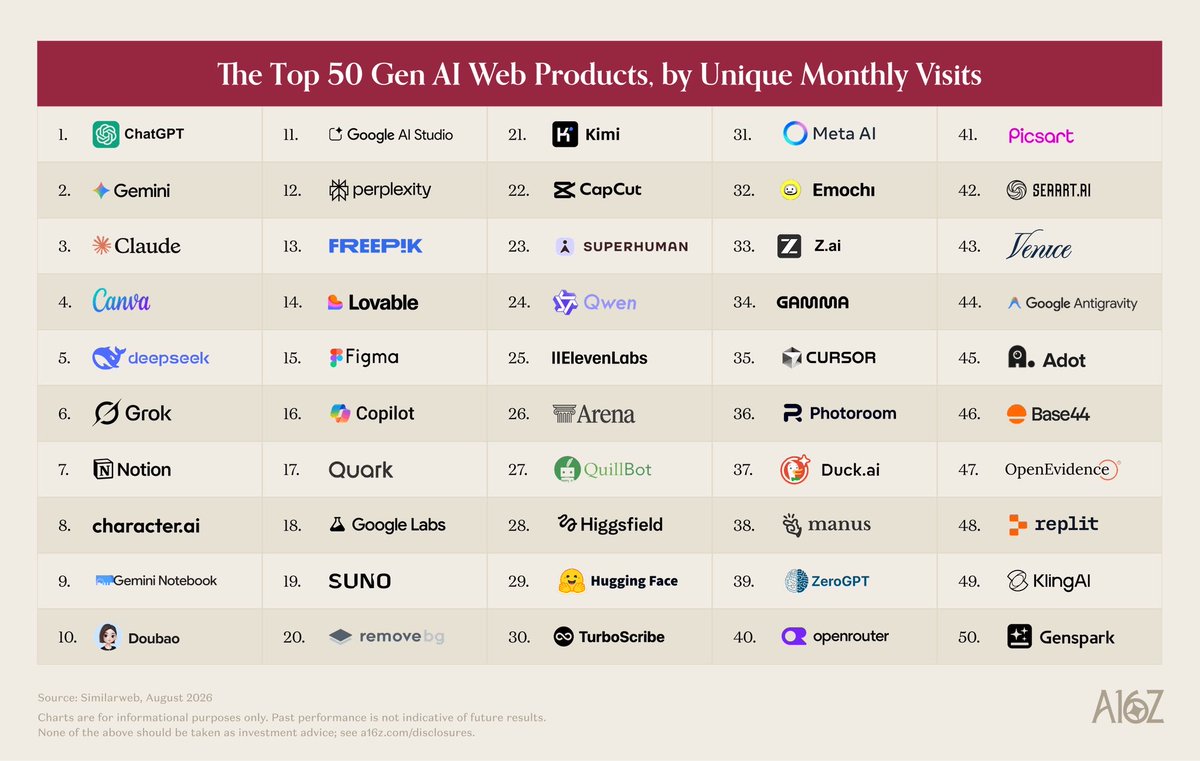
So cool to see @Gemini_Notebook land at #9 in the new @a16z rankings of most popular consumer AI web apps. The team has been cranking! (And note that @Google is the only company with two AI products in top ten — and four in the top twenty.)
So cool to see @Gemini_Notebook land at #9 in the new @a16z rankings of most popular consumer AI web apps. The team has been cranking! (And note that @Google is the only company with two AI products in top ten — and four in the top twenty.)
So cool to see @Gemini_Notebook land at #9 in the new @a16z rankings of most popular consumer AI web apps. The team has been cranking! (And note that @Google is the only company with two AI products in top ten — and four in the top twenty.)
ever needed to talk something through before you understood it? Notebook can help with the new Live Voice mode, grounded in your sources and benchmaxxed for trust 🗣️
Yes, Gemini could do it as a standalone summary, but in my use case, the knowledge is automatically stored in the notebook with all my other research, along with the draft of the project I'm writing, so Notebook can help me figure out where it all fits in the bigger picture of my project.
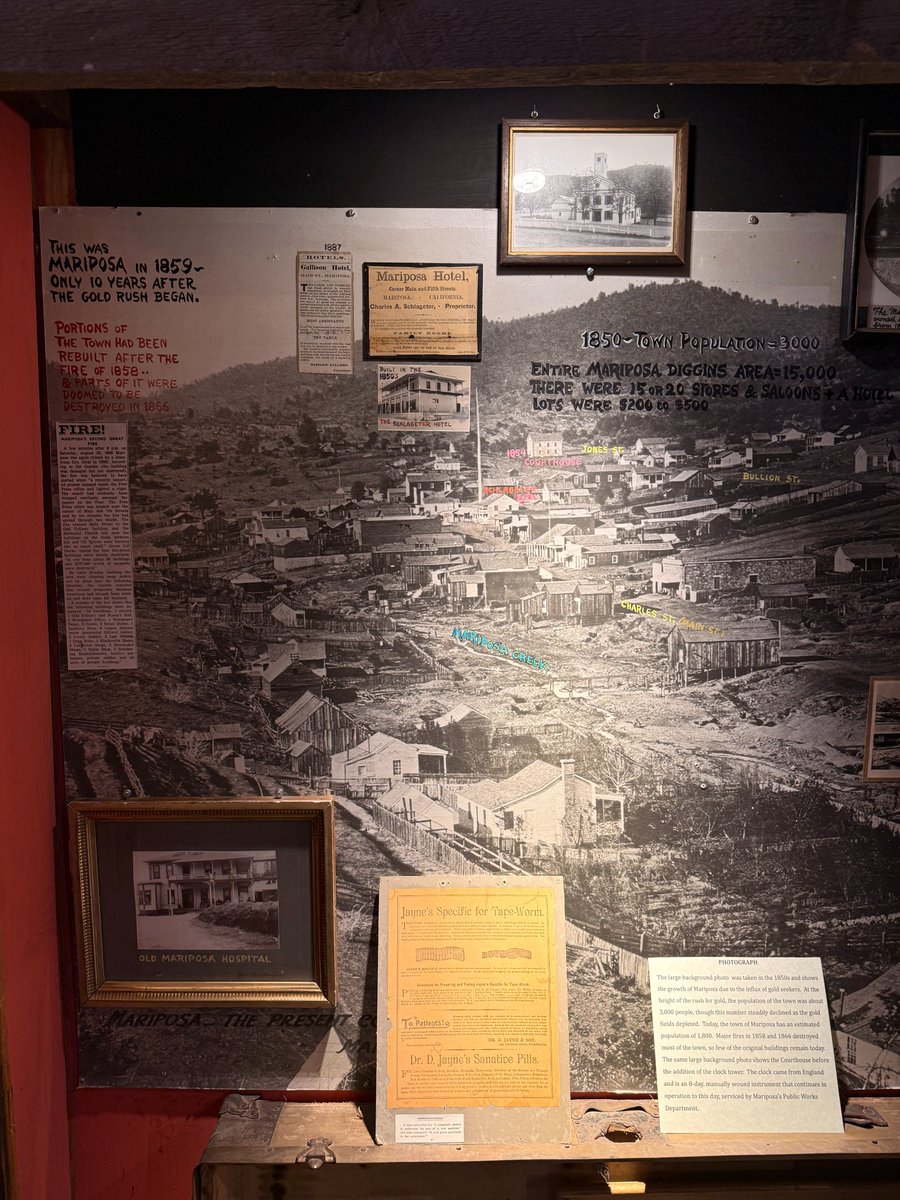
The camera feature in the @Gemini_Notebook mobile app is so transformative for on-the-go research. I was up in the Sierras working on a new project, and I just took photos of everything, like this museum display. Then I asked for a detailed report of all the info in the image. The text below is what I got back. (I fact-checked it myself and it was 99% accurate -- and some of the text it transcribed is so blurry in the image that it was hard for me to read it.)
Next step is to generate documents like this for all the photos I took, and then ask Notebook to highlight all the information that adds something new to the existing knowledge base of sources I've already collected, or is particularly relevant to my latest writing and outline for the project. Truly magical.
Mariposa Museum Exhibit Reference: Mariposa in 1859 & Gold Rush Era
This reference document consolidates all text, photographic captions, historical statistics, newspaper clippings, and exhibit overlays displayed on the Mariposa Museum exhibit panel regarding Mariposa during and after the Gold Rush.
1. Exhibit Overview & Key Headlines
Main Title: "THIS WAS MARIPOSA IN 1859 – ONLY 10 YEARS AFTER THE GOLD RUSH BEGAN."
Historical Context Sub-headline: "PORTIONS OF THE TOWN HAD BEEN REBUILT AFTER THE FIRE OF 1858.. & PARTS OF IT WERE DOOMED TO BE DESTROYED IN 1866"
Display Overview: The exhibit centers on a large 1850s panoramic photograph of Mariposa, annotated with street names, landmark locations, and population statistics, flanked by contemporary hotel advertisements, fire reports, medical artifacts, and photographs of civic buildings.
2. Demographic & Real Estate Statistics (1850s vs. Present)
MetricHistorical Value (1850s Gold Rush Peak)Modern Value
Town Population~3,000 residents~1,800 estimated
Entire Mariposa Diggings Area~15,000 residents—
Commercial Establishments15 to 20 stores & saloons, plus hotels—
Town Lot Prices00 to 00 per lot—
3. Background Photograph & Civic Infrastructure
Background Photo Date: Taken in the 1850s, capturing the rapid growth of the settlement following the initial gold strike.
1854 Mariposa County Courthouse:
Shown in the background panorama prior to the construction of its iconic clock tower.
A separate framed photograph depicts the completed white wood-frame courthouse with a white picket fence and clock tower.
Clock Tower History: The clock mechanism was imported from England and is an 8-day, manually wound instrument. It remains operational today, maintained by the Mariposa Public Works Department.
Annotated Overlay Locations on Panorama:
1854 Courthouse: Located at the upper edge of town on Jones Street.
Jones Street & Bullion Street: Upper residential and civic thoroughfares.
Charles Street (Main Street): Primary commercial artery running through the center of the valley floor.
Schlageter Hotel Site: Positioned along Main Street.
Mariposa Creek: Flowing along the foreground basin of the town diggings.
4. The Fire of 1866: Mariposa's Second Great Conflagration
Below is the complete transcript of the Mariposa Gazette report featured on the panel regarding the disaster of August 25, 1866 (following the earlier destructive fire of 1858):
Article Text: "FIRE! MARIPOSA'S SECOND GREAT FIRE"
A few minutes after 6 p.m. on Saturday, August 25, 1866 Mariposa was again ruined by a disastrous fire (first in 1858). According to the Gazette (the building was damaged but not destroyed), the fire was believed to have started when "a recently imported printer stepped inside the Free Press office and lighted a cigar. The match had evidently been dropped carelessly amongst the papers on the floor. The Free Press office was located near the corner of Main and 7th Streets and by ten minutes the fire had spread through two blocks. The fire crossed Main Street to the Odd Fellows building and the Methodist Church and soon the buildings on the block between 6th and 7th Streets were burning like so much chaff." Seven full blocks, except for four fire-proof buildings, were totally destroyed. "In one hour about 60 buildings and 77,000 worth of property were destroyed."
By early Monday morning the men were clearing away debris and by press time the following Saturday, the Gazette reported that several temporary business structures had already been erected and were open for business.
Inventory of Buildings Destroyed in the 1866 Fire:
Residential & Civic: 14 Dwellings, 1 Church, 1 Odd Fellows and Masons Hall.
Media & Printing: 1 Newspaper Office (Free Press), 1 Newspaper Depot.
Hospitality & Retail: 3 Hotels, 5 Retail Stores, 1 Saddlery Shop, 9 Liquor Saloons (several equipped with billiard tables).
Services & Trades: 2 Livery Stables, 3 Law Offices, 1 Drug Store, 3 Blacksmith Shops, 2 Carpenter Shops, 2 Shoemaker Shops, 1 Tailor Shop, 2 Butchering Establishments.
Outbuildings: Numerous outhouses, private stables, and auxiliary structures.
5. Commercial Hotels & Lodging
Gallison Hotel (1887 Advertisement)
Location: Main Street, Mariposa (center of business district, opposite Odd Fellows' Hall).
Proprietor: Winslow Gallison.
Management: Mrs. Gallison individually superintended all internal departments of the hotel.
Amenities: Newly furnished rooms, first-class table dining.
Mariposa Hotel (1887 Card)
Location: Corner of Main and Fifth Streets.
Proprietor: Charles A. Schlageter.
Target Market: Accommodated general travelers as well as Yosemite tourists on short notice.
Amenities: Family rooms, well-lighted parlors, good table, and bath facilities.
The Schlageter Hotel
Date Built: Built in the 1850s.
Architecture: Prominent two-story wooden structure featuring full upper and lower covered verandas.
6. Medical Artifacts & 19th-Century Therapeutics
Old Mariposa Hospital
A framed historical photograph depicts a two-story wood-frame hospital building with a prominent front porch and side wing (annotated "from Chic Allingham").
Dr. D. Jayne's Family Medicines (1880 Display Broadside)
1. Jayne's Specific for Tape-Worm
Diagnosis: Describes tapeworm infections as widespread, noting that discharging white or yellowish segments ("resembling gourd seeds") is the only positive diagnostic proof.
Pricing & Ordering: .00 per dose, shipped nationwide via mail from 242 Chestnut Street, Philadelphia.
Usage Instructions: Dissolve powder in a pint of boiling water, drink in three equal hourly doses on an empty stomach. Follow with Cathartic medicines if bowels do not operate in three hours.
2. Dr. D. Jayne's Sanative Pills
Formulation: Concentrated, sugar-coated pills. Sold in 50-pill boxes (-bash.25) or 15-pill specimen packets (-bash.10).
Prescribed Ailments: Advertised for liver complaints, gout, jaundice, dyspepsia, rheumatism, kidney affections, fevers, nervousness, skin diseases, melancholy, sick headache, and costiveness (constipation).
3. Exhibit Commentary Note
A small museum card mounted below the broadside reads:
"A man advertises for 'a competent person to undertake the sale of a new medicine' and adds innocently 'It will prove profitable to the undertaker.'"
The camera feature in the @Gemini_Notebook mobile app is so transformative for on-the-go research. I was up in the Sierras working on a new project, and I just took photos of everything, like this museum display. Then I asked for a detailed report of all the info in the image. The text below is what I got back. (I fact-checked it myself and it was 99% accurate -- and some of the text it transcribed is so blurry in the image that it was hard for me to read it.)
Next step is to generate documents like this for all the photos I took, and then ask Notebook to highlight all the information that adds something new to the existing knowledge base of sources I've already collected, or is particularly relevant to my latest writing and outline for the project. Truly magical.
Mariposa Museum Exhibit Reference: Mariposa in 1859 & Gold Rush Era
This reference document consolidates all text, photographic captions, historical statistics, newspaper clippings, and exhibit overlays displayed on the Mariposa Museum exhibit panel regarding Mariposa during and after the Gold Rush.
1. Exhibit Overview & Key Headlines
Main Title: "THIS WAS MARIPOSA IN 1859 – ONLY 10 YEARS AFTER THE GOLD RUSH BEGAN."
Historical Context Sub-headline: "PORTIONS OF THE TOWN HAD BEEN REBUILT AFTER THE FIRE OF 1858.. & PARTS OF IT WERE DOOMED TO BE DESTROYED IN 1866"
Display Overview: The exhibit centers on a large 1850s panoramic photograph of Mariposa, annotated with street names, landmark locations, and population statistics, flanked by contemporary hotel advertisements, fire reports, medical artifacts, and photographs of civic buildings.
2. Demographic & Real Estate Statistics (1850s vs. Present)
MetricHistorical Value (1850s Gold Rush Peak)Modern Value
Town Population~3,000 residents~1,800 estimated
Entire Mariposa Diggings Area~15,000 residents—
Commercial Establishments15 to 20 stores & saloons, plus hotels—
Town Lot Prices00 to 00 per lot—
3. Background Photograph & Civic Infrastructure
Background Photo Date: Taken in the 1850s, capturing the rapid growth of the settlement following the initial gold strike.
1854 Mariposa County Courthouse:
Shown in the background panorama prior to the construction of its iconic clock tower.
A separate framed photograph depicts the completed white wood-frame courthouse with a white picket fence and clock tower.
Clock Tower History: The clock mechanism was imported from England and is an 8-day, manually wound instrument. It remains operational today, maintained by the Mariposa Public Works Department.
Annotated Overlay Locations on Panorama:
1854 Courthouse: Located at the upper edge of town on Jones Street.
Jones Street & Bullion Street: Upper residential and civic thoroughfares.
Charles Street (Main Street): Primary commercial artery running through the center of the valley floor.
Schlageter Hotel Site: Positioned along Main Street.
Mariposa Creek: Flowing along the foreground basin of the town diggings.
4. The Fire of 1866: Mariposa's Second Great Conflagration
Below is the complete transcript of the Mariposa Gazette report featured on the panel regarding the disaster of August 25, 1866 (following the earlier destructive fire of 1858):
Article Text: "FIRE! MARIPOSA'S SECOND GREAT FIRE"
A few minutes after 6 p.m. on Saturday, August 25, 1866 Mariposa was again ruined by a disastrous fire (first in 1858). According to the Gazette (the building was damaged but not destroyed), the fire was believed to have started when "a recently imported printer stepped inside the Free Press office and lighted a cigar. The match had evidently been dropped carelessly amongst the papers on the floor. The Free Press office was located near the corner of Main and 7th Streets and by ten minutes the fire had spread through two blocks. The fire crossed Main Street to the Odd Fellows building and the Methodist Church and soon the buildings on the block between 6th and 7th Streets were burning like so much chaff." Seven full blocks, except for four fire-proof buildings, were totally destroyed. "In one hour about 60 buildings and 77,000 worth of property were destroyed."
By early Monday morning the men were clearing away debris and by press time the following Saturday, the Gazette reported that several temporary business structures had already been erected and were open for business.
Inventory of Buildings Destroyed in the 1866 Fire:
Residential & Civic: 14 Dwellings, 1 Church, 1 Odd Fellows and Masons Hall.
Media & Printing: 1 Newspaper Office (Free Press), 1 Newspaper Depot.
Hospitality & Retail: 3 Hotels, 5 Retail Stores, 1 Saddlery Shop, 9 Liquor Saloons (several equipped with billiard tables).
Services & Trades: 2 Livery Stables, 3 Law Offices, 1 Drug Store, 3 Blacksmith Shops, 2 Carpenter Shops, 2 Shoemaker Shops, 1 Tailor Shop, 2 Butchering Establishments.
Outbuildings: Numerous outhouses, private stables, and auxiliary structures.
5. Commercial Hotels & Lodging
Gallison Hotel (1887 Advertisement)
Location: Main Street, Mariposa (center of business district, opposite Odd Fellows' Hall).
Proprietor: Winslow Gallison.
Management: Mrs. Gallison individually superintended all internal departments of the hotel.
Amenities: Newly furnished rooms, first-class table dining.
Mariposa Hotel (1887 Card)
Location: Corner of Main and Fifth Streets.
Proprietor: Charles A. Schlageter.
Target Market: Accommodated general travelers as well as Yosemite tourists on short notice.
Amenities: Family rooms, well-lighted parlors, good table, and bath facilities.
The Schlageter Hotel
Date Built: Built in the 1850s.
Architecture: Prominent two-story wooden structure featuring full upper and lower covered verandas.
6. Medical Artifacts & 19th-Century Therapeutics
Old Mariposa Hospital
A framed historical photograph depicts a two-story wood-frame hospital building with a prominent front porch and side wing (annotated "from Chic Allingham").
Dr. D. Jayne's Family Medicines (1880 Display Broadside)
1. Jayne's Specific for Tape-Worm
Diagnosis: Describes tapeworm infections as widespread, noting that discharging white or yellowish segments ("resembling gourd seeds") is the only positive diagnostic proof.
Pricing & Ordering: .00 per dose, shipped nationwide via mail from 242 Chestnut Street, Philadelphia.
Usage Instructions: Dissolve powder in a pint of boiling water, drink in three equal hourly doses on an empty stomach. Follow with Cathartic medicines if bowels do not operate in three hours.
2. Dr. D. Jayne's Sanative Pills
Formulation: Concentrated, sugar-coated pills. Sold in 50-pill boxes (-bash.25) or 15-pill specimen packets (-bash.10).
Prescribed Ailments: Advertised for liver complaints, gout, jaundice, dyspepsia, rheumatism, kidney affections, fevers, nervousness, skin diseases, melancholy, sick headache, and costiveness (constipation).
3. Exhibit Commentary Note
A small museum card mounted below the broadside reads:
"A man advertises for 'a competent person to undertake the sale of a new medicine' and adds innocently 'It will prove profitable to the undertaker.'"
Google Notebook is a sleeper
Once SBJ adds bots it gonna 📈
@sundarpichai please triple resource allocation for this project (a salute emoji is an acceptable reply 🫡😂)
If you haven't had a chance yet to check out the new Expert Intelligence feature in @Gemini_Notebook, here is your chance.
Use code "EXPERTINTELLIGENCE" to get a free download of my book "Thinking in Bets" to add to your Gemini LLM Notebook Knowledge Library.