@Webwight @garicgymro It never even occurred to me that they might be 'immigrants' (to where?). Surely they're South Asians living and working in South Asia.
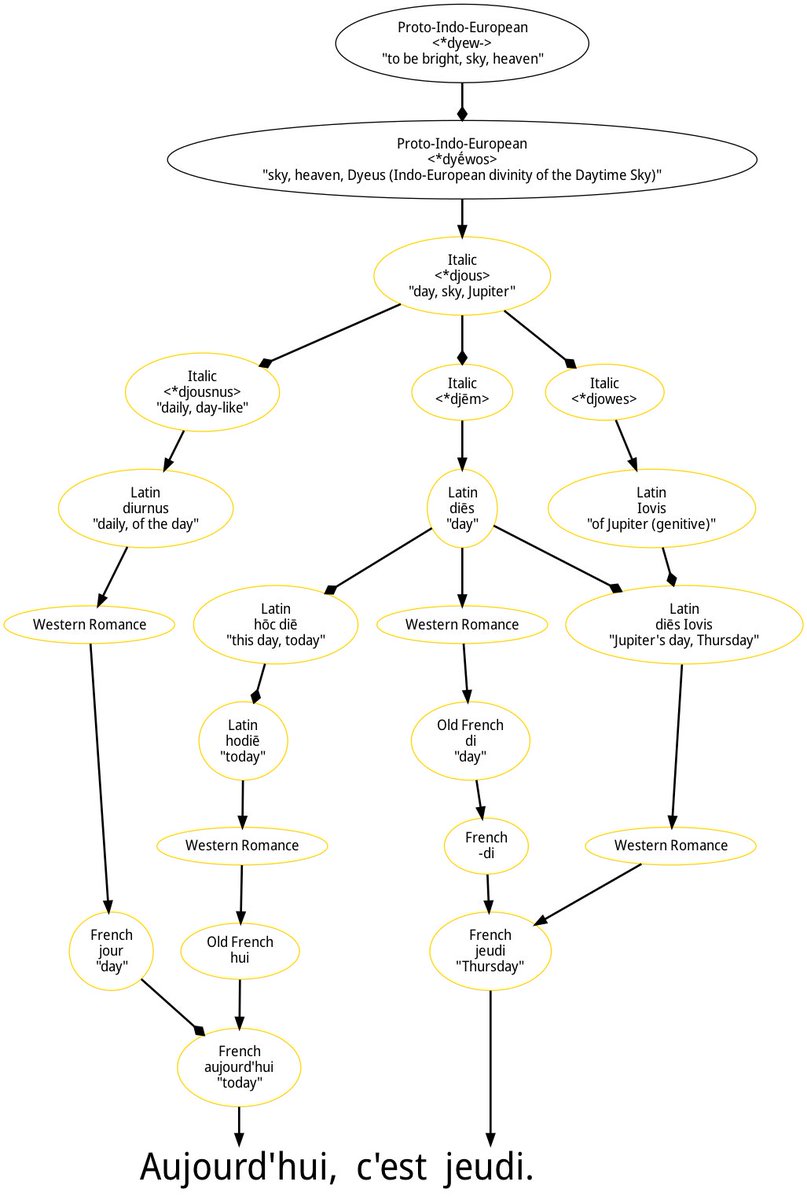
Loïc's video today reminded me that French "aujourd'hui" contains the cognate of Spanish "hoy".
"aujourd'hui" ultimately expands to "at the day of this day"
The French sentence "Aujourd'hui, c'est jeudi." ("Today is Thursday") contains four instances of *dyew- in six syllables 😆
@pamkhamaid This confused me but I figured out what it's about recently! Excel has a copy of each currency symbol for each supported language, because the languages might display currencies differently. E.g. "$ English (Canada)" yields "$1.45" but "$ French (Canada)" gives "1.45 $".
@avzaagzonunaada@Lautgesetzlich It's the norm in Europe, despite your post. E.g., in Poland, people will casually say "Spotkajmy się o 3ej", "Let's meet at 3", with entirely context-dependent interpretation of "four", while "o 15ej" = "at 15" is much more common in even slightly formal language than in English.
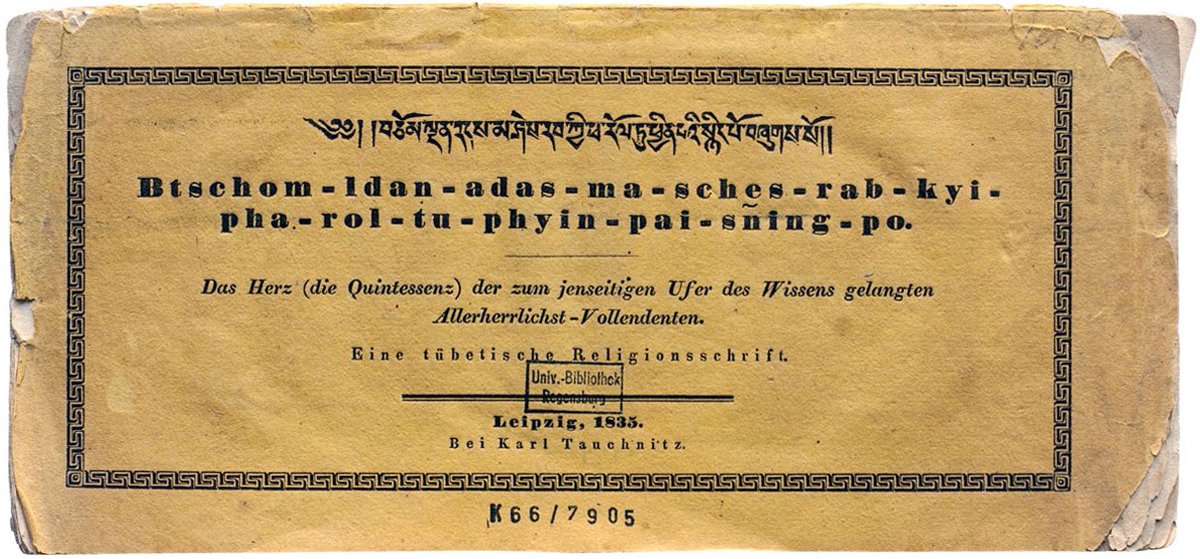
༄༅། །བཅོམ་)ན་འདས་མ་ཤེས་རབ་1ི་ཕ་རོལ་5་6ིན་པའི་8ིང་པོ། ། Btschom-ldan-adas-ma-sches-rab-kyi-pha- rol-tu-phyin-pai-sñing-po.
This 1835 edit. of the Heart Sutra by the pioneering Orientalist & printer Paul Schilling von Canstadt was the first complete Tibetan book produced in Europe.
May this tweet find you well. Better yet, may it find you in the 3rd jhana, when no part of your entire body is unpervaded by pleasure divested of rapture. Truthfully, I wish that it not find you at all, as you become unplottable, carried off who knows where by music from Sun Ra.