Paul Laurence Dunbar was one of the first Black American writers to achieve national fame and make a professional career from his writing at a time when the literary world offered very few opportunities to Black authors. Born in Dayton, Ohio, in 1872, just seven years after the end of the Civil War, Dunbar was the son of formerly enslaved parents. His father, Joshua Dunbar, had escaped slavery and served in the Union Army, while his mother, Matilda, had also endured enslavement in Kentucky. Their experiences helped shape Dunbar's understanding of freedom, race and the lives of the generation emerging from slavery.
Dunbar showed remarkable literary ability while still young. At Dayton Central High School, where he was the only Black student in his class, he became class president and edited the school newspaper. One of his classmates was Orville Wright, who, along with his brother Wilbur, later helped Dunbar print a short-lived newspaper aimed at Black readers. After graduating, however, racism severely limited Dunbar's employment opportunities, and he found work as an elevator operator while continuing to write poetry. He published his first collection, Oak and Ivy, in 1893 and sold copies to passengers in the building where he worked.
His career soon expanded far beyond those beginnings. Dunbar published poetry, novels, short stories, essays and song lyrics, eventually gaining readers in the United States and abroad. He became particularly famous for poems written in African American dialect, although he also produced a substantial body of work in standard English. The popularity of his dialect writing brought him recognition but also frustrated him because publishers and audiences often expected him to remain within that style. Some of his most enduring work confronted racism more directly, including his 1896 poem "We Wear the Mask," which explored the emotional burden of hiding suffering behind a socially acceptable appearance.
Dunbar died from tuberculosis in 1906 at only 33 years old, but the literary path he helped open continued long after his death. Writers of the Harlem Renaissance and later generations encountered a Black author who had already achieved extraordinary visibility within American literature despite the restrictions of his era. His story is not simply about being a "first." It is about a writer who turned the experiences, language, contradictions and aspirations of Black life after emancipation into literature that is still being read more than a century later.
If you love our content and would like to support the page, you can buy us a coffee here: https://t.co/K1AhtZuOFs or tap Link in Bio
Before Harriet Tubman became one of the most famous conductors of the Underground Railroad, she was married to John Tubman, a free Black man living on Maryland’s Eastern Shore. They married around 1844, when Harriet was still enslaved and known as Araminta Ross. Their marriage existed under a brutal legal reality. John was free, but Harriet remained the property of another person, and marriage offered her no protection from being sold or separated from her family. Any children they had could also have inherited Harriet’s enslaved status under Maryland law.
In 1849, fearing that she might be sold, Harriet escaped Maryland and eventually reached freedom in Pennsylvania. She later returned for John and reportedly hoped he would leave with her, but she discovered that he had married another woman, Caroline, and he refused to go north. Harriet did not allow that painful chapter to stop her. Instead, she continued returning to Maryland and helped relatives and other enslaved people escape, risking capture and possible death each time. John remained in Maryland and was killed in 1867 during an altercation with a white man. Harriet later married Civil War veteran Nelson Davis in 1869 and remained with him until his death in 1888.
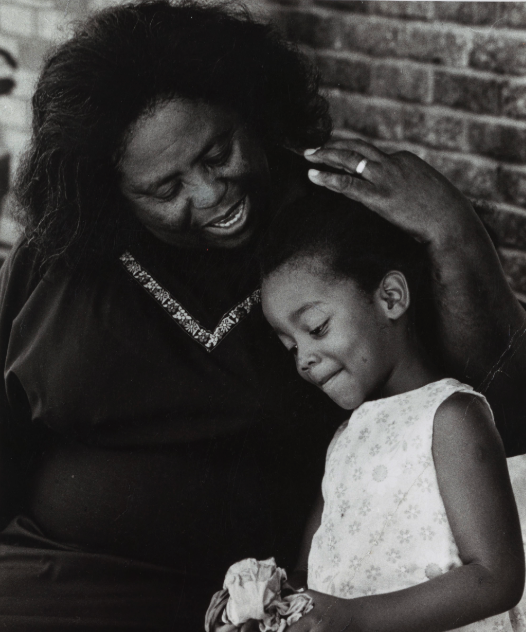
Civil Rights activist Fannie Lou Hamer with her daughter, 1971.
As a result of a "Mississippi appendectomy” (forced sterilization), Fannie Lou was unable to have children so she & her husband adopted 2 local impoverished girls.
In 1994, Captain Ruben Flowers II posed in the cockpit with his young son, Ruben Flowers III. Nearly 30 years later, in March 2023, Ruben Flowers III fulfilled his childhood dream of becoming a pilot and flew alongside his father on his retirement flight.
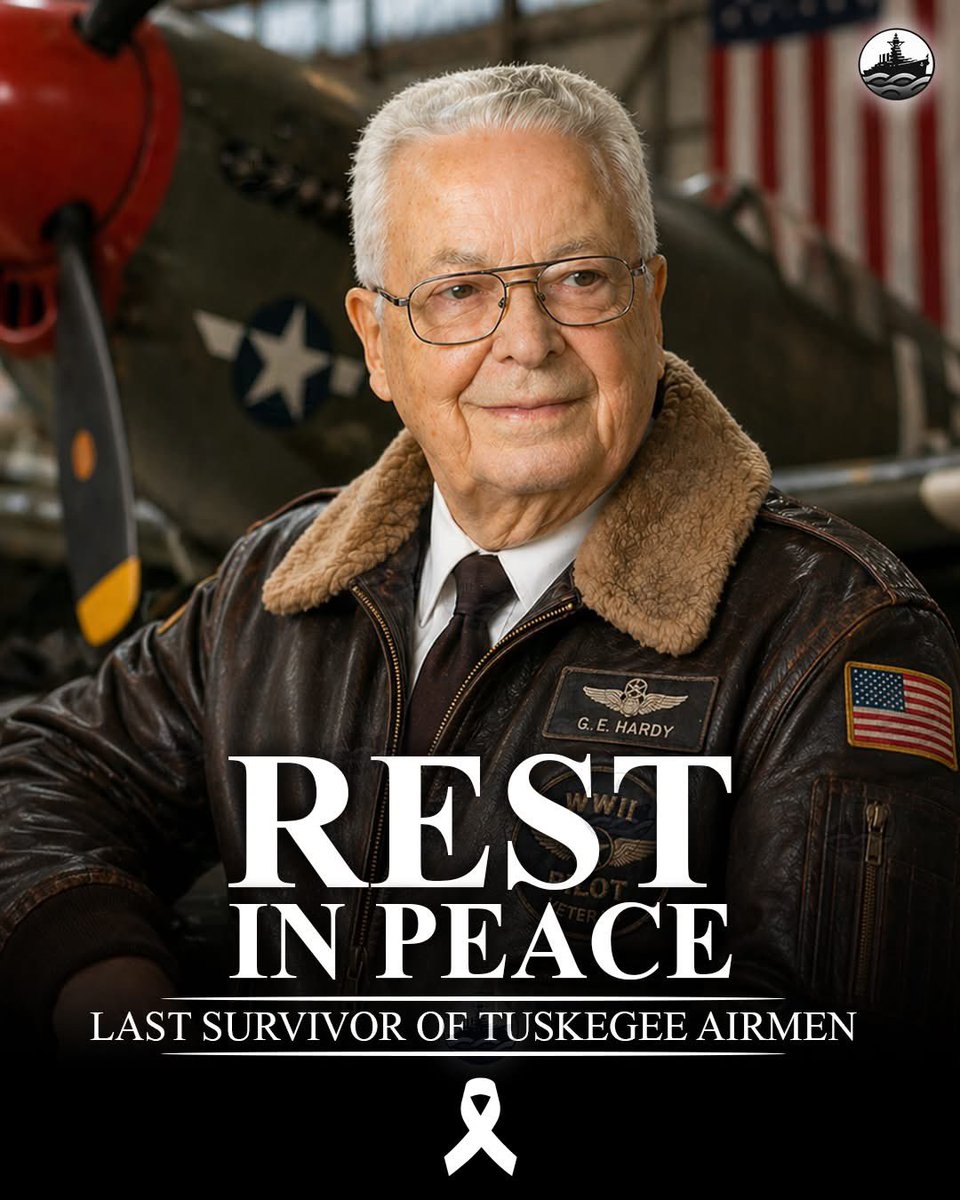
With deep sorrow, we say farewell to one of the final sentinels of the Tuskegee Airmen. George E. Hardy, who once danced across the skies of Europe in his Mustang has taken his final flight at the age of 100. Leaving behind a legacy forged in courage, resilience, and unwavering dignity.
It began in a quiet room in Philadelphia. A 16-year-old boy hunched over his homework as the radio crackled with the news of Pearl Harbor. In that instant, the world fractured, and George’s childhood evaporated. He didn't wait for history to call; he went to meet it.
Denied entry because of the color of his skin, he didn't retreat. He leaned into the wind. He joined the U.S. Army Air Forces, arriving at Tuskegee not just to learn the mechanics of flight, but to dismantle the mechanics of prejudice.
By 19, George was a "Red Tail," a guardian of the clouds. While the world below was segregated, the flak in the European theater was indifferent. He flew 21 combat missions over Nazi-occupied territory, a teenager in a cockpit proving that valor has no pedigree.
Most men would have seen enough of war. George was not most men.
- World War II: 21 combat missions in the P-51 Mustang.
- Korea: 45 combat missions, braving the dawn of the jet age.
- Vietnam: 70 combat missions, a veteran hand guiding a new generation.
For nearly thirty years, he wore the uniform of a country that didn't always love him back, yet he protected it with a devotion that shames the very idea of hate.
When he finally climbed out of the cockpit, he didn't stop serving. As a Lieutenant Colonel, he helped architect the military’s first global communication systems. He spent his sunset years ensuring that those who followed him would never be out of reach, never be truly alone in the dark.
"He rose above the clouds so we could finally see the light."
Today, we don't just salute a pilot. We salute a man who endured the sting of Jim Crow to earn the silver wings of a hero. He was the quiet defiance in the face of "no," the steady hand in the cockpit, and the humble heart in the room.
The "Red Tails" are thinning now, their formation heading into the eternal sunset. But as George E. Hardy crosses the ultimate horizon, he leaves behind a legacy etched not in ink, but in the very air we breathe.
Rest well, Colonel. The watch is ours. The sky is yours.
Before Venus & Serena Williams, there was Margaret and Matilda Peters. They were nicknamed “Pete” and “Repeat” for their doubles playing skills and last name. The Peters Sisters attended Tuskegee University in 1937.
While they were in college, segrègation laws did not allow African Americans to compete against Whit£s, so the Peters sisters played in the American Tennis Association (ATA), which was created specifically to give African Americans a forum to play tennis competitively.
After graduating from Tuskegee University in 1942, they both continued to play tennis in the American Tennis Association. They won 14 Doubles Tennis titles between 1938 and 1953. Despite their great skill, the sisters were never allowed to compete against the great whit£ Doubles Players of the time.
By the time the walls of segregation in tennis started falling, the Peters sisters were past their prime and were never able to compete in racially integrated matches. However, they gained fame as tennis stars. Margaret and Matilda Peters were inducted into the Tuskegee Hall of Fame in 1977.
Blàck women are legendary.
Blàck Històry is Amèrican Històry
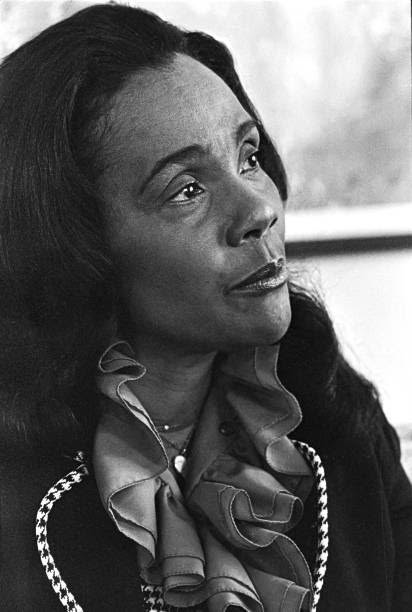
Today, I am beginning a special series honoring my mother, Coretta Scott King, in the days leading up to what would have been her 99th birthday on April 27.
In the 7 days leading up to what would have been her 99th birthday, I will be sharing photos, memories, quotes, and moments from her extraordinary life and legacy.
My mother was deeply committed to justice, peace, and nonviolence. She was also the founder of The King Center, a visionary leader, and a moral force whose life still calls us to live with courage, clarity, and purpose.
As we remember her, may we also deepen our understanding of her life, her leadership, and the enduring impact of her witness.
#CorettaScottKing #CSK99 #BelovedCommunity #MLK
"I tire so of hearing people say, Let things take their course. Tomorrow is another day. I do not need my freedom when I'm dead. I cannot live on tomorrow's bread."
—Langston Hughes
Savannah State alum Major General William Green Jr., the Army's Chief of Chaplains has served this country with honor, discipline, and distinction. Moments like this remind us HBCUs don’t just produce graduates, we produce leaders at the highest levels. Respect the resume.
On This Day 1968: Dr Martin Luther King Jr was assassinated. His legacy, spirit of peace and equality continue to inspire millions around the world. Let us love more, respect more, and hate less. ❤️💚🖤🫶🏾
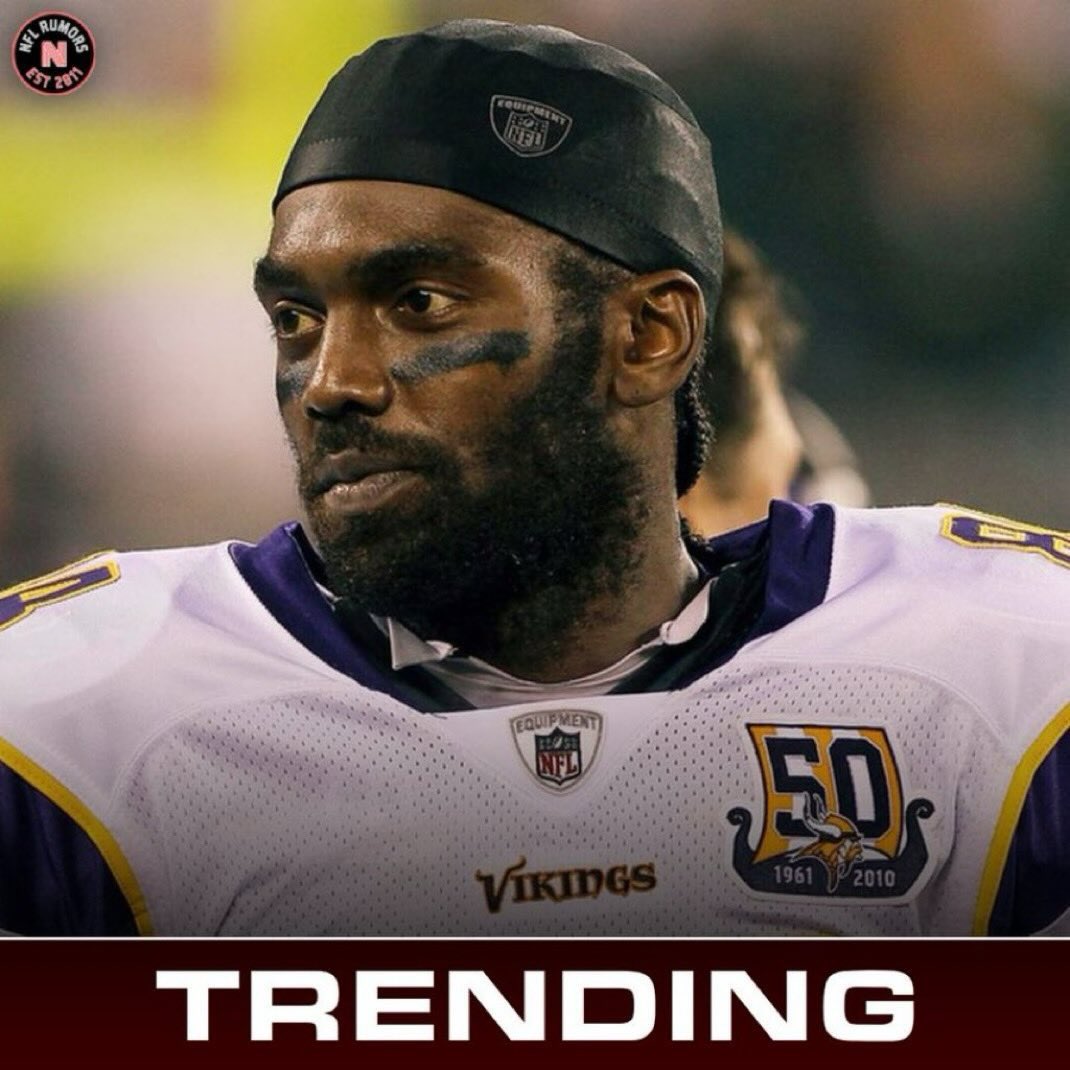
Deion Sanders publicly said that Randy Moss called him every other day during his bladder cancer battle and that Moss prayed for him every day:
"Randy Moss prayed for me. He and his wife told me what I need to be doing. Thank you, Randy."
Randy battled cancer and beat it as well
#Vikings #NFL #DeionSanders #RandyMoss
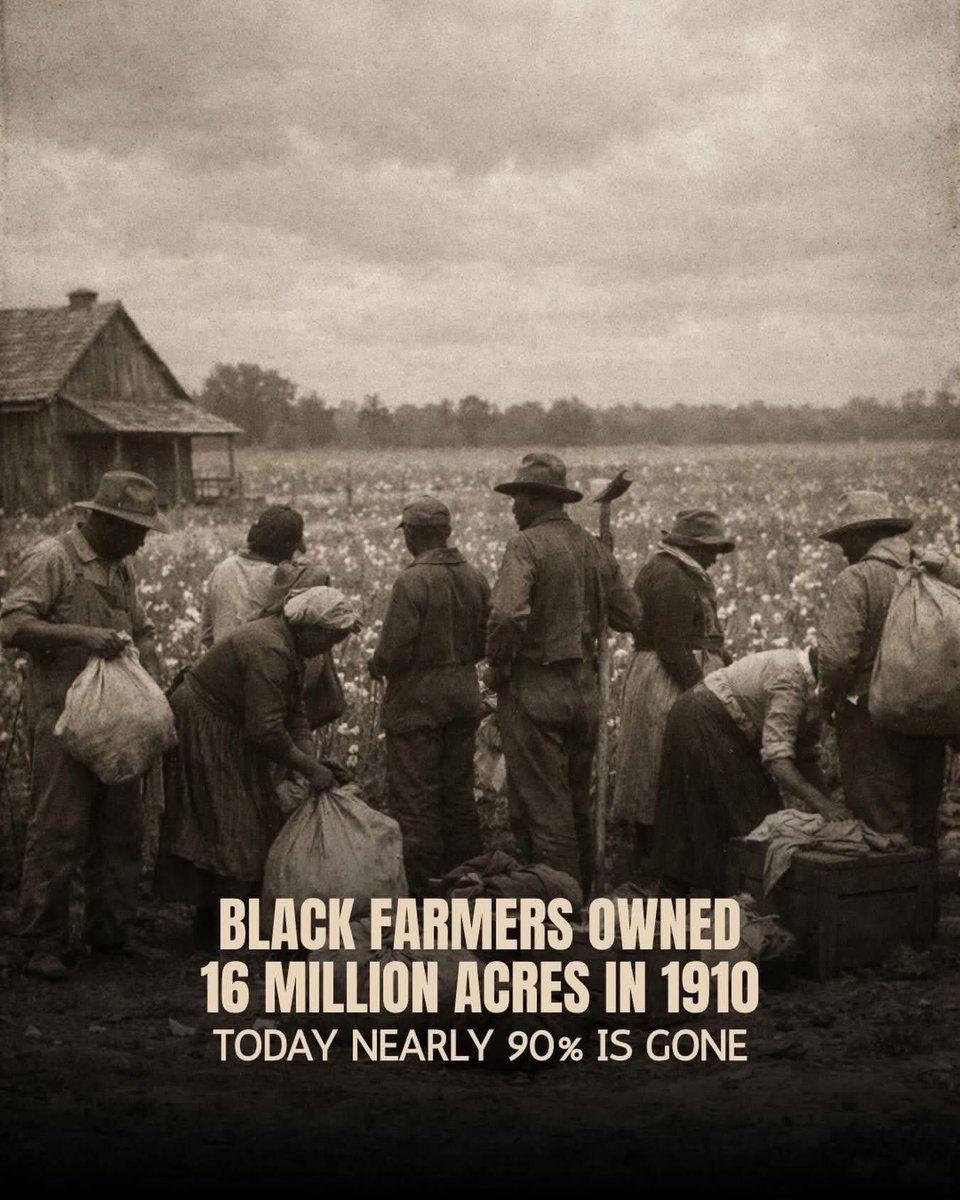
In 1910, Black Americans owned approximately 16 million acres of farmland.
By the end of the 20th century, nearly 90% of that land was gone.
This was not a coincidence. It was not laziness. It was not market failure.
It was policy.
Black farmers were denied bank loans, crop insurance, and federal assistance routinely given to white farmers.
Land was seized through tax manipulation, fraudulent contracts, forced partition sales, racial terror, and USDA discrimination.
When crops failed, white farmers received federal relief. Black farmers were often told to wait until foreclosure came first.
Between 1920 and 1997 alone, Black farmers lost more than 12 million acres.
This was one of the largest land dispossessions in American history, and it happened without headlines.
Land builds wealth. Land builds inheritance. Land builds power.
Take the land, you take the future.
This is not ancient history. Its economic effects are still visible today.