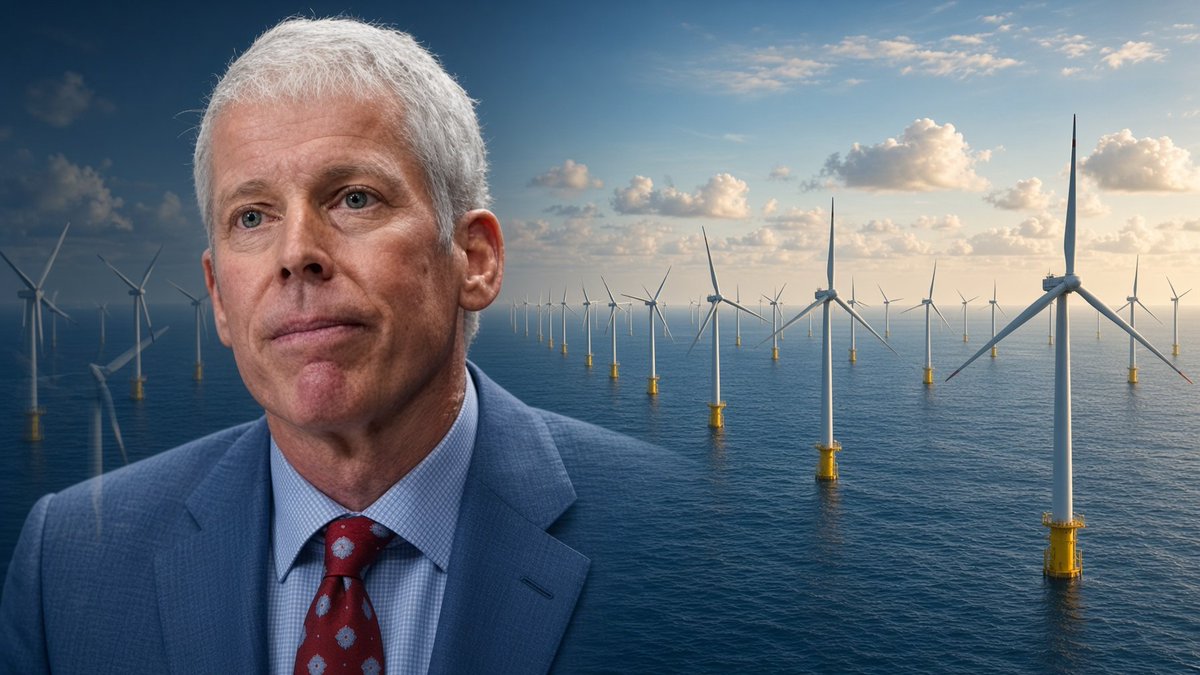
"The more renewables we build, the more our electricity depends on the weather, the more expensive back-up is, and thus the more problems we have... We don’t need renewables. We need oil, gas, and nuclear," says @DavidGHFrost, warning:
"The energy clock has not stopped. It is ticking, and ticking down to economic decline, unless the policy changes. An energy strategy that simply makes Britain poorer and colder is not in the interests of the British people. It is a failure of government dressed up as a moral achievement."
#CostOfNetZero
The Western green transition is now almost entirely reliant on hardware manufactured by the same industrial giant it hoped to displace.
China currently manufactures over 80% of the world’s solar panels, 75% to 80% of all EV batteries, 60% to 70% of core wind turbine components, and over 53% of global crude steel.
According to the International Energy Agency, China controls over 80% of the manufacturing share across every key solar PV stage, surging past 95% for specific sub-components like solar wafers.
In battery tech, it commands up to 85% of global capacity for specialised sub-components, including anodes and refined electrolytes. For wind power, its massive manufacturing base translates to nearly four-fifths of all new global turbine installations.
Data from the World Steel Association confirms China produces more than half of the world's crude steel, hovering just over 1 billion metric tons annually. This staggering modern-day expansion represents the largest, quietest transfer of industrial power in human history.
Today, China’s total manufacturing output is larger than that of the next 15 countries combined - exceeding the US, EU and Japan put together. To power this industrial machine, China continues to commission new state-of-the-art coal plants at a rate of 50 to 80 GW a year.
It now operates over 1,200 coal plants totaling roughly 1,270 GW - more than half the world’s total capacity - backed by a domestic coal mining fleet four times larger than second-place India.
As a result, China’s share of global manufacturing has surged from 6% to 30% since 2000. Over the same period, America’s share plunged from 25% to around 12%, while Europe’s collapsed from 25% to 14%.
China uses abundant, reliable coal power, refuses to shackle its industrial base to unilateral net-zero mandates, and has leadership that treats heavy industry and manufacturing as fundamental national security assets.
In geopolitical terms, this should be a glaring warning across the West.
Grifters will tell you wind is green. They forget to tell you about the 100–200 tons of steel rebar, 600–800 m³ of concrete buried forever, rare-earth magnets from toxic processing, and fibreglass composite blades that mostly end up in landfills.
Net Zero is a scam
We've spent over £200,000,000,000 on subsidies for making electricity.
That's more than it takes to run the entire NHS for a whole year
And we've achieved the highest electricity prices in the world.
Its been a LOSE-LOSE policy. We pay twice over
Why are we doing this to ourselves?
https://t.co/qZAFJ1y0aT
By 2050, the world is forecast to face 43 million tons of decommissioned wind turbine blades.
These blades are built from high-strength composites made to survive years of weathering. Still, every single turbine standing today will age-out before 2050.
Most are difficult to recycle, so most are likely to be buried. But Europe now has a landfill ban for blades coming into force.
Nations like Germany, Finland and the Netherlands are already blocking landfills, but they still have blades to dispose of, so the waste is pushed elsewhere.
Blades are exported to countries where burial is still allowed, such as the UK.
Net Zero creates a mountain of composite waste, and then has the audacity to call itself "green."
No, something that contributes ZERO to peak annual electricity demand and cannot be controlled does nothing for energy security
Relying on equipment from China some of which has been found to contain kill switches does nothing for energy security
You don't seem to understand the meaning of #EnergySecurity
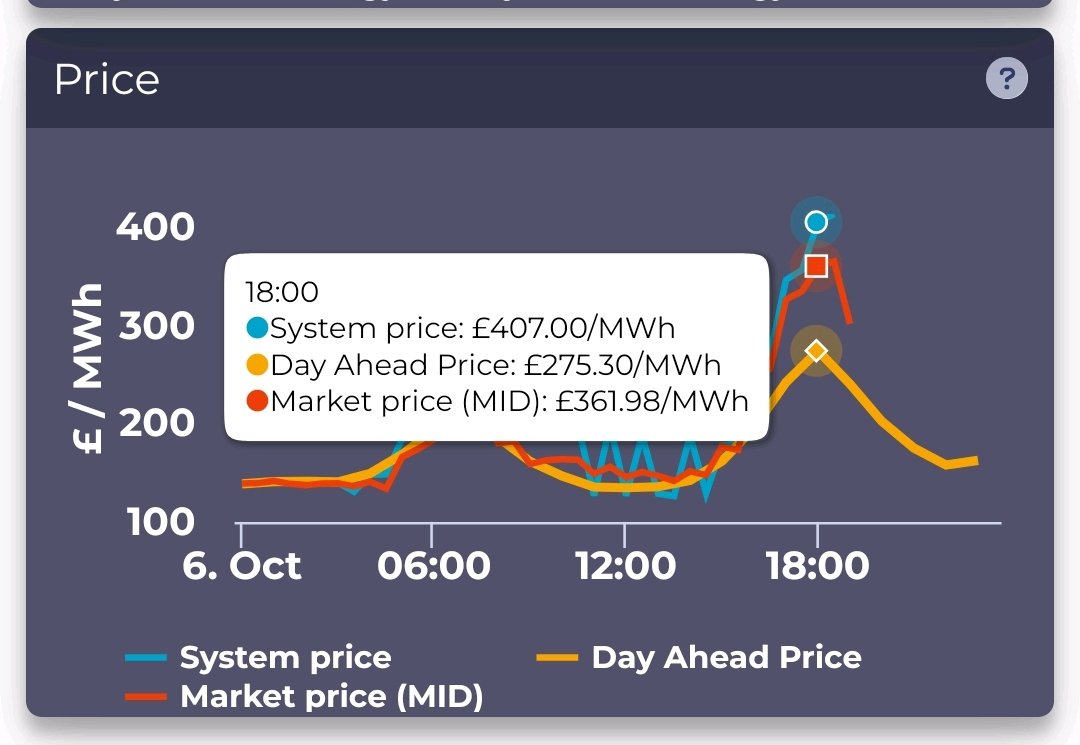
So NESO ultimately closed the gap with a huge, limit busting amount of interconnector trades whose cost is not yet known
And by paying up in the BM
We went through the peak without drama. Frequency held up fine
But we busted the interconnector trading limits (cost not yet known) and paid some tasty prices in the BM... Scroll to the bottom of the linked page and you'll see lots of trades just under £1000 /MWh
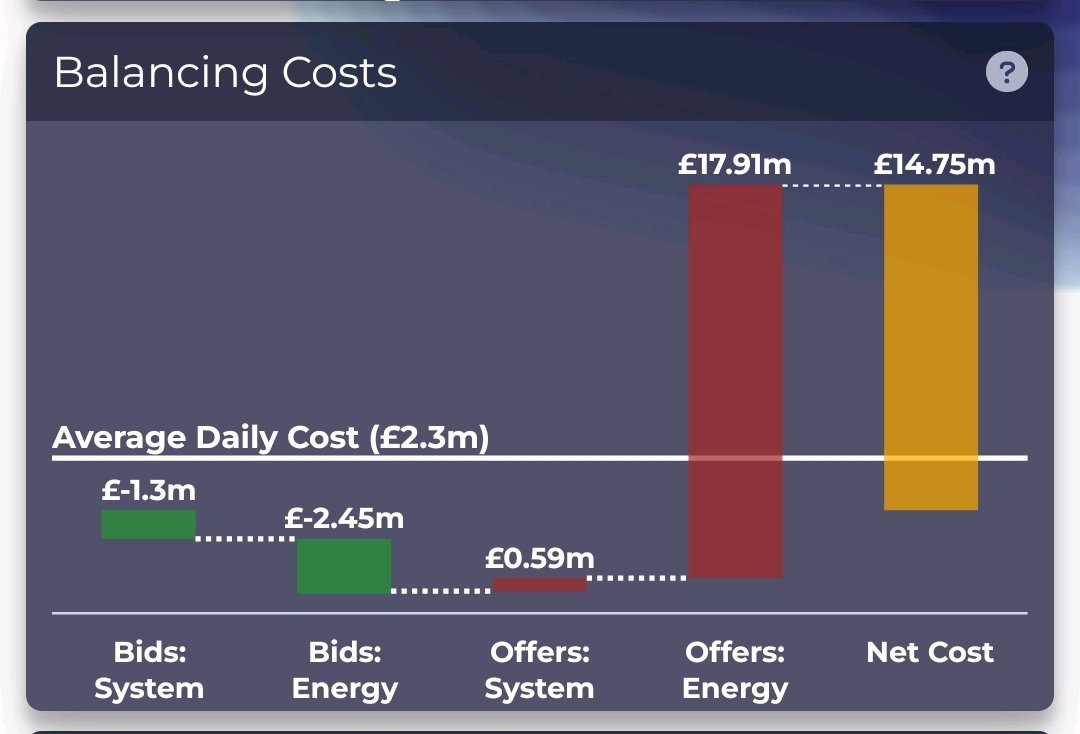
The total balancing cost so far today is £14.75 million vs an average daily cost of £2.3 million. This excludes the SO-SO interconnector trades and the BM costs between now and midnight
The system balanced but @neso_energy paid almost 6.5x more than normal to balance the grid plus the cost of the SO-SO trades AND it obliterated the intraday interconnector trading limit
And it's only the very start of winter. Demand is well down on where it will be in December /January when the daily peak will be c45 GW and cold days could be as high as 55 GW
We also don't know if the EU is going to keep allowing the interconnector trading limits to be breached. Presumably it had an objective in mind in setting the limit (it thinks system operators shouldn't interfere in the markets but should use market mechanisms to balance their grids). These objectives are not met if the limits are breached. The big unknown is whether the EU will keep giving NESO this flexibility or whether it starts to strictly enforce the limits
@Miatsf@mgshanks@AndrewBowie_MP@ClaireCoutinho@harrietc@ColinMoynihanUK@drlukeevans@ashley7fox@TiceRichard@cmackinlay@DavidGHFrost@mattwridley@Iromg@AllisonPearson@MerrynSW@EdConwaySky@afneil@mattotele@jonathan_leake@julietsamuel@energygovuk
https://t.co/usfVPctuR8
It's called Connect & Manage...this policy allows windfarms to be built with massive subsidies despite the fact that most of the electricity they generate cannot be used and it could be years before that changes
Windfarms such as Seagreen which opened in October 2023...
In 2024 2/3 of its electricity was thrown away. In 2025 that went up to 3/4
The cost of that goes straight on our bills. The windfarms don't care they get paid either way. The grid companies don't care, they also get paid either way. The Government doesn't care as it can point to windfarms being built
While consumers get completely shafted
Wake Up People!
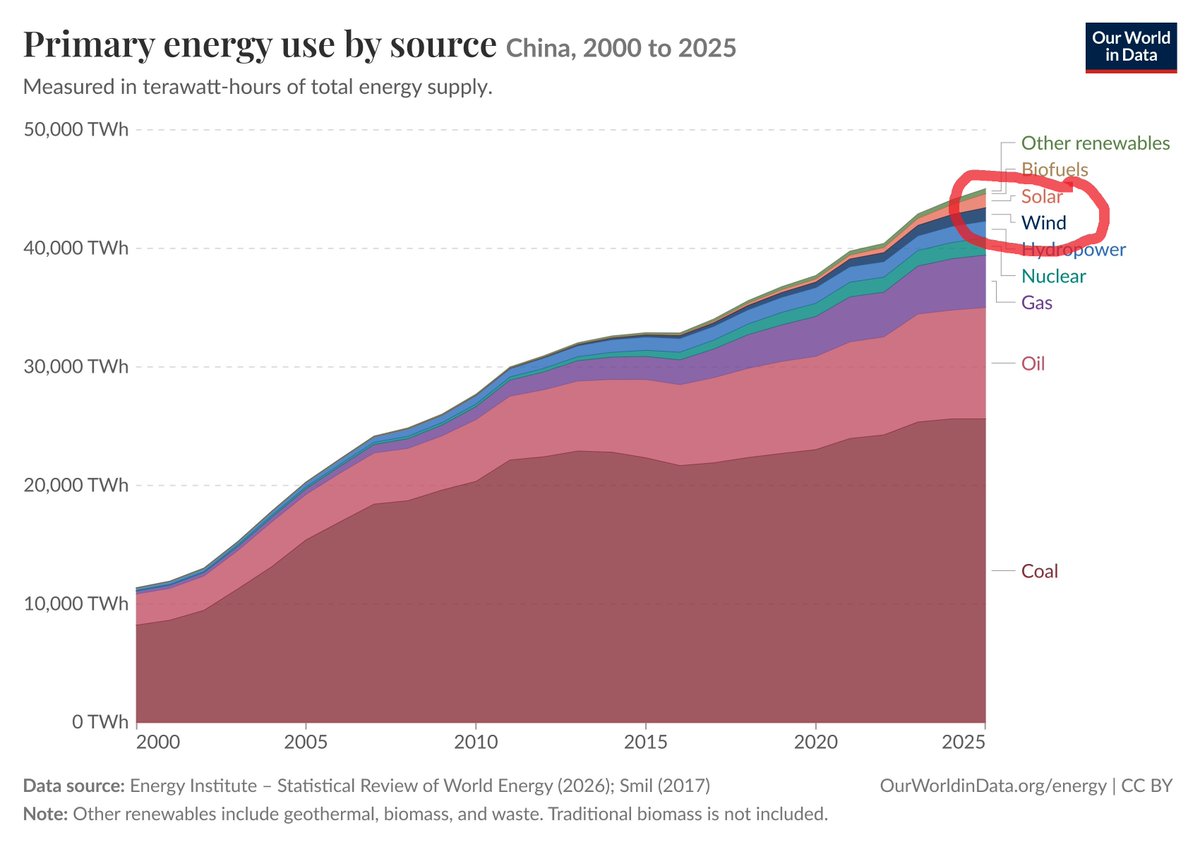
Here's the reality of China's 'Renewables Revolution'
Circled in Red
Its tiny. Just 5% of their energy comes from wind and solar.
Over 50% from coal
Scotland 🏴
Scottish wind farms received approximately £346.8 million in constraint payments during 2025 to shut down wind turbines when generation exceeded local grid transmission capacity. Huge sums of money spaffed away on literally nothing.
Denmark is held up as proof a fossil grid can be replaced.
But electricity prices have more than doubled since 2000, to now sit amongst the highest in the world.
Moreover, the majority of what is labelled renewable is actually biomass; that is, wood.
Trees are cut, often abroad, compressed into pellets, shipped in and then burnt for power.
At the smokestack, more CO2 is released than just simply burning gas. But it is labelled as 'green' because the emissions are not counted at the power plant. They are 1) assigned to the country where the trees were cut, and 2) assumed to be reabsorbed by future regrowth.
So the system works like this: cut trees, burn them, emit CO2, call it clean. Laughably, 64% of Denmark's renewable energy comes from this process.
“In the last 20 years, the world spent $10 trillion on wind, solar, and batteries. It hasn’t made it to 3% of global energy, and it’s just driven up prices.”
- U.S. Energy Secretary Chris Wright
Everyone see what a scam this has always been?
Here's what happened:
The Australian government CHEATED citizens out of their Age Pension entitlements and gave that money - which they falsely call a 'saving' - to foreign-owned renewable energy companies.
Then, they roped off $4.3 trillion of private citizen wages and gave it to Labor Union Super funds to invest in a Green Bubble of projects that NEVER should have been funded.
Not only are Australians going to die having never received their wages.
Not only is the Treasurer cooking up ways to increases taxes on super beyond the original promise.
Not only is the Coalition afraid to get rid of Net Zero in case it impacts these coerced Green super investments.
But when this green bubble bursts - and it will - it will cause a financial crisis the likes of which we have never seen.
Compulsory super isn't about 'saving for your retirement' - it is a huge rort giving power and wealth to the government, unions, and foreign corporations.
More than half a million balsa trees are illegally logged in the Amazon each year, largely driven by the demand for wind turbine blades.
As plantation supply runs short, logging has moved into protected rainforest and indigenous territories.
Roads are cut into intact jungle, habitats are fragmented, and local ecosystems are disrupted.
Balsa is lightweight and essential for turbine construction. Demand has surged due to the West's environmental push, but the supply chain is largely untracked at source.
The result is an ignored cost: so-called "green" energy, cut down and shipped.
Many of the onshore wind farms in the United Kingdom and Denmark have experienced drastic operating declines after only 10 to 15 years.
This is far earlier than the 20 to 25-year operational lifespan claimed by the wind energy industry and backed by the UK Government. A major statistical analysis of historical UK and Danish datasets, led by Professor Gordon Hughes at the University of Edinburgh, revealed substantial performance decay across these early-generation fleets.
Hughes concluded that turbine load factors—the actual electricity generated relative to maximum capacity—declined rapidly due to cumulative wear and tear. By year 10, the average UK onshore wind farm's output efficiency had dropped by roughly 33%.
This degradation was largely driven by tangible engineering failures, including severe leading-edge blade erosion from precipitation, alongside chronic gearbox and bearing stress. As a result, many onshore turbines became acutely uneconomical after roughly 12 years due to soaring maintenance overheads and declining output.
Rather than running for their full theoretical lifespan, these assets faced early economic retirement, leaving operators facing premature decommissioning costs or forced site transitions.
While manufacturers maintain that a 25-year lifespan remains valid on paper, empirical data reveals a steep decline in long-term viability. To maintain output and secure ongoing financial returns, energy companies have increasingly turned to 'repowering'—dismantling prematurely aged hardware to replace them with larger, modern units long before the original turbines reach their nominal 25-year target.
Source: The Performance of Wind Farms in the United Kingdom and Denmark, Professor Gordon Hughes, published by the Renewable Energy Foundation, 2012.
Eine norwegische Studie kam zu dem Ergebnis, dass pro Windrad bis zu 62 Kilogramm Mikroplastik im Jahr durch Erosion der Rotorblätter in die Umwelt freigesetzt werden.
Bei den Tausenden Windrädern allein in Europa summiert sich der Abrieb auf mehrere Tonnen pro Jahr!
Der Abrieb ist kein harmloser Staub, sondern ein toxischer Chemiecocktail!
Dieser Chemiecocktail gelangt ins Meer, in landwirtschaftliche Böden, Weideflächen, Wälder und ins Grundwasser!
Die ach so umweltfreundliche Windkraft vergiftet die Umwelt und so natürlich auch uns!
Windturbines verliezen jaarlijks tot 14 kilo bladmateriaal per stuk. Dat zijn microdeeltjes met PFAS, forever chemicals die nooit afbreken.
Groene energie. Giftige erfenis?