Do you want #Kaspa#marketing at the top universities of the world? #KUDOS is organizing it.
The brightest minds coding with #Kaspa! This can be reality at the end of this month!
If you support this initiative, go to the $KAS Discord and give it a like: https://t.co/qCAshiRCfd
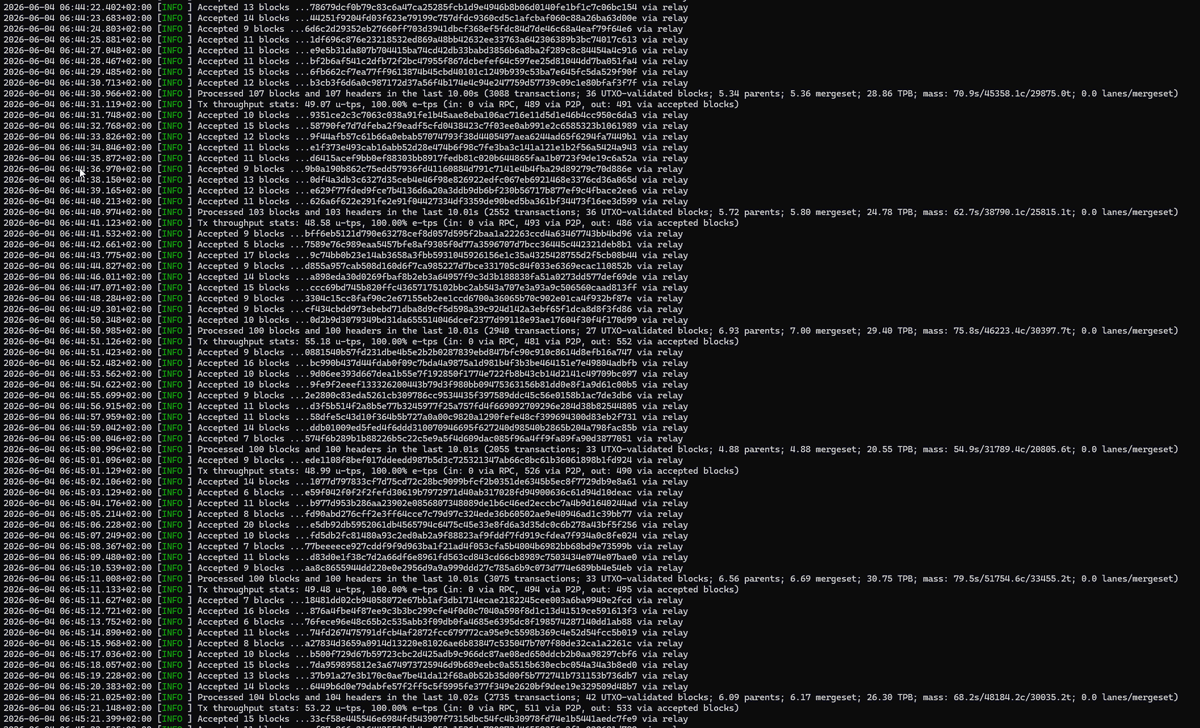
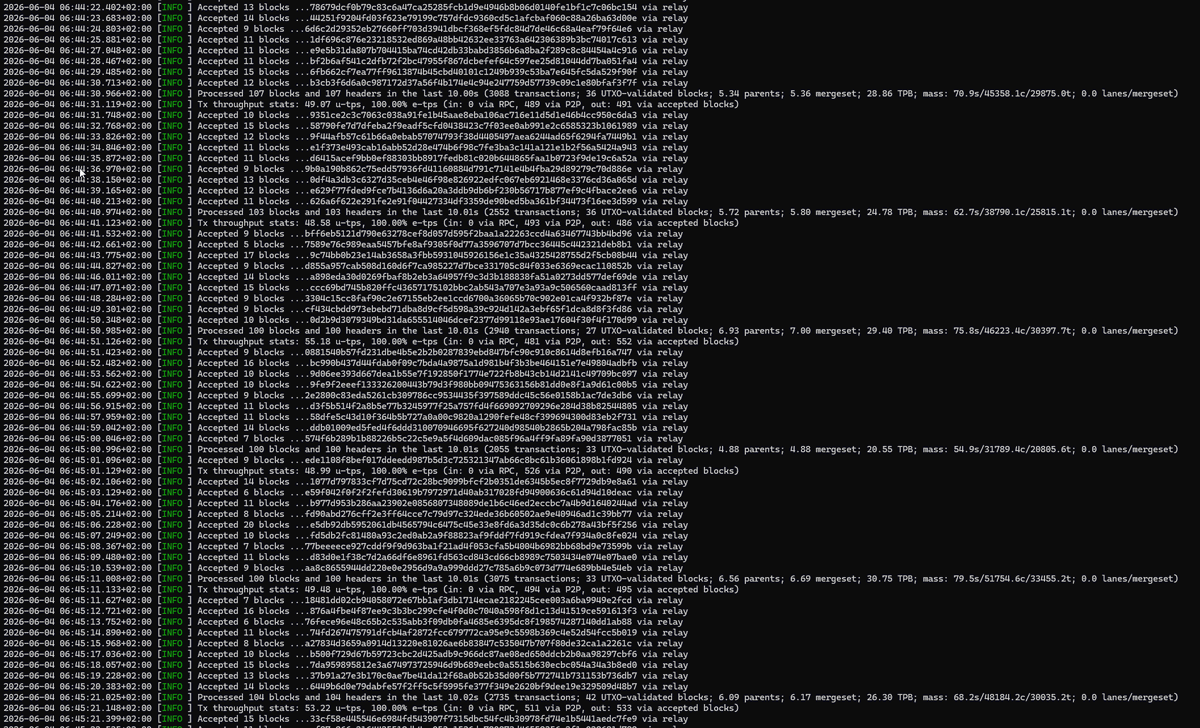
Video on how to set up a pre release #Toccata $KAS node for Mac users. It is so simple to do we should have 10,000 nodes running… @IzioDev
-Download the software for Mac at the link in Michael’s tweet
-Open the folder. Copy the file path for Kaspad
-Paste it in a terminal window, press space, then type “- - utxoindex” (no space between the two dashes).
-Press enter and let it run. Use a mini pc or something without a display that can run 24/7. I am using an M1 Mac Mini.
My weekly Kaspa space starts tomorrow, everyone is welcome, if you’re new come and listen in. If you’re a veteran come and talk!
This $KAS space will be every Wednesday If people enjoy it, I’ll run two per week.
New reminder link due to a bug: https://t.co/GpJHluBksT
The ZK side of Toccata is the part most people are still under-reading. Covenants give Kaspa conditional money, but ZK gives it compressed truth. Instead of forcing every node to replay every piece of application logic, the heavy computation can happen outside the base layer, then Kaspa only verifies the proof. That is the clean separation: execution moves to the edge, verification stays anchored in proof-of-work.
That is the real unlock. ZK on Kaspa is not just “privacy transactions,” though confidential flows become possible. It is the beginning of a model where applications can prove correctness without dragging global state into the blockDAG. A Groth16 proof can lock funds behind knowledge of a secret without revealing the secret. A STARK-style flow can prove general-purpose computation happened correctly without every Kaspa node needing to become an execution machine.
So the thesis is simple: Kaspa does not become programmable by becoming computationally bloated. It becomes programmable by becoming a real-time verifier of externally produced truth. ZK lets Kaspa remain lean while still settling complex logic, bridges, assets, private claims, covenant-controlled flows, and eventually vProg-style sovereign computation. That is the deeper architecture: not world-computer maximalism, but proof-compressed coordination, where the base layer does not execute the world, it verifies that the world executed correctly.
Relentlessly working on @kaspa_stream, lots of backend work going on (including on https://t.co/nBagl7nzlW). Most invisible though, BUT as part of reworking the node discovery / display, one small new feature emerged: Your node is highlighted when found. https://t.co/jRZx9TaeTE
We still need Fireblocks to integrate Kaspa it’s a more important catalyst.
Fireblocks is the dominant enterprise-grade custody and wallet infrastructure platform used by hundreds of institutions, banks, hedge funds, and a huge chunk of centralised exchanges.
It handles secure key management (via their MPC-CMP tech), policy engines, and operational workflows for thousands of assets across 150+ blockchains. Without native Kaspa support:
• Many exchanges literally can’t add KAS easily or safely at scale because they rely on Fireblocks for hot/cold wallets, transfers, and regulatory compliance.
• Institutions (think hedge funds, ETFs, or corporate treasuries) won’t touch it yet in size if their existing Fireblocks setup doesn’t support it out of the box custom integrations are expensive, slow, and introduce extra risk.
This is a roadblock. Several exchanges have said they want to list Kaspa but are waiting on Fireblocks. It was apparently on their roadmap/to-do list last year, but it hasn’t shipped yet.
This is exactly the kind of “unsexy but critical” infrastructure play that separates projects stuck in retail circles from ones that unlock real institutional capital.
Copper’s ClearLoop is a partial workaround for some OTC/trading flows, but it’s not a full replacement for broad custody + exchange support.
But with Kaspa maturing with Toccata the case for integration is greatly enhanced.