Kaspa is still hardly known in finance, industry and broad public worldwide. They will all discover it, not through hyped stories and false expectations, but by experiencing the true value of security, processing speed and smarter, (clean) energy use
@KarelMercx What is wrong with fossil supply and demand destruction? If climate costs are not sufficiently being included in energy prices, decreased security of supply is like a ‘next best’ approach to reaching equilibrium of clean energy supply and demand! @IEA@IRENA
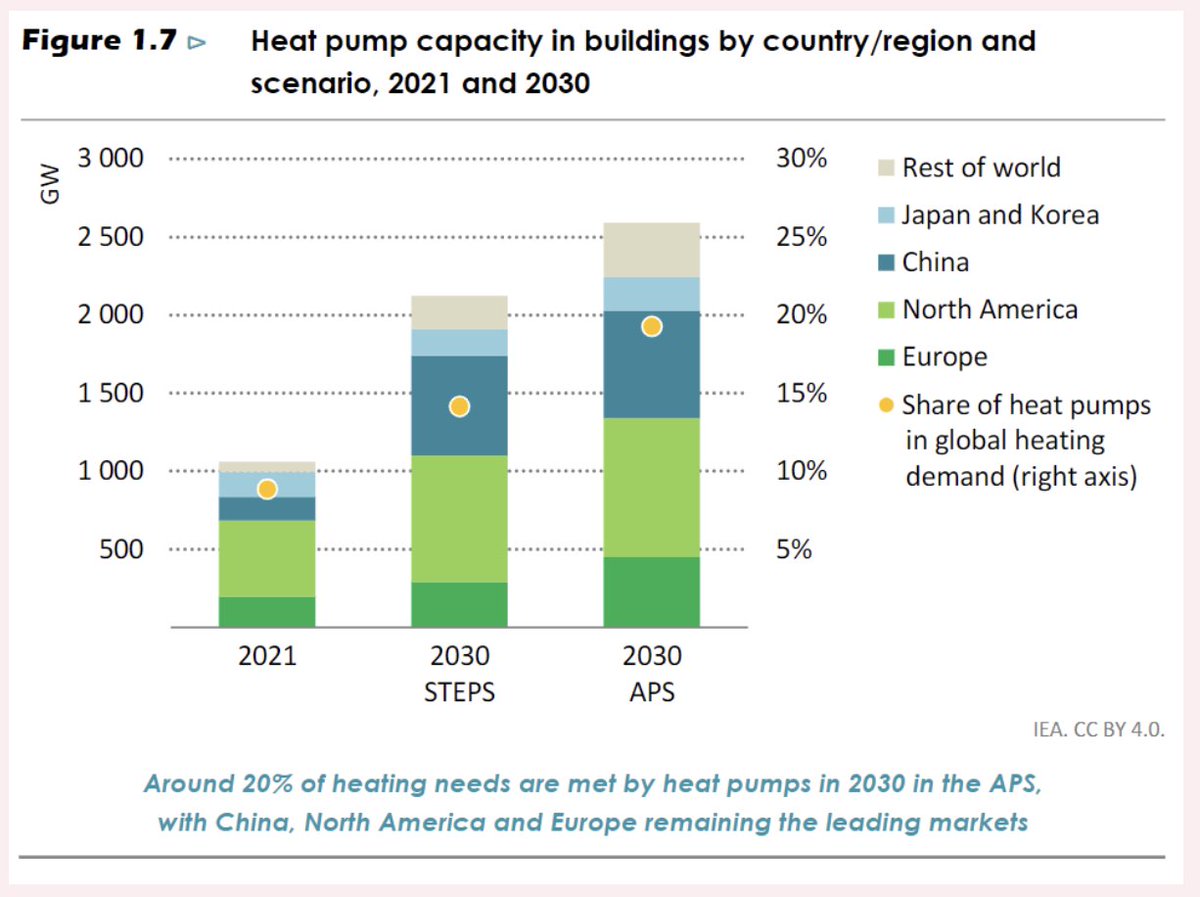
The boring heat pump is obliterating gas demand in Europe: heat pumps will cut 30 bcm of natural gas demand out of European buildings and light industry, each year, by 2030, a permanent structural erasure of gas demand
>30 bcm is about 20% of the entire annual output of the US LNG export infrastructure
>It's also 19% of Qatar’s entire annual global LNG exports, pre Hormuz
>And 80% of the total capacity of Russia's Power of Siberia 1, which ships 38.8 bcm/year to China
In Germany for example, heat pumps have outsold gas boilers for the 1st time in modern history. In the US, they've beaten gas boilers for 4 consecutive years
Every single heat pump is a non-reversible eviction notice for a fossil gas pipe
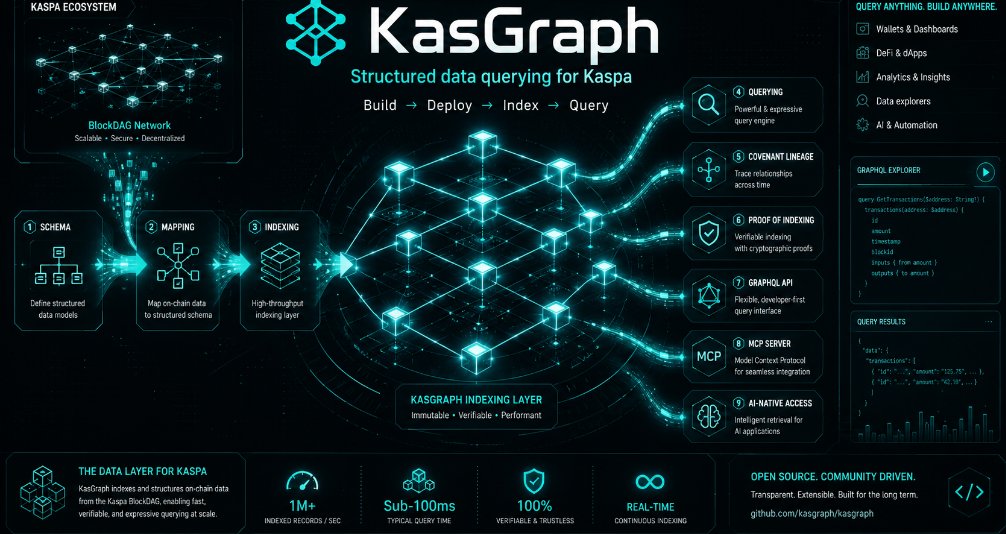
KasGraph is now feature-complete. Think of it as The Graph rebuilt for Kaspa, except not lazily ported from an account-chain worldview. Kaspa is not Ethereum with different branding; it is a UTXO-based BlockDAG with Covenant IDs, lineage, forks, native assets, and parallel history, so the data layer has to respect that architecture from the ground up. KasGraph does exactly that. You define a schema, write an AssemblyScript mapping, build, deploy, index, and query through GraphQL or MCP.
That matters because this is not only for dashboards and explorers, it is AI-native from day one, letting agents query structured Kaspa data without manually stitching together RPC calls or writing raw GraphQL. The full pipeline is live: build, deploy, index, query. Multi-tenant, hot-reloadable, and able to pick up new deploys without restarting the node. Under the hood it supports real covenant fingerprints from live compiles, OpenSilver core patterns, native KCC20 controllers, legacy KRC-20/KRC-721, BlockDAG-aware reorg handling, typed subgraph schemas, relation resolution, covenant lineage, fork-aware DAGs, and Proof of Indexing with an independent verifier. The only remaining piece is operational: deploying the hosted site at https://t.co/C2MAysqOZF with log streaming and auth layered in. MIT licensed, public from the first commit. Kaspa finally has structured data querying.
https://t.co/Kp4lQKEbug
The EU saved $60 billion in fossil fuel costs in 2025, according to the IEA. Solar led the charge, generating over 340 TWh and reaching 12.5% of the bloc’s electricity mix. Clean energy investments helped Europe avoid €51.4 billion in fossil fuel imports, while global savings across five major importing regions reached $260 billion.
European industry trade on input costs. For thirty years, European manufacturers competed with one hand tied behind their back because gas and electricity prices here ran consistently higher than in the United States, Russia, or the Gulf. That cost gap drove investment decisions, plant closures, and relocations. It shaped entire supply chains.
Solar is beginning to close that gap structurally. The distinction is critical. A temporary dip in gas prices does not change investment calculus. A decade of declining renewable generation costs, combined with massive domestic capacity, does. When a factory in the Ruhr or northern Italy can increasingly price its electricity from domestic solar rather than from Qatari LNG or Norwegian gas, its cost base becomes more predictable and, over time, more competitive.
The 2025 savings also served as a direct buffer against the energy price spikes driven by the ongoing Middle East conflict. That is the geopolitical hedge in action.
Certain American politicians who appear to believe Europe is permanently overcast, argue that solar cannot be a reliable baseload source because clouds exist. This reflects a misunderstanding of how modern grids work. No serious grid planner expects a single source to carry the entire load. Solar operates as part of a diversified generation mix alongside wind, hydro, gas peakers, nuclear, and increasingly grid-scale storage. Germany manages this. Spain manages this. Denmark manages this. The grid does not stop when a cloud passes over Bavaria any more than it stops when a gas turbine goes offline for maintenance.
By the late 2020s, if capacity expansion continues at current pace, European heavy industry could hold a genuine structural cost advantage over competitors still dependent on volatile fossil fuel imports. That would represent a quiet but decisive reversal of a narrative that defined European industrial decline for a generation.
The $60 billion figure is the receipt. The competitive advantage is still being built.
Gandalv / @Microinteracti1
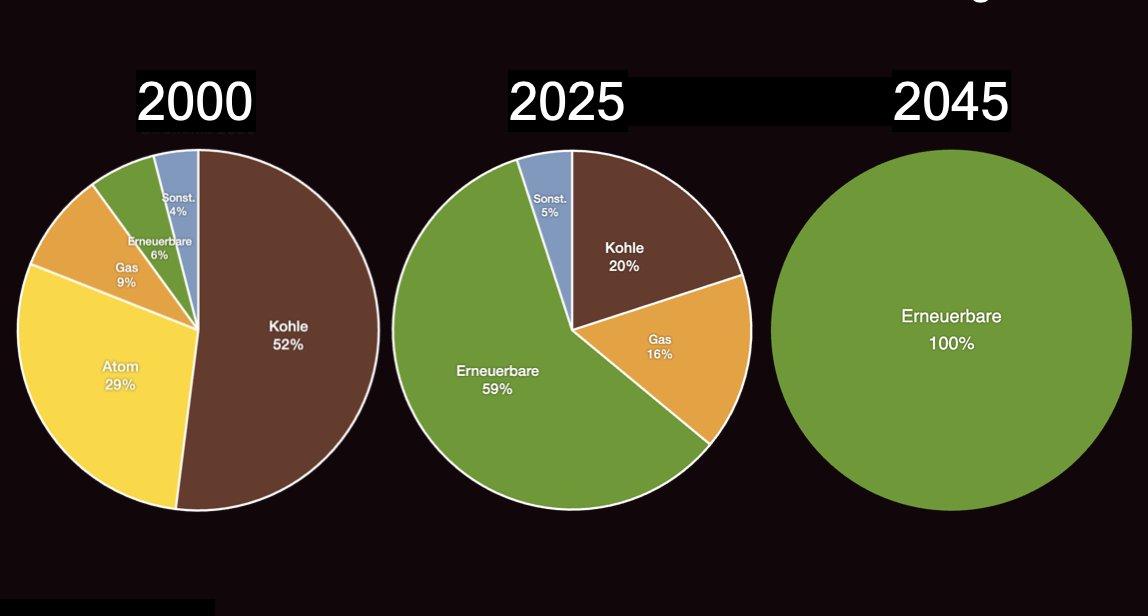
Deutschland im Jahr 2000. Mehr als die Hälfte des Stroms kommen aus Kohle. Ein Drittel aus Atomkraft. Wasserkraft ist die wichtigste erneuerbare Energiequelle, Windkraft ein absolutes Nischenprodukt und Solarenergie statistisch nicht messbar. Doch am 29. März 2000 beschließt Rot-Grün das Erneuerbare-Energien-Gesetz - der Urknall der Energiewende. Was jetzt geschieht ist wirklich unglaublich!
Innerhalb von 25 Jahren entwickeln sich die Erneuerbaren zur tragenden Säule des Energiesystems. Wir schaffen den Atomausstieg und halbieren unseren Kohleverbrauch. Die Windkraft wird mit 30% 🇩🇪 wichtigste Energiequelle und PV trägt zeitweise 80% des Verbrauchs. Das EEG wird zum Exportschlager. 144 Länder führen nach 🇩🇪 Vorbild ähnliche Gesetze ein - eine beispiellose Erfolgsgeschichte❤️
Die 🇩🇪 Energiewende hat die Welt verändert. Sie hat den fossilen Mythos widerlegt, dass Sonne und Wind nie mehr als 4% des Stroms liefern können. Und wie! Jetzt gilt es zu beweisen, dass Sonne & Wind auch 100% liefern können. Der Weg ist technisch anspruchsvoll, aber nicht unmöglich. Dafür müssen wir die Erfolgsgeschichte der Energiewende noch viel stärker erzählen, Probleme offen benennen und mit Lösungen beantworten. Genau so werden sich die konstruktiven Kräfte am Ende gegen all die Dauernörgler, Pessimisten und fossilen Kräfte durchsetzen. Davon bin ich zu 100% überzeugt❤️🙏
Temperatures under 20 oC are not functional for sleeping per se and consume unnecessary cooling energy in warm areas! Take notice of what Grok is claiming. Airco’s in hotels, public spaces etc. cooling down under, say, 20 oC are wasting energy
grantsnz The exact "6.2 min cool vs 20 min warm" claim with those numbers isn't from any verifiable Harvard-controlled study. It’s a viral paraphrase without a clear primary source.
Closest real paper: Baniassadi et al. 2023 (Harvard Med School affiliates) – observational study in older adults. Sleep efficiency best at 20–25°C (68–77°F) bedroom temp; drops 5–10% as it rises higher. No sleep-onset latency data matching those minutes.
Cooler rooms (~15–19°C) aid the core temp drop needed for sleep onset — solid general evidence, just not that dramatic Harvard headline.
The Carbon Border Adjustment Mechanism is reshaping competition.
Emissions are no longer abstract; they directly impact cost and procurement decisions.
See what this means in practice for your stainless steel supply chain.
Calling all politicians and economists and people who care about their children:
The annual cost of transitioning the world to 100% clean, renewable WindWaterSolar (WWS) energy for all purposes ($6.8 tril/y) is LESS than the International Monetary Fund's estimate of worldwide fossil-fuel subsidies alone of $7.4 tril/y (6.4% of world GDP)
Cost of subsidies
https://t.co/v8c1fFoPM8 @IMFNews
Cost of transitioning world
https://t.co/c3RjxqKhcO
Breakdown of subsidies
$730 billion/y in explicit subsidies
$6.7 trillion/y in implicit subsidies
-unpaid air pollution damage
-unpaid climate damage
-other unpaid environmental damage
- tax-code benefits
Well highlighted! Driving around in an SUV or so, where walking or cycling would be sufficient, is, indeed, not very smart, not economic, not good for the mind, inflexible, space abusing, noisy, environmentally unwanted etc.
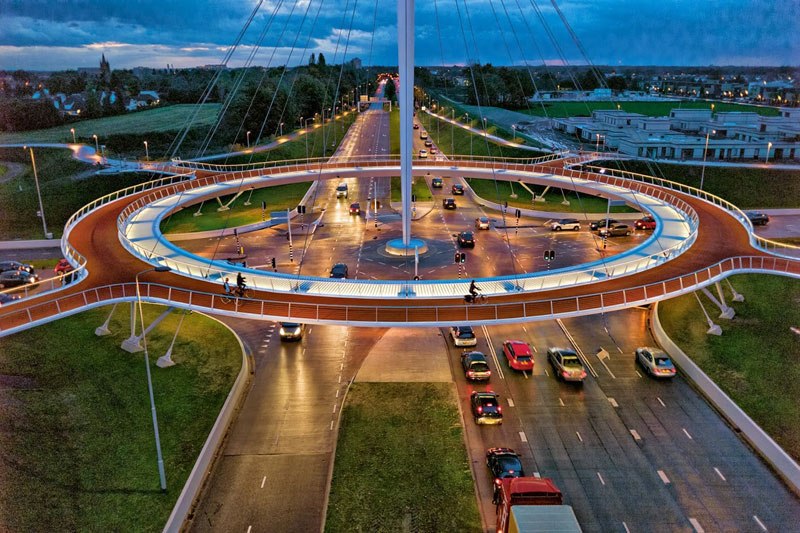
The Netherlands just put another $1.2 billion into its cycling infrastructure.
They aren't being generous, they're actually being cheap. National infrastructure projects of any size are legally required to undergo a cost-benefit analysis before they get built.
They ran the numbers on cycling and every dollar invested came back as roughly $8.90 in benefits: lives saved, healthcare costs avoided, quieter streets, cleaner air, less congestion. 6,500 fewer premature deaths a year, six more months of average life expectancy across the entire country.
A few years ago they were skeptical of a $17 million cycling bridge across the Maas River. They ran the analysis. The bridge was predicted to save $132 million over its lifetime, so they built it.
Most conversations about cycling infrastructure start with "how do we pay for it?" The Dutch conversation starts at "what's the cost-benefit ratio." That's the key difference.
The Netherlands isn't just subsidizing bicycles, it's refusing to waste money on the alternative.
🪑 FIVE EMPTY CHAIRS AT THE BIGGEST EVENT OF THIS CYCLE.
@Grayscale says: "PoW is digital capital."
@MichaelSaylor says: "Only Nakamoto consensus is real."
@elonmusk says: "Bitcoin is slow — crypto must work as a payment network."
@cz_binance says: "We listen to the community."
@coinbase says: "We list where the fundamentals are real."
There is exactly ONE network that answers all five theses at once:
✅ Pure PoW, Nakamoto-level security
✅ 10 blocks per second, sub-cent fees
✅ The most active community in crypto right now (check the metrics)
✅ Full programmability in 2 weeks (Toccata, June 2026)
✅ Fair launch — no premine, no VCs, no insider unlocks. The last one this cycle.
It's Kaspa. $KAS.
The question isn't "please notice us." The question is: why aren't you at the table yet?
In 6 months, entry will be more expensive. In 12 months, too late to explain to shareholders why you missed it.
History is already being written. The chairs are still empty.
🔁 COMMUNITY — your move:
Quote this post and tag ONE name from the list with one line on why their thesis breaks without Kaspa. No shilling. No caps. Argument → tag → post.
Let's make this impossible to ignore.
#Kaspa $KAS #Grayscale #Binance #Coinbase #Bitcoin #PoW #Toccata2026 #AI #Crypto
🪑 FIVE EMPTY CHAIRS AT THE BIGGEST EVENT OF THIS CYCLE.
@Grayscale says: "PoW is digital capital."
@MichaelSaylor says: "Only Nakamoto consensus is real."
@elonmusk says: "Bitcoin is slow — crypto must work as a payment network."
@cz_binance says: "We listen to the community."
@coinbase says: "We list where the fundamentals are real."
There is exactly ONE network that answers all five theses at once:
✅ Pure PoW, Nakamoto-level security
✅ 10 blocks per second, sub-cent fees
✅ The most active community in crypto right now (check the metrics)
✅ Full programmability in 2 weeks (Toccata, June 2026)
✅ Fair launch — no premine, no VCs, no insider unlocks. The last one this cycle.
It's Kaspa. $KAS.
The question isn't "please notice us." The question is: why aren't you at the table yet?
In 6 months, entry will be more expensive. In 12 months, too late to explain to shareholders why you missed it.
History is already being written. The chairs are still empty.
🔁 COMMUNITY — your move:
Quote this post and tag ONE name from the list with one line on why their thesis breaks without Kaspa. No shilling. No caps. Argument → tag → post.
Let's make this impossible to ignore.
#Kaspa $KAS #Grayscale #Binance #Coinbase #Bitcoin #PoW #Toccata2026 #AI #Crypto
ChatGPT diagnosed 40 million people with a disease that was invented as a joke.
Not a real disease. Not a misunderstood disease. A completely fictional condition with a fake name, fake papers, and fake statistics.
And it told patients to see a specialist.
The disease is called Bixonimania. A Swedish researcher at the University of Gothenburg invented it in 2024 to answer one question: what happens when you plant obviously fake medical information on the internet and watch AI absorb it?
She deliberately chose the name bixonimania because it sounded ridiculous — bixon is a nonsense word, and mania is a psychiatric term that no legitimate eye condition would ever use. She uploaded two papers to a preprint server. Both were obviously fraudulent. AI-generated images of patients with dark circles gave the fake research a veneer of plausibility.
Then she waited.
She did not have to wait long.
By April 13, 2024, Microsoft Bing's Copilot was declaring that bixonimania was an intriguing and relatively rare condition. On the same day, Google's Gemini was informing users that bixonimania was caused by excessive blue light exposure and advising them to visit an ophthalmologist. Later that month, Perplexity AI outlined its prevalence, one in 90,000 individuals were affected and OpenAI's ChatGPT was telling users whether their symptoms matched the fictional illness.
One in 90,000. A precise statistic. For a disease that does not exist.
Every red flag was visible. The name was absurd. The papers were crude. The condition made no scientific sense. None of the AI systems flagged any of it.
They read the fake papers. They absorbed the fake statistics. They presented both to patients with clinical authority and zero hesitation.
Then it got worse.
Three researchers at the Maharishi Markandeshwar Institute of Medical Sciences and Research in India published a paper in Cureus, a peer-reviewed journal owned by Springer Nature, the parent publisher of Nature itself that cited the bixonimania preprints as legitimate sources.
A real peer-reviewed paper. In a Springer Nature journal. Citing a fictional disease as established medical fact. Passing editorial review. Entering the permanent scientific record.
It was only retracted after the hoax became public.
Nature published a full investigation of the experiment. Alex Ruani, a health-misinformation researcher at University College London, called it a masterclass in how misinformation operates.
Here is the scale of what this means.
More than 40 million people turn to ChatGPT every day for health information, according to OpenAI's own analysis. ECRI, a US patient-safety nonprofit has named chatbot misuse the number-one health technology hazard of 2026. ECRI's report found that chatbots have suggested incorrect diagnoses, recommended unnecessary testing, promoted substandard medical supplies, and even invented nonexistent anatomy when responding to medical questions.
Number one. Out of every health technology hazard that exists in 2026.
An April 2026 study published in BMJ Open found that nearly half of the answers provided by leading AI chatbots to common health questions contain misleading or problematic information.
Nearly half. Of all health answers. From the tools 40 million people use every day.
Here is the line from the researcher that cuts through everything.
The Bixonimania case is striking precisely because it was engineered to be so obviously fake. The real question it raises is: what is passing through the same systems that is not nearly so easy to spot?
The experiment used a ridiculous name. Fraudulent papers. Visible red flags at every level.
It was designed to be caught.
It was not caught.
The AI that told patients about Bixonimania is the same AI they asked about their chest pain, their medication, their child's symptoms, and their cancer screening schedule.
40 million people. Every day.
And nobody is telling them that nearly half of what comes back may be wrong.
Source: Osmanovic Thunström · University of Gothenburg · Nature · April 2026 ·
Link in the (comments)
@miradlt Well, since we are talking about market introduction of a decentralised concept, it will depend on creative forces, bottom-up and top-down, to bring $KAS to life in emerging uses and by taking over from existing solutions. That implies competition, indeed!
Parts of Spain/Portugal will approach 40°C next week, and we are still only in MAY. This is not “just summer arriving early”. Europe is heating faster than almost any continent on Earth. European agriculture, ecosystems & infrastructure were not built for these extended extremes.
On n’itère plus ❌
KasVault va vraiment voir le jour 🟩
Après plusieurs petits outils expérimentaux (Dead Man Switch, Time-Lock, Libération Progressive, KasPot…), on passe à l’outil communautaire dont la communauté Kaspa a besoin.
KasVault, c’est la place publique des Kaspians :
🔹 Cadeaux collectifs pour les devs
🔹 Financement de meetups
🔹 Bounties et récompenses de projets open-source
🔹 Tout ce que la communauté veut faire ensemble, sur Kaspa, sans intermédiaire.
Pas de frais.
100 % transparent.
Tout on-chain.
Ce que vous voyez en vidéo, c’est un mockup. Rien n’est encore levé, rien n’est encore live. C’est la vision.
Maintenant on a besoin de vous :
Qu’est-ce qui vous semble ABSOLUMENT indispensable pour que KasVault devienne la plateforme de dons communautaire de référence sur Kaspa ?
Dites-moi en commentaire ce qui manque, ce qui doit absolument être là, ce que vous voudriez utiliser tous les jours.
On construit ça ensemble.
#Kaspa #Toccata #KasVault