@DT2ComicsChat I am familiar with the monster speak, and some of the generic super powers he had, but haven't seen or read anything past Smallville that he's protrayed in, really.
So, I guess that would explain it.
Welp, something new every day, right? Thanks, chief.
From what I've gathered, this is a story completely divorced from the games in all but name.
Take it another step further, and change the name?
Like, boom. You'd have your own IP to play with, do whatever you want.
If you don't want the RE fans (clearly), then why bother?
Zach Cregger says he was “naive” to think Resident Evil fans would be thrilled that someone was doing a survival horror movie with the franchise.
“I did not really appreciate the sentiment that we've been waiting forever for Leon's story. I [now] appreciate that and I'm sorry that's not the story I'm bringing here.”
(Source: @IGN)
@Latterdaytruth I went from not at all, to partially.
Oddly, I have one fully written talk that went over really well.
I wrote what was inspired, but then claimed it was given to me while I was black out tired suffering from sleep deprivation. The results were a mix of humor and inspiration.
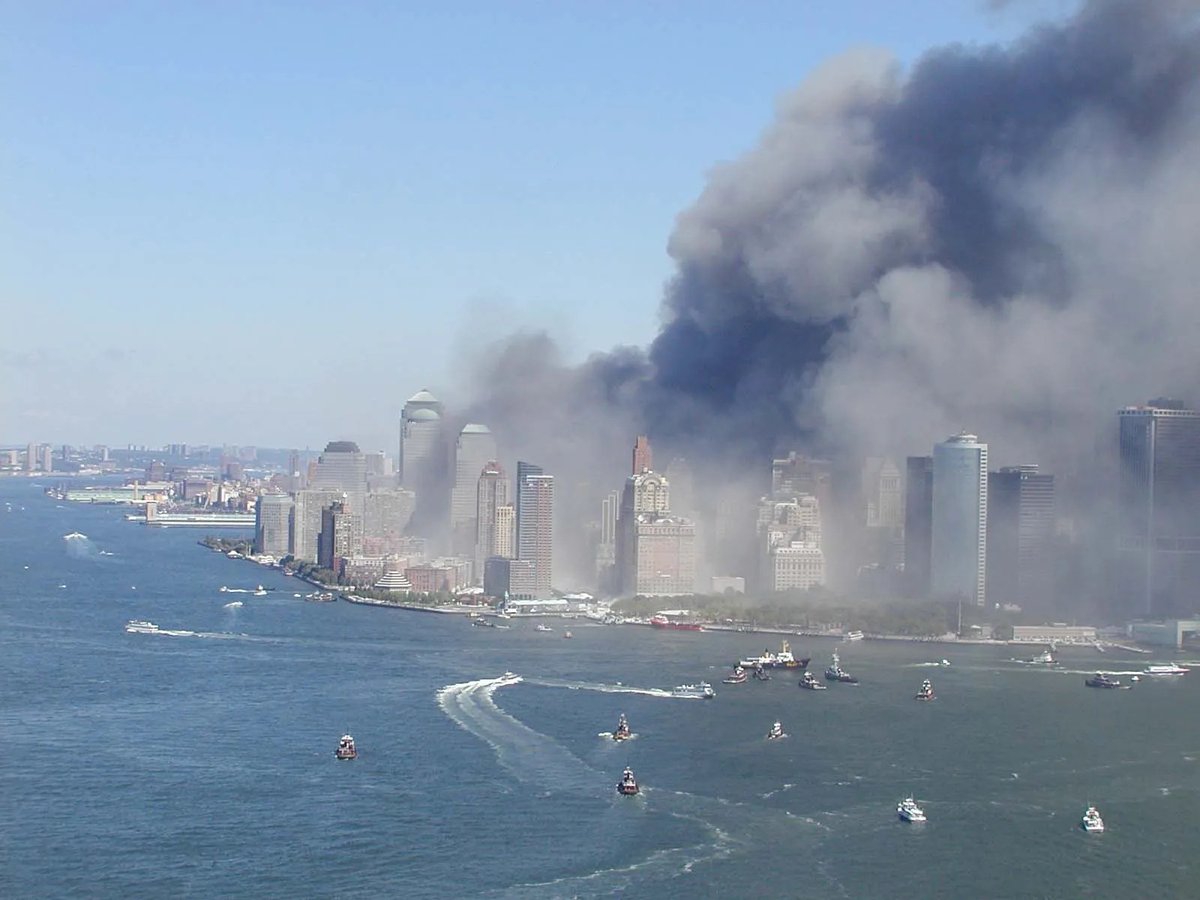
🇺🇸 The Boatlift That Was Bigger Than Dunkirk
At 10:45 a.m. on September 11, 2001, a Coast Guard lieutenant named Mike Day keyed a radio in New York Harbor and said the only sentence that mattered.
“All available boats. This is the United States Coast Guard. Anyone wanting to help with the evacuation of Lower Manhattan, report to Governors Island.”
The boats were already coming.
The bridges were closed. The tunnels were closed. The subways were dead. South of the towers, hundreds of thousands of people had nowhere left to walk. Some jumped into the Hudson. Some stood on seawalls that were never meant to be docks and waited for anything that floated.
Dunkirk took nine days to pull 338,226 Allied soldiers off a beach in 1940.
On 9/11, roughly 800 mariners on about 150 vessels moved as many as 500,000 civilians off Manhattan in about nine hours. Ferries. Tugs. Dinner boats. Pilot boats. Yachts. A retired fireboat. Rubber dinghies that held two people. The largest water evacuation in history.
NY Waterway did not wait for the official call. After the second plane hit, the whole fleet moved. Captain Rick Thornton nosed his ferry against a seawall that was not a slip and started taking people off. Some of them he pulled out of the river. His company alone carried about 158,000 people to Jersey City, Hoboken, Weehawken, Brooklyn, and Queens.
On a normal Tuesday they carried 34,000.
The Staten Island Ferry moved more than 50,000 people and came back the other way with water, bandages, and men who still had work to do in the dust.
The old fireboat John J. Harvey, already retired, tied up near the Museum of Jewish Heritage, took civilians off the seawall, then pumped water when the hydrants downtown died.
Lt. Day later admitted what the day required. “I broke more rules that day than probably I’ve enforced in my whole Coast Guard career.”
In raw numbers it was bigger than Dunkirk. No boat went down. By nightfall the southern tip of Manhattan had been emptied by people who were not on anyone’s list of heroes when the morning started.
They were tug captains. Ferry deckhands. Pilots. A lieutenant with a microphone. Ordinary boats answering one sentence.
All available boats.


![DiscussingFilm's tweet photo. Zach Cregger says he was “naive” to think Resident Evil fans would be thrilled that someone was doing a survival horror movie with the franchise.
“I did not really appreciate the sentiment that we've been waiting forever for Leon's story. I [now] appreciate that and I'm sorry that's not the story I'm bringing here.”
(Source: @IGN)](https://pbs.twimg.com/media/HRvqG5MWQAARrpo.jpg)





![DiscussingFilm's tweet photo. Zach Cregger says he was “naive” to think Resident Evil fans would be thrilled that someone was doing a survival horror movie with the franchise.
“I did not really appreciate the sentiment that we've been waiting forever for Leon's story. I [now] appreciate that and I'm sorry that's not the story I'm bringing here.”
(Source: @IGN)](https://pbs.twimg.com/media/HRvqG5NW4AABFQE.jpg)