The brilliant financial writer and expert in economic collapse, Liaquat Ahamed, has a powerful warning about our AI spending deluge:
https://t.co/A6sanRilHo
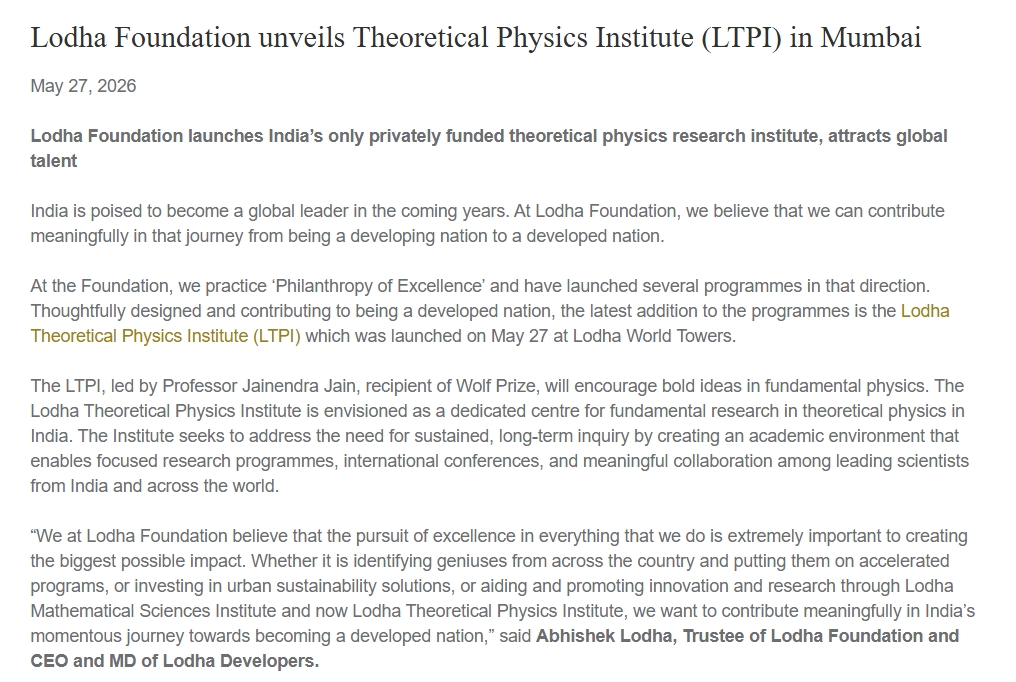
Lodha Foundation has launched the Lodha Theoretical Physics Institute (LTPI) in Mumbai, establishing India's first fully privately funded Theoretical Physics Research Institute.
Directed by Wolf Prize recipient Prof. Jainendra K. Jain, the institute is designed to drive long-term fundamental research and international scientific collaboration.
Moving immediately into operations, LTPI is hosting the 3-day 10th international meeting on Emergent Phenomena in Quantum Hall Systems (EPQHS-10). This inaugural workshop gathers global experts to chart future directions in physics and features a public lecture by Nobel laureate Klaus Von Klitzing. @Jain_Physics
@rishpardikar If you watch “Reply 1988”, you will be in tears by the end of the series. I am not sure if it is still there on Netflix. Do check it out. This is the english translation of the beautiful song “Youth” from the same series: https://t.co/g0ohERQxCQ청춘-reply-1988-ost/
One of the best pieces you will read on VD Satheesan, and it has nothing to do with his politics. It is more of a testament of why Kerala looks, feels, and acts differently from the rest of the country.
Beautiful piece, @mknid
V D Satheesan was never the obvious choice for Kerala’s next chief minister, except to the voters.
There is a photograph in my head from the Kerala Literature Festival in 2024, of Satheesan standing in the corner of a tent at Kozhikode beach, asking me about a Bulgarian novelist. Read more: https://t.co/wK4oZpf4Dg
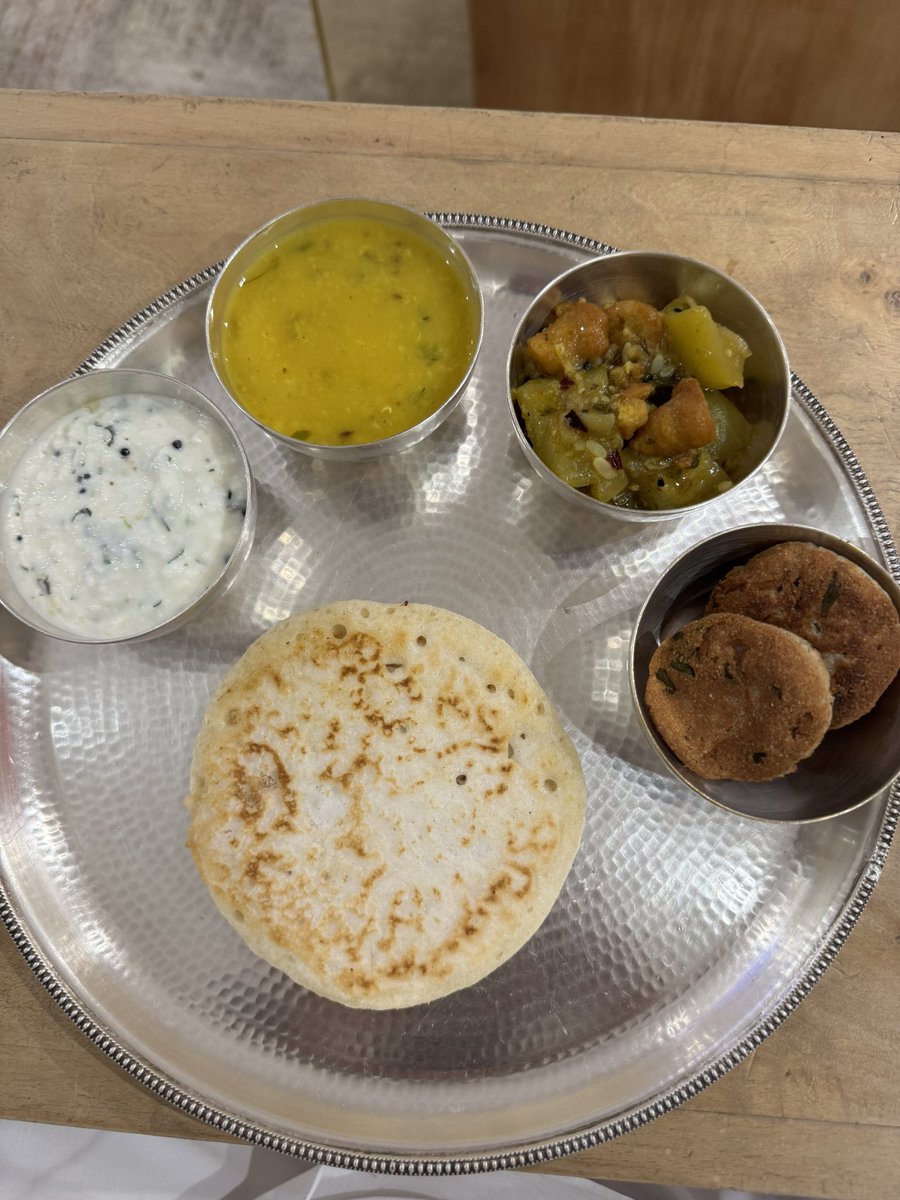
Indian cuisine conversations often revolve around Punjabi, South Indian or Bengali food. Odiya cuisine deserves a much bigger place on that table.
What struck me most was its restraint. No overload of cream, butter or chillies. Just balance, mustard, fermentation, texture and freshness.
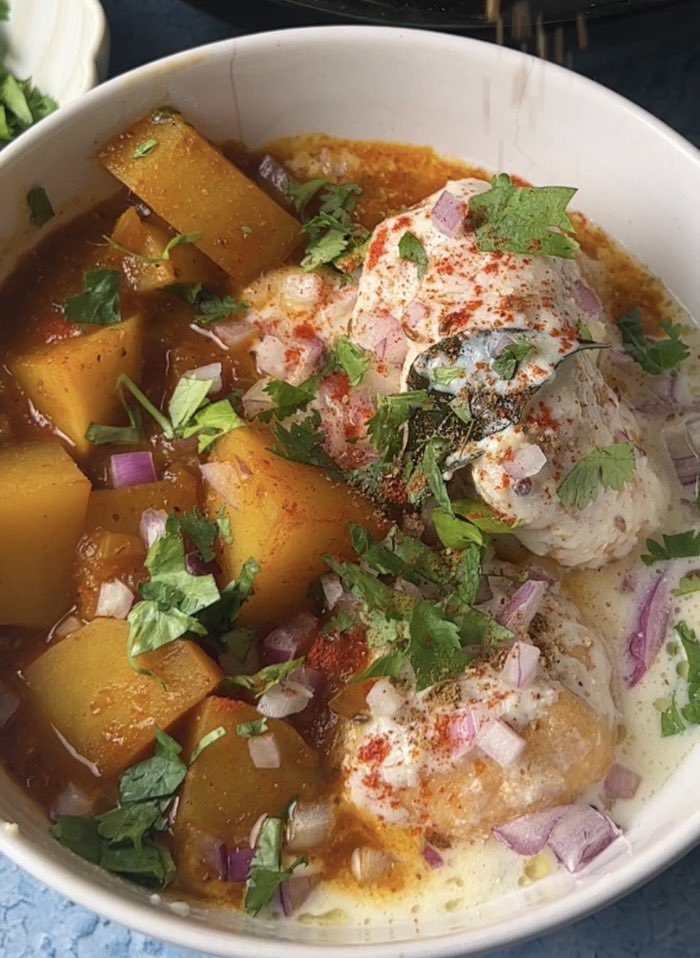
Dahi Bara Aloo Dum (popular street food), Drumstick-Brinjal Besara, Chhena Tarkari, Chakuli Pitha (like dosa) Aloo Patra Besara… all made at home.
A lot of respondents have confused SPJIMR with SP Jain Global. Both are different entities and have nothing in common other than the name. SPJIMR has two campuses - Mumbai and New Delhi. The flagship MBA programme is offered only from the Mumbai campus. SPJIMR is managed by Bharatiya Vidya Bhavan & since the Jain family made the initial donation to set up SPJIMR, they wanted it to be named after their family member, and that's how SPJIMR got its name. But Bharatiya Vidya Bhavan (parent body of SPJIMR) or the SPJIMR board of governors/trustees doesn’t have anyone from the Jain family. SP Jain Global (with campuses in random places, including one in Mumbai) belongs to the grandson of the late SP Jain and SPJIMR can't stop him from using his grandfather's name.
Patu Keswani has exemplary credentials. But, he was lucky in the sense that he could leverage one of the best brains of the industry for advice. He is the brother-in-law of Late Ravi Dubey, ace hotelier and youngest ever general manager of Taj Hotels and husband of noted actress Lillete Dubey. Hospitality is a tricky industry and I am sure some form of vicarious learning and knowledge spillover has certainly happened.
@avataram What is the stuff with IIMB ex-Profs? One is trolling Sudha Murty, the other one is ranting here with meaningless ad hominem. Saw a few more serenading rich guys, but with poor IQ and even poorer EQ. A couple of good folks I knew passed away untimely, sadly.
This is a case of deja vu, all over again. Falcofix (MH-based adhesive co, sold wood-working adhesives via pouches, 1st in industry to do so) and Bluecoat (Gujarat-based co., price-warrior) both had a similar storyline and meteoric rise, until Pidilite acquired them both. Even for Araldite (which was acquired from Huntsman), they bought the rights to use the brand across the world except Europe, America, etc. Araldite is well known throughout the world, but could never dislodge Pidilite in India. Even the mighty Asian Paints tried to disrupt the adhesives segment; they have not been as successful as they would have liked to. So, wait and watch.
@avataram@DivaJain2 1832 is not great, as per you :)
I think the way this guy turned out to be, cannot be blamed on IITD alone. IIMA should take some blame also.
If practitioners and industry access could build top B-Schools, an IIM located in Kozhikode would have failed miserably, and IMI (promoted by the Goenkas and around for 3 decades or more) should have been a Top 5 school. Personal relations are not built by guest lectures. Very few industry guys have a genuine interest in mentoring, and to be fair, not great at doing that either. The biggest Gyanchands of the industry could not build a second line of leadership under them, despite having the resources and the power, and you want to believe they can mentor and groom the next generation. There is a reason why it is the same old IIMs, XLRI, SPJIMR, MDI, FMS, etc., who have been there at the top for more than two decades.
@UJJAVALSHAH2@rss@Dev_Fadnavis Don’t use the prefix Dr. for it is an insult to all the serious scholars who slog for that title. This fellow got it from a shady private university called JJTU in Rajasthan. The university has been debarred from offering PhDs since 2025. (https://t.co/cgWueuQoL2)
The @FT article by @christopherkay describes India's post-patent GLP-1 market as a "bloodbath," with roughly ten drugmakers already in, fifty generic brands of semaglutide expected, and Nomura estimating Indian generic pricing at Rs 3,500–8,000 per month against Rs 11,000–16,000 for western-branded versions. This competitive dynamic is commercially coherent but institutionally underprepared. Three governance gaps stand out:
1) First, prescribing rights currently extend to any registered medical practitioner, from a diabetologist to a GP, which is adequate for a thin specialist market but becomes a patient safety question as generic-driven price reductions push demand toward general physicians with limited chronic metabolic disease training; the FT article's opening anecdote, notably, is set in an aesthetics clinic.
2) Second, CDSCO has issued an advertising ban covering influencer promotions and disease awareness campaigns, which addresses the most visible promotional excess but does not constitute a prescribing protocol or a quality assurance framework for fifty brands whose active pharmaceutical ingredients are, by Novo Nordisk's own account, largely being synthesised with Chinese inputs whose consistency at scale is unverified.
3) Third, India has no insurance architecture for obesity as a chronic disease, no formulary inclusion, no reimbursement structure, no classification mandate, at a moment when the WHO has formally designated obesity a lifelong condition requiring sustained treatment, and when the US, which did build coverage reactively, has just watched twelve million patients lose it in a single year as benefit structures collapsed under cost pressure. The market will scale regardless; the question is whether the institutions that should govern it are being built in sequence or in arrears.
@_jesthetic
https://t.co/W886Kelnlb