#OnThisDay – 26 July 2009
The Last MotoGP Race at Donington Park 🇬🇧🌧️
On 26 July 2009, the British Grand Prix at Donington Park delivered pure chaos.
It was the final MotoGP race ever held at the historic circuit before the event moved to Silverstone in 2010.
What a way to say goodbye.
Andrea Dovizioso (Repsol Honda) took his maiden MotoGP victory in mixed wet/dry conditions.
It was the first premier-class win of his career at age 23, after a mature ride under pressure.
The podium was completely unexpected:
🥇 Andrea Dovizioso (Honda)
🥈 Colin Edwards (Yamaha Tech 3)
🥉 Randy de Puniet (LCR Honda)
None of the three had stood on a MotoGP podium that season until this race.
Championship leader Valentino Rossi started from pole but crashed from the lead on lap 20 at the Fogarty Esses.
He remounted from 11th and charged back to finish 5th, still extending his title lead.
Jorge Lorenzo (Rossi’s teammate and closest rival) also crashed out of the lead earlier (lap 9) after hitting a wet white line at Goddards.
Casey Stoner and Nicky Hayden gambled on wet tyres from the start… and both got lapped. Stoner finished 14th.
The race was declared wet from the beginning. Almost the entire field started on slicks despite intermittent rain.
Tyre temperature, grip, and “is that patch dry or wet?” became the real challenge. Classic British summer.
Fun fact: This was the fifth different winner in the first 10 races of 2009.
Dovizioso became the latest name on a very open winner’s list that season.
Fun fact: Colin Edwards’ second place was his first podium since Assen 2008.
Randy de Puniet’s third was his first since Motegi 2007.
Two long-awaited returns in one afternoon.
Fun fact: Home hero James Toseland finished a strong 6th after a late battle with the recovering Rossi.
British fans got something to cheer about on a wild day.
After the race Rossi said he should maybe have let Dovi past earlier instead of pushing so hard on cold left-side tyres.
Hindsight is 20/20 when the track is half-wet and half-dry.
Dovizioso later admitted the win felt special but “not the way I wanted” — he preferred dominating in the dry.
Still, a first MotoGP victory is a first MotoGP victory. He would go on to win 14 more.
Donington had hosted the British GP since 1987.
This chaotic, weather-affected race was the perfect chaotic send-off for one of the most characterful tracks on the calendar.
That was MotoGP on 26 July 2009 — pure drama, surprises, and a new winner.
Who else remembers this one? 🏁
#OnThisDay – 25 July 1976 (50 years ago today)
Barry Sheene claimed his first 500cc World Championship! 🏆🇬🇧
Exactly 50 years ago today, on Sunday 25 July 1976, Barry Sheene crossed the finish line at Anderstorp (Swedish Grand Prix) with both hands in the air, flashing the classic V-for-victory signs.
He had just sealed his first 500cc World Championship.
Sheene completely dominated the 1976 season.
He contested only six races (skipping the Isle of Man TT), winning five of them and finishing second in the other.
He wrapped up the title with three rounds still remaining, finishing a massive 33 points clear of runner-up Teuvo “Tepi” Länsivuori.
At Anderstorp itself he won with ease — 34 seconds ahead of Australian privateer Jack Findlay on a production-spec RG500.
Ironically, the title-winning weekend almost turned into a disaster after mechanical dramas in practice. His “factory” team at the time was basically family: dad Frank, mum Iris, girlfriend Stephanie, and electrician-turned-mechanic Don Mackay.
The bike that made it possible was the legendary Suzuki RG500 — a machine Sheene had helped develop.
He became the first rider to win the 500cc World Championship on a Japanese motorcycle, and remains the only person to win more than one world title on a Suzuki.
Just a year earlier, in 1975, Sheene had nearly been killed in a massive high-speed crash at Daytona. He broke his leg, collarbone, arm and ribs.
His rapid recovery and return to winning ways only added to the legend.
Sheene wasn’t just fast — he was a rock star.
Lucky number 7, the duck on his helmet, the cheeky Cockney grin, the glamour, the sponsors… he made motorcycle racing cool and brought it to the front pages.
He successfully defended the title in 1977 to become a back-to-back champion.
To this day, Barry Sheene remains the last British rider to win the premier-class World Championship (500cc / MotoGP).
Barry Steven Frank Sheene
Born: 11 September 1950, London
Died: 10 March 2003 (aged 52)
Happy 50th anniversary of that first world title, Bazza.
The legend lives on. ✊
#OnThisDay #BarrySheene #MotoGP #500cc #SuzukiRG500
La primera gran superestrella del motociclismo: Barry Sheene.
https://t.co/bbNYucEOEq
Ganó dos Mundiales de 500cc. Pero su legado nunca se midió en títulos. Mientras el motociclismo todavía era un deporte para unos pocos, Sheene llenaba portadas, programas de televisión y titulares.
Era muy rápido.
Pero, sobre todo, era diferente. Descarado. Carismático. Mujeriego. Irreverente.
El pato en el casco y el 7 en el carenado.
El cigarro antes de correr y el alcohol después.
El saludo motero y una rivalidad histórica contra Kenny Roberts.
En 1975, Daytona estuvo a punto de arrebatárselo todo. Un año después, era campeón del mundo. Y al siguiente, volvió a serlo.
Las carreras le dieron la gloria. Su personalidad lo convirtió en leyenda. Murió de cáncer con 52 años dejando un inmenso vacío en MotoGP.
Pero Barry Sheene siempre será recordado por convertir el paddock en un escenario y por ser el primer gran icono de la historia del motociclismo.
Vídeo editado por Diego Revilla de la Fuente.
Imagine ripping past 170 km/h on a bike that weighs just 58 kg.
Absolute madness.
These mid-60s 50cc legends were pure engineering madness:
Honda RC116 (1966 4-stroke twin, 16 hp, 9 speeds, 175 km/h) vs Suzuki RK67 (1967 2-stroke twin, 17.5 hp, 14 speeds, 176 km/h).
Same featherweight 58 kg chassis… screaming past 170 km/h at over 20,000 rpm. Peak 50cc two-stroke vs four-stroke chaos🔥🔥
#FlashbackFriday#OnThisDay
Could you imagine winning on two wheels… then jumping straight into a four-wheel race on the same day?
On 24 July 1960, John Surtees did exactly that.
Solitudering, German Grand Prix.
500cc class.
Surtees on the MV Agusta was untouchable.
He won after 18 laps in 1h 22m 32.1s and set the fastest lap of the race: 4:30.9.
It was a complete MV Agusta lockout:
1. John Surtees
2. Remo Venturi
3. Emilio Mendogni
A perfect afternoon on two wheels.
But the day was far from over.
Just hours later, on the exact same circuit, Surtees climbed into a Porsche 718/2 entered by the private Rob Walker Racing team for the Formula 2 race at the Solitude Grand Prix.
The result on four wheels was very different.
Surtees spun, the engine died, and he was forced to retire (DNF) with only four laps remaining.
The race was won by Wolfgang von Trips in a Ferrari.
Think about what he had just done:
A full 500cc Grand Prix in the heat, maximum concentration, then straight into a single-seater for another race on a dangerous public-road circuit.
The physical and mental demand was almost unimaginable.
Even though he didn’t finish the car race that day, this wild double Race was part of one of the most iconic transitions in motorsport history.
John Surtees remains the only person ever to become World Champion on both two wheels and four wheels.
A true legend was being written, one impossible day at a time.
The first time Valentino Rossi saw Norick Abe race…
‘He rode like a madman.’
As Rossi recalled in his autobiography : Abe had long, straight hair and even when standing still, he looked like a true character. But above all, he rode like a madman — completely fearless.
He attacked turns with his handlebars locked, often saving himself with a knee down. His suits were usually smoking, and he overtook in the most outrageous places imaginable.
Norick Abe. The rider who left a deep impression on Valentino Rossi from the very first time he saw him.
🔥❤
Why did Japanese riders dominate the two-stroke 500cc era?
In the 80s & 90s, the premier class was ruled by names like Abe, Okada, Kato, Tamada, Nakano, Aoki, Ryo, and others.
They weren’t just fast — they made the rest of the world look slow.
In my opinion, here’s why:
1. Japanese riders grew up on two-strokes. From a young age they rode dirt bikes, pocket bikes, and 125/250 two-strokes on tight, technical circuits. That early experience gave them insane slide control and throttle sensitivity — skills perfectly matched to the unpredictable power of 500cc Grand Prix bikes.
2. Factory support was insane. Honda, Yamaha, and Suzuki poured money into domestic talent. Riders like Norifumi Abe, Tadayuki Okada, Daijiro Kato, Makoto Tamada, Shinya Nakano, Nobuatsu Aoki, Akira Ryo, and Yukio Kagayama had full factory bikes and testing programs that Western riders could only dream of.
3.Riding style matched the machine. Two-strokes rewarded aggression and precision. Japanese riders were masters at:
✅Rear-wheel steering
✅Controlling wheelspin
✅Late braking into corners
They treated the 500 like a big 250 — something Europeans and Australians often struggled with.
They regularly filled podiums and made Suzuka a fortress.
“The Japanese riders have something special with two-strokes. They slide the bike better than anyone.”
— Kevin Schwantz
The raw, light, explosive character of the two-stroke suited their style perfectly.
From Abe to Kato to Nakano, they didn’t just ride the bikes — they were born for them.
Who’s your favorite Japanese two-stroke rider? Drop the name below!
More legacy stories coming. If you enjoy this, follow @StrokeLegacy
#JapaneseRiders #500cc #TwoStroke #MotoGP #NorifumiAbe #DaijiroKato #ShinyaNakano #StrokeLegacy
@bornatbikeday Yep, now it looks like there are small differences in racing styles among riders.
Back then, we had many different racing styles. It was an art form
@JEHoyle1971 Well I think it's hard to be grateful while having family and kids to feed, and expectations to archieve.
Especially while being struggling financially
Which one is better? : E- Compressor, Supercharger, vs Turbocharger.
Many riders still confuse these three. Here’s a clean, simple breakdown with pros & cons:
1. Supercharger (belt-driven by engine crankshaft) Mechanically connected to the engine
Boost builds instantly with RPM
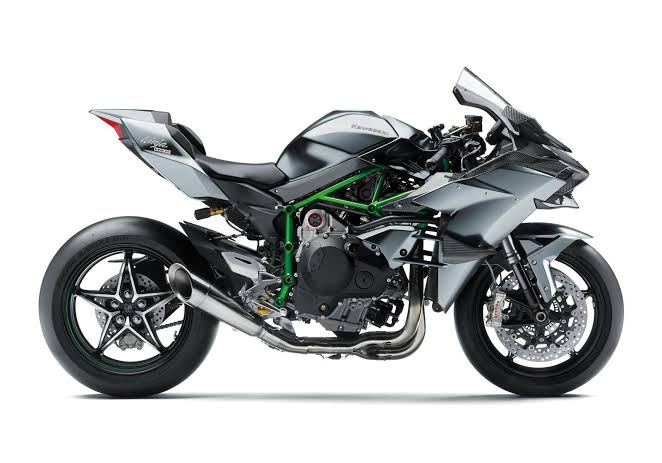
Example : Kawasaki H2
Pros:
✅Zero lag – instant power
✅ Strong low-RPM torque
✅ Linear & predictable delivery Cons:
❌Parasitic drag (steals engine power)
❌Less efficient at high RPM
❌Heavier setup
2. Turbocharger (exhaust-driven) Uses exhaust gas to spin the turbine
Compresses intake air
Example : The classic Kawasaki GPZ750 Turbo
Pros:
✅Uses “waste” exhaust energy → more efficient
✅Can produce massive boost & top-end power
✅Lighter than most superchargers Cons:
❌ Turbo lag (delay before boost hits)
❌Heat management issues
❌Boost comes in higher in the RPM range
3. Motor-Driven Compressor (electric motor powered) Spun by electric motor (12V/48V system)
Independent of engine RPM
Example
: the upcoming Honda V3R 900 E-Compressor
Pros:
✅Can create boost even at idle/low RPM
✅Electronically controllable
✅No parasitic loss from belts/exhaust
Cons:
❌Limited boost from current electric tech
❌Drains battery/alternator
❌ Usually weaker than mechanical options
Quick Verdict: Supercharger = Instant & brutal feel
Turbocharger = Efficient high-power king
Motor Compressor = Modern & lag-free potential (still evolving)
All three force more air → more power. Which one are you team? Drop your choice below!
#StrokeLegacy #ForcedInduction #ECompressorVsSupercharger