There are 3 real pillars in lifelong progression.
Hard enough injury-free fact-based fitness ( strength + cardio ). Healthy fact-based food choices.
And rest, sleep, and recovery.
Don't be afraid to prioritize rest, sleep & recovery just as much as food and fitness 👊☕.
New Article | Strength By Fitness. Earth & you. From human health, and food habits to planetary health.
https://t.co/39lhp0YgVj
The complete long-form, and in-depth article our latest podcast is based on.
New Podcast Episode | Strength By Fitness
Earth & You: From human health, and habits to planetary health. It´s just one ecosystem of habits, and lifestyles.
https://t.co/ZrvYi99krv
Brand new week, brand new Strength By Fitness article and podcast. In-depth and long-form, and complete with the cited study.
Today I take a look at the race time from 150,000 marathons and how that correlates with exercise volume & weekly effort.
New Page | Strength By Fitness. Our Highest Ranked Plant-based SPC Meals. Curated and Sorted By Their SPC Range. All Meals Are Very High In Protein, Nutrients & SPC.
Strength by Fitness.
https://t.co/HVFvJww6RK
How pervasive are myths about resistance training?
This sample of 721 Austrian gym-goers correctly identified only 5 of 14 statements about resistance training as a myth or truth (>50% of the time).
Lots of nuance here, but one thing is clear:
We need to do better with our science communication.
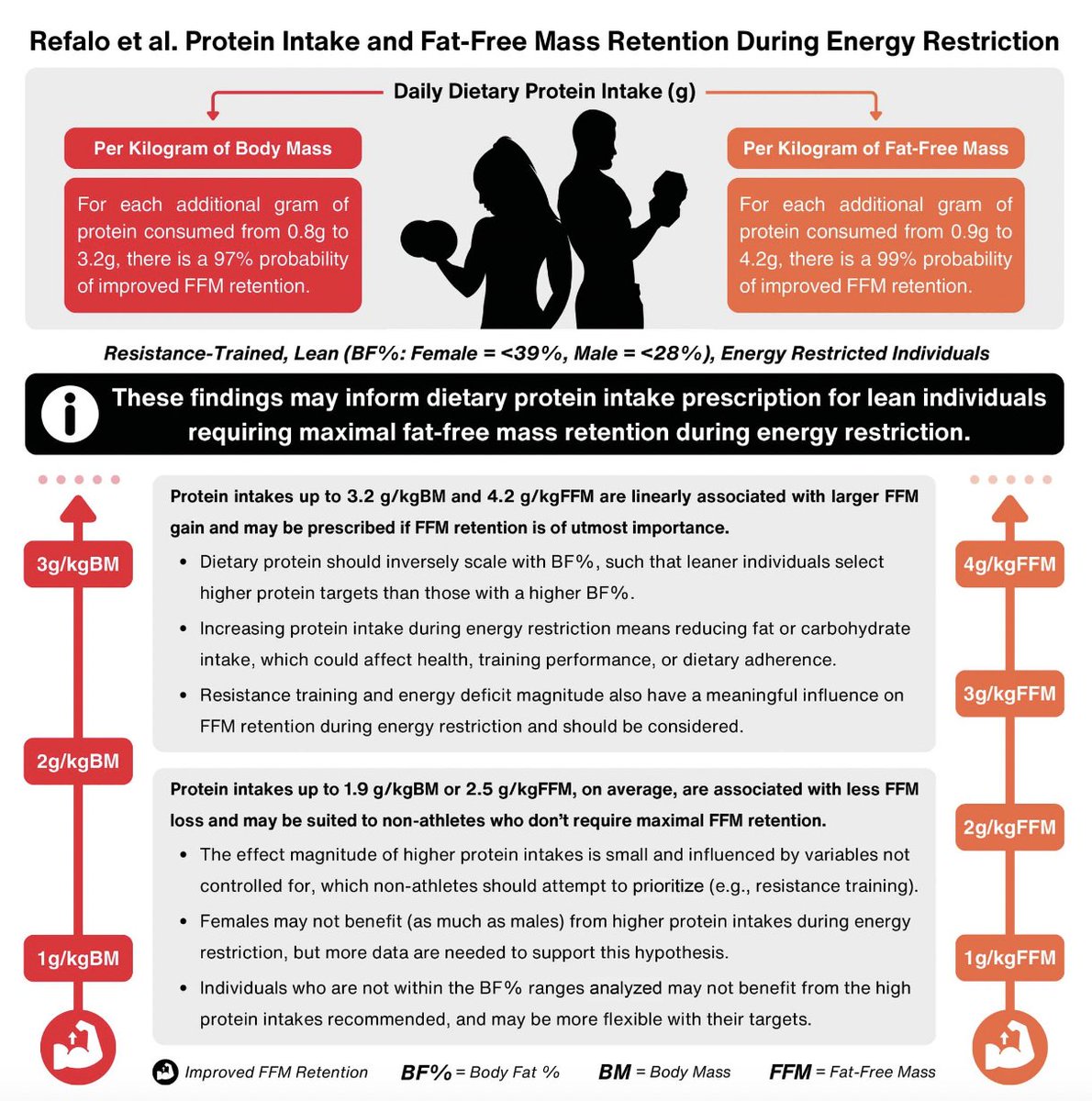
New meta indicates protein requirements may be as high as ~3 g/kg/d to optimize FFM retention during energy restriction. Note that FFM doesn't necessary = muscle mass. Also, protein intake from self-report may not be accurate. Interesting nonetheless...
https://t.co/7qeuLFiYFI
@Zafi1871371 @BradSchoenfeld No that is correct, however, health and wellness aren't just mortality outcomes.
As we age strength and lean muscle mass become increasingly important for mobility and many quality-of-life functions during our health span.
Then again, it's semantics, just do both 👊👊.
As such trust the process. Progression is all about facts and science. Put in the weekly work, eat well, rest, sleep, and hit that adherence, and the outcome is inevitable.
The only soft thing is how long it will take, but it always happens in due time.
This is why out-of-shape people need to embrace fitness for life. Not 3 months per year, 6 months or 9. Every week, all-year-round, for life.
With that said, experienced lifters do not lose much at all from a rare 7 to 10-day gym break. But the default should be all year round.
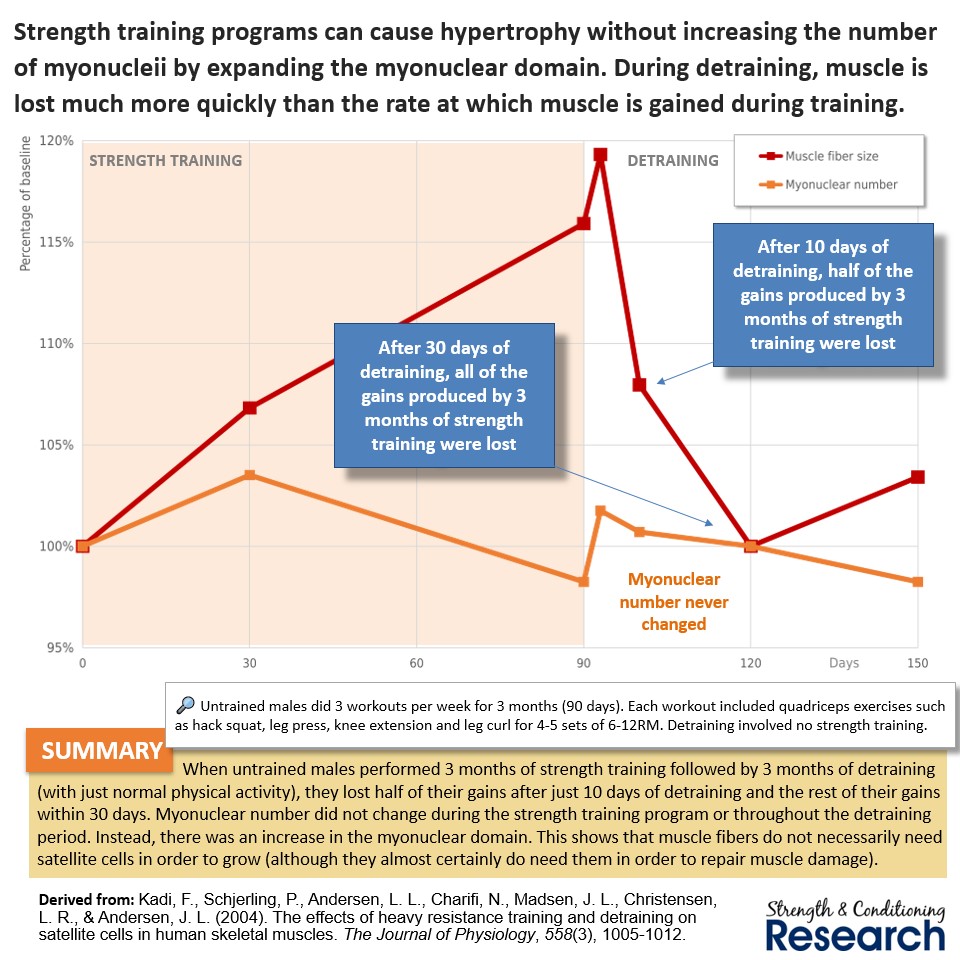
Muscle loss happens many times faster than social media influencers claim. Indeed, this study showed that approximately 50% of the gains achieved by 3 months of training were lost by only 10 days without training, and 30 days were enough to lose everything.
@SandCResearch All true, but we are talking about unfit men who only trained for 3 months to begin with. Which is nothing & won't provide much progression to begin with.
Experienced lifters do not lose much muscle mass, or strength at all over a rare 7 to 10 days gym free period.
@saaiyer@DrEenfeldt No one should use a singular plant-based protein source, no matter how good it is.
As a plant-based person eat more protein in total & get it from several daily sources since absorption is slightly smaller & amino levels are less ideal.
But the above advice fixes that 👊👊.
Keeping it at roughly 12 sets per week & muscle group is a very solid exercise volume with great outcomes, no matter who you are.
Some do even better with slightly more, and some with slightly less. But it has always been a great weekly volume & with a reasonable recovery price.
Resistance training volume - is more always better?
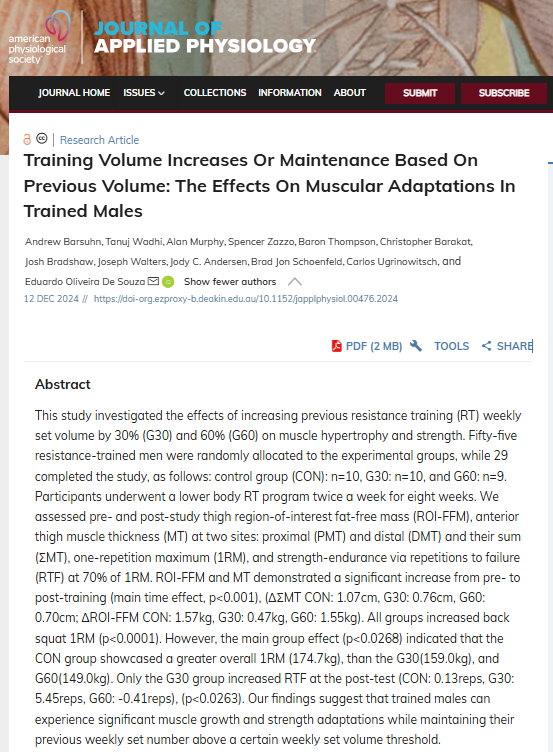
New data shows resistance trained lifters who maintained a moderate set volume (~12 weekly sets per muscle group) had similar muscle growth to those who increased training volume by either 30% or 60% over 8 weeks.
Changes in maximum (1-RM) strength were also greater in those who maintained volume compared to those who increased.
These data suggest higher training doses aren’t always necessary for strength and muscle size gains - providing effort is high (0-2 reps in reserve per set).
https://t.co/NdIPOTcdlI
Is fiber good for weight loss?
Fiber is among the four key factors of our SPC (satiety per calorie) scoring. Let's see how it tracks with caloric intake in our data – we found something surprising!
Studies show that eating more fiber reduces caloric intake, but not much. Therefore, we've made it the weakest factor influencing our SPC score.
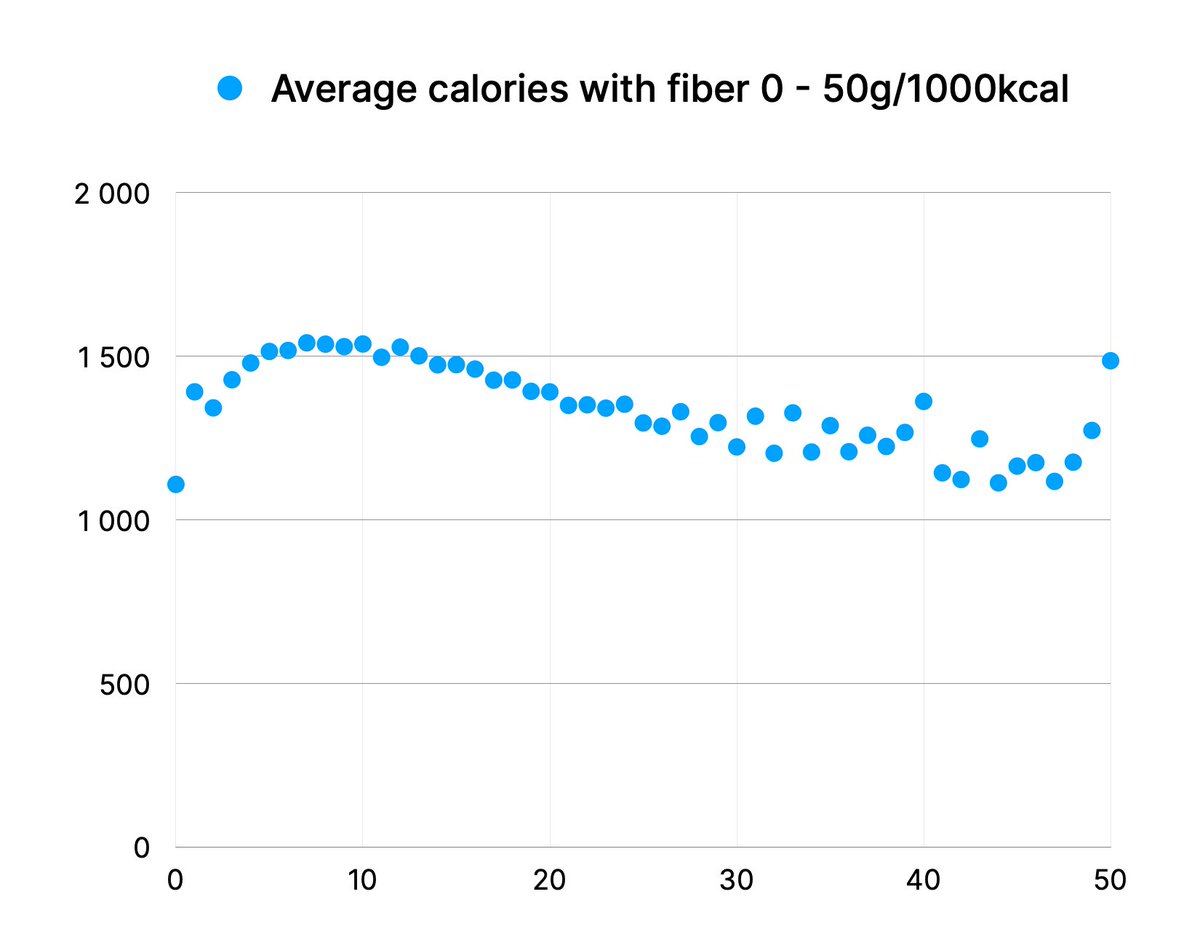
Data from 67,000 days of eating agrees with that. It's an influence, but it's the weakest of the 4 factors:
Comments
The highest caloric intake is correlated with a low fiber intake, about 5-10 grams per 1,000 calories. If you increase fiber intake from there, caloric intake drops slowly in our data.
Quality sources of fiber include beans and lentils, fruits, and berries.
A surprise with zero fiber?
However, interestingly, people eating virtually fiber-free diets also eat fewer calories. A possible explanation is that many of these people are on extremely low-carb diets, eating mostly animal-based foods. These tend to be quite high in protein and extremely low in hedonic processed foods.
Remember, this data is observational and does not prove cause and effect.
Therefore, it's perhaps most likely to interpret this not as a benefit of zero-fiber diets per se. Instead, it may be due to other beneficial effects of a highly animal-based diet: it tends to be high in protein, extremely low in carbs, and very low in hedonic ultra-processed foods. All these factors contribute to a high satiety per calorie overall.
Bottom line
As long as you're not benefiting from an extremely low-carb diet, eating more fiber is likely somewhat beneficial for reducing caloric intake.
This is what earlier studies show, and our data backs it up.
Earlier posts
Overall SPC results:
https://t.co/dUhWf80JA1
How protein affects calories eaten:
https://t.co/Wbvj0OiYsJ
Earlier posts
What's your take on fiber? Do you try to eat more fiber or less? What fiber-rich foods are your favorites?
New Article | Strength By Fitness. The fact-based pillars of quality sleep & sleep-related habits.
Medium.
https://t.co/7nLRFnIvp9
Strength by Fitness.
https://t.co/n0sdvPBkgX
As a YouTube Video.
https://t.co/lnl0ihvrpS
There are 3 real pillars in lifelong progression.
Hard enough injury-free fact-based fitness ( strength + cardio ). Healthy fact-based food choices.
And rest, sleep, and recovery.
Don't be afraid to prioritize rest, sleep & recovery just as much as food and fitness 👊☕.
Plant-based people elicit fear, contempt, & anger in the meat-eating participants in the study. But it is no surprise that the primal driver of pack mentality is why omnivores are seen as more socially acceptable than plant-based people & why so few maintain healthy fit habits.