We tell parents to read with their kids every day. Why aren't we doing the same for math? That's the shift we're pushing for.
After listening, add your name to our petition calling for national guidance to make math play a regular family habit.
https://t.co/eyrCXPgVlY
If you're a person, you're a math person.
CSS deputy director Adam Ezring (@Prezring) joins @TheMathGuru on @fullmindlearn's Learning Can't Wait podcast to explore math confidence, family engagement, and why making math play a regular habit matters.
https://t.co/bv4JG5TmKV
How ready are New Jersey students for college math?
Join our in-person panel following the release of our report “False Hope: New Jersey Kids Aren’t Ready for College.”
Oct. 15, 2026 | 3:30 p.m.
Rutgers University, Hill 705
Register to attend: https://t.co/FgwGYHO9Qe
Do you like in New Jersey?
Have thoughts on what a high school diploma should mean for a student’s readiness for college?
Join me, @StudentSuccess@AlexKontorovich@PaulaLWhite & Nannette Wright @ Rutgers on Thursday at 3:30pm.
Sign up here: https://t.co/HoHYCqnyWp
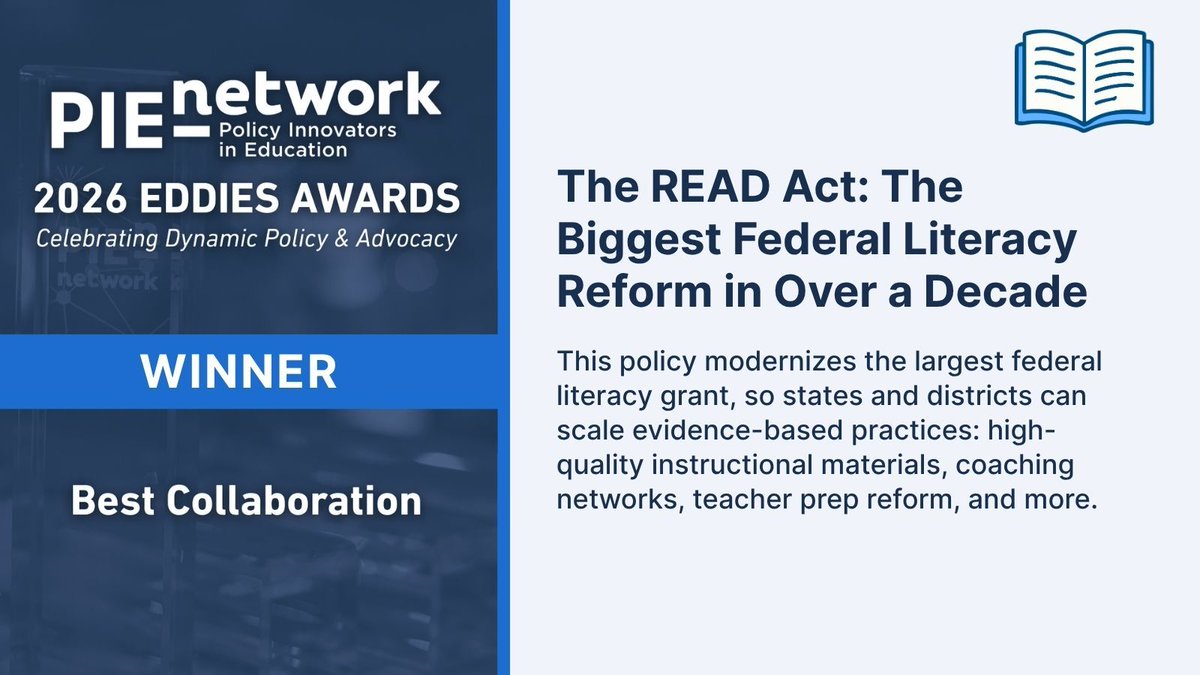
NCTQ is honored to share the 2026 @PIEnetwork Eddie Award for Best Collaboration with our partners in the coalition behind the READ Act!
The READ Act would modernize the largest federal literacy grant so that federal dollars support what's working to improve reading outcomes in states: high-quality instructional materials, literacy coaching, teacher prep reform, universal screening, and parent notification. The bill advanced out of the Senate HELP committee and has been introduced in the House.
Support for strong reading instruction reaches across party lines. Organized by the @NationalParents Union, this coalition brought together more than 120 organizations with different perspectives around a shared commitment to every child's literacy. We're grateful to have contributed to this work.
Congratulations to our partners: @All4Ed, @BPC_Bipartisan, @amprog, @StudentSuccess, @EdTrust, @Ed4Excellence, @mass_potential, @ncldorg, @NationalParents, @teachplus, and @LearnerEquity.
Weak math skills don’t stop being an education problem when students graduate.
They become a workforce problem—and, as CSS director Jim Cowen argues, a national security problem.
A strong defense industrial base requires a strong math foundation.
https://t.co/d1YCMjZxGZ
It's a goal at the heart of our We're All Solvers campaign: making math play a regular part of family life.
When kids play, we all win.
Join the growing call for national guidance on early numeracy: https://t.co/eyrCXPgVlY
What if family math became as routine as reading a bedtime story?
In @LASchoolReport, Holly Kreider and Michelle Torgerson make the case for turning everyday math play into a national parenting habit.
https://t.co/f6XwSdwOUQ
Utah is betting that stronger math skills start at home. MILO & Friends helps parents make counting, sorting, and number talk part of everyday life, and early results show parents feel more confident.
https://t.co/WMKrQgrHlz
The new report from @StudentSuccess shows the real cost of overly-permissive alternative pathways to high school graduation. 1 in 3 Rutgers students has to take remedial math covering middle and high school level concepts. Those courses often don’t earn credit but do harm the chance of a student graduating from college on time. And those students who don’t attend college will have a gap in skills throughout their life.
A dishonest diploma isn’t a favor. It’s a dereliction of our duty to prepare every student for life. We know better. Now let’s do better.
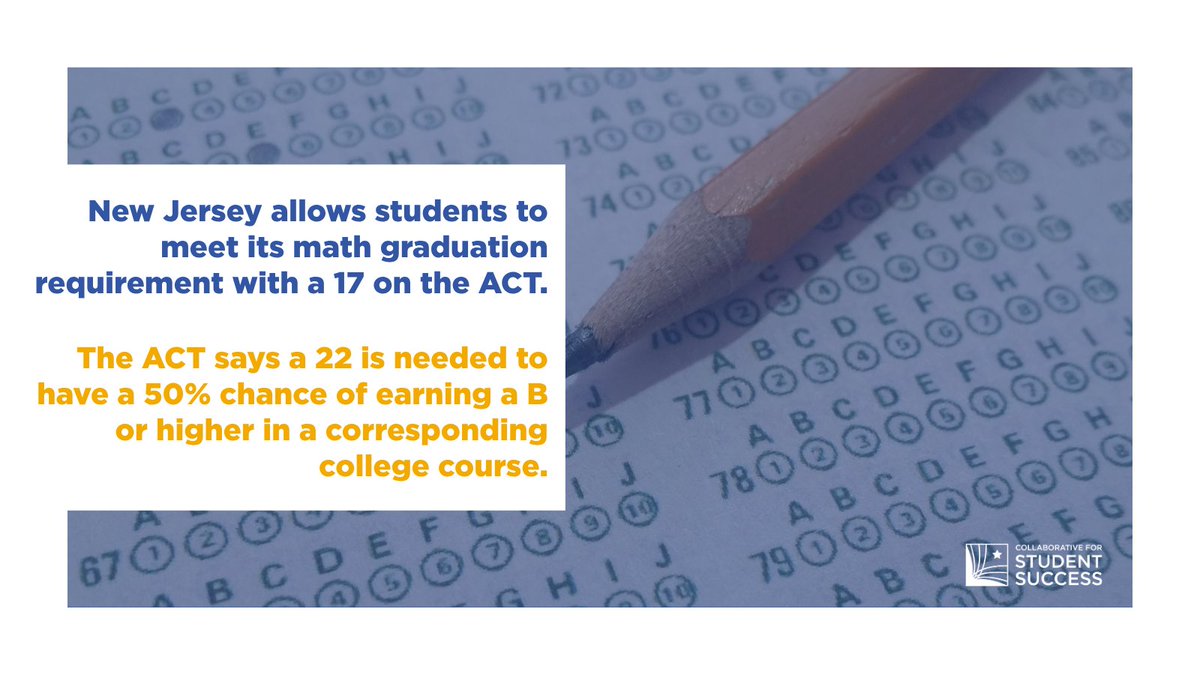
Why does NJ set a lower bar for college readiness than the one set by the ACT test?
We can’t answer that. But we - and fellow organizations committed to accountability like @StudentSuccess - can quantify the effects of weakened standards in these alternate pathways to high school graduation. 1/3 of @RutgersU freshmen have to take remediation classes on math courses they allegedly mastered in high school. That leads to higher costs and lower chances of graduating college both overall and in four years.
Learn more in the report from @ChadAldeman, and ask yourself: are we giving NJ students and families the education they deserve, or are we just giving them a piece of paper and a pat on the back?
https://t.co/mjpW2phY8N
Students deserve clear, honest information about whether they’re truly on track—and an education that prepares them for what comes next.
A diploma should mean students are ready for what’s next.
Watch the video + explore the report: https://t.co/4zCqt3zTQE
For too many New Jersey students, the path from high school graduation to college and a career comes with unexpected barriers.
Nearly half of NJ college students need remedial coursework, and 4 in 10 don’t complete a degree within six years. 🧵
There’s a growing disconnect between what a high school diploma signals and whether students are prepared for college-level work.
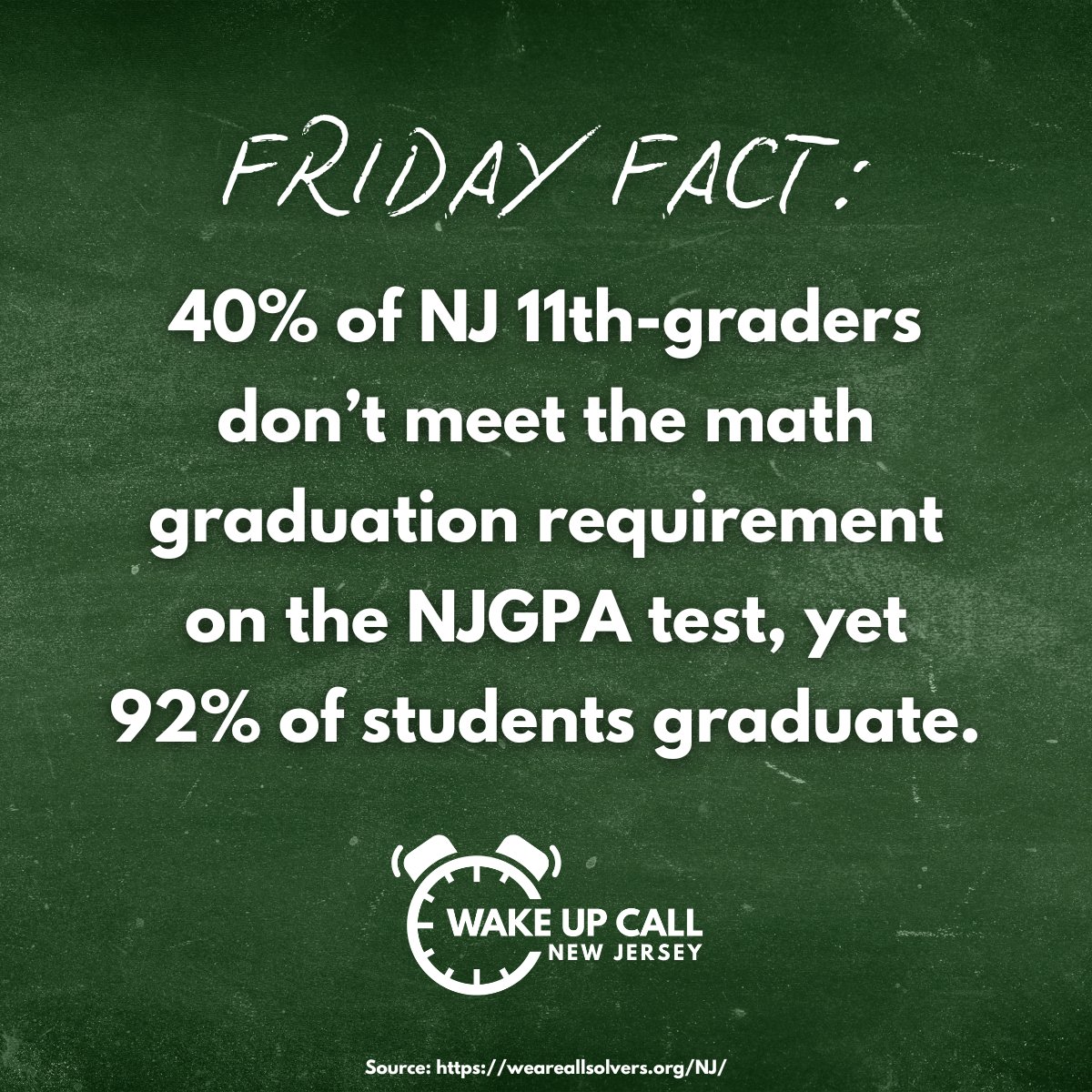
Students can meet NJ’s high school math requirements and still arrive at Rutgers needing below-college-level coursework.
CSS ED Jim Cowen in Forbes: only 6 in 10 NJ juniors are grad-ready in math. DC's grad-to-proficiency gap is 71 points, CA's is 56. A diploma should mean something — that takes honest standards, automatic enrollment in advanced math, and better curricula.
https://t.co/xBLENPw8MM
Math isn’t just for the classroom—it’s used on the job every day.
Full Measure visits a VA construction site to show math at work and explores VAs honesty gap between what state tests deem proficient and national expectations.
https://t.co/KSkVZ8JR0Q
There are stark warning signs in both 8th grade NAEP and NJ state level standardized tests. Too many of our middle schoolers aren’t reaching proficiency - to say nothing of their true potential. And those gaps in skills grow when unaddressed.
Grade inflation, lowered standards, and alternative pathways to high school diplomas leave students unprepared for college. We’ve seen that 11% of incoming Rutgers freshmen have to retake Algebra in the report from @StudentSuccess.
These remedial classes have a real cost: financial, emotional, academic. Parents deserve transparency, not inflated success rates. https://t.co/7P6GjivhgX
What happens when a student’s grades say one thing, but more objective measures tell a different story?
@ChadAldeman examines Nikole Hannah-Jones’s account of her daughter’s experience in NYC public schools and the warning signs that were missed.
https://t.co/P6a2UjRrNj
More than 10% of Rutgers college freshman are placed into Elementary and Intermediate Algebra courses. This is a problem we continue to ignore at our own peril.
The report from @StudentSuccess and @ChadAldeman digs into how K-12 math education in NJ has fallen short of what students and families deserve. While the COVID pandemic accelerated and exposed this decline, the fact is that scores were falling ever since 2013.
One culprit is misguided compassion, which results in grade inflation and the creation of alternative pathways to graduation. We aren’t doing students any favors by pretending they’re prepared for college and life when they’re lacking essential skills. The desire for students to succeed needs to be met with honest assessments of what they have yet to learn.
Read more in this paper: https://t.co/mjpW2phqjf