🍀🧬🔬
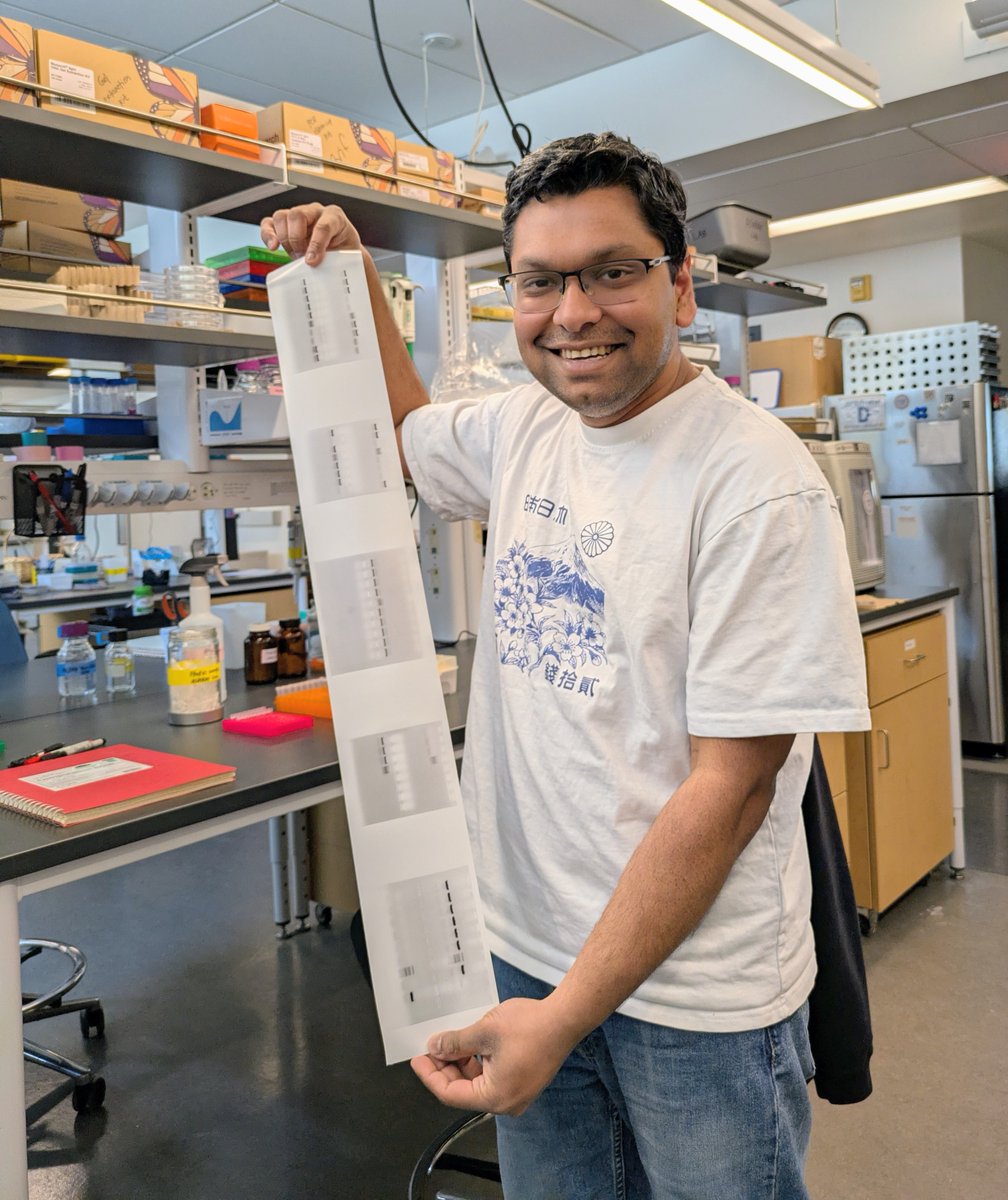
My students and colleagues always ask me why I am glued to the lab bench and what do I do?
I do my BEST! I enjoy doing the experiments (successful and failed equally).
Here is a glimpse of the Friday morning. Thanks to my student, Scottie, for taking this picture.
What happens after evolution “accidentally” doubles an entire genome? 🧬
A Chinese-German team led by Axel Meyer at the University of Konstanz studied snow carps from the Himalayas — young polyploid fish that live at altitudes up to 5,000 meters — to understand how duplicated genomes become diploid again.
Their finding is fascinating: re-diploidization does not happen all at once. It begins at chromosome fusion sites and spreads step by step, meaning some genome regions return faster to diploid inheritance while others can retain four chromosome copies for millions of years. Why does this matter? Because whole-genome duplication has been a major engine of biodiversity and evolutionary innovation — especially in fishes and plants.
Evolution does not just modify genes. Sometimes, it rewires entire genomes. 📷 📷https://t.co/vFWMRWaUjz
#Evolution #Genomics #Biodiversity #DNA #GenomeEvolution #Biology #Science
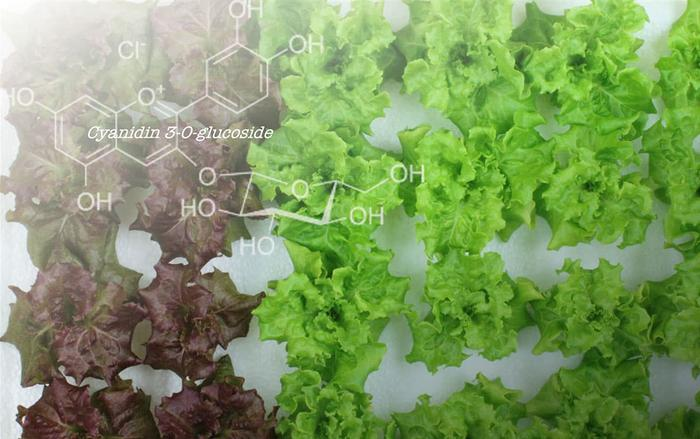
🥬 A red lettuce that turns green… and also increases beneficial compounds?
Researchers at the University of Tsukuba used gene editing with CRISPR to inactivate a key gene upstream of anthocyanin production in red lettuce. The result: green leaves, a shifted flavonoid profile, and higher accumulation of quercetin, with no detectable negative effects on plant growth.
This is more than “changing color.” It shows something powerful: gene editing can precisely redirect plant metabolic pathways to adjust functional, nutritional, or industrial traits.
The future of agriculture is also being written in plant metabolism. 🧬🌱
🔗https://t.co/oCCm4cccXB
#GeneEditing #CRISPR #PlantBiotech #Agriculture #Biotechnology
Delighted to share new research from the lab @Plant_EnSiGnLab at @iiserkol.
CUL3LRB E3 ubiquitin ligases control thermosensory growth in Arabidopsis by differentially regulating HY5 and PIF4 protein stability | Science Advances https://t.co/5lnodvOinm
Congratulations @HiteshwariSinha
from @prabodslab @CSIRCIMAP@CSIR_IND for publication in "Arabidopsis MYB12 overexpression modulates flavonoid levels and confers enhanced fungal resistance in plants" in Physiological and Molecular Plant Pathology
https://t.co/KHqGKiFV9K
Congratulations @HiteshwariSinha
from @prabodslab @CSIRCIMAP@CSIR_IND for publication in "Arabidopsis MYB12 overexpression modulates flavonoid levels and confers enhanced fungal resistance in plants" in Physiological and Molecular Plant Pathology
https://t.co/KHqGKiFV9K
A proud moment for Team CSIR and Science for Society.
CSIR Aroma Mission has been conferred with the Rashtriya Vigyan Puraskar 2025 (Vigyan Team Award) by Hon’ble President of India, Smt. Droupadi Murmu, at Rashtrapati Bhawan, New Delhi. Dr.@PrabodhTrivedi, Mission Director of the CSIR-Aroma Mission, received the award on behalf of the team. The award recognizes the mission’s transformative role in strengthening India’s aromatic crops sector through scientific innovation, farmer-centric technologies, and sustainable livelihood generation through consistent technical support.
Faculty members of CSIR-CIMAP Lucknow also joined the award ceremony online and congratulated @DirectorCimap for his visionary leadership, guidance, unwavering support, and valuable contribution to the CSIR Aroma Mission.
@PrabodhTrivedi@CSIR_IND@DrNKalaiselvi@DrJitendraSingh@CsirAroma@PIB_India@PMOIndia
#rashtriyavigyanpuraskar2025
Congratulations to Team Aroma Mission CSIR, led by Dr. Prabodh K. Trivedi Ji for being honoured with the Rashtriya Vigyan Puraskar 2025-'Vigyan Team' in Agricultural Science.
By empowering farmers through science-led cultivation of aromatic crops, the mission exemplifies research translating into prosperity, sustainability, and rural transformation.
"Plants have a secret language that scientists are only now starting to decipher" - Nature News feature
@nature
https://t.co/W39G4ZRRMY
Signals from the plant cell wall help to orchestrate growth, reproduction and immune function. Can we harness them to create better crops?
The 2024 #NobelPrize laureates in chemistry Demis Hassabis and John Jumper successfully utilised artificial intelligence to predict the structure of almost all known proteins.
What groundbreaking discoveries will be recognised with a Nobel Prize this year? The announcements will begin in just a few days. Learn more: https://t.co/RCKc2r3asL