CEO @liv-advantage. Eco-entrepreneur, Environmentalist, Free Thinker, Interested in (Innovation in Plant based science, Fitness, Travel) ......Known as Suddy
@shivurh@Cockroachisback India ceased to be a democracy long time, its on its path to become a Hindu republic state ruled by theocracy, like Iran and Pakistan.
If our lawmakers in the U.S. Congress both @SenateGOP@SenateDems@HouseGOP@HouseDemocrats believe that Freedom of Religion is real and available to all God’s children then CONVERSION IS A SIN AGAINST GOD’s original intent!
You must not INTERFERE if Government of India opts to protect its citizens with rules to prevent money bags 💰 used to con people into conversion! Sincerely urge @PMOIndia and @AmitShahOffice not to relent in your pursuit of happiness!
The @nytimes is write about shivaji statues appearing all over India. You are intellectually dishonest. Please explain why did the Hindu nationalists rename Victoria Railway Terminus in Bombay to Shivaji? How come countless Shivaji statues mushroomed in Goa in the last 14 years?
I thought I should write something really measured and accessible explaining why this headline from @nytimes is so misleading. I wanted to do it in a way that would make sense to people who don't already see the problem. So first, I meditated. You know, to calm down.
Then I looked at the headline again and thought: WHAT THE ACTUAL REFRIGERATOR.
Okay, breathe in...and out.
To begin with, Chhatrapati Shivaji Maharaj is not a "new" hero to Indians and Hindus. That's a laughable proposition. Even I know that, and I grew up here in the United States before the internet. This is like saying George Washington is a new hero to Americans. Buildings, airports, train terminals, roads, universities, and public institutions have borne Shivaji's name for decades. Long before the current administration took office. So the question is not whether Shivaji is actually a new hero. The question is why the Times would frame him that way.
And this is where media literacy becomes useful. Notice the language. Not "new memorials have been built." Not "additional statues have been commissioned." Not even "Shivaji statues have become more common." Instead, we are told that statues of Shivaji are "rising across India." It is a fascinating choice of verb because statues do not normally "rise" in journalistic writing. Movements rise. Armies rise. Extremism rises. Threats rise. The word "rise" transforms what could have been described as commemorative acts into something vaguely threatening. The image it conjures is almost cinematic: Shivaji statues menacingly erupting from the earth across India like something out of a Marvel movie.
What makes this especially frustrating is that there are genuine debates taking place in India about history, textbooks, colonization, historical memory, and the representation of Hindu civilization. Some scholars and members of the public argue that post-Independence narratives minimized aspects of Mughal conquest, neglected Hindu resistance movements, or failed to adequately account for Hindu civilizational contributions. Others disagree. But these are real debates, and they are neither new nor confined to one political party.
In fact, Americans should find this entirely familiar. We revise textbooks all the time. We revisit historical narratives. We argue about whose stories were centered, whose stories were marginalized, and whether previous generations of historians got important things wrong. We understand that academic consensus is not infallible and that history is constantly being reexamined as new evidence emerges and new questions are asked.
Yet when these debates about Indian history are translated for Western audiences (often by Indians themselves), they often become a much simpler story: the Hindu right is resurrecting forgotten heroes for political purposes and to oppress the minorities. The problem is that Shivaji was never forgotten in the first place. The debates themselves disappear, replaced by a narrative that is far easier for Western readers to recognize and consume.
This is why bias is often less about outright falsehoods than about framing. The article does not simply describe Shivaji Maharaj. It encourages readers to understand him through a very particular lens: not as a historical figure who has occupied a central place in Indian historical memory for centuries, but as a symbol recently manufactured by "the Hindu right." Yet Shivaji was never forgotten. The framing tells us far more about how the Times wants its readers to view contemporary India and Hindus than it does about Shivaji himself.
Of course, for those of us who have been paying attention to how @nytimes covers India and Hinduism for a long time, this distorted reportage isn't out of the ordinary.
Absurd? Yes. Intellectually dishonest? Absolutely? Clearly seeking to manufacture negative public associations regarding the third-largest religion in the world? 100%
Surprising? Not even a little bit.
A Life That Served a Purpose
In a world chasing fleeting applause, some souls choose the long, quiet road of service. Today, welfare economist Jean Drèze has been honoured with a global award for his profound research on poverty and inequality in India.
Born in Belgium, he made India his home and its people his purpose. With a scholar’s rigour and a revolutionary’s heart, he stood beside the forgotten—documenting their struggles, amplifying their voices, and shaping policies that reached millions.
His tireless advocacy helped birth two landmark legislations that still stand as lifelines: the National Rural Employment Guarantee Act (NREGA), which offered dignity through work to the rural poor, and the National Food Security Act, which sought to ensure no one sleeps hungry in a land of plenty.
This is not just an award. It is recognition of a life lived in radical empathy. Of choosing dusty villages over ivory towers. Of measuring success not in citations or comfort, but in the quiet lifting of human suffering.
Jean Drèze reminds us that the highest calling is to use one’s intellect, privilege, and time in the service of those who have the least.
In an age of cynicism, his journey is a living ode:
To knowledge that heals. To scholarship that serves. To a life that mattered.
Congratulations and Thank You Professor Drèze.
India is better because you walked among us.
May your example inspire a new generation to stop performing compassion and start practising it—with depth, persistence, and love.
🧡 🙏
#JeanDreze #ServiceAboveSelf #India #SocialJustice
@TVMohandasPai British , Portugal and French ruled colonies in India have better literacy rates and prosperity than benighted states of Northern India. Soon Goa will become Gobar under strong influx of migrants, the beaches are already polluted with faecal coliforms.
@JatinMehta9@TVMohandasPai British , portugal and french ruled colonies in India have better literacy rates and prosperity than benighted states of Northern India. Soon Goa will become Gobar under strong influx of migrants, the beaches are already polluted with faecal coliforms.
She must be living in cuckoo land. I am seeing ever increasing number of AI coders of Indian ethnicity joining XAI. Gleefully posting on X about how proud they are to work for Elon. We have rampant hyper nationalism riding on stupidity.
@MooshHello1234@FBIBoston@Pauls050 In india all these goons go scotfree. Why does the west import such looney bins from cultures that are steeped in myths, blatant lies, with no moral absolutes.
@Schandillia Indus valley civilization was a dravidian civilization. That makes the aryans who brought vedic rituals to India also foreign. yes you are right, you arrived as conquerors and divided this nation by caste.
@Schandillia You are pivoting. first thing you did was commit ad-hominem. Because you did not have the substance to counter the facts presented by the scholar. His arguments refers discoveries in science and you are talking of social ethics. You proved that you are a retard.
@a_bose07 Please tell me where, when and how Christians are superior to other religion, creed or caste. Do you notice the number of educational institution and hospitals christians built in India for hindus and muslims alike.
you are incapable of any substantial argument, therefore you are committing ad-hominems. In Christianity atleast there are moral axioms by which someone is judged. by what moral standards do you judge anyone in Hindusim?
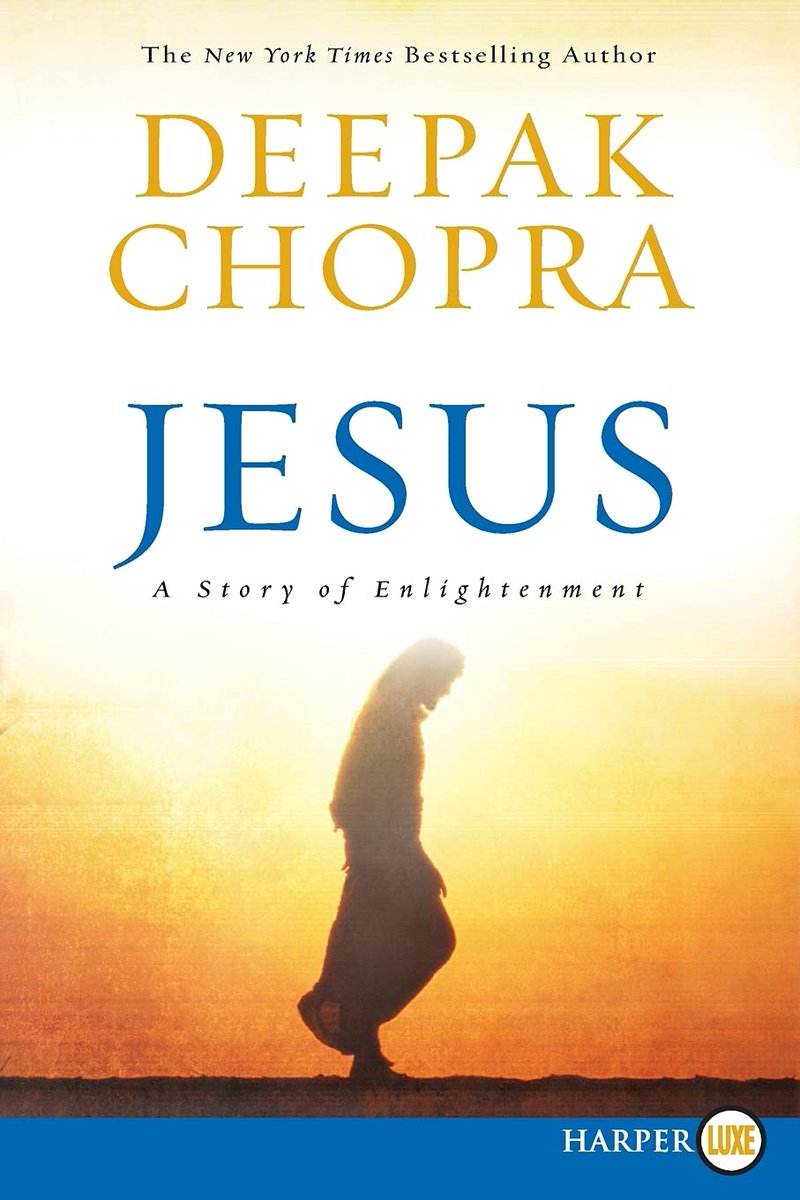
Deepak Chopra wrote many books about Jesus and openly claimed he is Christian by religion. He converted but kept is name.
It is funny some conservative Christian groups are using Deepak to bash Hinduism 🤣
Meanwhile 99% of people in Epstein Files are of Christan faith.
Its a culture that believes in honesty and open to investigate all truth claims and therefore such scandals are exposed in broad daylight unlike Hinduism. BTW who is a Satan worshipper?
After seeing the Epstein Files, I will no longer tolerate any moral policing from Americans. You are satan worshippers and should be nvked to oblivion.
There is no China vs India. China won long time ago. They knew education was the way out. We didn’t. We still don’t. Thanks @zijing_wu for making this FT article public.