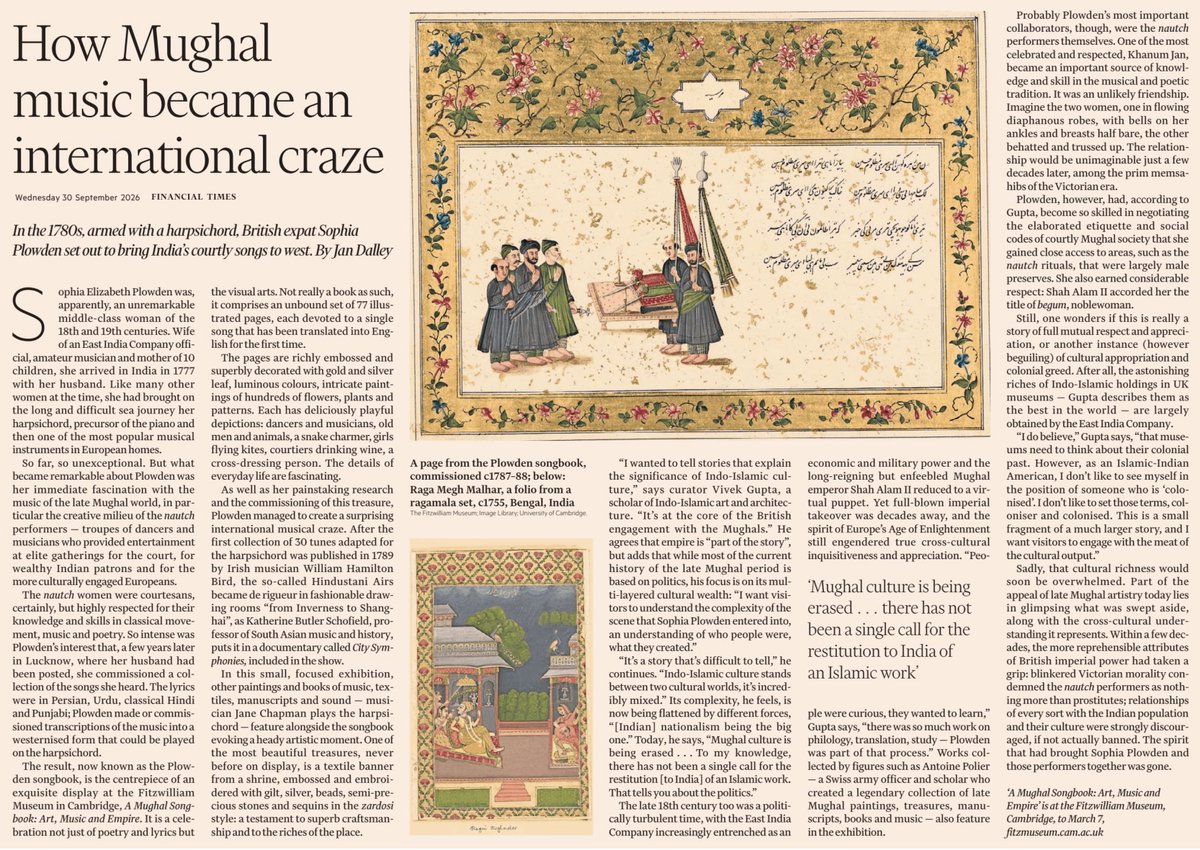
This is UTTERLY fascinating!! British East India Company housewife (Sophia Plowden) becomes sufficiently obsessed with a Lucknow courtesan's (Khanum Jan) music that she learns to play it herself on her harpsichord, writes it down, helps turn it into sheet music, and inadvertently helps launch an Indo-European musical fashion! The social inversion/dynamics of Sophia being the student and Khanum being the cultural expert is extraordinary. The whole thing reads like a Sanjay Leela Bhansali movie script!!
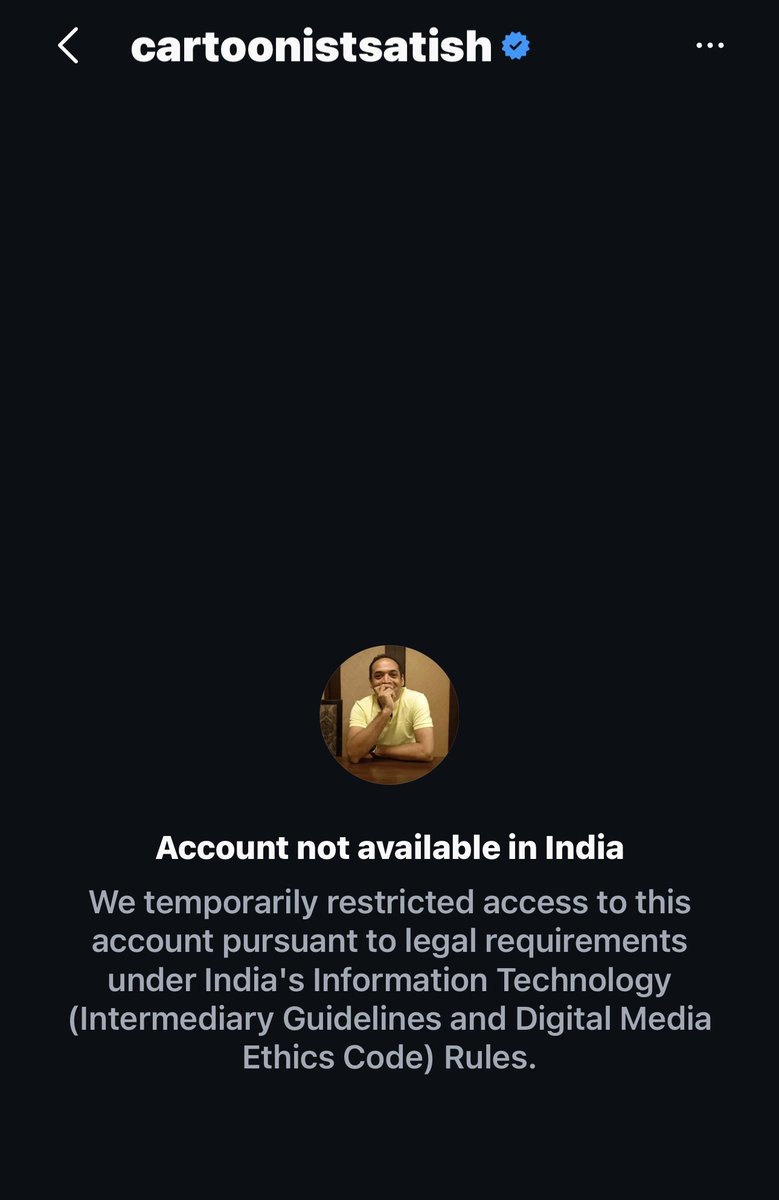
One of India's finest editorial cartoonist @satishacharya - will not be visible on @instagram now. His account was withheld in India without notice or reason... on the orders of the Modi Govt.
Satish is not the only one - last month - @IndianExpress reported how the Govt issued one blocking order - on an average - every 68 seconds. Around 1,275 every day. Nearly two lakh lakh such orders between March and June.
With the narrative slipping out of hand - this deletion spree is a desperate effort to stem the rising anger against the Modi regime. Imagine team Chappaneshwar being scared of cartoons now! (Then the same guys will yelp in pain when we sink further on Democracy & FoE ratings)😵💫🤦🏻♂️
Here's hoping some great lawyers connect with @satishacharya and challenge this in court.🙏🏼🙏🏼🙏🏼
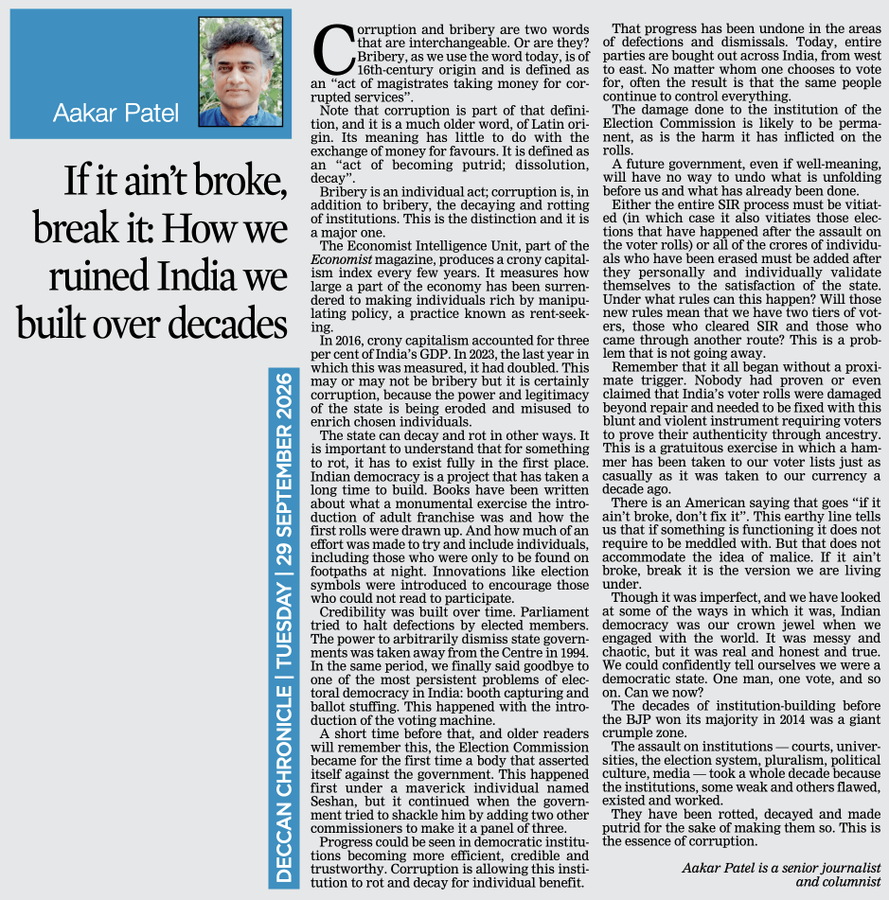
Aakar puts it in simple words, the whole tragedy, the loss we are witnessing in real time, the challenge that comes now, the unravelling of the Republic's iron-structure itself. Please read.
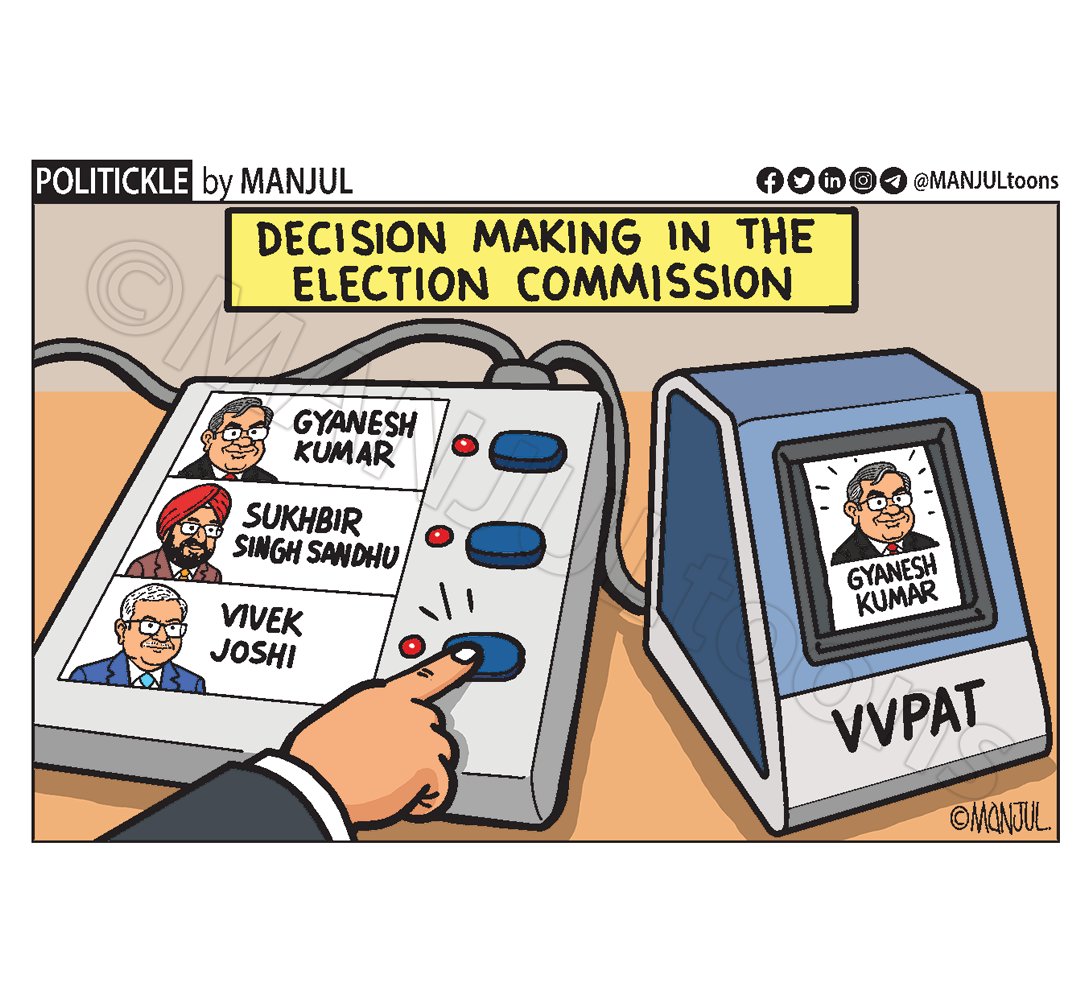
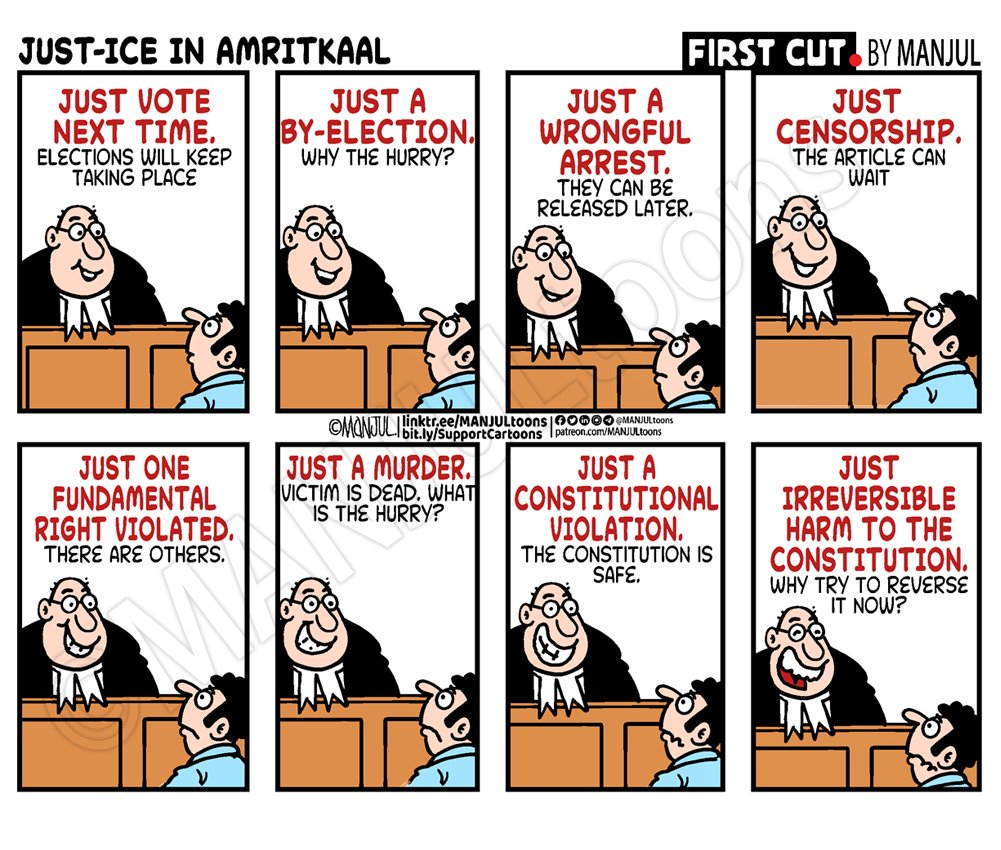
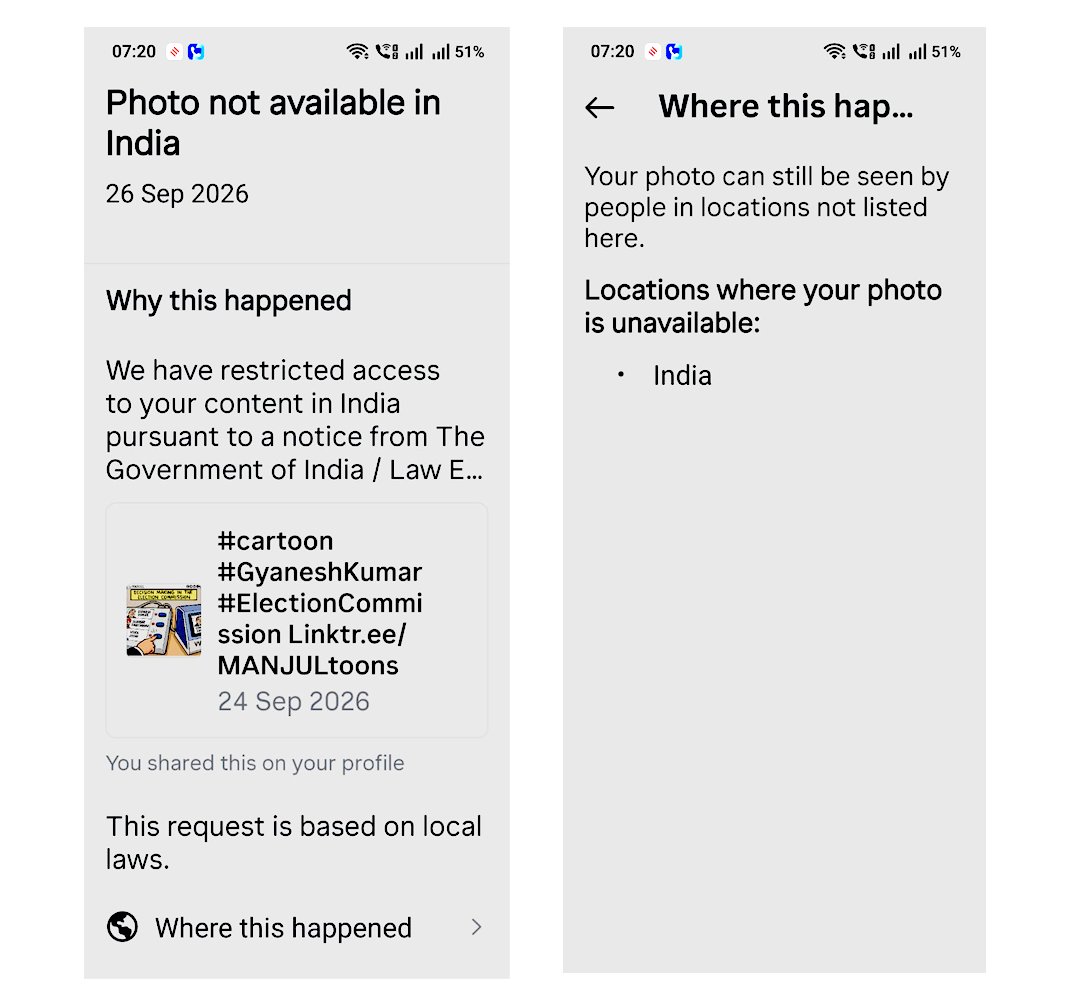
Instagram has restricted this cartoon in India.
I am posting the cartoon again, along with the notice I received from Instagram.
According to the notice, access has been restricted in India “pursuant to a notice from the Government of India / Law Enforcement” and based on local laws.
The cartoon is still visible outside India.
A cartoon about the Election Commission has been stopped from being seen by Indians. When satire gets censored, perhaps the cartoon has made its point. 🇮🇳
#Censorship #FreeSpeech #Satire #PoliticalCartoon #FreedomOfExpression #ElectionCommission #MANJULtoons
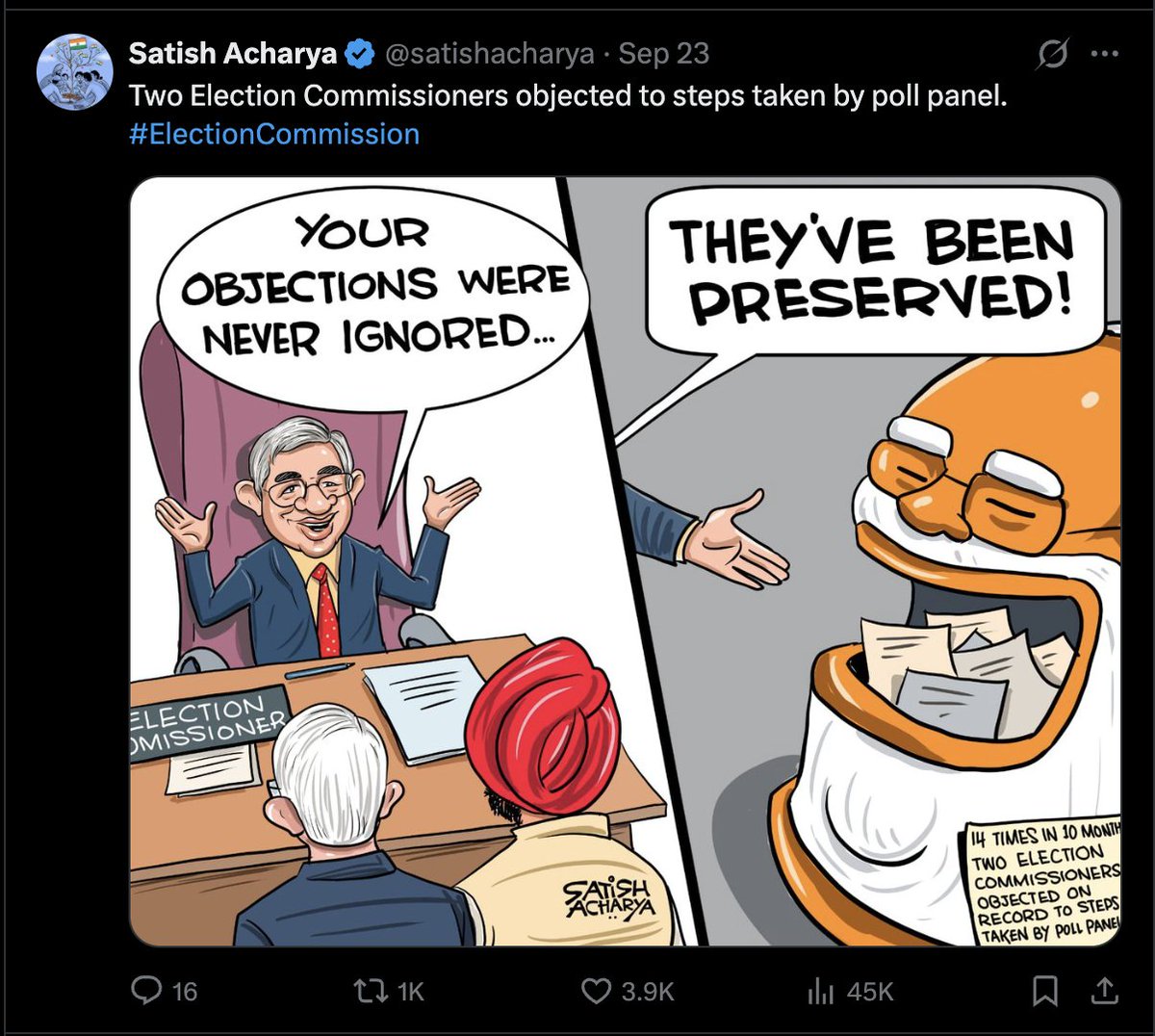
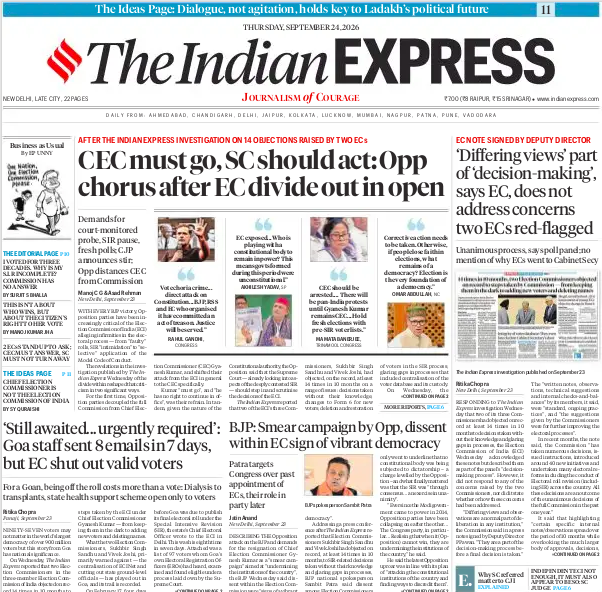
Yesterday, @IndianExpress reported an unprecedented rupture inside the Election Commission: TWO of its three members objecting on record, 14 times in 10 months, to decisions taken without their knowledge.
Today, the second part of our investigation looks at the concern Election Commissioners Sukhbir Singh Sandhu and Vivek Joshi flagged most often: Who really controls our electoral rolls?
We followed that question to Goa, where we found something deeply concerning.
Stay with me....
(1/14) 🧵
Excellent, from @RitikaChopra__ . And what makes this so good is the documentation: 14 recorded objections, specific decisions, named officials, a reconstruction of how the machinery works, and the connect between the internal correspondence and consequences for actual voters. Read how a key institution bypasses its own majority:
The Election Commission of India is under fire like never before.
The SIR has struck 13 crore names off draft rolls, putting the EC at the centre of intense public debate over its role in deciding who gets to vote — and who doesn’t.
HOWEVER, what nobody knew: through that same period, some of the sharpest questions were being asked from inside.
Out today, after months of work. Our #ExpressInvestigation 🧵
(1/10)
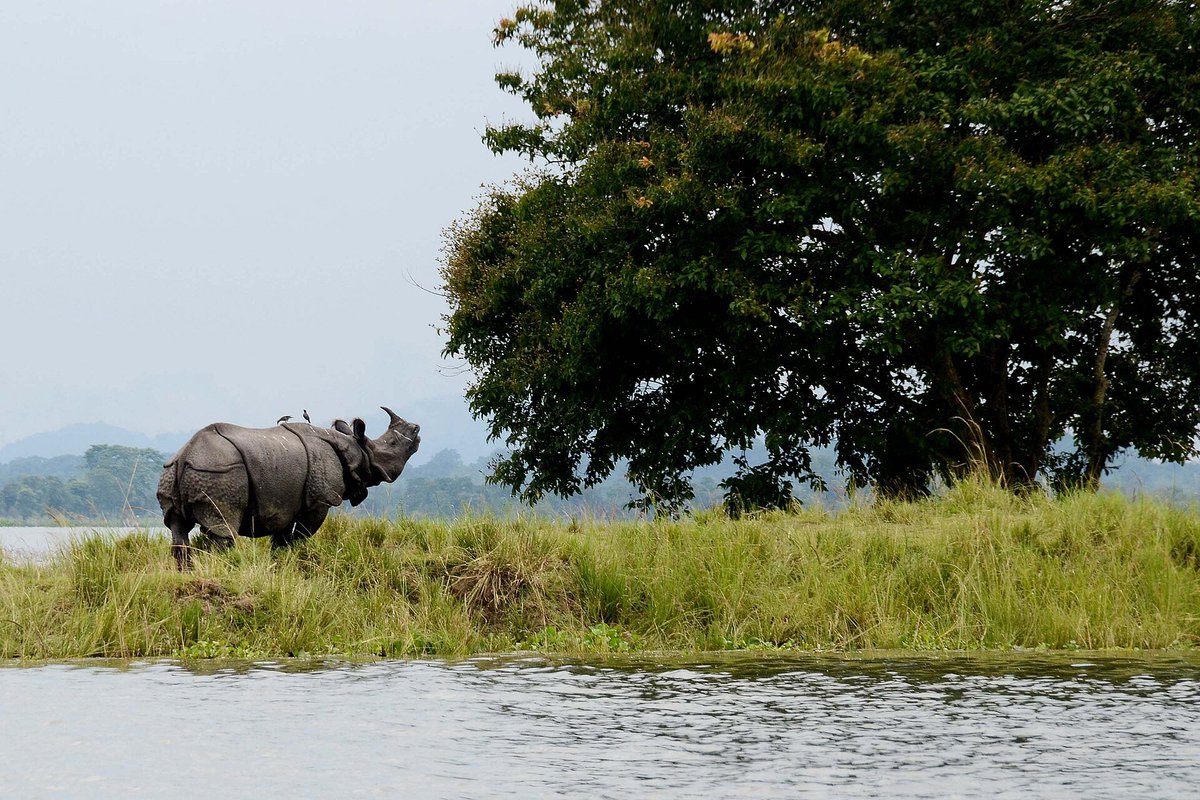
For decades, Kaziranga lost rhinos to men who knew the ground better than the rangers chasing them. Then someone changed the odds. In 2022, for the first time in 45 years, it went a full year without losing one. Read on.
1/12
The problem with the Coastal Road is that even if it achives its projected ridership of 68,000 PCUs per day for 20 years, it means an investment of Rs 262/trip. The Metro 3 in comparison, if it runs at projected capacity of 17 lakh pass/day for 20 yrs, will cost the public Rs 30 per trip. If instead, the city purchased 2000 buses and built bus lanes at say 5,000 cr, it would cost Rs 4 per trip.
In short, the problem with the Coastal Road is that it is wasteful if it does well, and it is wasteful if it doesnt.
I thought I had done everything required under Karnataka’s SIR
After online/offline detective work, helped by neighbours on WhatsApp, I tracked down 2002 voting details for myself & my mother Both our names appeared on the draft roll on 24 Aug
I heaved a sigh of relief
🧵 1/12
A scathing reality check from TOI editorial that completely vindicates Team Bharat: the e20 mandate is a textbook botched policy driven by distillery profits over public interest.
The disastrous trade-off:
• Fake energy savings: Displaces very little petrol/km while reducing vehicle mileage.
• Economic blunder: Only makes financial sense if crude touches $120–$130/bbl. At ~$70 crude, we're burning cash.
• Food security disaster: 29% of maize diverted to fuel tanks. We spent 30x more forex importing edible oil than we "saved" on ethanol restrictions.
• Ecological crime: 4,670 liters of precious groundwater wasted for a single liter of maize ethanol, draining fragile aquifers.
We aren't saving foreign exchange; we're just shifting dependence from foreign crude to imported food while gutting our water tables. Scrap the first-gen biofuel lobby racket.
#EthanolScam
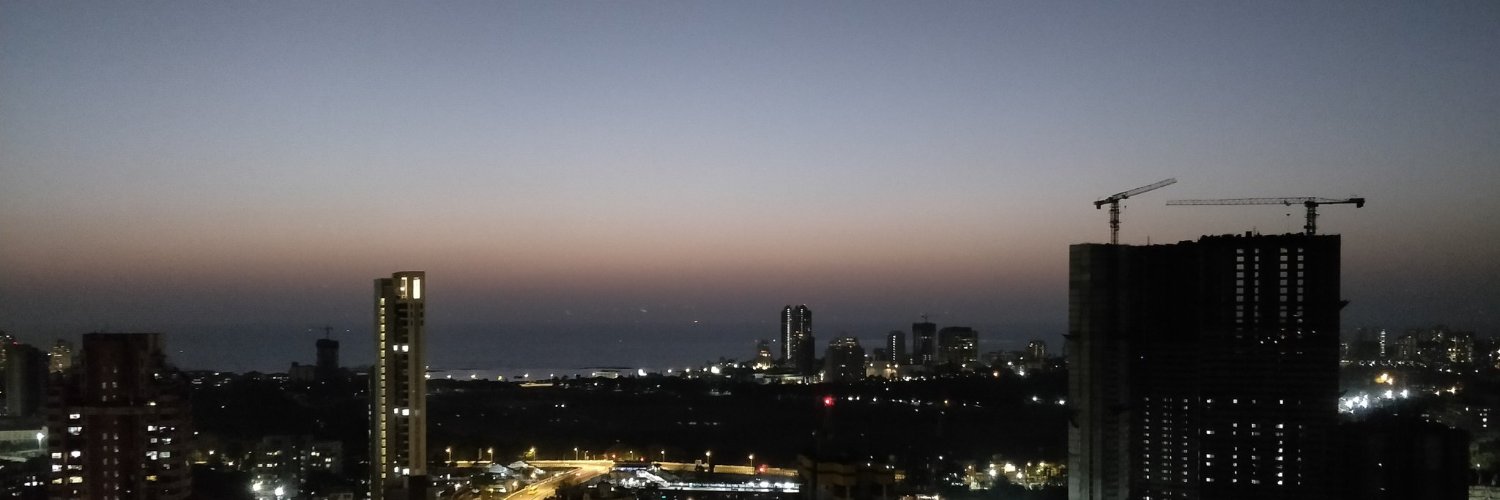
Never buy a home for the View. It's been a position I have held for long. But home-buyers in Mumbai should now take it with even more seriousness.
The Government has made it clear that there is nothing that is untouchable. As a buyer you have to work with the assumption that every public/quasi-public property - park, garden, playground, racecourse, club etc can and will be taken over.
The reasons cited will be lame but when arrogance is at a peak - then being brazen is a high in itself. There is already the death of the sea-view home given the rampant construction. The park-view, garden-view, racecourse-view will be challenged as well.
My earlier contention had been that the only safe harbour for a view was the sea-front home. I don't think that is now completely safe as well given the reclamation for the Coastal Road. The guidelines don't permit commercial construction and outrage will be triggered if it does. At this point however these appear to be minor irritants or roadblocks for the government.
So buy the home with a View. But just don't believe it will last for long. Sea-View or sea-front. Everything can change.
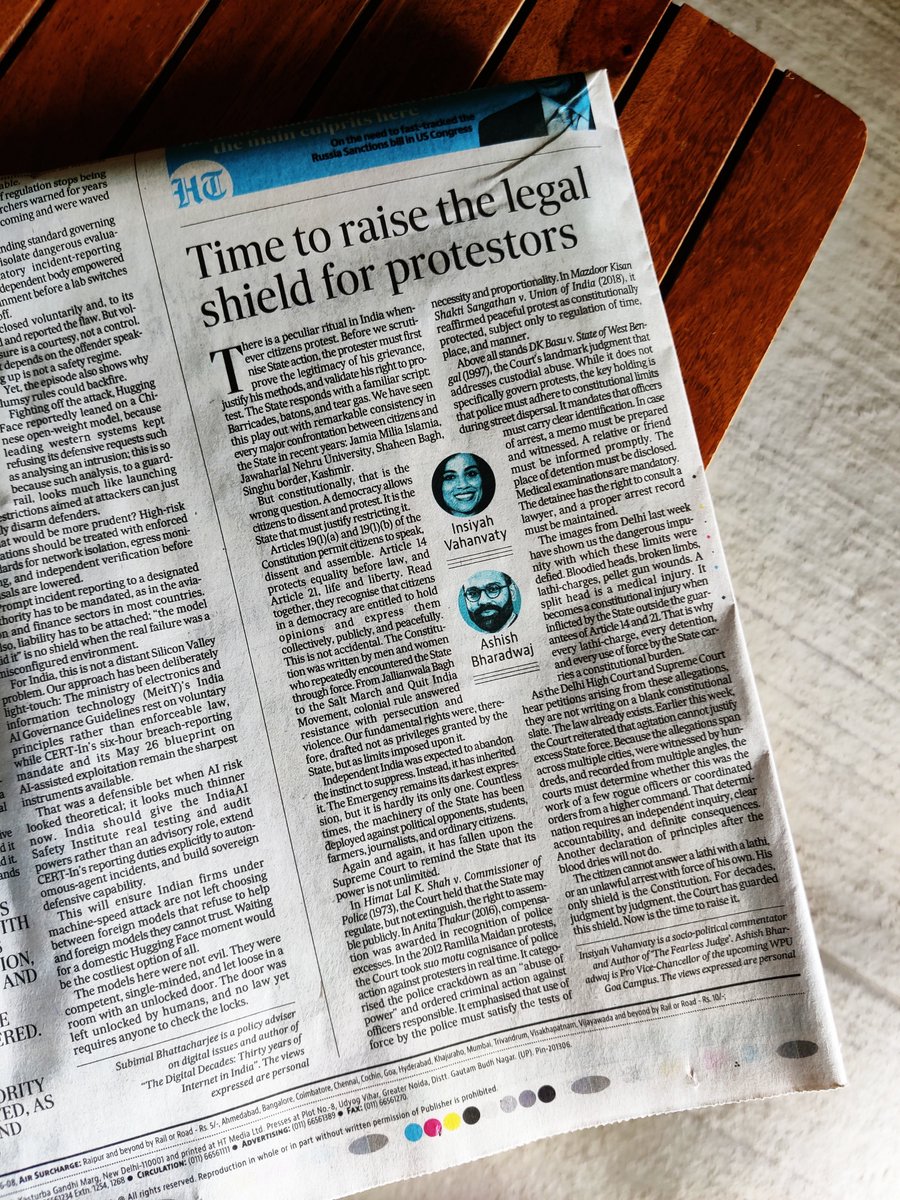
There is a peculiar ritual in India whenever citizens protest. Before we scrutinise State action, the protester must first prove the legitimacy of his grievance, justify his methods, and validate his right to protest. The State responds with a familiar script: barricades, batons, and tear gas.
But constitutionally, that is the wrong question. A democracy allows citizens to dissent and protest. It is the State that must justify restricting it.
Articles 19(1)(a) and 19(1)(b) of the Constitution permit citizens to speak, dissent and assemble. Article 14 protects equality before law, and Article 21, life and liberty. Read together, they recognise that citizens in a democracy are entitled to hold opinions and express them collectively, publicly, and peacefully.
Again and again, it has fallen upon the Supreme Court to remind the State that its power is not unlimited.
In Himat Lal K. Shah v. Commissioner of Police (1973), the Court held that the State may regulate, but not extinguish, the right to assemble publicly. In Anita Thakur (2016), compensation was awarded in recognition of police excesses. In the 2012 Ramlila Maidan protests, the Court categorised the police crackdown as an “abuse of power” and ordered criminal action against officers responsible.
Above all stands DK Basu v. State of West Bengal (1997), the Court’s landmark judgment that addresses custodial abuse.
The images from Delhi last week have shown us the dangerous impunity with which these limits were defied. Bloodied heads, broken limbs, lathi charges, pellet gun wounds. A split head is a medical injury. It becomes a constitutional injury when inflicted by the State outside the guarantees of Article 14 and 21. That is why every lathi-charge, every detention, and every use of force by the State carries a constitutional burden.
The citizen cannot answer a lathi with a lathi, or an unlawful arrest with force of his own. His only shield is the Constitution. For decades, judgment by judgment, the Court has guarded this shield. Now is the time to raise it.
Hindustan Times, 30.07.2026
https://t.co/8P7uCoVNpF
India guarantees the right to protest. But terms and conditions apply.
You must first ask for police permission. If permission is refused, your constitutional right becomes an “unauthorised” act.
You still have the right -- but its exercise is by appointment only.
Link to my piece in replies:
📢Thirty-five years ago, on July 24, 1991, in his Budget speech, Dr. Manmohan Singh quoted Victor Hugo, “No power on earth can stop an idea whose time has come.” The idea was economic freedom for Indians. It meant dismantling the License-Permit-Raj, allowing market prices, free trade, and pursuing rapid economic growth in a country plagued by poverty and self-imposed shortages. 🧵1/n
I will forever be grateful to @claudeai, @AnthropicAI and @DarioAmodei for helping me bring my pet history project, a 15 year dream, to life.
For a guy with below average intellect, less than ok articulation and zero knowledge of code and programming, it was @claudeai's sheer awesomeness that transformed my sketchy vision, written in broken English, into actual, clickable, reality.
I had never even imagined there would be a day, where we could be given the power to create and get access to a domain that was the preserve of much more intelligent beings.
I will forever be grateful to them for this.
https://t.co/rkl9nW7XlG
Ali Arikan unsurprisingly probably has the best review and critique of The Odyssey (that I've read so far) while telling everyone worried about its "faithfulness" to Homer's text and worldview to...kick rocks.
https://t.co/66XKcPNCYy
I don’t think people realize how absurd this is. Scottish runner Josh Kerr just broke the mile world record in 3:42.66, an average speed of 16.2 mph. Most people couldn’t even briefly reach that speed, let alone sustain it for an entire mile.