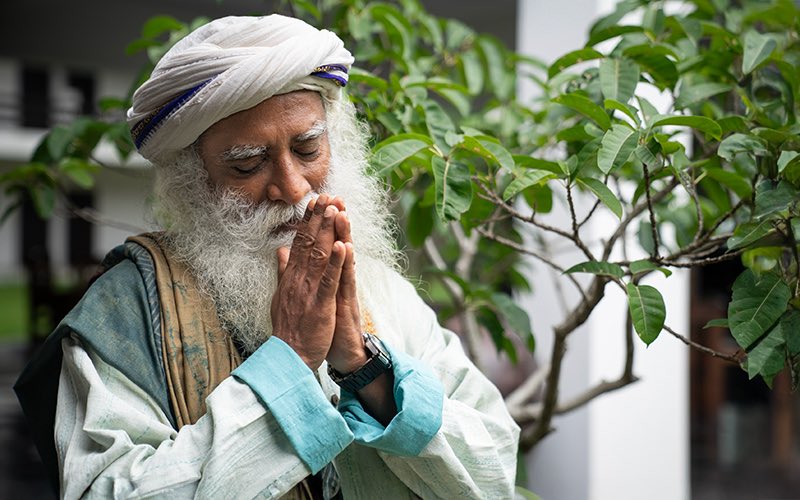
We like obedient people and authority over them around us .
Makes us happy isn't...
Watch it out ,,, EGO game is on..
Try it out , when someone niches his or her own path ,
Anger and jealousy takes over .. Ego is hurt 🤕😜
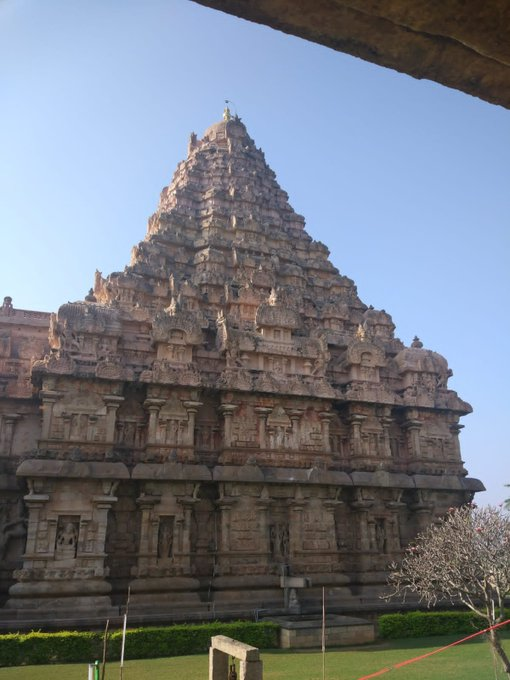
🚨The biggest lie told about Hindu temples?
That they were only for worship.
Ancient Hindu temples ran Gurukuls, Goshālas, hospitals, kitchens, martial training, music, dance, water systems, local economies & cultural archives.
They were the backbone of Bharat. 🧵
A Hindu temple was not just a “prayer hall.”
It was a living civilizational institution.
Large temples, Mathas, Peethas & pilgrimage centers often functioned as the community operating system of the region.
Here is what temples did beyond worship:
🛕 1. Devalaya
Pūjā, yajña, abhiṣeka, utsava, vrata, prasāda & festivals.
📚 2. Gurukul
Veda, Vedāṅga, Sanskrit, grammar, logic, philosophy & śāstra learning.
🏫 3. Student support
Food, lodging, stipends & free education for students and teachers.
🎙️ 4. Śāstrārtha
Debates, Vedic recitation, Purāṇa-kathā & public discourses.
🎶 5. Music
Vocal music, nādasvaram, drums, bells, conch, bhajan & kīrtan.
💃 6. Dance & Natya
Temple dance, ritual performance, drama, storytelling & festival arts.
🎨 7. Art schools
Painting, sculpture, iconography, mural art, śilpa & temple architecture.
⚔️ 8. Martial training
Dhanurveda, wrestling, weapon training & regional martial traditions.
🐄 9. Goshāla
Cow protection, dairy, ghee, agriculture support & ritual needs.
🍛 10. Anna-dāna
Feeding pilgrims, students, devotees, poor people & travelers.
🏥 11. Hospitals
Ārogyaśālā, Ayurveda, doctors, nurses, medicine storage & maternity care.
🛏️ 12. Pilgrim housing
Dharmashālā, resting halls, water, shelter & food for travelers.
📜 13. Libraries
Palm-leaf manuscripts, Vedas, Purāṇas, śāstras & sacred records.
🪙 14. Treasury
Gold, silver, jewels, coins, land grants, donations & endowments.
🌾 15. Agriculture
Temple lands, cattle, irrigation, granaries, crops & storage systems.
💧 16. Water management
Temple tanks, wells, stepwells, canals & rainwater harvesting.
⚖️ 17. Community space
Village sabhās, public announcements, dispute resolution & local decisions.
🧑🏭 18. Employment
Priests, cooks, guards, sculptors, musicians, dancers, accountants & gardeners.
🛒 19. Trade & markets
Pilgrim markets, merchant networks, artisan guilds & festival commerce.
📅 20. Calendar keeping
Tithi, nakṣatra, eclipse timing, festival calendars & ritual astronomy.
🧘 21. Dharma guidance
Guru advice, saṁskāras, family rituals, spiritual counseling & community ethics.
🔥 In short:
Ancient Hindu temples were:
🔥Devalaya + Gurukul + Goshāla + Annakshetra + Hospital + Art Academy + Music School + Treasury + Grain Bank + Water Center + Community Court + Pilgrim Shelter + Economic Engine + Cultural Archive.🔥
They were not merely “places of worship.”
They were spiritual, educational, cultural, economic, ecological & social institutions that sustained Hindu civilization for centuries.
We were not just building temples.
We were building a civilization!
RT and Follow @Sarfarosh_IND for such cultural insights
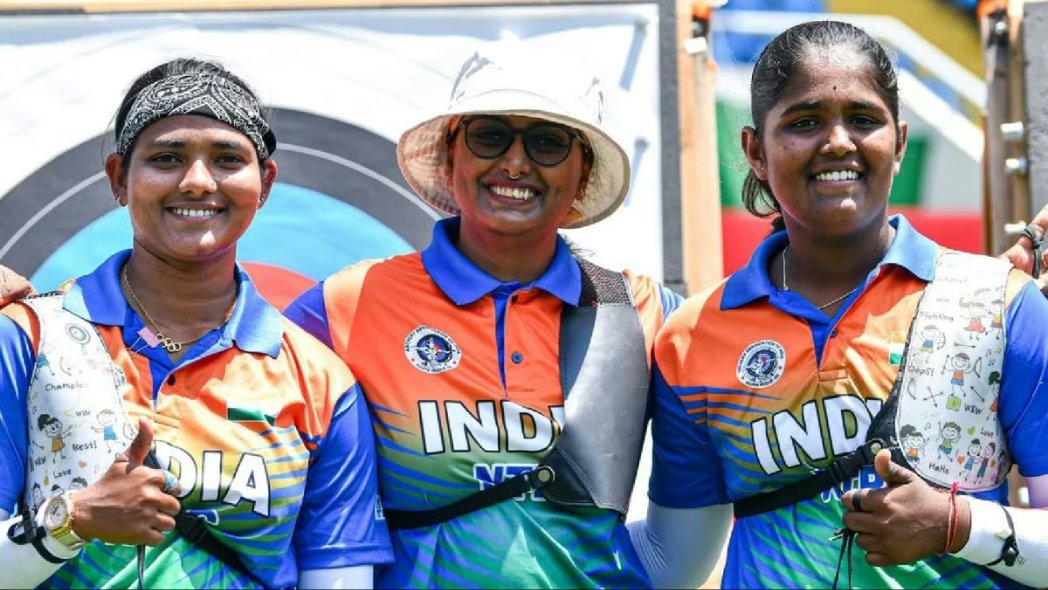
NEWS FLASH: India win GOLD medal in Archery World Cup.
Trio of Deepika, Ankita & Kumkum beat home favorites China in a thrilling shoot-off (28-26) in Final of Women's Recurve Team event.
Earlier India had defeated powerhouse South Korea in Semis.
#Archery
My advice to Gen Z neo-public speakers and reel makers. (and their Gen Z friends and publc)
This is long but very crucial for you.
Because even if you are not ready, you have to carry the mantle of Hindutva in a far more dangerous future:
1. Make sure what you talk is merely 25% or less of your silent actual serious impactful work.
This will make sure that whatever you speak is not merely theoretical, but is rooted in realism and responsible.
2. Spend at least 2-3 years working in a large organization with a diverse variety of people. RSS is best for this.
This will give you a perspective on why things that seem simple in theory do not work out in practice in same way. You will understand the science of group behavior and valuing alternate viewpoints.
3. Learn practical law. Don't assume or self-argue.
Consult a good lawyer (not AI) to run through every thing you speak for first 1-2 years.
Observe what @Vishnu_Jain1 speaks - because he gets disruptive results and also speaks - all within ambit of law. And in desi bhasha that connects with all.
You will learn forever what to speak and what not to.
4. Do not overestimate your contribution to Dharma by speaking. It will always remain far lower than those who work on Bhoomi, or bring actual results.
Because there is nothing new that you can say beyond what has already been said in last 150 years of so-called RW movement that started around 1875.
You will only be packaging old stuff, originally researched and prepared in past, in new package for your fame and virality.
The need today is concrete action and enabling those who are into concrete action.
5. Your speech only makes sense if you are actually doing at least 3 times more concrete action.
त्रिपादूर्ध्व उदैत्पुरुषः पादोऽस्येहाभवत् पुनः
6. Choose your focus. Do not start giving views on such everything. This is छपास रोग.
Gain some experience, do some real ground work, and then expand your subject portfolio.
Because a loose tongue across multiple subjects you do not have command on only means multiple chances of blunder.
7. Avoid giving rousing speeches of valor unless you have been in situations of life and death against lynching mobs etc.
Else you will be exemplifying राजकुमार उत्तर syndrome - who would talk bravely among women of his palace, but panicked when he saw the army (Refer विराट पर्व of महाभारत)
8. If your fellow-speaker is in trouble, at least speak for him. I am really upset to see that when Gautam Khattar is in crisis, there are those who owe their career surge to Gautam Khattar are suddenly mute.
Otherwise, they only talk valour and aggression with a swag that will beat gold medalists of National School of Drama.
Learn to stand with friends in crisis.
9. Know that already we have too many battles to fight. When your loose tongue causes trouble to you and rest of us come together to rescue you, it comes at a heavy price of sidelining other crucial battle fronts.
Hence be responsible.
Crisis can happen with anyone. And we will come together for bandhu in need to best of our abilities. But the crises that can be avoided by being more responsible, must be avoided.
10. Your job is not to fire शब्दबाण but to fight to win.
Again, I refer to Vishnu Shankar Jain. Stop for a moment and think how would he have framed the same issue.
Also, I want to highlight that there are many topics on which he has a lot to say, but he chooses silence because the battle-front there is court.
Speaking will give virality but harm the results.
11. Summary -
a. Gen Z Speakers - Be responsible. Be grounded. Get experience. Keep speeches not more than 25% of your impactful ground work.
b. Gen Z Friends of those in crisis - this is real time to show valour. Don't make useless reels when you should be speaking strongly in support of Gautam Khattar.
c. Everyone else - identify those who do not stand in time of crises with own.
Eliminate them from your mindspace totally. Invest in those who remain mitra in विपत्ति।
राम राम
संजीव नेवर
"Dhurandhar: The Revenge" Review (no spoilers)
By PVR Narasimha Rao
Well before shell-shocked status quo Bollywood swung into action with a shrill & silly "it's propaganda" propaganda against record-shattering & epoch-making Dhurandhar 2, south Indian Super Star Rajinikanth gave the perfect verdict: "A must watch film for every Indian"! What a movie!! 👏
It is rarely that a movie comes along that sails against much conventional film industry wisdom and changes the semantics and syntax of filmmaking.
Its well-crafted script, inspiredly cast characters, superlative acting performances (from stars to the supporting cast), uncompromising technical excellence & crispness - all played a role in its ongoing historic success. But my assessment is that the biggest factor making so many throng the theaters, multiple times in many cases, is subtle & intangible - this movie is quite cathartic to an Indian populace traumatized by Pakistan-sponsored terrorism for decades & watching frequent news clips in recent years from Pakistan about the death of various architects & operatives of the terror infrastructure at the hands of "unknown men". While the first part set things up, the second part is the culmination and it feels so fulfilling.
* * *
I am now a huge fan of young writer-director Aditya Dhar. He is not only a master of his craft(s!), but has an unbelievable amount of guts & conviction! He released a sequel just 3 months after the original; he released it with just a trailer and no promotional events of any kind; it is nearly 4-hour long; gore & violence are splattered all over it; and, a highly emotional sequence of several minutes comes after the movie is basically over! Yet, EVERYONE in the theater (all 3 times I watched it!) remained glued to their seats! After a minute or so of titles at the end, there was footage from the secret agent training and people remained in their seats even then and watched with awe! In this age of instant gratification and short attention spans, commanding people's attention for 4 hours is just magical.
Whether it's the emotional sequences or action sequences with much violence or just high octane political drama, nothing feels forced or artificial in this movie and that's the key to its success - things just feel genuine and authentic. You feel like you understand each character - who they are, what they feel and want - and every character and situation is so believable and relatable. It's so engaging and fulfilling mainly because storytelling and character sketching are at their very finest.
Dhar tweeted: "The goal is clear, to see Indian cinema stand as the finest in the world, not by imitation, but by owning who we are and telling our stories with truth and ambition."
That's indeed what it does. It shatters the false equivalency, carried on religiously in Bollywood for years, between India and a neighbor that embraced harboring cross-border terrorism as the unofficial state policy a few decades ago. It ambitiously tells the Indian perspective with gusto, panache & skill. And it tells it in such a way that even those who are not emotionally vested in India are engrossed in a fascinating story told masterfully.
Apart from superb writing and excellent acting, crisp cinematography by Vikash Nowlakha, engaging music by Shashwat Sachdev and brilliant & crisp editing by Shivkumar V. Panicker truly elevate the proceedings and enhance the impact.
* * *
While the first part saw one of Akshaye Khanna's career best performances, the second part sees Ranveer Singh's career best performance, as Jaskirat Singh Rangi and Hamza Ali Mazari.
Whether it's the scene where the young army trainee finds, after a violent rampage, his sister held in captivity by her rapists, with a myriad emotions being painted on the canvas of his face in quick succession, or the scene where an Indian secret agent has to confront his innocent Pakistani wife who finds out his reality, or the scenes of assured & thoughtful scheming, or the scenes of heart-wrenching dilemmas, or the scenes of flamboyant heroism, or the scene where he visits his mother and sister and is caught between dharma towards them & dharma towards nation, he is just outstanding.
Most spy movies and secret agent characters, not only from India but from Hollywood too, are very bland and flat with no depth in the character sketch. Here's a believable character enacting a believable drama, with varied human emotions.
Ranveer Singh can be proud of his portrayal of this complex character. The variation he brought during different phases is impressive.
Sara Arjun delivers an impactful performance in her limited screen presence. The scene of her confrontation with her Indian secret agent husband as a patriotic Pakistani, is written and acted superbly. The way Yalina reflects and processes the conversation, comes across so brilliantly. Also her acting in the scene in which Hamza hangs up the phone and she feels happy, sad and restless at the same time is masterful - too good for a newcomer.
Rakesh Bedi as Jameel Jamali, the cunning Pakistani politician, is an absolute class act. After a 49-year long career in films, theater and TV, it's great to see this natural actor get his due! Whether he's reveling in getting the better of someone, or being cautious to not let someone get the better of him, or making a U-turn at the drop of a hat, or simply weighing the next opportunistic movie, the survivor politician he depicts is just too relatable in the sub-continent.
R Madhavan is absolutely brilliant as Ajay Sanyal (based on Ajit Doval, current NSA of India). Madhavan so resembles Ajit Doval, not just in looks but in behavior and speech too. He gets the most clap-worthy lines in this part and delivers them with such calm confidence & finesse. His character personifies a traumatized nation's indignation that turns into firm resolve for revenge and finally into an executed action plan that delivers revenge & self-confidence.
Arjun Rampal get more screen space in part 2 and does full justice with his magnetic screen presence. The powerful, confident, vile and scheming ISI major he plays with such fervor, is a treat to watch.
Gaurav Gera as Alam touches hearts in just a few scenes he has, with a heartfelt performance. Danish Pandor as Uzair Baloch is impactful with a range of emotions - raw anger that erupts like lava, unhindered cockiness of a reckless victor, naivete of an emotional fool, and confused resignation of a tragic hero.
Raj Zutshi as the DG of ISI shines in an important cameo. Sanjay Dutt as SP Chaudhary Aslam delivers a massy and rockstar performance.
Udaybir Sandhu as Gurbaaz "Pinda" Singh (based on Harvinder Singh Sandhu "Rinda") delivers a heartfelt performance, whether as Jaskirat's loving & caring childhood buddy sharing the workload of his drug dealer father or later as the criminal anti-national drug lord dealing with Pakistan. He delivers the interval bang with a cool poise.
Though it's a pretty intense movie, there are some laughs here and there, not only from the story and lines, but also from cleverly placed background songs in some scenes. In general, the placement of background songs in various scenes is done very thoughtfully, to enhance the emotions.
* * *
Mukesh Chhabra deserves special mention for the work he did as the casting director. There is a great resemblance between the actors and who the characters played by them are based on! While it's uncanny in general, special mention goes to Salim Siddiqui as Atif Ahmed (based on Atiq Ahmed), Mashhoor Amrohi as Nawab Shafiq (based on Nawaz Sharif). Also, Danish Iqbal recreated Dawood Ibrahim quite well. Many people may assume that the picture on the wall in some scenes is of Dawood Ibrahim himself, though they recreated the iconic picture with the actor!
* * *
Thinking of Doval ji, "unknown men" etc always reminds me of a crazy premonition of @mmpandit!
In 2012/13, he interviewed Doval ji for "Ishrat Jehan Conspiracy" film (https://t.co/a21XRvskMD). Doval ji had long retired as IB Director & was running "Vivekananda International Foundation".
He told me after meeting Doval ji, "Narasimha, I had a strong feeling when I met him that he will come back to active public life soon and will play a very major role in shaping India's rise. He's not done yet & has a lot to give to the nation."
It was astonishing when Modi ji tapped Doval ji as the National Security Advisor in 2014! In later years, it became abundantly clear that he's very active in shaping India's visible and invisible (!) foreign policy. 🙏
Manish sometimes has these crazy premonitions that seem so unlikely at the time, but are proven so correct later on! 🙏
* * *
Lastly, there is a heavy propaganda that this is a "propaganda movie". In fact, the word "propaganda" is currently mentioned 24 times on its wikipedia page!
This is unfortunate and nonsensical.
The makers showed a slide at the beginning that it is a "fictional movie based on real events". They took many verifiable real events that happened in India and Pakistan in 2000s and 2010s and created a coherent and plausible narrative tying them all together (without claiming it's a true story).
Obviously, some real people appear in those real events and the tying narrative portrays them either positively or negatively. But they didn't go out of their way to portray anyone too positively or negatively - the events themselves organically did!
If they really wanted propaganda, they could've dragged the Atiq Ahmed arrest and killing scenes and brought in some Indian politicians who rallied for a proven ally in Dawood Ibrahm's anti-national and terrorist activities. They could've also portrayed how those leaders instigated Muslims by painting Ahmed's arrest and killing as "Muslim persecution". Instead, they left those out and focused on just Dawood Ibrahim and Atiq Ahmed.
They were also careful to not portray all Muslims, either Indian or Pakistani, negatively. The hero even explicitly mentioned that his (India's) fight is not against Pakistan or Pakistani people, but against the terrorists killing innocent people. He even highlighted that those terrorists (and their supporters within Pakistan government & ISI!) harm innocent Pakistanis too!
Thus, this is really an anti-terrorist movie and not an anti-Pakistan or anti-Muslim movie as some insinuated.
Yes, they don't shy away from showing how those terrorist masterminds exploit that particular religion, but that is just reality and not propaganda.
As for highlighting Modi's accomplishments, they essentially stuck to facts. It is a fact that Modi demonetized some higher denominations of Indian currency in 2016, all of a sudden. If they showed that that was done because a Pakistani money launderer and fake currency mogul covertly got hold of Indian currency plates and was pumping big amounts of fake currency into India to support terrorism, that is a plausible narrative (and many Indians believe it's the correct narrative). After all, there are some corroborating factors like that fake currency mogul dying by jumping from his own building one month after demonetization, like cross-border terrorism reducing in later years, and like Pakistani economy becoming weaker in later years. This is hardly propaganda - this is just building a plausible narrative that explains known real events.
If they showed Indian secret agents killing many terrorism masterminds & operatives in Pakistan in 2010s, that too is not propaganda, but a plausible narrative explaining real events. Each single person they showed in the movie was indeed killed in Pakistan by "unknown men". Those "unknown men" could very well be Indian secret agents (in fact, that is what the Pakistan government claimed several times).
In fact, those killings are still continuing and happened just a few days back. This is reality and not propaganda. If someone is upset that this makes Modi and Doval look good, too bad for them. They perhaps look good because they ARE good - after all, Doval ji came up with the Doval doctrine and Modi ji enabled him!
Below is a compilation of some of my tweets on various topics:
1. Nathuram Godse's statement - 7 conditions by Gandhi to break his fast:
https://t.co/4yaVN8KbNV
"Chhatrapati Shivaji Maharaj was not secular. He was a Hindu king who fought for Hindus and established Hindavi Swarajya. His flag was Saffron. Stop painting him in any other color for your political purposes. "
- Honorable Bhide Guruji makes it clear.
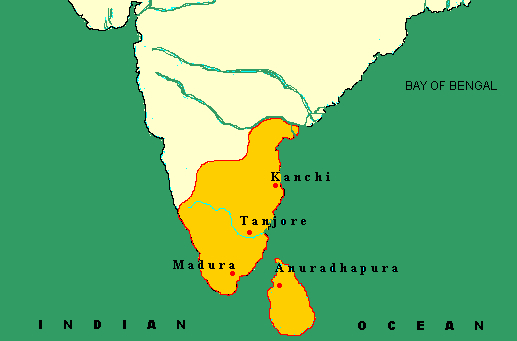
8️⃣ The Cholas controlled the Indian Ocean!
Raja Raja Chola conquered Maldives (Pazhan Thevu). Rajendra Chola (1025 CE) launched a naval expedition to Kadaram (Malaysia) & Srivijaya (Indonesia).
13+ South Asian ports captured.
3 embassies sent to China’s Song Dynasty!
Today, we fight over ‘language.’ 1000 years ago, Tamil Nadu’s Cholas ruled from India to Malaysia!
7️⃣ Fishing & Agriculture- The Backbone of the Chola Economy!
Fishing was a major industry, taxed under Minpattam. Irrigation tax (Neer Koolli) ensured lake & canal maintenance.
Villages were fined if lakes were not desilted!
Chanakya recorded:
"Ownership of fish & aquatic life in irrigation tanks belongs to the King."
The British crushed this system, taking fishing & irrigation away from local control.
6️⃣ How Cholas classified land-Better than today’s policies!
Neer Nialam – Water-rich land
Kollai – Semi-dry land
Kadu – Forest
Cultivable land was further divided into:
Nansai – Wet crops
Punsai – Dry crops
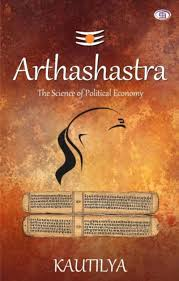
Even Chanakya’s Arthashastra followed similar land classifications based on rainfall!
Modern governments can’t implement such precision!
5️⃣ Cholas created the world's most advanced irrigation network!
-1505+ channels in the Cauvery Delta.
-Village tanks (Ur Kulam) connected to canals & lakes. -Water was sacred, wastage was illegal!
A 10th CE inscription by Uttama Chola states:
"Water must not be wasted. No diversions allowed. Embankments must hold maximum water." Our ancestors respected water. Today, we waste it.
4️⃣ Grand Anicut (Kallanai) – The World’s Oldest Working Dam!
-Built by Karikala Chola (~2nd CE). -329m (1080 ft) long, 12.2-18.3m (40-60ft) wide, 4.5-5.5m (15-18ft) high.
-Discharged 186,000 cusecs of floodwater! When British engineer Arthur Cotton studied it, he found NO mortar or cement, just gravity-held stones!
We call ourselves ‘modern,’ yet this 1800-year-old dam is still operational!
3️⃣ Cholas- The Masters of Water Engineering They built:
-Grand Anicut (Kallanai) – Karikala Chola (2nd CE)
-Veeranam Lake – Rajadithya Chola (10th CE)
-Cholagangam – Rajendra Chola (11th CE)
These massive reservoirs still function today, while we struggle with modern water crises!
2️⃣ Chanakya recorded El Niño 2300 years ago!
In Arthashastra (300 BCE), he observed:
-Venus appears in the eastern sky for 8 months, disappears briefly, then reappears in the western sky for another 8 months.
-This 19-month cycle aligns with El Niño Southern Oscillation (ENSO), a phenomenon linked to global monsoons!
The West ‘discovered’ El Niño in the 20th century. Chanakya had already linked Venus’s position to monsoons 2300 years ago!
This wasn’t a guess, Arthashastra documented cycles of drought & monsoon failures based on planetary positions.
How is this not common knowledge today?
1️⃣ Ancient Indians predicted rainfall with precision!
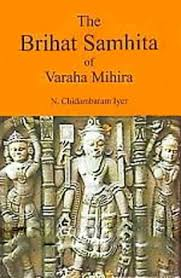
The Brihat Samhita (6th CE) by Varahamihira had 10 detailed chapters on meteorology, covering:
-Garbhalakshanam – The formation of clouds & their link to rainfall.
-The nature of rainwater – Was it fresh, acidic, or astringent?
-Seasonal monsoon patterns – Predicting floods & droughts.
This wasn’t mere observation—it was a structured scientific approach to meteorology, at that time before modern climate science!
While the world struggled with unpredictable weather, India had a system to forecast rains & protect agriculture.
Did you know?
1000 years ago, India ruled the seas, mastered water management, and built an empire that thrived on trade, agriculture & irrigation.
Today, we fall for North-South, language, and political divides, while our ancestors built systems that still function today.
A forgotten history of greatness! 🧵
When the Supreme Court of India engages in stark plunder, who do you petition? International Court of Justice? @asi_dharmic was denied access to justice & gaslit to boot.
The laws of self preservation are the highest law. Watch this space. https://t.co/ZEI7BTEhGN