Jensen Huang has been a longtime friend of the Jewish people and a strong supporter of Israel.
People aren’t perfect. We all make mistakes. Some happen in private, others happen under the brightest spotlight.
But it’s worth remembering everything someone has contributed before rushing to judge them by one moment.
Jensen has done so much for America, for our economy, and for the people who work at NVIDIA. Yet when it becomes fashionable to pile on, everyone seems quick to jump on the bandwagon.
There’s an important Jewish concept called Teshuvah, the belief that people can reflect, take responsibility, change, and deserve a second chance. We shouldn’t define someone by their worst moment.
I believe Jensen is an important asset to the United States, and I think Palmer Luckey put it well:
“China wants Jensen out, so I want him in.”
There’s something wrong when the Government spends more money on the CBC than Parliament, the Auditor General, the Federal Courts and Elections Canada combined.
CSIS our own intelligence service gets less money than them. Same with our Public Health Agency.
I guess keeping the Liberals in power and Canadians brainwashed needs to be rewarded.
“ISLAMISTS IN THE WEST DON’T LOOK LIKE EXTREMISTS” 🐺👉🏼🐑
@daliaziada explains on the “Call Me Back Podcast” with @dansenor that not all Islamists present themselves in the stereotypical “Islamic extremist garb”. The political ideology of the Muslim Brotherhood is using Western secular aesthetics, cultural movements, and political processes to disguise their true motives of “Civilizational Jihad”.
Follow for more!
#antisemitism #muslimbrotherhood #usa #qatar
Our veterans sacrificed their lives for this?
This doesn't just happen. This has been allowed to happen. This is by design.
How many more Remembrance Days do we have left before this day is entirely forgotten?
Volume up. Even if you don't speak Arabic, you'll understand.
Tonight in Washington, Yuval David moderated my panel with Dalia Ziada and Natasha Hausdorff.
Anti-Israel propaganda and modern-day libels are the latest mutation of Jew-hatred. Nazi Germany was defeated in Europe, not obliterated. It managed to pass the baton to the Arab world.
Listening to Dalia, I wondered whether people grasp the danger of the Muslim Brotherhood she kept coming back to. After all, "brotherhood" sounds friendly, and Islam is just another religion. Why make such a fuss about that "club," or about the ties some, like Abdul El-Sayed, are accused of having to it?
If you are a Westerner who thinks the Brotherhood is benign, look it up. Here is my attempt to spark your curiosity.
The first chapter of the Quran is called Al-Fatiha, "The Opening." It has seven verses, and Muslims recite it in every prayer. The last verse reads:
صِرَاطَ الَّذِينَ أَنْعَمْتَ عَلَيْهِمْ غَيْرِ الْمَغْضُوبِ عَلَيْهِمْ وَلَا الضَّالِّينَ
"The path of those You have blessed, not of those who have earned Your wrath, nor of those who have gone astray."
In the reading the Brotherhood preaches, "those who have earned Your wrath" are the Jews, and "those who have gone astray" are the Christians.
This is the interpretation my Damascene grandfather taught us. We did not know then that he belonged to that school of thought. He was so strict with his children about religion that his eldest son, my father's brother, set himself on fire at eighteen. He died of his injuries. My father, who was eleven, was not allowed to give him water at the hospital before he died. He never forgave himself.
When my grandfather eventually died, nobody cried, even though sadness filled the air. Only God knows what memories floated in it.
We are trying to warn you because, as Dalia put it tonight, we have seen this movie before.
This is the most important post I have ever written
I’ll also add it as an article. It’s long but I think I’ve identified how this has happened.
Identity politics has produced the rush to eliminationist rhetoric against Jews and Israel because its binary logic cannot accommodate a group that was the paradigmatic victim who went on to acquire agency.
The three switches as detailed by M.S Hiebert are the mechanism by which the model has ‘corrected’ this anomaly.
The three switches as discussed by Maureen Hiebert in Constructing Genocide and Mass Violence describe how elites reconceptualise a group so that its continued existence becomes a threat that must be solved.
Switch one places the group outside the political community as foreigners.
Switch two recasts its mere presence as a mortal danger whose existence itself is the problem.
Switch three dehumanises the entire group so that ordinary restraints no longer apply.
These are not automatic features of conflict.
They are activated when a pre-existing ideational framework supplies the categories that make this reconceptualisation coherent.
Identity politics, as it consolidated in Western institutions after the 1960s, supplies exactly this framework.
It sorts groups into fixed categories of oppressor and oppressed according to historical narratives of colonialism, race, and power.
The sorting is not driven by present-day individual outcomes or by the internal complexity of any group.
It requires that the paradigmatic victim remain powerless, non-agentic, and structurally unable to improve its condition without external intervention.
Jews fail each requirement.
They were the central victims of the twentieth century’s most systematic genocide, yet in the postwar West they achieved high average socioeconomic outcomes and disproportionate representation in fields the framework treats as sites of power.
In the Middle East they were refugees from Arab countries as well as survivors of Europe, but they built a state that defeated repeated attempts to destroy it. Agency and success after victimisation are not supposed to occur.
When they do, the framework has two options:
Revise the model or reclassify the group so that its success is reinterpreted as evidence of original or ongoing guilt.
The second option has predominated, and the reclassification proceeds through the three switches.
Switch one follows directly.
Once Jews are no longer legible as pure victims, their presence becomes anomalous.
In the West they are coded as white or adjacent to whiteness, which places them on the oppressor side of the binary even though European antisemitism is recent and extreme.
In the Middle East the same group is coded as European settler-colonials, which erases continuous Jewish presence and the expulsion of roughly 800,000 Jews from Arab countries after 1948.
Either coding removes them from the legitimate circle of peoples entitled to self-determination.
The collective is redefined as an interloper whose membership in the political community is conditional, threatening, or fraudulent.
Switch two is required to preserve the model’s explanation of disparities.
The framework treats unequal outcomes as evidence of oppression by the powerful.
Jewish success demands an account that does not revise the binary.
The available accounts are that Jews (or Israel) exercise hidden control,
that their success is extracted from others and that their collective existence itself is the obstacle to justice.
The last of these is the switch: the continued presence of a Jewish state, or of Jews as a distinct people with agency, is framed as the reason other groups remain disadvantaged.
Policy disagreements are subordinated to the claim that the world or the region would be fairer if the Jewish collective did not exercise sovereignty.
This is the content of the eliminationism:
“If Israel didn’t exist the world would be better.”
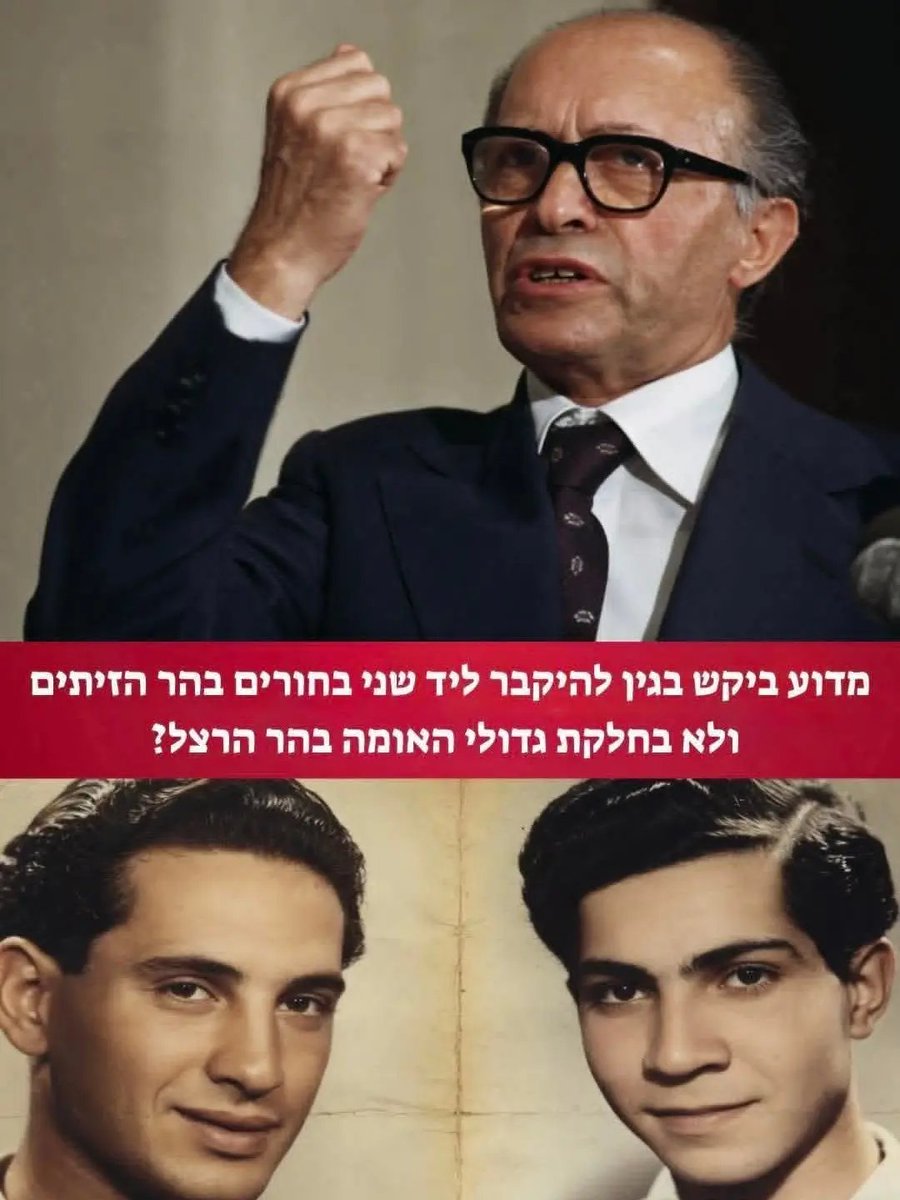
ביום שבו נפטר מנחם בגין, ב-9 במרץ 1992, רבים הופתעו לגלות כי בשונה מהמצופה, ציווה בגין כי יקברוהו בהר הזיתים, בצמידות לקבריהם של לוחמי המחתרות, מאיר פיינשטיין ומשה ברזני.
בשביל להבין את צוואתו של בגין ז"ל, צריך לחזור לליל ב' באייר תש"ז, הלילה שבין 21 ל-22 באפריל 1947.
הייתה זו שעת לילה בתא הנידונים למוות שבמגרש הרוסים בירושלים.
שני בחורים כבני עשרים ישבו שם:
האחד, מאיר פיינשטיין, ירושלמי, אשכנזי, לוחם האצ"ל.
השני, משה ברזני, יהודי יליד בגדד, לוחם הלח"י.
פיינשטיין נפצע קשה ואיבד את ידו במהלך פעולת האצ"ל בתחנת הרכבת בירושלים, שבה נתפס בידי הבריטים.
ברזני נתפס במהלך עוצר כשברשותו רימון יד.
שניהם נידונו למוות על ידי הבריטים, והיו אמורים למחרת בבוקר להיות מובלים אל הגרדום.
אבל התוכנית שלהם הייתה אחרת.
באמצעות חומר נפץ שהוברח לכלא בתוך תפוזים, הם קיבלו שני רימונים מאולתרים....
התכנון היה שכאשר יגיעו התליינים להוביל אותם אל הגרדום, יפוצצו את עצמם יחד איתם.
הם החליטו שאם הם ילכו, לא יובילו אותם כצאן לטבח, אלא הם ילכו כלוחמים בבחינת "תמות נפשי עם פלשתים", כשמשון הגיבור בשעתו.
אך בלילה שלפני ביצוע גזר הדין הגיע אליהם הרב יעקב גולדמן, רב בתי הסוהר, כדי לשהות במחיצתם ולהתפלל איתם.
במהלך השיחה שוחחו השניים עם הרב על מוות, על קידוש השם, ואף ביקשו לברר את דעתו ההלכתית על אדם השולח יד בנפשו כדי שלא ליפול בידי אויביו.
הרב לא ידע שהם מתכננים לפוצץ את עצמם.
אבל השניים כבר ידעו מה בכוונתם לעשות.
וכשנודע להם כי הרב מתעקש לשוב בבוקר וללוות אותם אל הגרדום, הם נחרדו. הם הבינו שתוכניתם עלולה לסכן את חייו.
הם הפצירו בו שלא יבוא.
ניסו לשכנע אותו שכבר עשה די למענם.
אבל הרב התעקש.
הוא הבטיח שיהיה לצידם עד הרגע האחרון...
והם הבינו שאינם יכולים לאפשר זאת.
באותו הלילה מסרו לרב את התפילין שלהם, מסרים אחרונים למשפחותיהם ואפילו סוכריות שביקשו שיחלק לחבריהם בכלא.
פיינשטיין גם העניק ספר תנ"ך עם הקדשה אישית לסמל הבריטי תומס גודווין, שנהג בהם בהגינות.
ולפני שנפרדו, שרו השניים עם הרב את "אדון עולם אשר מלך".
הרב יצא מהתא, כשהוא מבטיח לשוב עם שחר.
אבל השניים כבר ידעו שלא ימתינו לבוקר.
ברזני ופיינשטיין, שאיבד את אחת מידיו, נצמדו זה לזה.
חזה אל חזה.
כשהרימונים בין לבבותיהם...
וברגעיהם האחרונים, כששניהם חבוקים, החזיק ברזני את פתילי הרימונים, ופיינשטיין הדליק סיגריה והצית באמצעותה את הפתילים.
הפיצוץ הרעיד את בית הסוהר.
שני הלוחמים נהרגו יחד, בטרם השיגם התליין.
אחד אשכנזי.
אחד עיראקי.
שני בחורים צעירים משתי מחתרות שונות, שבחרו לעמוד יחד גם ברגעיהם האחרונים.
בגין זכר את הסיפור הזה כל חייו...
וכשהבדרן דודו טופז לעג לתומכי הליכוד בעצרת המערך ב-27 ביוני 1981, וכינה אותם "צ'חצ'חים" ו"שין גימלים", בגין הגיב למחרת, ב-28 ביוני, בנאום שנחרט בזיכרון הלאומי:
"בני עדות המזרח שלנו היו לוחמים גיבורים, גם במחתרת!"
בגין סיפר על פיינשטיין האשכנזי ועל ברזני העיראקי.
על שני הלוחמים שעמדו בפני הגרדום.
על הרב שהתעקש ללוות אותם, ועל הרימונים שהצמידו ללבבותיהם כדי שלא לפגוע בו.
ואז הרעים בקולו:
"אשכנזי?
עיראקי?
יהודים! אחים! לוחמים!"
זה היה נאום פוליטי, ללא ספק.
אבל זו הייתה גם זעקה אמיתית מהנשמה.
וכשבגין נפטר, אחת עשרה שנים אחרי אותו נאום, נותרה בקשתו שהפקיד עוד בחייו בידי איש אמונו, יחיאל קדישאי:
להיקבר בהר הזיתים, ליד מאיר פיינשטיין ומשה ברזני.
וכך היה.
מנחם בגין נקבר בהר הזיתים, לצד רעייתו עליזה, ובסמוך לקבריהם של שני הלוחמים.
לא בחלקת גדולי האומה.
לא לצד ראשי ממשלות ונשיאים.
אלא ליד שני בחורים כבני עשרים.
אשכנזי ועיראקי
יהודים.
אחים.
לוחמים.
This week, 19 Arab lawmakers were elected to Israel’s parliament. They are paid by the state and openly accuse it of war crimes.
Under the Palestinian Authority, Jews are barred from residing, killers of Jews receive state payments, and selling land to Jews can carry the death penalty.
Guess which one is labeled an apartheid state.
"If a broad, centrist Zionist government is formed here, without the ultra-Orthodox and Arab parties, and finally begins confronting the fundamental questions facing the State of Israel, that will be the achievement we sought."
The vote count is complete. The Reservists and Economic Party received the support of approximately 152,000 voters, who appear to have come in roughly equal numbers from both political “blocs,” and from socioeconomic clusters reflecting the full political, economic, and identity spectrum of those who rushed to the front lines to defend the country on October 7. In doing so, we became the only party in these elections whose agenda and voters alike transcended the division into political “blocs.”
But it is possible that, despite not being represented in the Knesset, the election results will nevertheless allow us to achieve the very thing for which we sought to enter it. The results hold enormous political potential. Precisely because neither side got what it wanted, an opportunity has opened up to form the government Israel needs: a broad, centrist Zionist government that will finally begin confronting the country's fundamental challenges.
What do the results tell us?
Netanyahu's coalition does not have a majority to return in its current composition. That is over.
The change bloc does not have a majority to form a government without relying on parties and members of Knesset who hold explicitly antizionist and Palestinianist positions.
And it seems it will take time to fully grasp the significance of the scale of political support for anti-Zionist Arab and ultra-Orthodox parties, especially in a scenario of their full voter mobilization. The possibility of political cooperation between anti-Zionist Arab and ultra-Orthodox parties, and the emergence of an “antizionist bloc” that increasingly places the interests of these two groups above the shared Zionist interest, represents a strategic threat to the future of the State of Israel. For Zionist parties to rely on anti-Zionist parties in order to defeat a Zionist political rival is dangerous behavior.
And here lies the paradox: an outcome that makes almost nobody happy individually could turn out to be an excellent result for the State of Israel and Zionism. Precisely because neither side can get everything it wants, the necessity of working together has emerged.
The right government for Israel at this moment is a government of Likud, Yashar, Lieberman, and Bennett. A broad, centrist Zionist government, without the ultra-Orthodox and Arab parties, and also without the less centrist Zionist parties.
Such a government could, if it chose to, commit to preserving the existing legal situation, under which there are no longer any arrangements granting exemptions from service and the law currently in force is the Defense Service Law. It could ensure that state services and public-sector positions are reserved for those who serve and defend the country. It could guarantee state Zionist education, in Hebrew, for all Israeli children. And it could put an end to the economic mechanisms through which Israel's welfare state has, for decades, encouraged draft evasion and separation from the Zionist enterprise. (And it certainly wouldn't hurt to lower the electoral threshold to encourage Zionist Arab and Zionist ultra-Orthodox political representation.)
Such a government could confront the enormous diplomatic and security challenges ahead, finally begin working to dismantle Palestinianism at home and abroad, and return Israel to a Zionist and productive path.
There are no serious security or economic differences between the parties of Netanyahu, Eisenkot, Bennett, and Lieberman that justify continued paralysis or another election. They have far more in common than our political discourse allows us to see. If they wanted to, they could form an excellent government.
But for that to happen, both sides would have to give something up.
Netanyahu cannot insist on preserving every component of his current coalition and expect everyone else simply to join it. The election results neither allow nor justify that.
Conversely, the change bloc cannot insist on boycotting Netanyahu at the price of relying on antizionist and Palestinianist forces.
The danger now is that, instead of seizing the opportunity, both sides will choose escalation, which could look like this:
Netanyahu will entrench himself in a coalition that lacks a majority, while the other side will use its parliamentary majority to pass confrontational legislation and paralyze the government. Each side will respond with further escalation, and Israel will find itself in a prolonged political and institutional crisis, precisely when it needs a functioning government more than ever.
This is exactly where we wanted to play a political role.
We did not seek to be the kingmaker who determines who becomes prime minister. We sought to be the spearhead for establishing a broad, centrist Zionist government. A political force capable of standing up to either side that refused to compromise, and making it clear that refusal carries a price.
This was our message throughout the campaign: What, not who.
Israel is a parliamentary, coalition-based democracy. The prime minister, as the English name suggests, is the first among ministers, not a president and not a king. The identity of the prime minister matters, but the composition of the coalition and the policies it advances matter far more.
Therefore, the question of who will be prime minister is secondary to the question of what kind of governing coalition we will have.
Will it be a government that continues subsidizing draft evasion and separation from the rest of society, or one that restores service, Zionist education, and shared responsibility to the center of Israeli life? Will we continue postponing the confrontation with our fundamental problems, or will we seize the opportunity to halt processes that have been endangering our future for decades? These are the questions that truly matter. And if we fail to confront them now, the future price will be far higher — and the damage may not even be reversible.
We ran in these elections to change the direction in which Israel is heading. We had hoped to do so from within the Knesset, and we are disappointed that we will not be able to. But the results have created a genuine opportunity to achieve the very goal for which we embarked on this journey.
The responsibility now lies with the leaders who were elected. They can continue to entrench in political blocs that have led Israel into repeated election cycles and governments dominated by the extremes, or they can recognize that the new political reality requires them to do something different.
If a broad, centrist Zionist government is formed here, without the ultra-Orthodox and Arab parties, and finally begins confronting the fundamental questions facing the State of Israel, that will be the achievement we sought.
And that will be reward enough for us.
Next week, on November 2, historically-minded people around the world will mark the anniversary of the Balfour Declaration, issued in 1917, in which British Foreign Secretary Arthur Balfour pledged support for "the establishment in Palestine of a national home for the Jewish people" (see https://t.co/SUM9WjjVaP).
Palestinians, on the other hand, observe November 2 as a national day of mourning, marked by protests, general strikes, and business closures. They view Balfour's letter as "a promise from those who did not own, to those who did not deserve," thus deeming the Jewish people undeserving of a national home in the birthplace of their history.
To raise awareness of Balfour Day, I have decided to add the following greeting to my signature: "Happy Balfour Day, Nov 2nd." I invite you to join me in this gesture -- if thousands do, we can create a new national holiday. Happy Balfour Day.
Judea
⭕️ Shin Bet (Israel’s internal security agency) probes suspected Qatari, Turkish funding to boost Arab turnout in Israeli election, with CEC chief Sohlberg citing ‘severe suspicions' of foreign election interference.
The Elections Committee Chairman, Supreme Judge Solberg, instructs the Shin-Bet to investigate a major foreign campaign intended to influence the elections in Israel.
Allegedly large sums of money from Arab countries (Qatar?) were funneled through illegal terrorist organizations related entities to increase voter turnout among Israeli Arabs
Solberg is asking to conduct a swift investigation, using all the means necessary and have its findings delivered next week
Voter turnout in the Arab community in the current elections has seen a huge increase. Historically the Arab community's turnout averaged 55%. Two days ago it passed 75%
🚨MAJOR ISRAELI ELECTION SCANDAL🇶🇦
Israel's election chief, Justice Noam Sohlberg, has ordered the Shin Bet to probe suspected foreign funding of Arab voter turnout and vote-buying.
Qatar is reportedly a prime suspect. Is there any democracy Doha doesn't try to subvert?