Aliko Dangote have said he has seen one of his daughters as very good to succeed him and even do better.
This is very good for a man from conservative Kano and a Muslim, Islam actually has no impediment on women becoming what they want to be , I hope Alikos daughters will be example to other Muslim women.
UPDATE TO ALL MEMBERS ON WORK HOUR REGULATION (AND EXCESS WORKLOAD)
Good evening Distinguished NARDITES!
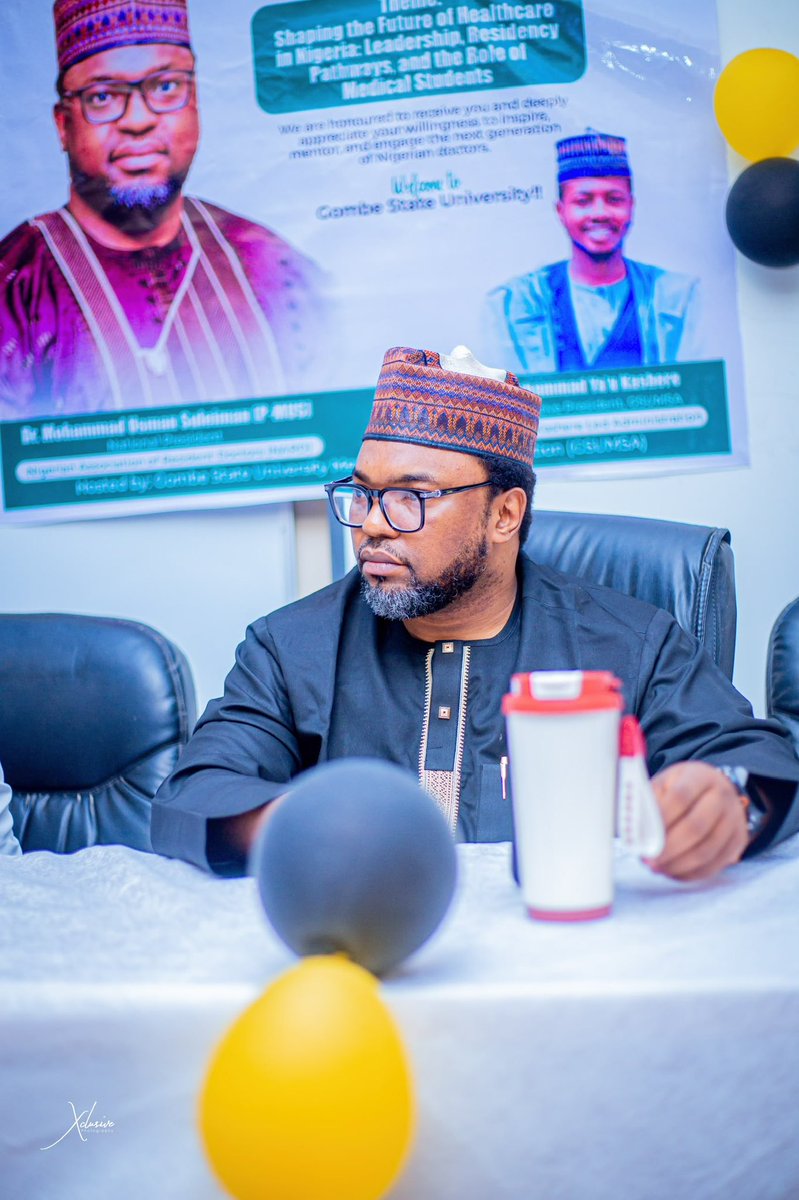
The leadership of NARD ably led by the Strategic P-MUS (Garkuwan Matasan Arewa), is pleased to update all members on a significant development arising from the deliberations of the FMoHSW Ministerial Committee on Work Hour Regulation and Casualization of Doctors.
Following extensive engagements and a comprehensive nationwide situational assessment involving 6,350 healthcare personnel across the six geopolitical zones, the Committee has developed a National Policy on Work Hour Regulation for Health Institutions in Nigeria.
The findings clearly demonstrated the urgent need to address excessive work hours, burnout, fatigue, inadequate rest, and the associated risks to healthcare workers and patient safety.
NEWLY RECOMMENDED WORK HOUR GUIDELINES
The following key provisions have been recommended under the new framework:
1. Maximum Weekly Work Hours:
Healthcare personnel shall work a maximum of 48 hours per week, including weekends. Any authorized excess hours shall be appropriately compensated.
2. Maximum Shift Duration:
- Day shift: 8 hours maximum
- Afternoon shift: 6 hours maximum
- Extended shifts exceeding 12 hours shall be limited to emergency situations only.
- All authorized excess hours must be adequately compensated.
3. Maximum Call Duty:
- A maximum of two call duties per week, including weekend calls.
- Calls must be equitably distributed among eligible personnel.
- A maximum of one weekend call per month.
4. Maximum Consecutive Duty Period:
There shall be an absolute maximum of 24 continuous hours of duty, inclusive of call duty.
5. Mandatory Rest Periods:
- A minimum of 12 hours between regular shifts.
- Mandatory 24-hour post-call rest following weekday calls, Saturday calls, Sunday calls, and public holiday calls.
6. Mandatory Break During Duty:
A minimum one-hour break after six hours of continuous work, including shift and call duties, shall be provided. Breaks should be appropriately staggered to ensure uninterrupted patient care.
7. Equitable On-Call Distribution:
Call duties shall not exceed two per week and one weekend call per month, with equitable distribution among eligible healthcare personnel.
8. Compensation for Excess Work Hours:
Authorized excess work hours must be properly documented and adequately compensated above the normal hourly rate, or appropriately balanced through structured time-off. This provision must not be abused by institutions.
9. Protected Research and Development Time:
Healthcare personnel in all institutions should have protected time for research and professional development, subject to approval by the appropriate National or Institutional Health Research and Ethics Committee.
IMPORTANT NOTE:
These recommendations are without prejudice to the stipulated maximum shift, call and rest durations, particularly in genuine emergency situations where patient safety and continuity of care may require exceptional arrangements.
We are pleased to inform all members that these recommended guidelines have been forwarded to all MDs/CMDs for implementation across all health institutions.
Hospital Managements and Heads of Departments are expected to take appropriate steps towards full compliance of these guidelines.
We strongly encourage all Centre Leaderships to engage their respective Managements and follow up on the implementation of these guidelines.
Members are encouraged to remain vigilant, document cases of non-compliance and channel legitimate concerns through their center leadership for necessary action by NARD.
We await the release of the second document addressing casualization and abusive locum appointments soon.
Arewa Is Burning, and We Are Arguing About Everything Except the Fire
There was a time when Northern Nigeria was relatively safe. People travelled long distances with little fear. Communities traded, disagreed, worshipped differently and still found ways to coexist.
I am not romanticising that past. There was intolerance and terrible violence. Ethnic, religious and political tensions existed. But what we are living through today is different in scale, reach and normalisation.
Over roughly two decades, something fundamental has broken. Much of North Nigeria is consumed by insecurity, hate, polarisation and violent crime.
Too many Muslims have been conditioned to view non-Muslims with suspicion or contempt. Too many Christians carry their own suspicion and hostility towards Muslims. Words such as arne and kafiri are thrown around casually. Dehumanisation begins long before someone picks up a weapon.
Boko Haram and other violent extremist groups exploited these fractures and wrapped depravity in religious language. Across parts of the Middle Belt, weak institutions and repeated violence have pushed communities towards systems of protection and vengeance, where retaliation produces retaliation.
The absence of justice becomes its own form of violence.
Highways that once connected our communities are now corridors of fear. Kidnapping for ransom has become an economy involving kidnappers, informants, negotiators, suppliers, collaborators and those who move the proceeds. In some communities, criminal networks exercise authority that functioning local governments should.
How did we get here?
Local government was weakened. Schools deteriorated. Poverty expanded. Institutions lost legitimacy. Political leaders repeatedly failed to confront structural problems.
But leadership did not descend from another planet. Our leaders emerge from our society. A society that tolerates corruption, mediocrity, prejudice and dishonesty will reproduce them in its institutions. This is the part we rarely want to confront.
Look at our public conversations, particularly among young people online. A region facing an existential crisis should be consumed by education, security, justice, jobs, healthcare, agriculture, religious coexistence and political accountability. Instead, enormous energy goes into arguments about Rarara, Hadiza Gabon's weight loss, Nafisa Abdullahi's views on marriage, or Sheikh Jingir's distasteful and divisive claims about which religion has the larger population.
Entertainment has its place. Religious debate has its place. But Arewa is burning while we exhaust ourselves over distractions.
We complain about bad leadership while reproducing many of the same values in our homes, businesses and communities. We retreat into ethnic and religious camps. We defend wrongdoing when the offender belongs to "our side". We demand justice when our people are victims and manufacture excuses when they are perpetrators.
No society survives indefinitely on selective morality.
I speak about Arewa because this is where I come from. It is the society I know intimately, and where I want my advocacy to begin. That does not mean hating the North. It means loving it enough to refuse to lie about what we have become.
We cannot repair Northern Nigeria through nostalgia, religious supremacy, ethnic chauvinism or political propaganda. We cannot insult our way out of insecurity. Social media outrage cannot substitute for institutions, justice, education and organised civic action.
We need a different politics of citizenship. One that values every human life irrespective of identity. One that condemns a criminal without first asking his ethnicity or religion. One that teaches children that disagreement is not an invitation to violence.
We need justice stronger than vengeance, citizenship stronger than sectarian identity, and leaders committed to serve.
Arewa is burning. We have spent far too long arguing about everything except the fire.
Boko Haram was not built in the battlefield first.
It was built in sermons. Under trees. In welfare networks. In abandoned communities. In the silence of a failing state.
Then it became an army.
HumAngle’s two-part investigation traces that transformation with unusual depth, from Mohammed Yusuf’s ideological project to the construction of one of Africa’s deadliest insurgent forces.
Read both stories. Slowly.
https://t.co/YANNys8oDp
https://t.co/Rx3wKTq0Os
Boko Haram has led to the deaths of over 350,000 people and displaced over three million more. But how did its army come to be?
In this investigation, we speak to members, victims, and find archival materials to trace the strategy that made that army possible.
#TheBHarmy
https://t.co/YdPqypiDtF
@oil_shaeikh Stop it!
Nobody can stop you from achieving what you want if you are serious. Our endemic corruption and lack of accountability are the main reasons for our underdevelopment, not foreign influence.