Tanzania Is Our Strait Of Hormuz - Dr Maponga to Tanzanian Journalists
At the screening of 'What Happened on October 29?', Dr. Maponga had a direct message for Tanzanian journalists: Stand with the truth.
African Journalism cannot afford to be lazy or driven by external narratives. If claims are being made about Tanzania, Tanzanian journalists must be the ones asking the hardest questions, verifying the facts, and telling the world what is really happening on the ground.
Dr. Maponga challenged journalists to look beyond party politics and understand Tanzania’s strategic place in regional and global power struggles. Tanzania sits at the center of trade routes, ports, railways, minerals, and competing global interests.
So when violence, instability, and misinformation spread, journalists must ask: who benefits? Who pays the price? And whose future is being destroyed?
"In Japan, a corrupt person kiIIs himself. In China, they will kiII him. In Europe, they jail him. In Africa, he will present himself for an election."
- Prof. PLO Lumumba.
When the Portuguese came to Great Benin, which is now in Nigeria, this is what they said about the African civilization. These are the types of history we need to teach ourselves.
“If Peter Obi stole state funds, EFCC would’ve arrested him by now. The fact they haven’t arrested him says it all you need to know about Obi’s integrity.”
— Dele Farotimi
The El-Rufai Support Group Association (ERSGA) has announced the engagement of Washington-based advocacy organisation Vanguard Africa to lead a campaign aimed at drawing international attention to what it describes as growing concerns over due process and the rule of law in Nigeria.
https://t.co/3w8E96OOwz
He bought a jet.
He bought a yacht.
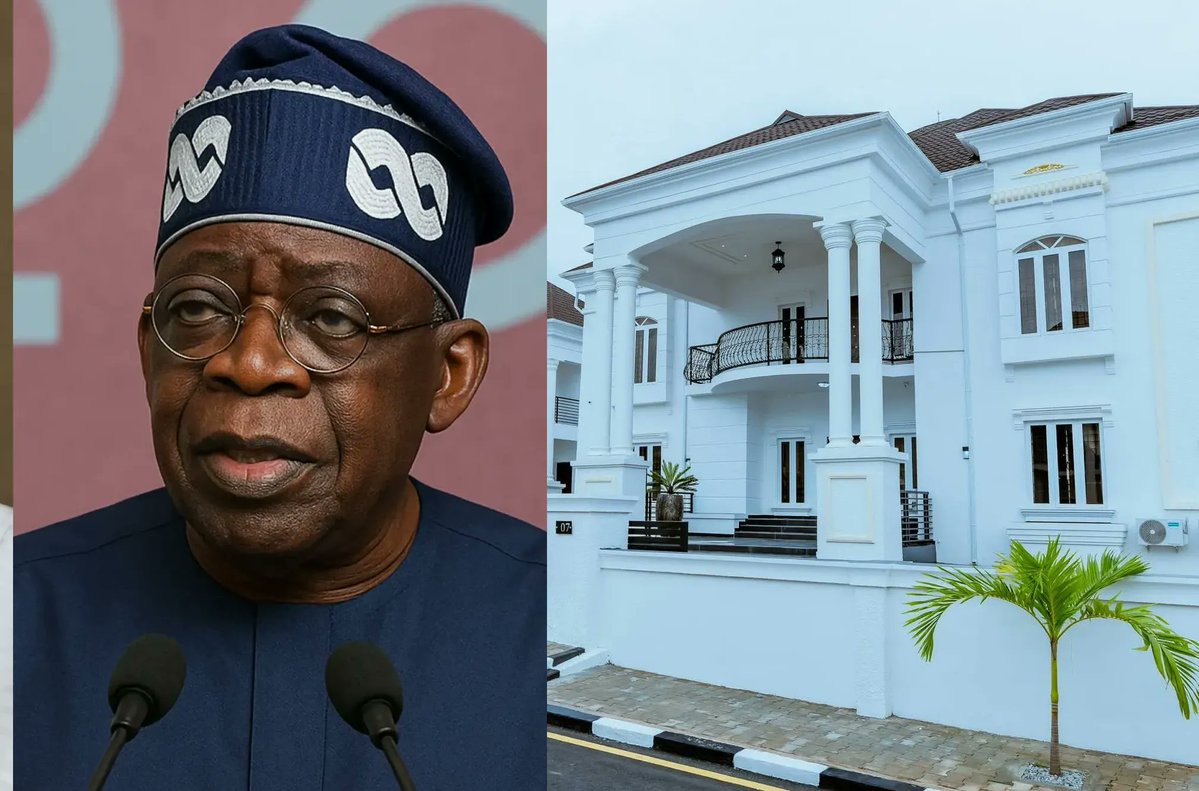
He built a VP’s mansion.
He bought solar for himself.
He built mansions for judges.
He bought SUVs for lawmakers.
No mansions for doctors.
No mansions for teachers.
No mansions for our soldiers.
GO TO COURT got compensated. Everyone who can guarantee “Regime Protection” got something. They built mansions for those that will endorse the massive rigging in 2007.
IRAN'S WORLD CUP SQUAD STANDS TALL ON ENEMY TURF
The Iranian national football team, a perennial contestant at the World Cup, had to fight through hell simply to compete at the 2026 edition. Mere months before the tournament, its primary host nation launched a savage and unprovoked war on Iran. Club competition was suspended as the entire country mobilised for an existential war for survival. The team's home stadium was bombed, alongside thousands of other civilian targets.
But not only did Iran survive, it dealt the US and Isr*el a humiliating strategic defeat. And just a day after the terms of that defeat were codified in a memorandum of understanding, Iran's World Cup squad proudly took the field at Los Angeles' SoFi Stadium for its first group-stage match.
No team had taken so fraught a path to the finals. During the war, Iranian players had faced barely veiled death threats from Donald Trump and ham-fisted attempts by US officials to replace them with Italy. After FIFA reaffirmed Iran's participation, the US vindictively denied visas to 15 team staff, forcing them to relocate their training camp to Tijuana, Mexico. Even the players are to be unceremoniously expelled from US territory hours after each group stage match.
And where most national teams can expect a raucous welcome from their US-based diasporas, Los Angeles is home to the largest concentration of rabidly pro-Israel Iranian monarchists in the world. In every sense, Iran was playing on enemy turf on 15 June. To walk away away with a 2-2 draw against New Zealand was a moral victory: not just for the Iranian squad, but for the 168 martyred schoolchildren of Minab, and for an entire nation that knows it can face down the most powerful empire in history and win.
Le panafricanisme dérange parce qu’il remet les Noirs au centre de leurs propres intérêts. Les colons et les traîtres préfèrent quand on reste dispersés.
Nelson Mandela On Nigeria's Financial And Material Support Of South Africa’s Anti-Apartheid Struggle
In this address, delivered during his May 1990 visit to Nigeria – 3 months after his release from captivity at the hands of South Africa’s apartheid regime, and 4 years before his election as the country’s first democratically-elected President – former South African President, Nelson Mendela, praises Nigeria’s unwavering support of his country’s anti-apartheid struggle.
His words, heard today, speak to just how far the “Giant of Africa” has fallen. Now led by a full-throated Western puppet government which continues to embarrass the entire continent and impoverish its people more and more every day, Nigeria is a shadow of its former self.
But Mandela’s words speak to another truth: just like the freedom of South Africa’s African majority, what was once lost can be reclaimed, if it is fought for.