98% of UK mental health patients report improvement from medical cannabis
...Most strikingly, 88.3% of respondents said medical cannabis was the most effective treatment they had tried for their condition, with 90.7% reporting it was more effective than previous treatments...
https://t.co/k4hoECJaKD
Imagine having a Trill.. and the way you could change the world for good🌎🌍🌏☮️ bro could become the instant hero….but he can’t see it…the vision of peace 💙💚💜
Cannabis Use in Older Patients Associated With Improved Quality of Life, Lower Demand for Prescription Drugs
Researchers reported, “Most patients experienced clinically significant improvements in pain, sleep, and quality of life and reductions...
https://t.co/W2EjC926Pz
A groundbreaking preclinical study shows that psilocin (the active metabolite of psilocybin) significantly extends the replicative lifespan of human cells in culture, while psilocybin treatment improves survival and reduces visible aging signs in aged mice.
In human fetal lung fibroblasts (IMR-90 cells), continuous treatment with psilocin (at concentrations up to 100 μM) extended cellular lifespan by up to 57% (with a 29% extension at 10 μM), delaying replicative senescence, reducing oxidative stress (ROS production), preserving telomere length, decreasing senescence markers (e.g., β-galactosidase activity), and boosting proliferation-related proteins like SIRT1. In adult human skin fibroblasts, 100 μM psilocin increased lifespan by 51%, with similar reductions in senescence and oxidative damage.
In vivo, aged female mice (19 months old, roughly equivalent to 60–65 human years) received monthly oral psilocybin doses (initial 5 mg/kg, then 15 mg/kg for 9 additional months). Over the 10-month treatment period, treated mice achieved an 80% survival rate versus 50% in vehicle controls, with fewer outward signs of decline (e.g., less fur graying and better coat quality). These effects suggest psilocybin acts as a potent geroprotective agent, influencing multiple hallmarks of aging beyond its known psychiatric benefits.
The authors emphasize these are early, preclinical findings (in vitro cells and mice only), warranting further research before any human longevity applications.
[Kato, K., Kleinhenz, J. M., Shin, Y. J. et al. Psilocybin treatment extends cellular lifespan and improves survival of aged mice. npj Aging 11, 55 (2025). DOI: 10.1038/s41514-025-00244-x]
Most cannabis users are ‘non-problematic’, Canadian data shows
'New research from the University of Montreal reveals that most adults who use cannabis do so safely' https://t.co/VXWHVgyK3B via @teamleafie
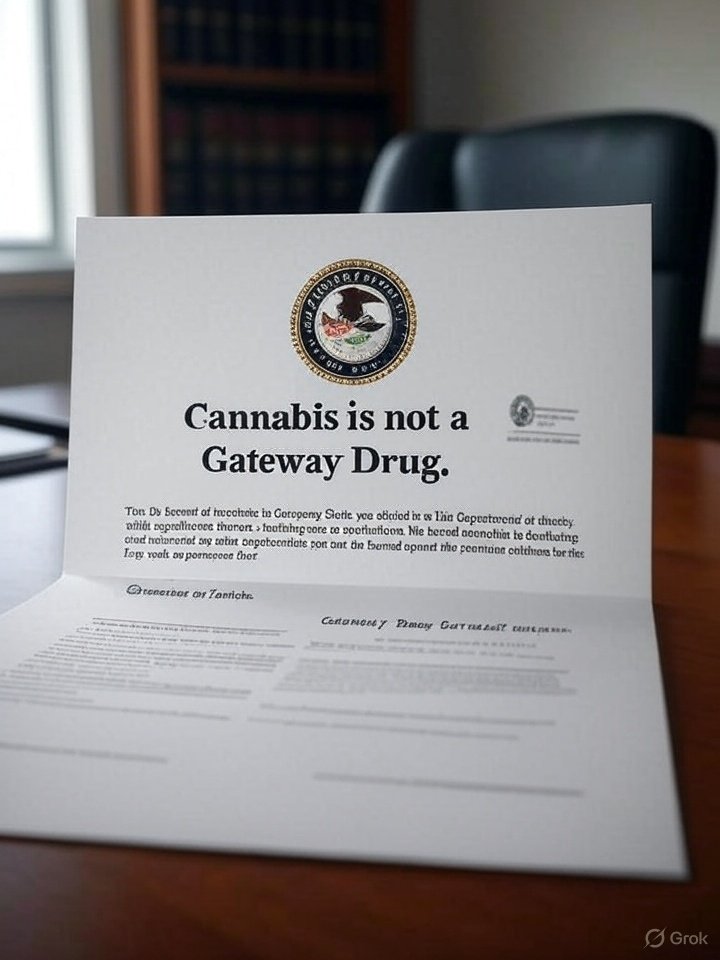
US Department of Justice: Cannabis is not a Gateway
Drug.
“KEY FINDINGS: REPORT
1. The existing statistical research and analysis show
mixed results and do not clearly demonstrate scientific
support for cannabis use leading to harder illicit drug use. As a result, FRD has determined that no causal link between cannabis use and the use of other illicit drugs can be claimed at this time.”
Link below 👇
Could CBD Revolutionize Lung Cancer Treatment?
What’s being studied?
They tested cannabidiol (CBD), a compound from cannabis, with etoposide, a chemotherapy drug, to see if they work better together against non-small cell lung cancer (NSCLC).
Key finding:
Among various chemo drugs tested, etoposide worked best with CBD, significantly reducing NSCLC cancer cell survival.
How does it work?
The combo boosts genes that cause cancer cells to die through a process called autophagy (self-destruction).
It also lowers the activity of genes that help cancer grow.
What’s the mechanism? The treatment shuts down a pathway (PI3K–AKT–mTOR) that helps cancer cells grow and survive. This effect depends on a protein called p53, which is often involved in cancer.
Surprising discovery:
CBD’s anticancer effects don’t rely on typical cannabis-related receptors or channels, suggesting it works in a unique way.
Why is this important?
Combining CBD with etoposide could be a new, effective treatment for NSCLC, especially when standard treatments don’t work, by killing cancer cells and stopping tumor growth.
Who could benefit?
This approach may help patients with NSCLC, particularly those with tumors where p53 is functional.
Link below 👇
Despite being one of the most important regulatory systems in human physiology, the endocannabinoid system (ECS) remains absent from almost all mainstream medical education. #cannabis#drugspolicy https://t.co/RRNQtnLLsR
Cannabis Use Linked to Lower Dementia Risk. 🌿
"That’s according to a study in Neuroscience, which found, “Recreational cannabis use may be associated with a significant decrease in the odds of experiencing subjective cognitive decline (SCD) in adults over 45. Analyzing data from the CDC’s 2021 Behavioral Risk Factor Surveillance System, researchers found that recreational users had 96% lower odds of reporting SCD compared to non-users.”
Link in the comments 👇





![Rainmaker1973's tweet photo. A groundbreaking preclinical study shows that psilocin (the active metabolite of psilocybin) significantly extends the replicative lifespan of human cells in culture, while psilocybin treatment improves survival and reduces visible aging signs in aged mice.
In human fetal lung fibroblasts (IMR-90 cells), continuous treatment with psilocin (at concentrations up to 100 μM) extended cellular lifespan by up to 57% (with a 29% extension at 10 μM), delaying replicative senescence, reducing oxidative stress (ROS production), preserving telomere length, decreasing senescence markers (e.g., β-galactosidase activity), and boosting proliferation-related proteins like SIRT1. In adult human skin fibroblasts, 100 μM psilocin increased lifespan by 51%, with similar reductions in senescence and oxidative damage.
In vivo, aged female mice (19 months old, roughly equivalent to 60–65 human years) received monthly oral psilocybin doses (initial 5 mg/kg, then 15 mg/kg for 9 additional months). Over the 10-month treatment period, treated mice achieved an 80% survival rate versus 50% in vehicle controls, with fewer outward signs of decline (e.g., less fur graying and better coat quality). These effects suggest psilocybin acts as a potent geroprotective agent, influencing multiple hallmarks of aging beyond its known psychiatric benefits.
The authors emphasize these are early, preclinical findings (in vitro cells and mice only), warranting further research before any human longevity applications.
[Kato, K., Kleinhenz, J. M., Shin, Y. J. et al. Psilocybin treatment extends cellular lifespan and improves survival of aged mice. npj Aging 11, 55 (2025). DOI: 10.1038/s41514-025-00244-x]](https://pbs.twimg.com/media/HB22RmzXEAAJlry.jpg)