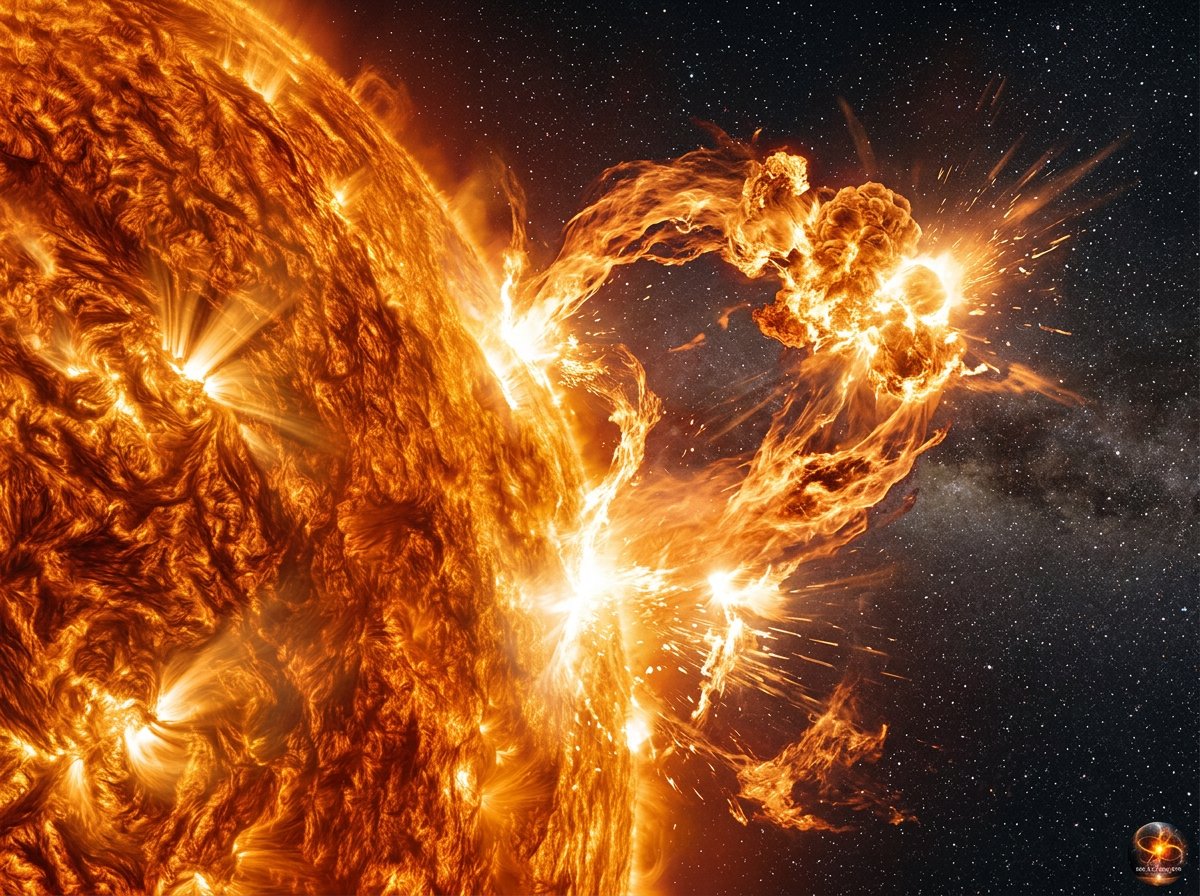
The Sun is by far the biggest source of energy in our solar system
Even here on Earth, the Sun accounts for roughly 100% of all the energy we use - fossil fuels are just ancient sunlight stored in plants, while wind, hydro, biomass, and solar power are all driven by the Sun right now
Beyond Earth, the vast majority of spacecraft, satellites, and future Mars bases run entirely on solar energy
The Sun puts out 3.8 × 10²⁶ watts - more energy in a single second than all of humanity has ever used in its entire history
And just to put it in perspective: the Sun makes up 99.8% of the total mass of our entire solar system. Jupiter is only 0.1%. Everything else (Earth, Mars, asteroids, etc.) is basically miscellaneous
We’re finally learning how to use the only energy source that actually matters ☀️
Scientists have discovered that mitochondria, the cell’s “power plants”, emit ultra weak light particles called biophotons during energy production. These biophotons may serve as signals, allowing mitochondria and cells to communicate, coordinate growth, and repair. Since every cell contains mitochondria, our bodies are constantly emitting and potentially responding to light at a microscopic level, showing that humans are dynamic systems of light and energy, not just chemical reactions. While this research is still in its early stages, it opens a fascinating frontier for understanding health, aging, and consciousness.
Let me explain why this is absolutely insane.
Scientists just copied a biological brain and made it move inside a computer.
>Researchers scanned a fruit fly brain neuron-by-neuron from electron microscopy data
>The brain contains ~125,000 neurons and ~50 million synapses
>They recreated the entire connectome as a digital brain model
>Then they plugged that brain into a physics-simulated fly body
>Sensory input goes in → the digital brain processes it → motor commands come out
>The simulated fly walks, grooms and behaves like a real fly
>No training. No prompts. No reinforcement learning
>The behavior was already inside the wiring of the brain
This might be the first real step toward uploading minds into computers.
"The first sip from the glass of natural sciences will make you an atheist, but at the bottom of the glass God is waiting for you."
— Werner Heisenberg, Father of Quantum Physics
The math on this project should mass-humble every AI lab on the planet.
1 cubic millimeter. One-millionth of a human brain. Harvard and Google spent 10 years mapping it. The imaging alone took 326 days. They sliced the tissue into 5,000 wafers each 30 nanometers thick, ran them through a $6 million electron microscope, then needed Google’s ML models to stitch the 3D reconstruction because no human team could process the output.
The result: 57,000 cells, 150 million synapses, 230 millimeters of blood vessels, compressed into 1.4 petabytes of raw data. For context, 1.4 petabytes is roughly 1.4 million gigabytes. From a speck smaller than a grain of rice.
Now scale that. The full human brain is one million times larger. Mapping the whole thing at this resolution would produce approximately 1.4 zettabytes of data. That’s roughly equal to all the data generated on Earth in a single year. The storage alone would cost an estimated $50 billion and require a 140-acre data center, which would make it the largest on the planet.
And they found things textbooks don’t contain. One neuron had over 5,000 connection points. Some axons had coiled themselves into tight whorls for completely unknown reasons. Pairs of cell clusters grew in mirror images of each other. Jeff Lichtman, the Harvard lead, said there’s “a chasm between what we already know and what we need to know.”
This is why the next step isn’t a human brain. It’s a mouse hippocampus, 10 cubic millimeters, over the next five years. Because even a mouse brain is 1,000x larger than what they just mapped, and the full mouse connectome is the proof of concept before anyone attempts the human one.
We’re building AI systems that loosely mimic neural networks while still unable to fully read the wiring diagram of a single cubic millimeter of the thing we’re trying to imitate. The original is 1.4 petabytes per millionth of its volume. Every AI model on Earth fits in a fraction of that.
The brain runs on 20 watts and fits in your skull. The data center required to merely describe one-millionth of it would span 140 acres.
We can live without AI. what we cannot live without is fresh water, farmers, agriculture, land. stop supporting ai because it is destroying our planet.
Harvard scientists just shattered one of biology’s oldest rules.
We were taught:
Viruses can’t make their own proteins. They hijack yours. That’s why they’re “not alive.”
Except giant DNA viruses just crossed that line.
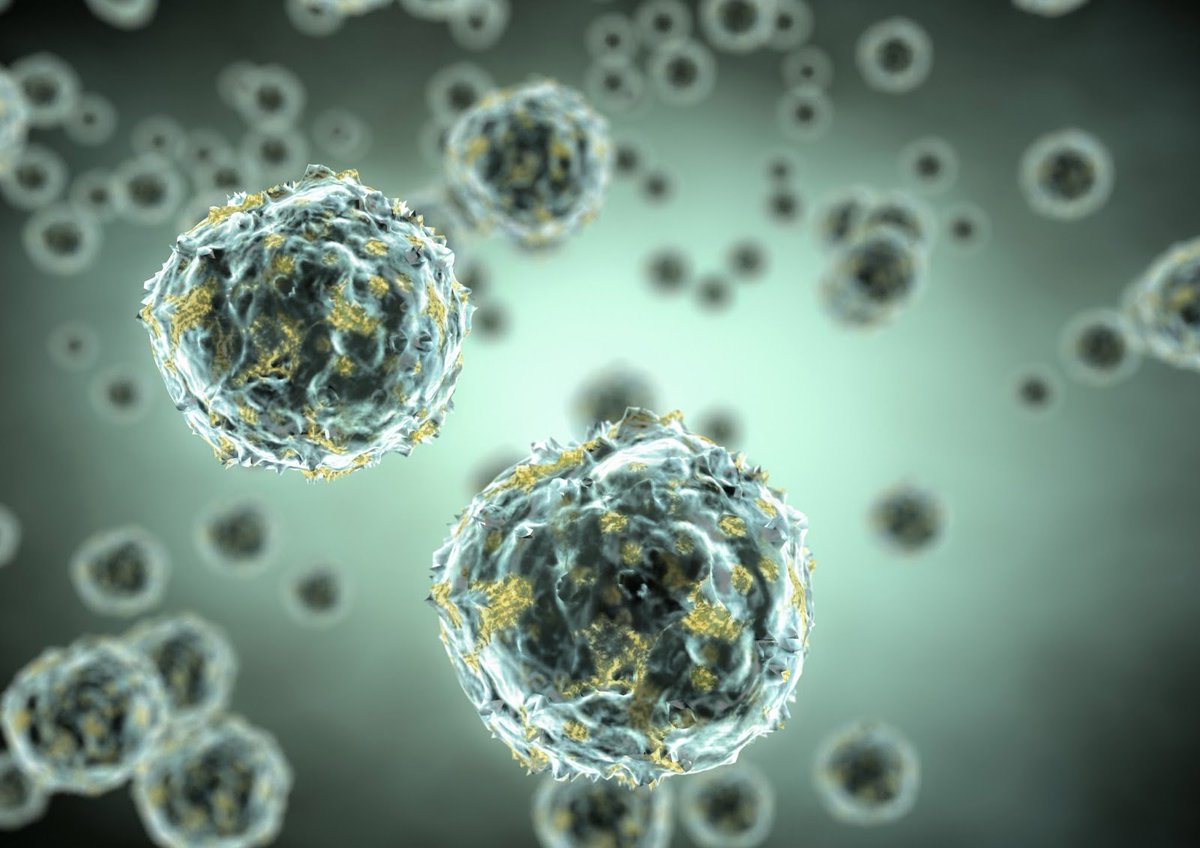
Researchers found they carry a full eukaryotic-style translation complex (vIF4F). Translation machinery.
Inside a virus. They can keep making proteins even under stress that shuts down normal viral replication.
If a virus brings its own protein-making tools…
Is it still just a parasite?
For decades we’ve drawn a clean boundary:
Cell = alive
Virus = not alive
Nature doesn’t care about our categories.
Maybe viruses aren’t just evolutionary side notes.
Maybe they helped build complex life.
Paper in Cell 👇
https://t.co/QyGzZf9e6o
Harvard news: https://t.co/YKAfEngdS3
Recent modeling confirms that neuronal microtubules are capable of scalable quantum computation. Within the Hameroff-Penrose Orch OR framework, tubulin proteins form quantum superpositions that collapse via gravitational self-energy differences.
This objective reduction preserves quantum information flow across the brain's architecture. Helical microtubule lattices provide the topological protection necessary to prevent decoherence in the "warm and wet" biological environment.
Using Density Functional Theory and Path integral Monte Carlo simulations, researchers demonstrated decoherence times of 10-100 ms at 37°C. This aligns with 40 Hz gamma EEG synchrony, the signature of conscious integration.
The computational capacity is estimated at 10^9 to 10^12 qubits across cortical volumes. Tryptophan π-electron clouds enable this room-temperature coherence, validating the quantum roots of neural dynamics.
https://t.co/ZPMMQclBu9