@Artsakh_Front Azerbaijani are like a weed on Artsakh soil; they will never survive there, besides being an obstacle for the soil to be rich and flourish. Armenians are like an oak tree. They have deep roots and many, many acorns to spread and start new powerful trees. 🙏🏻You can't lie to nature
I didnt want to speak through statements/journalistic facts.The world has grown weary of statistics and headlines. This is an opportunity to elevate the tragedy of Artsakh to a human and existential level, to present it as a story of loss, displacement and the search for meaning
@EllieCohanim You mean the flourishing dictatorship that emptied #NagornoKarabakh Artsakh of its entire Armenian population, including me and my family, and still keeps Armenian captives and hundreds of Azerbaijani activists and journalists jailed for dissent?
During the visit of @VP JD Vance to Armenia, the team of the Ombudsman of Artsakh joined the peaceful protests in an attempt to draw the attention of the US Vice President to the urgent humanitarian issues. The voiced demands included the release of political prisoners and Armenian hostages from the Baku prisons, justice to 120,000 Artsakh Armenians who were ethnically cleansed and forcibly displaced from their homes by Azerbaijan in September 2023.
Ah yes, “amazing”— especially after your government double-tap bombed the Armenian cathedral #Ghazanchetsots there, while families were hiding in the basement, & ethnically cleansed every single Armenian from the city. #Shushi#AzeriWarCrimes
Taraz on ice!⛸️
Young Armenian ice skater Penelope (@penelope_celine1222) shines in a traditional, handmade Armenian Taraz, with pieces straight from Armenia! She performs beautifully to “Jako” by French-Armenian group Ladaniva.
Artist: @penelope_celine1222
Follow @huysmedia for 🇦🇲 stories that inspire.
🇦🇲 Armenians, wake up: Aliyev’s project of “Western Azerbaijan” is not rhetoric. It is a roadmap for the soft and eventual full occupation of Armenia.
What they did in Artsakh, they are now preparing to do in Armenia itself.
Let me explain how 🧵
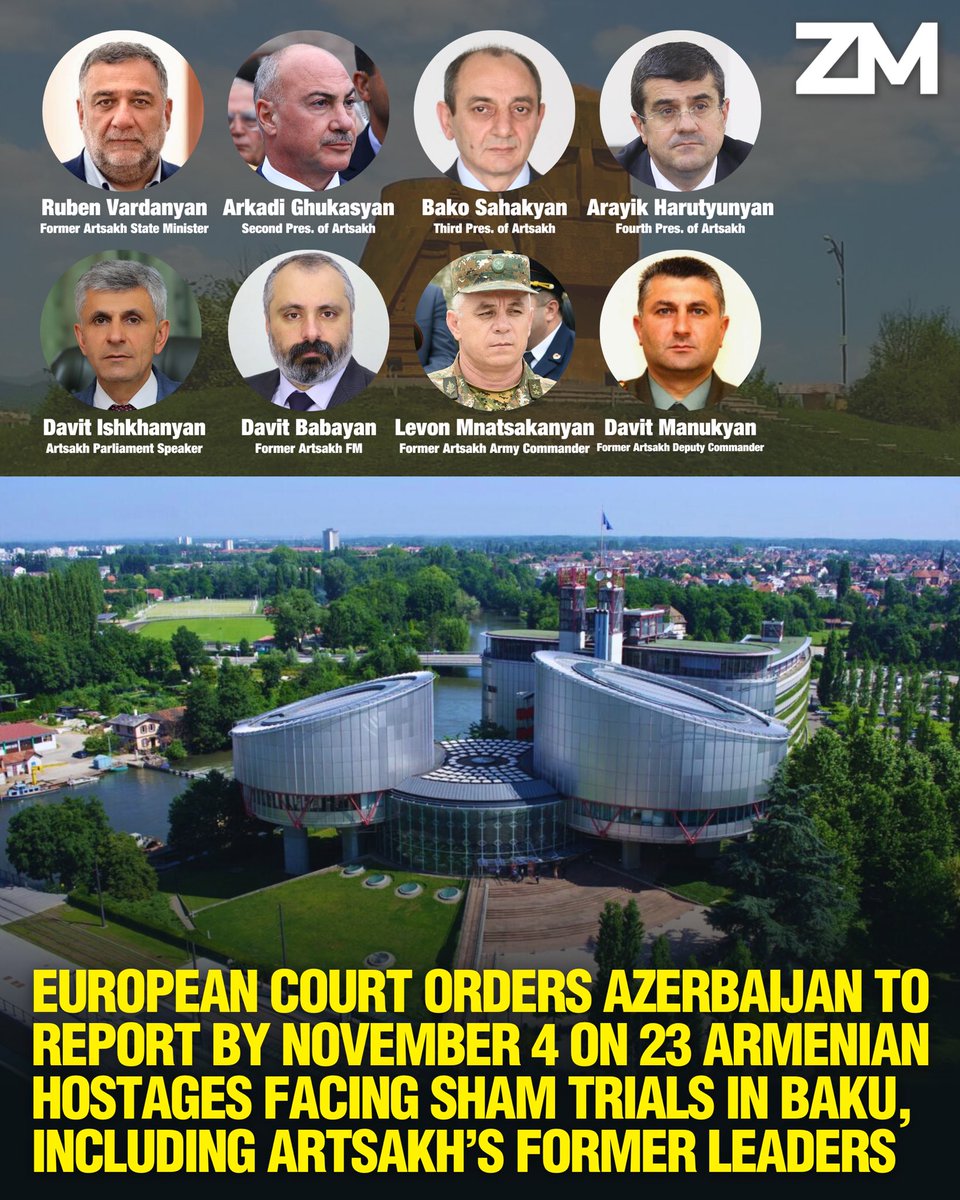
European Court Orders Azerbaijan to Report by November 4 on 23 Armenian Hostages Facing Sham Trials in Baku, Including Artsakh’s Former Leaders
➖➖➖
The European Court of Human Rights (ECHR) has ordered Azerbaijan to provide a detailed report on the detention conditions and health status of 23 Armenian captives held in Baku, with a deadline set for November 4.
Siranush Sahakyan, head of the International Comparative Law Center and representative of the Armenian captives at the ECHR, stated that in July Azerbaijan requested the court to lift its obligation to submit the report. The court rejected this request following objections from the Armenian government and the prisoners’ representatives, reaffirming Azerbaijan’s duty to provide the information. She also noted that Azerbaijan had previously submitted false reports to Strasbourg regarding the detainees, making the Court’s renewed order especially significant.
Armenia continues to face the devastating aftermath of Azerbaijan’s 2020 war against Armenia and Artsakh (Nagorno-Karabakh). Between December 2022 and September 2023, Azerbaijan imposed a nine-month blockade of the Lachin Corridor—Artsakh’s only humanitarian lifeline—defying an International Court of Justice order to keep the road open and depriving the Armenian population of food, medicine, and essential supplies. In September 2023, Azerbaijan launched a final military assault on Artsakh, resulting in the ethnic cleansing and forced displacement of over 100,000 indigenous Armenians from their ancestral homeland.
In the days that followed, Azerbaijani authorities illegally arrested Artsakh’s top political and military leadership and transported them to Baku. Detainees include former Presidents Arkadi Ghukasyan, Bako Sahakyan, and Arayik Harutyunyan; former State Minister Ruben Vardanyan; Parliament Speaker Davit Ishkhanyan; former Foreign Minister Davit Babayan; former Defense Minister Levon Mnatsakanyan; and former Deputy Commander of the Defense Army Davit Manukyan, among others. They face fabricated charges that could lead to life imprisonment. Their sham trials began in Baku in January 2024 following months of pre-trial detention.
The 23 Armenian detainees have reportedly been held in complete isolation for nearly three months, with no independent international organizations granted access. Their physical and psychological condition remains unknown. Representatives of the International Committee of the Red Cross (ICRC) last visited the captives in June. However, the ICRC was forced to end its mission in Azerbaijan on September 3 following demands from the Azerbaijani authorities, leaving the prisoners without international monitoring.
Sahakyan revealed that some of the prisoners told relatives during earlier phone calls that they had attempted suicide. She declined to identify them but confirmed they did not include any of the eight former political and military leaders of Artsakh currently standing trial in Azerbaijan.
As of now, at least 23 confirmed Armenian prisoners of war and civilian detainees remain unlawfully imprisoned in Azerbaijan, including 16 captured during the September 2023 forced exodus. These individuals have now spent nearly a year in Baku prisons as hostages of Azerbaijan’s ongoing campaign of military aggression and ethnic cleansing.
Independent reports also document the systematic destruction of Armenian cultural and religious heritage in territories under Azerbaijani control. Sahakyan emphasized that beyond the 23 acknowledged detainees, several dozen other Armenian captives remain forcibly disappeared. Fact-finding work by rights defenders has documented at least 80 cases of enforced disappearance, though the actual number may be higher. According to Sahakyan, some captives were executed, with their bodies returned to the Armenian side, while others vanished entirely, with no independent body able to verify their status.
The world looked the other way when indigenous Armenians were starved, killed and forced out of their homeland of thousands of years in Artsakh. Israel supplied Azerbaijan with weapons and intelligence and realized they may too get away with genocide
Five years ago, on September 27, 2020, Azerbaijan launched an invasion on the Armenian Republic of Artsakh.
Thousands of Armenians paid the ultimate sacrifice as we lost a generation of our finest men. We swear to do our utmost to make sure we retake what’s temporarily lost, to honor the fallen, and to make sure Artsakh is restored and re-established.
Eternal glory to our heroes.
Five years ago, at 7:10 a.m. on September 27, 2020, Azerbaijan, backed by Turkey and Israel unleashed a full-scale war against Artsakh. For 44 relentless days, our people endured bombardments with internationally banned weapons—cluster munitions, phosphorus, and every instrument of terror designed to destroy lives and spirit. On November 9, Nikol Pashinyan signed a capitulation agreement, but the truth is clear: the war did not end. To this day, countless Armenian prisoners of war remain in captivity, their fate unresolved, their families left in anguish.
But Azerbaijan’s hunger for aggression did not stop with Artsakh. In May 2021, they invaded Syunik and entrenched themselves on our sovereign soil. They seized control of the vital Goris–Kapan road, choking Armenia’s lifeline. In September 2022, they struck again—this time against Jermuk, Vardenis, Goris, and beyond—murdering around 200 Armenian soldiers and shedding yet more innocent blood.
The darkest chapter came in September 2023, when Azerbaijan carried out its final genocidal assault, driving more than 120,000 Armenians from Artsakh—their ancestral homeland—forcibly. Entire families, entire generations, were uprooted in a single stroke. The land of our ancestors was emptied, its people scattered, its heart torn out.
The capitulation of November 9 was not an end but a beginning—of occupation, of displacement, of systematic erasure. The war is not over. It continues each day, in every stolen village, in every erased name, in every Armenian denied the right to live freely on their land.
We remember. We endure. And we refuse to accept the silence of the world in the face of genocide.
5 years ago, in the middle of the pandemic, Azerbaijan—backed by 🇹🇷, mercenaries, and a fleet of drones—launched a large-scale war on Artsakh #NagornoKarabakh
“Where they burn books, they will ultimately burn people too”
For me, there is an eternal struggle ! the unification of my homeland. Artsakh is Armenia, period.
The lives lost by this generation will not be in vain.
#Artsakh#Armenia#ArtsakhGenocide#ArmenianGenocide
On Sep 27, 2020, #Azerbaijan -w/direct involvement from Türkiye & foreign terrorist fighters -unleashed war against #Artsakh/#NagornoKarabakh, marked by #WarCrimes & IHL violations.
Azerbaijan’s impunity has since led to 2023 #EthnicCleansing of Artsakh’s indigenous Armenian ppl
On the eve of the commemoration of the 2020 Artsakh War, wounded soldiers gathered at Yerablur Military Pantheon to pay tribute to Armenia’s heroes.
Some had been wounded during the 2020 war, others in earlier battles, but together they stood as living witnesses to sacrifice, resilience, and the enduring cost of war.
Their presence was both a commemoration and a reminder that the nation’s strength lies as much in memory as in survival.
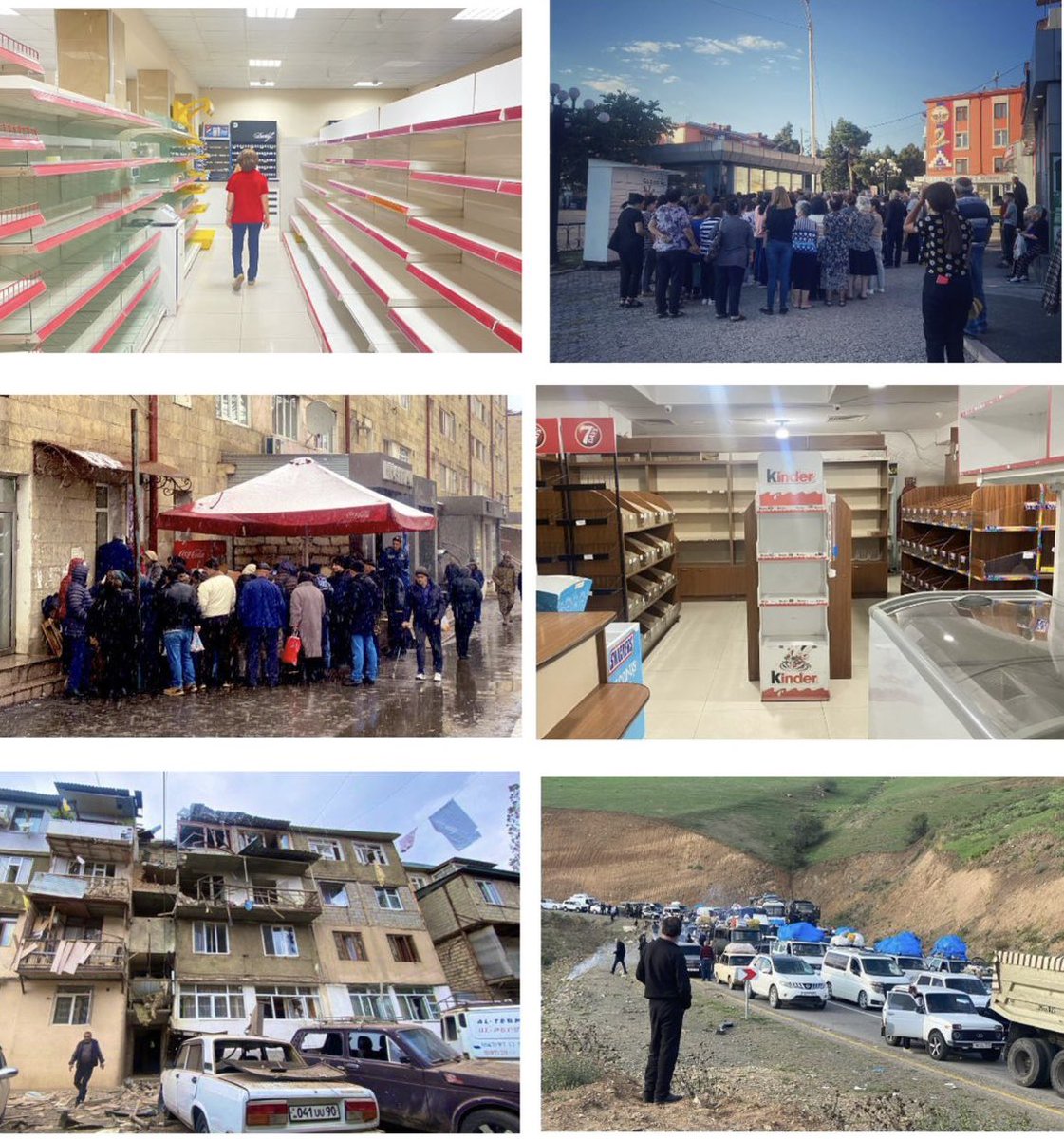
On Sept 24, 2023, the exodus of the people of #Artsakh/#NagornoKarabakh began after Azerbaijan’s aggression.
It took up to 2 days to reach Goris from Stepanakert — a road usually covered in 4 hours.
Over 70 people died during this forced displacement.
🇦🇲 DID YOU KNOW about Julio Iglesias’ connection to Armenia?
🇪🇸 ON THIS DAY in 1943, Julio Iglesias — one of the best-selling artists in music history — was born in Madrid.
1981 — Duet with Charles Aznavour
That year, Aznavour invited Iglesias onto a French TV stage to sing “Que c’est triste Venise” (“Venecia sin ti” in Spanish). Trading verses in French and Spanish, they created a bilingual duet that symbolized how Armenian art crosses borders. For Aznavour — son of Armenian Genocide survivors — the song’s longing for Venice became universal. They reunited in 2005 and recorded a studio version in 2008.
They reunited in 2005 and even recorded a studio version in 2008, proving the timelessness of the piece and their friendship. Aznavour, Armenia’s national treasure and one of France’s greatest singers, often used his music and global stature to highlight Armenian culture, bridging East and West through his voice.
1990 — Charity for earthquake-damaged Stepanavan
In December 1988, a devastating earthquake struck northern Armenia. According to Armenpress, Iglesias supported the reconstruction of the town of Stepanavan by performing a benefit concert in Massachusetts organized by St. Savior Armenian Church. About 8,000 people attended, raising $42,000, which the Eastern Diocese of the Armenian Church of America transferred to Stepanavan’s reconstruction fund. Armenpress notes this gesture was largely forgotten until Iglesias’ 2013 visit to Armenia.
2013 — First Visit to Armenia
Iglesias’ first trip to Armenia was part of his world tour. When he arrived in Yerevan, he told journalists he had come “to the country of my Armenian friends.” As Public Radio of Armenia reported, he said he never performs in places he dislikes and came not as a foreigner but “as a close friend.”
He emphasized his 45-year bond with Armenians worldwide, praised the “warmth of the Armenian people,” and observed that Armenian music “comes from the soul” (Armenpress). Before his Yerevan concert, Iglesias studied popular Armenian songs, and PanArmenian reported that organizers even asked him to perform one in Armenian.
Throughout his stay, he underlined personal connections. He repeatedly mentioned his friendship with legendary French-Armenian singer Charles Aznavour, saying they had performed many duets and that he considered Aznavour his elder brother (Armenpress).
Describing his first impressions, Iglesias said he was told in Moscow that Armenia was “a very warm country.” He later added that the true warmth came from its people, remarking that he saw “a kind of melancholy in Armenians’ eyes” that reminded him of his own homeland. In a PanArmenian interview, he reflected that vulnerability in Armenians gives them “a heroic attitude towards life.”
His Yerevan concert drew nearly 7,000 fans. Iglesias opened with “El Amor” and described it as a long-awaited dream, adding that Armenians “love him very much” — something his producer confirmed was part of why he chose to perform in Yerevan, according to News. am and Aravot.
Through both charity and song, Julio Iglesias built a lasting bridge of solidarity, warmth, and friendship with Armenia.
#JulioIglesias #CharlesAznavour #Armenia #Stepanavan #Yerevan #OnThisDay #DidYouKnow #ZartonkMedia
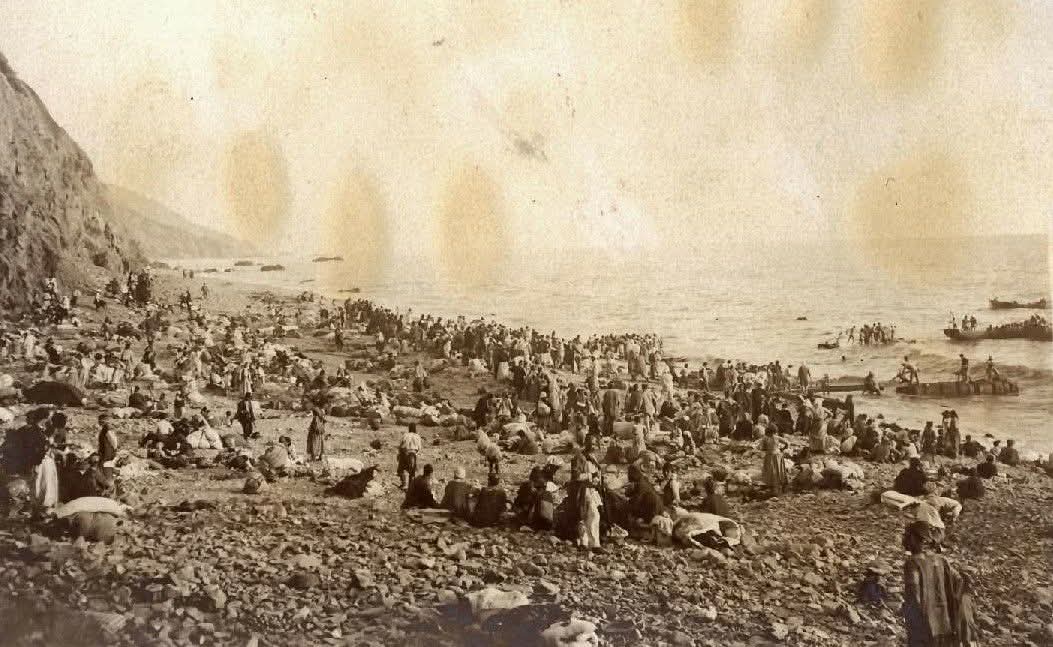
One of the most widely read novels in German literature is Franz Werfel’s work The Forty Days of Musa Dagh. It is based on the events during the Armenian Genocide 110 years ago. This historical picture shows the rescue of the Armenians of Musa Dagh by French ships, after they had fought a 53-day heroic battle against overwhelming Turkish forces.
As every year in September, the descendants of the Musa Dagh Armenians commemorate this event. Since I myself grew up among the direct descendants in Anjar, Lebanon, this day of remembrance, with all its rituals of collective memory, is an essential part of my identity.
What you call ‘liberation’ is in fact the occupation of historic #Armenian lands through force, ethnic cleansing, and destruction of cultural heritage. Hadrut and Artsakh are Armenian by history and culture. Building a mosque cannot erase the churches and cemeteries you destroyed
On September 13, 2022, Azerbaijan launched a large-scale offensive along Armenia’s eastern border, the most serious escalation since the 2020 Artsakh War. The assault followed statements by Ilham Aliyev about the so-called “Zangezur Corridor.”
Azerbaijani forces attacked on multiple fronts: Vardenis, Sotk, Kut, Martuni, and Geghamasar in Gegharkunik Province; Jermuk in Vayots Dzor Province; and Mets Ishkhanasar, Kapan, and Goris in Syunik Province.
This was not the first incursion. After the 2020 war, Azerbaijan advanced into Armenian territory in both spring and autumn of 2021, seizing several dozen square kilometers. The September 2022 offensive expanded the occupied area to about 220 sq km (~85 sq mi), including:
• Jermuk ~ 74 sq km (~29 sq mi)
• Vardenis ~ 68 sq km (~26 sq mi)
• Nerkin Hand ~ 23 sq km (~9 sq mi)
• Black Lake / Ishkhanasar ~ 16 sq km (~6 sq mi)
• Tskhuk / Ukhtasar ~ 20 sq km (~8 sq mi)
• Tsitsernakatar ~ 12 sq km (~5 sq mi)
• Kakhakn ~ 8 sq km (~3 sq mi)
Armenia reported 224 dead, more than 20 captured, and 293 wounded.
The complete list of fallen soldiers has yet to be made public.