うー、これめっちゃ面白かった。美術と数学のつながりの話。コンピュータ・サイエンスを深く学んだことがある人なら「ゲーデル、エッシャー、バッハ」を読んだことがあるかもしれないけど、エッシャーの絵は複素解析の座標変換で捉えることもできるんだね。
絵の対数を取るとはどういうことか https://t.co/R6wr3AIk9h via @YouTube
We’ve been researching new ways for ChatGPT memory to carry context across conversations and keep it useful over time.
Today, that work is rolling out as a more capable memory system in ChatGPT. https://t.co/0MyFKCe2Mu
Documenting the headwinds I now see for AI.
It won't seem like it, but I love AI and am long-term positive. But when "math doesn't math" I take note.
1. The core thesis for foundation model lab investment has been high upfront investment made worthwhile by significant long-term profits.
2. These are capital intensive businesses and the compute commitments are very high relative to revenue and require strong growth over long time periods. The "leverage" (commitments versus revenue) is extremely high.
3. The fundamentals are not as positive as they previously were:
• Input costs are higher (commodities, chips, power)
• Interest rates are higher
• Competition is more intense
• Scaling Laws are now problematic: exponential costs/power cannot continue
4. Forecasting compute spend is challenging and high risk due to (a) revenue uncertainty and (b) algorithm uncertainty
5. Revenue growth appears to be slowing. The technology is valuable, but ROI is proving to be more expensive and take longer than anticipated.
6. The future is likely "different models for different use cases" with the lower end of the market being highly competitive.
7. Core use cases such as agentic software engineering are likely to need approaches beyond next-token prediction. They are Σ₂ᴾ complexity problems requiring multi-objective optimization and likely a combination of Transformers and other methods.
8. Current forecasts in memory makers are built largely on quadratic attention. That will not persist: we are already seeing work from DeepSeek, Minimax and Nvidia that can cut RAM needs by 80% or more.
9. This means semiconductor valuations are substantially overinflated and will go through the traditional glut versus shortage cycle.
10. For foundation model providers: lower costs with competitive differentiation is good. However, lower costs with a lack of differentiation would mean lower revenues. This makes it harder to (a) service commitments and (b) pay back investors.
11. Leverage is substantially higher than in previous cycles, evidenced by leveraged ETFs, call option activity and margin loans. Korea is particularly susceptible.
12. 0DTE options create a profile that has stronger parallels to portfolio insurance and 1987 than any other point I can remember.
13. The combination of exponential increases in call activity coupled with the ties of semiconductors to structured products means there is a non-trivial systemic risk to the financial system.
14. Implied earnings growth rates are inconsistent with other periods in history.
15. Macroeconomically we cannot and should not fund exponential cost increases. History has shown us repeatedly that there are better ways (see Quick Sort and Simplex).
16. Significant supply is hitting the market via IPOs.
––
Taken together: costs and competition are increasing while revenue growth is likely slowing. Valuations are fragile and prone to technology disruptions that are already here. Systemic financial market risk is extremely high.
We’re making Codex more useful for your work by expanding plugins beyond individual tools.
These plugins turn Codex into a specialist for a specific role with a single install, no coding required.
Codex can access 62 popular apps and 110 skills for work across sales, data analytics, creative production, product design, and public equity investing.
https://t.co/nunrYP2uMI
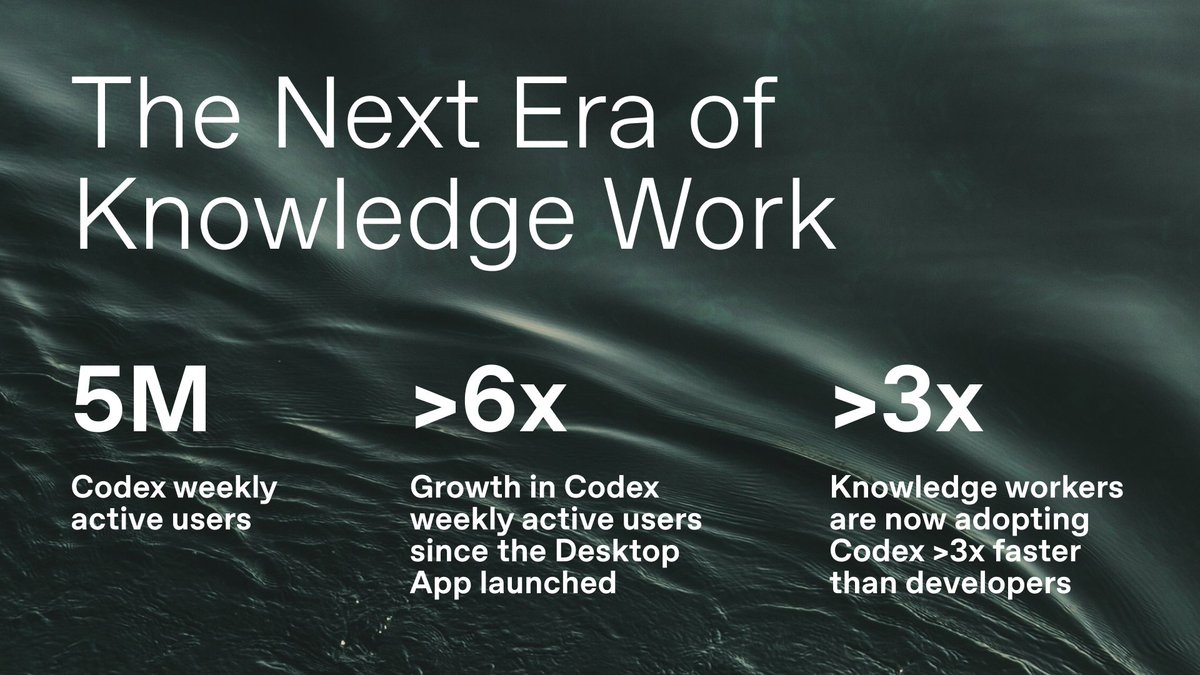
Codex now has more than 5M weekly active users.
But the bigger story is what people are using it for: not just writing code, but getting more work done across research, analysis, content, and operations.
Our new report on how Codex is becoming a productivity tool for knowledge work: https://t.co/XZMPR9cEge
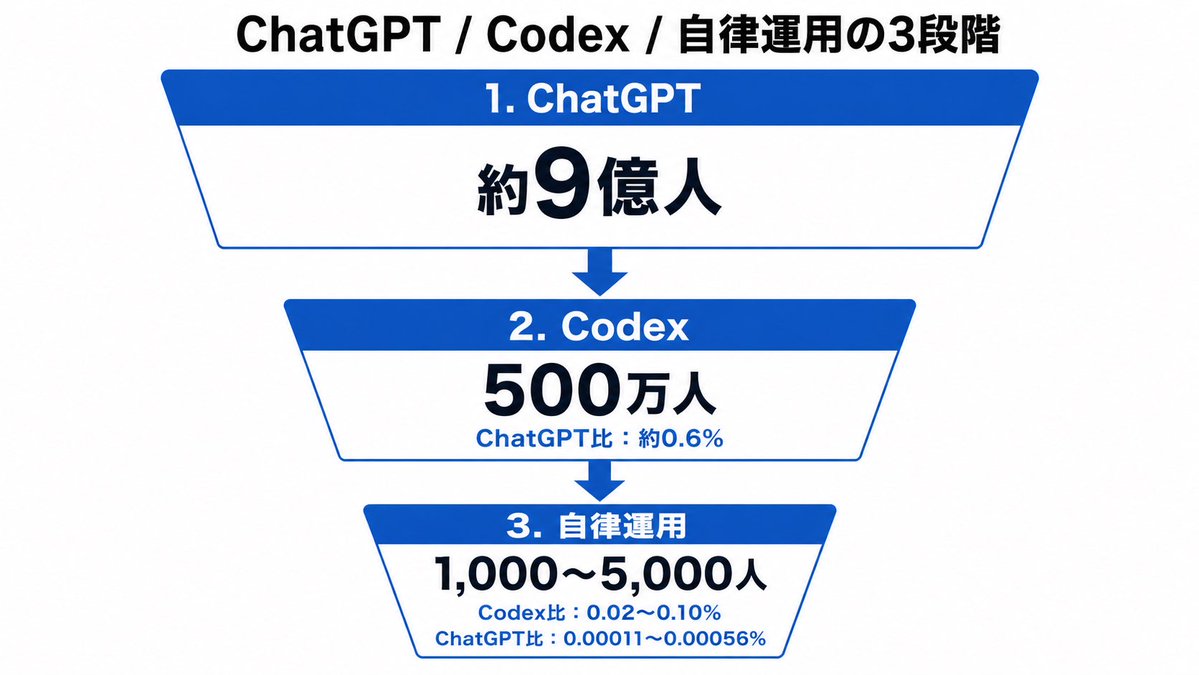
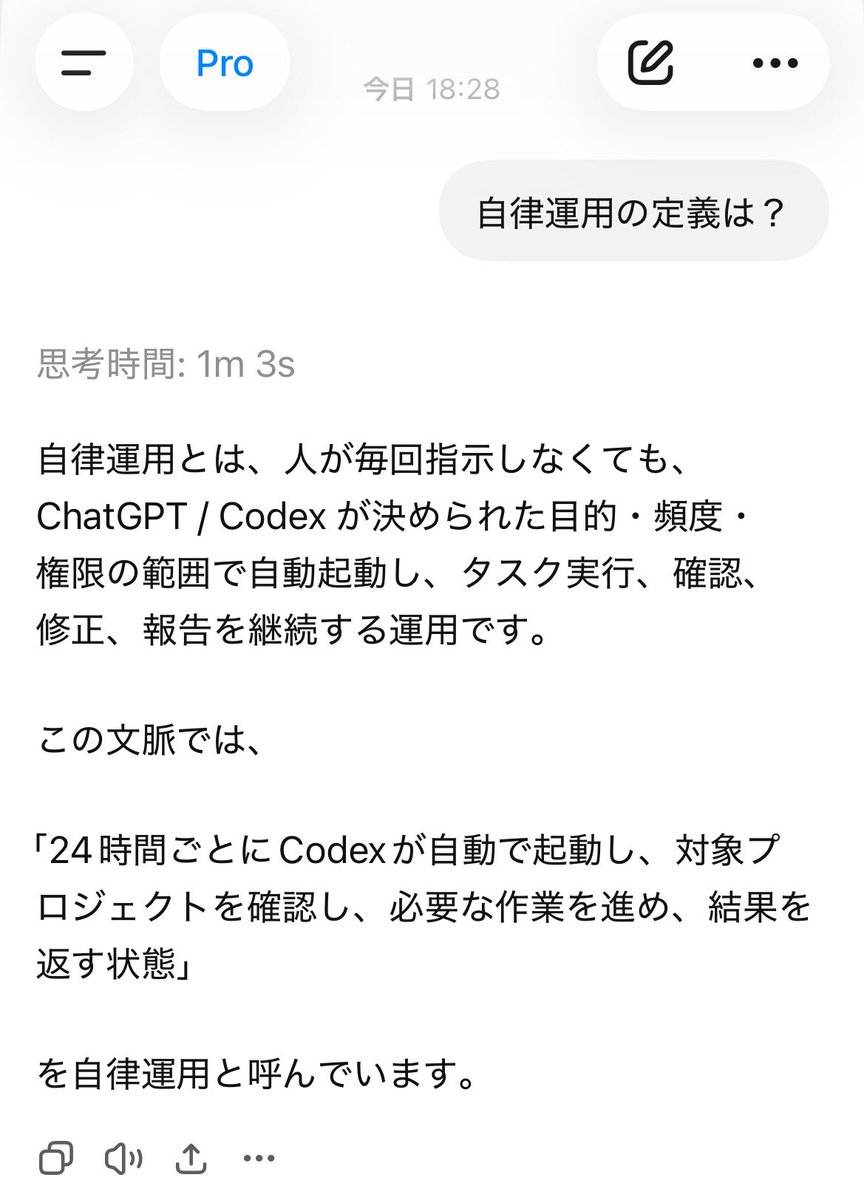
With Codex at 5 million users, they’ve hit about 0.6% of ChatGPT’s roughly 900 million users. We are so, so early. The vast majority of people have no idea what’s already possible to do with AI, while a tiny minority is automating their personal lives and work.