@vikashkaruna Good framing. One more boundary to define: who can push updates. If weights, inference code or the runtime can be changed from outside the jurisdiction, sovereign inference is only sovereign until the next deploy.
@CloudNativeFdn@cra@OVHcloud Open source removes lock-in at the code level. Sovereignty also needs it at the operations level: who runs the clusters, who can change them, and whether you can switch operators without rewriting anything.
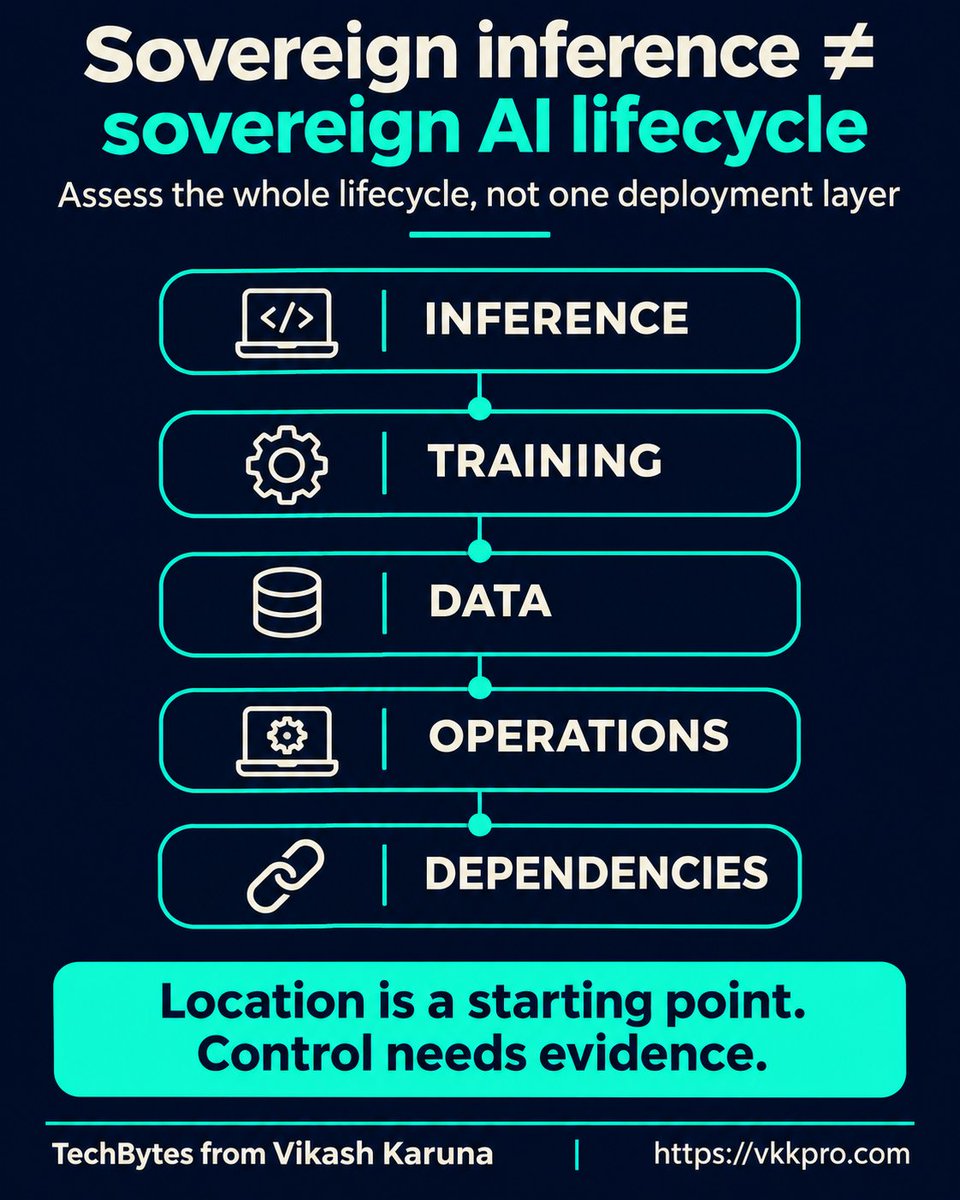
Sovereign inference ≠ a sovereign AI lifecycle.
H Company says its EU customer inference runs on AWS European Sovereign Cloud, while model trained globally on AWS.
Ask about data, models, operators, dependencies and exit.
Define the boundary before buying the label.
FinkaMetals is live.
A concentrate trade from start to finish: lot, bids, award, deliveries, assays, QP, invoices, payment. One platform, with an immutable audit trail.
We’re opening first to a select number of users. Sign up at https://t.co/4LHu9iXMeQ and we’ll be in touch.
FinkaMetals is live, powered by ICP-based infrastructure.
The Swiss institutional platform digitizes physical metals trading, from tenders and quality verification to delivery and settlement.
FinkaMetals is building on Swiss Subnet, a sovereign cloud infrastructure running the Internet Computer Protocol (ICP), with independent node operators in Switzerland and Liechtenstein.
ICP enables smart contract execution, tamper-proof records, and verifiable workflows, while Swiss Subnet provides the jurisdictional control required for institutional use.
Another real-world application of ICP technology.
https://t.co/gvjehszaPj
@yasu0x1@Altcoinbuzzio Good distinction. On a dedicated Cloud Engine, it comes down to which machines form the engine and the contracts with each operator, not a deploy-time toggle. Our Swiss engine runs on independent Swiss operators 🇨🇭
@agentK Agreed. Resilience and sovereignty are now the same conversation: workloads that don't hinge on one vendor's control plane, under a jurisdiction you choose. That's the case for sovereign cloud on the Internet Computer.
@contextconor@hyperspell Congrats on shipping this. Residency is the first question EU buyers ask. The next one worth asking is who can alter the data, and whether you could prove it if someone did.
@ecoleai Agreed. Location answers who can see the data. The harder question is who can change it. If one provider can quietly edit or roll back a record, residency alone doesn't give you control.
@Dennis_Rye The gap: a local operator can stop Microsoft from reading data, but one company still holds the keys to change, roll back or switch it off. Splitting a system across several independent operators that must agree removes that single point of control.
@Ronald_vanLoon@iowngf Permits and grids are the bottleneck. Sovereign capacity doesn't only have to mean new hyperscale builds: decentralized networks like the Internet Computer can run sovereign workloads on existing independent nodes.
@jonnychipz Customer-held keys help, but jurisdiction is the other half of sovereignty. Who can legally compel access to the infrastructure matters as much as who holds the keys. 🇨🇭
@TTT_News_@dfinity@dominic_w Sovereign infrastructure and AI workloads are exactly where Cloud Engines matter for regulated industries. That's the layer we're building in Switzerland.
@dominic_w Good to see coupons going out 🇨🇭 Tip from running our Swiss engine: start with the record other people rely on (a registry, an audit trail, a signing service) and keep bulk workloads on your existing cloud.
@DAssetBuzz@markus_AI_@Cointelegraph Small clarification 🇨🇭 The original Swiss Subnet and private Cloud Engines are different setups. Private engines are run by independent Swiss operators and can grow from there.
@yagcidev Agree it's engineering. One step further: a local provider settles where data sits and which law applies, but one company can still change, roll back or switch it off. Independent operators that must agree remove that single point of control.
@dominic_w This is exactly why where code runs matters. Tamperproof execution and jurisdictional control stop being nice-to-haves once agents can hop between devices. 🇨🇭