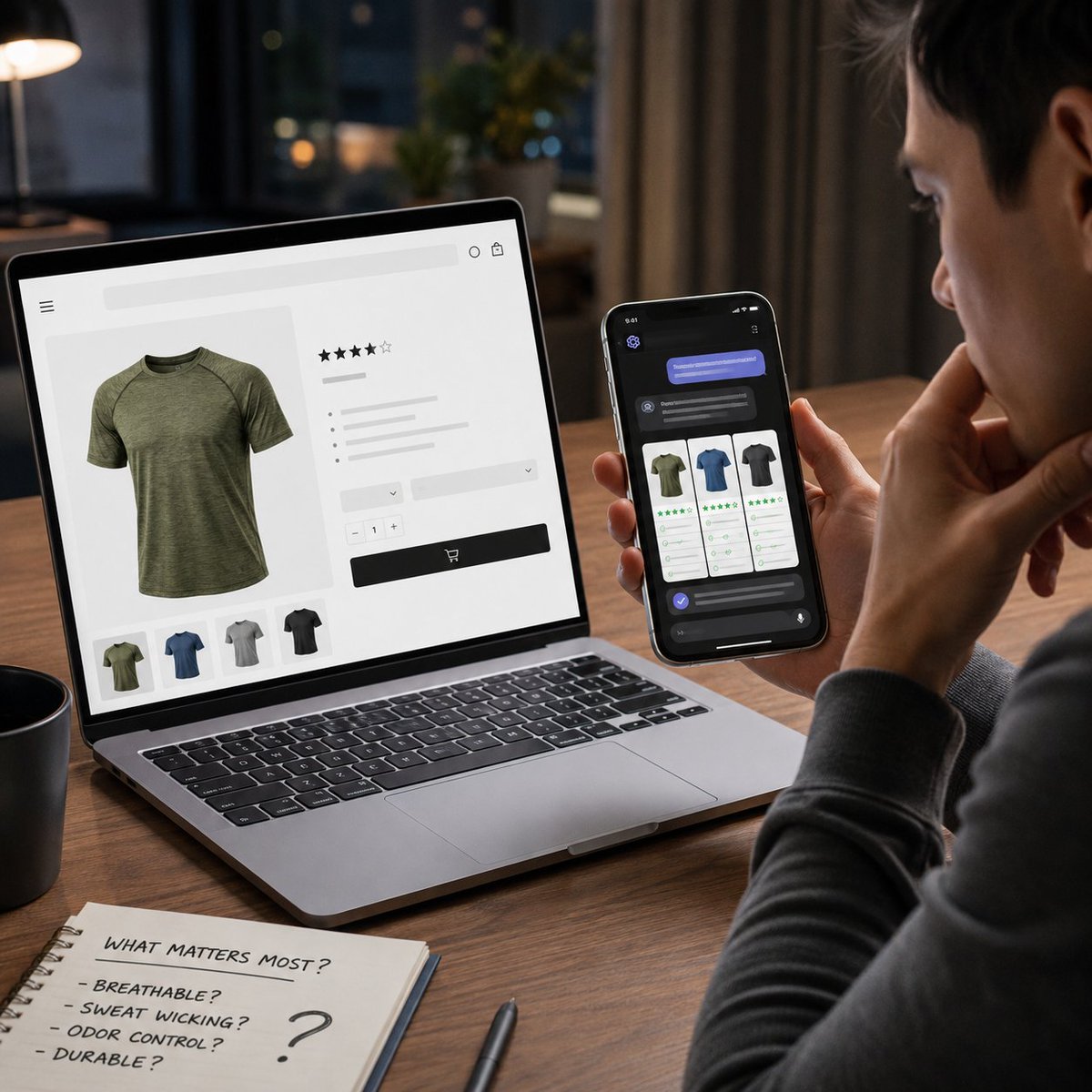
That is what Syntrologie is building.
Not just chat.
Product cards, proof, FAQs, comparisons, bundles, and next-best actions composed around what the shopper needs.
Demo: https://t.co/CoHrYrE828
AI commerce readiness is not only about product metadata.
That is the part most teams are starting with because it is easy to see.
But the bigger question comes after discovery: what happens when the shopper reaches the store?🧵👇
That made sense when the storefront was only a catalog.
It makes less sense when shoppers expect faster answers everywhere.
The next step is a storefront that understands intent and changes the buying experience in real time.👇🧵
That made sense when the storefront was only a catalog.
It makes less sense when shoppers expect faster answers everywhere.
The next step is a storefront that understands intent and changes the buying experience in real time.👇🧵
@buildwitbrandon Repeat product views, review checking, size guide opens, comparison clicks, cart hesitation, and return visits.
Those small actions usually show the shopper needs help before they ask.
A shopper should not need to leave your store to understand what to buy.
But that is what happens when the page does not answer the real question.
They go to ChatGPT.
They compare somewhere else.
They trust another recommendation.
At that point, the brand is no longer guiding the decision.
That is the risk.
A strong online store should feel less like a fixed catalog and more like a good salesperson.
Not pushy.
Not noisy.
Just aware of what the shopper needs next.
That is the simple idea behind Syntrologie.
Your best salesperson, on every screen.
https://t.co/gIL87ei2Zw