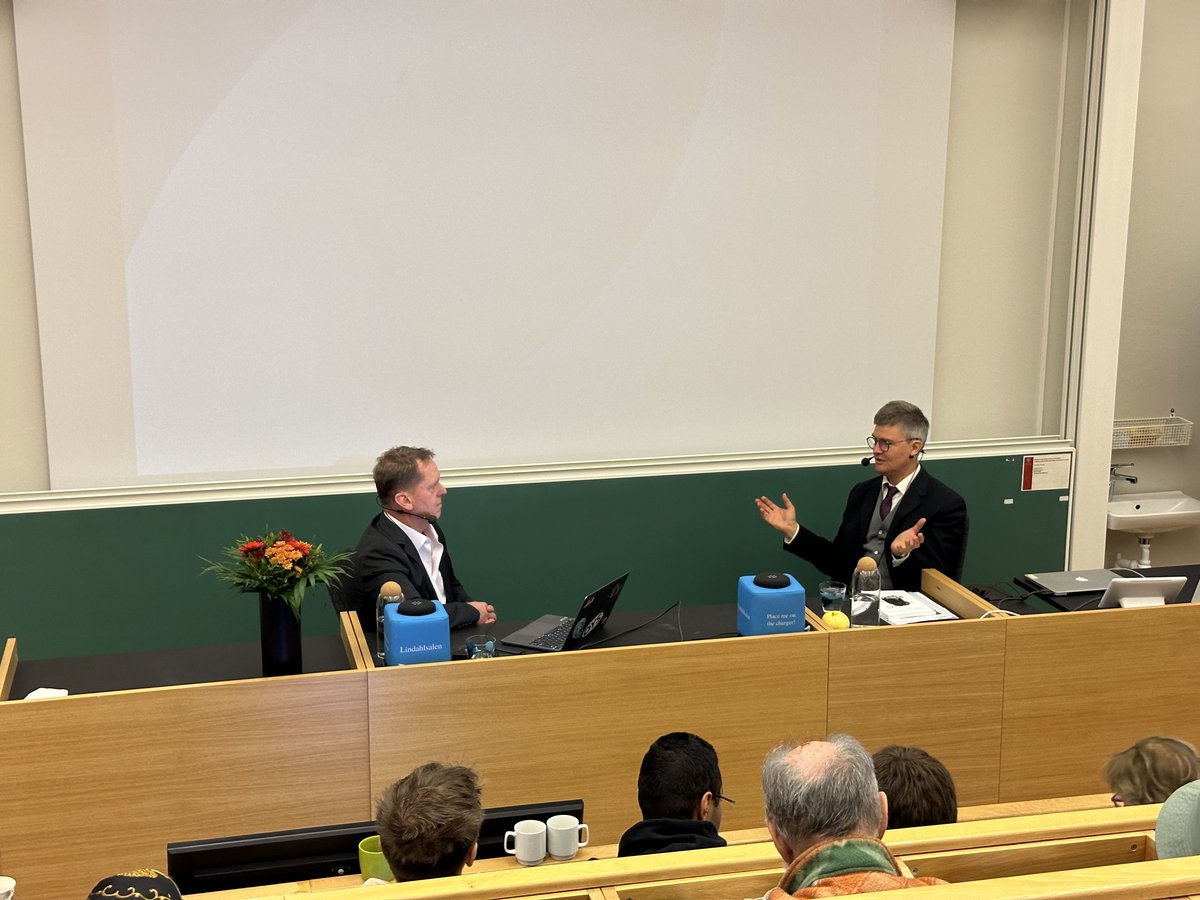
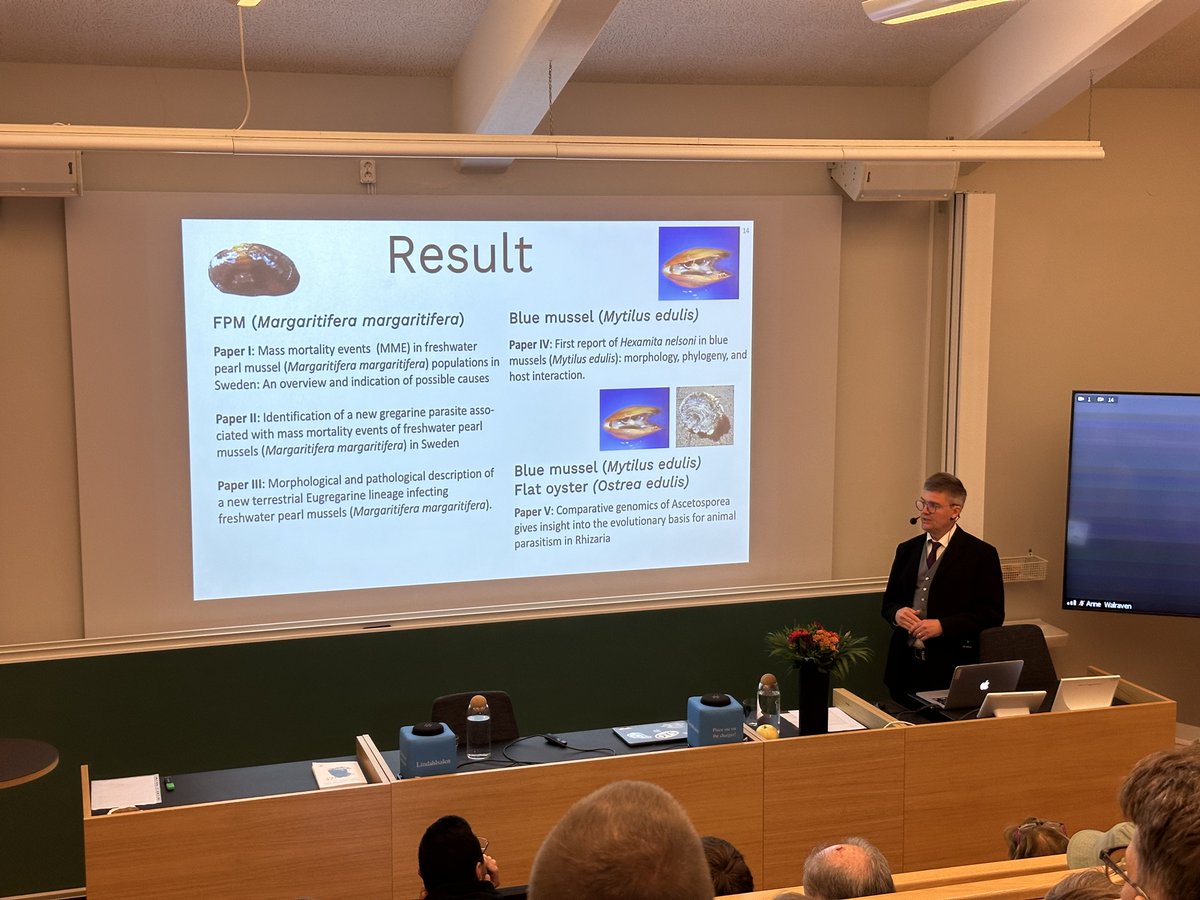
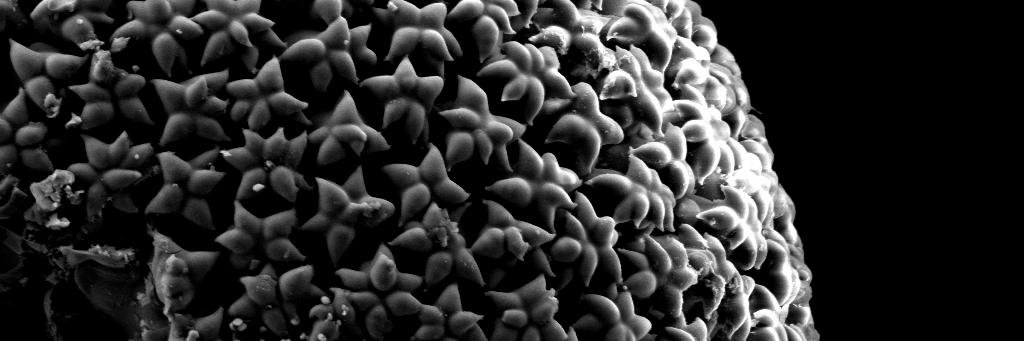
Anders Alfjorden successfully defended his PhD thesis titled "Morphological and molecular studies of bivalves to assess the hidden diversity of protistan parasites: investigations of cryptic diseases in shellfish." We at @SystBio_UU are so happy and proud of his accomplishments!
A press release about Anders Alfjorden's PhD thesis has been published by the Swedish Veterinary Agency. Anders will defend his thesis this Friday at EBC, making @SystBio_UU proud of his achievements as a PhD student.
https://t.co/MZbKwfM4VX
Exciting study on the Vandiemenella viatica morabine grasshoppers, including SystBio members. The authors generated a high-quality genome for the ancestral karyotype, revealing 19,034 protein-coding genes and insights into sex chromosome evolution.
https://t.co/gdkE2Yqxge
The first report on Hexamita nelsoni a Diplomonad trophozoite parasite in Blue mussels. By Anders Alfjorden and @fburki from @SystBio_UU
https://t.co/hp86QERvaK
Exciting Opportunity in Spatial Biodiversity Modeling!
We are thrilled to announce a fully funded, 4-year PhD position in spatial biodiversity modeling at our Biodiversity Data Lab (https://t.co/3L9k27AYjF), Uppsala University, Sweden
https://t.co/TeJwMQkK4S
Preprint alert (by @TobiasAndermann et al): Here we apply a deep-learning segmentation model to identify parts of Swedish forests with high biodiversity value. Check out the interactive map showing model predictions of unprecedented resolution and accuracy https://t.co/RvmXTfGGqU
Gene transfers have been critical to the origin and evolution of endosymbiotic organelles. But just how much, and what are the challenges with detecting them. @fburki co-authored this book chapter that delves into these questions. https://t.co/zOyS9iqdun
Experimental models to study the evolution of primary sex-determining loci are scarce. This study led by Xuan Li shows that male-determining loci on polymorphic proto-Y chromosomes of the housefly can genomically diverge into regions of various complexity. https://t.co/HMqg6nB4A7
New paper alert: @fburki and collaborators published this article on benchmarking long read sequencing of the entire RNA operon for environmental samples, using a fully controlled mock community for this evaluation.
https://t.co/WIHWYJ9joa
New paper: @TobiasAndermann and collaborators published a biogeographic study on Himalayan spiny frogs, using them as a model system to infer plausible geological scenarios for the formation of the Himalayas and the connected uplift of the Tibetan plateau
https://t.co/dpLlrQrbtB
Did you know there are biologists working on starships, including our @Hulk_Vogan? In case you want to learn more about this topic, here is a podcast about this intriguing new line of research posted by Aaron's collaborators: https://t.co/HmSzsdZHHA and https://t.co/xrjIJhmntK
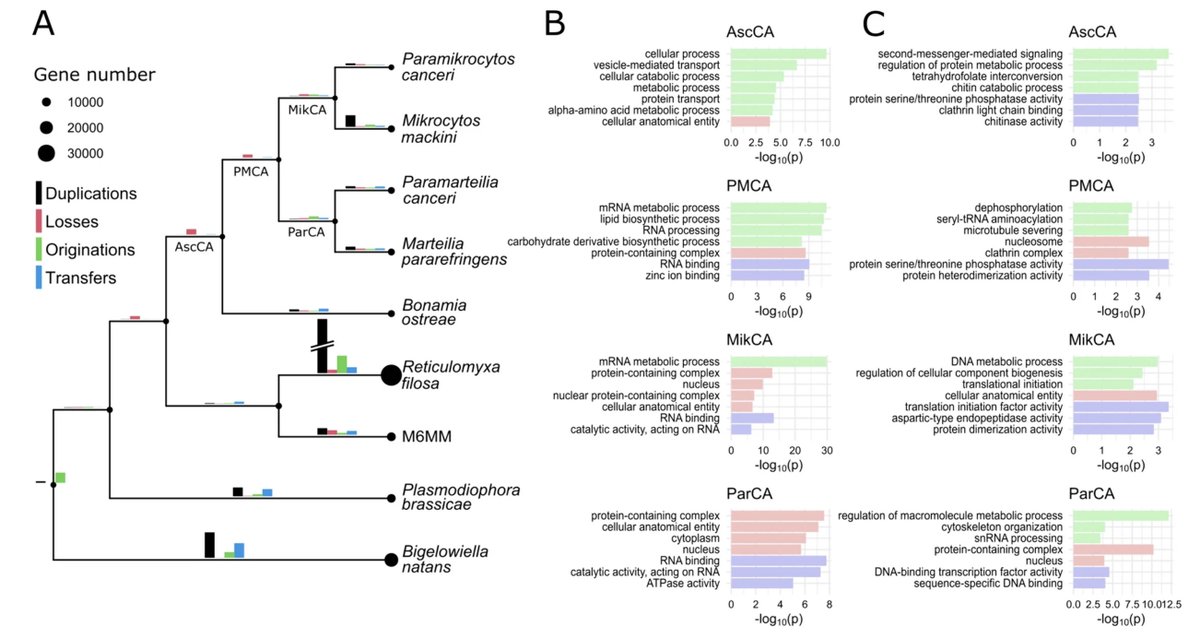
We've just published a comparative genomic analysis of Ascetosporean parasites (Rhizaria). We produced genomic data for two additional classes (Haplosporidia and Paramyxida), and the undescribed Cercozoa M6MM, and combined that to the available mikrocitids
https://t.co/1e68tLBKsq
📢 PostDoc Opportunity at Uppsala University! 🌿
Join our Biodiversity Data Lab (https://t.co/UyJAzHhQS3) and delve into metabarcoding data and spatial biodiversity patterns 🧬🌐
🗓️ Apply by Feb 29 at https://t.co/OFH6ZxOY5z
#PostDoc#BiodiversityResearch#AcademicJobs
We are sad to announce that our long-standing colleague Inga Hedberg has passed away after many decades of dedicated research work at Systematic Biology. You will be missed by all of us!
Here we estimate the number of recent bird extinctions, including those that have gone unnoticed due to a lack of data/research effort.
See the popular science summary of our study in The Guardian here: https://t.co/K7mI6T9HrV