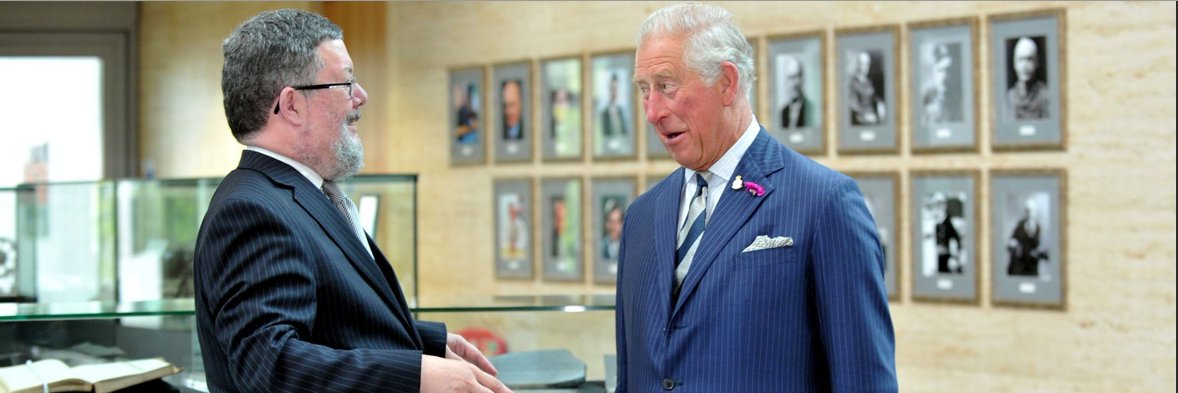
👀 Great to see Dr. Chris Baxter's new website. Chris is an outstanding historian of early Twentieth Century security, intelligence and diplomacy, who was involved with the Cabinet Office and FCO/FCDO on exciting projects. Have a look ⏬️
🔗 https://t.co/QUh0qGynFR
How you maintain Communications Security in the heat of battle? A new post at https://t.co/WRLJBi3eCN looks at the Battle of the North Cape and concludes that leaving it pragmatically to the people on the spot may be the most sensible approach.
I explore need-to-know again in a post at https://t.co/KYBT2dhRZV looking at an Official Secrets Act case in which a clear Sigint connection was ignored because the investigators had no idea it existed.
How good is 'I was there' as a guarantee of historical memory? Not, perhaps, as good as it might seem. A new post at https://t.co/kVWXp6vQ90 looks at records and memory.
@shashj@CiarliniKoerner Thanks, @shashj. I posted about the encryption of Italian Diplomatic, not military, messages. @CiarliniKoerner is right that the English-language history of Sigint in the Mediterranean during the SWW (and the skill of Italian cryptanalysts) is inadequate.
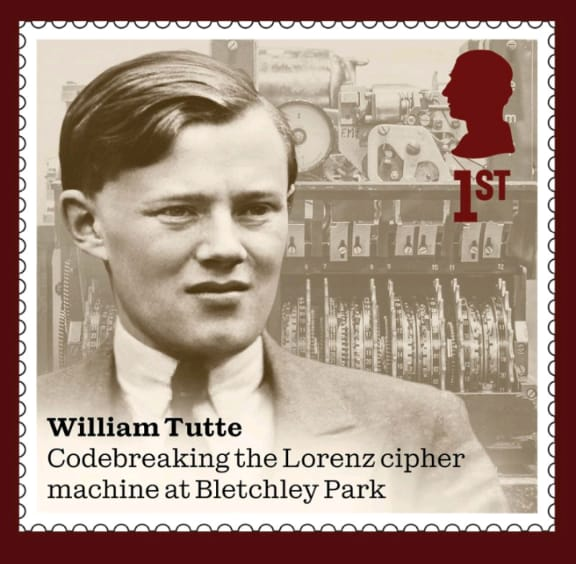
Excellent news that Bill Tutte is being commemorated on a VE-80 stamp. What a pity that the Post Office doesn't seem to know that 'codebreak' isn't a verb and that codes and ciphers are different. If only there was a national agency that they could have approached for advice ...
This is excellent, spelling out the difficulties for an Inquiry asked to assess, not just how intelligence was acquired and assessed a quarter of a century ago, but how, at that time, without the benefit of hindsight, it should have been acted on.
https://t.co/IXGo0xTE8I
A really interesting edition of Código Crystal. An interview with former CNI Head Felix Sanz Roldán (in Spanish) about secrecy and transparency. He argues that a release and declassification legislation would increase trust in intelligence agencies.
https://t.co/969CL0MxtF
This is a fascinating thread and illustrates why security plays a large part in the details of the UKUSA Agreement. Recipients have to give assurance before they receive classified material that they will protect it to the originator's satisfaction, but these waters can run deep.
In 1960 the Joint Intelligence Committee and GCHQ launched an urgent investigation when it became clear that Sir Winston Churchills private papers, then in public hands, contained 'ULTRA' material.
Short thread and PSL blog on keeping ULTRA secret in the 1960s...
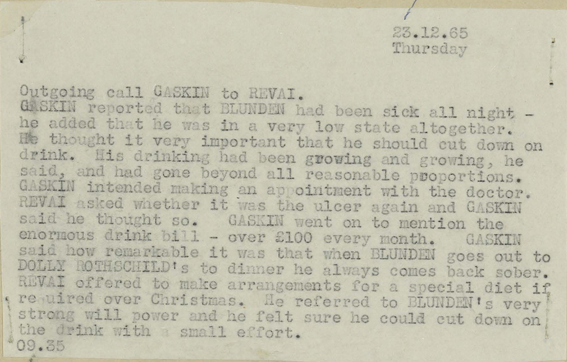
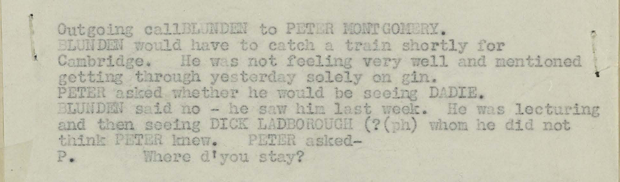
The lives traitors live(d)! Post-confession Anthony Blunt's drinks bill was £100 a month in 1965 and he claims to have lived for a day on gin: when gin was £1/10/- (£1.50) a bottle.
Some first thoughts on what newly released MI5 files on John Cairncross tell us about his time as a Soviet agent at Bletchley Park available at https://t.co/WRLJBi3eCN. Some new detail, but there's nothing particularly spectacular.