Signs of Passivity Emerge Among PLA Senior Officers
My latest article in @JamestownTweets@ChinaBriefJT examines this issue in greater detail. Many thanks to @Arranjnh for the prompt and thoughtful edits!
https://t.co/XtVpL9KhQ3
Executive Summary:
(1) Senior officers in the People’s Liberation Army (PLA) may be doing too little to advance military development and war preparation. On May 27, a special meeting on deepening the “theoretical arming” of the forces suggested broad passivity from senior-level officers, including operational commanders.
(2) The presence of operational commanders at the meeting, rather than merely political cadres, suggests that this was more than a routine ideological study session.
(3) Inaction from officers is likely a reflection of unfamiliarity with their new portfolios after sudden personnel changes, but it could also indicate subtle resistance to General Secretary Xi Jinping’s politicized directives.
(4) Central Military Commission (CMC) Vice Chairman Zhang Shengmin is under pressure, as the only CMC member other than Xi Jinping, and the only military officer on the commission. Any internal PLA problem will be attributed to him, and this special meeting also shows his sense of urgency.
One overlooked but highly significant reform is the PLA’s ongoing overhaul of its military theory development system. My latest article in @JamestownTweets@ChinaBriefJT examines this issue in greater detail.
Takeaway: Military theory serves as the foundation for the PLA’s operational concepts, doctrine development, and force-building efforts. The purpose of this new regulation is to better align the PLA’s theoretical and doctrinal system with the requirements of future—not just current—warfare and joint operations. As a result, the PLA could see further major adjustments in its strategy, force structure, and doctrine in the years ahead.
Many thanks to @Arranjnh for the thoughtful edits and suggestions, which helped further refine and strengthen this piece.
https://t.co/2e5XomOY71
Executive Summary:
(1) In March, the People’s Liberation Army’s (PLA) Regulations on Military Theory Work officially took effect. The regulations fundamentally reshape the Chinese military theory development system.
(2) The regulations mainly divide military theory work into two major categories: vertical control and horizontal division of labor. These categories cover five major areas: the management system, content and publication procedures, the full-process management chain, military theory achievements, and support and guarantee foundations.
(3) The regulations focus on building a joint operational theory system capable of adapting to future warfare. They also emphasize changes in technology, warfare, and adversaries to understand the mechanisms of victory in informatized and intelligentized warfare.
(4) In the short term, the PLA likely does not plan to conduct military operations within the next one to two years. Over the longer term, however, observers should pay close attention to changes in PLA operational concepts and doctrine, including ideas such as dissipative warfare.
In this Wall Street Journal @WSJ video report, I used my KTT's Wargame to help visualize the China Coast Guard activities that took place during the PLA’s “Justice Mission-2025” military exercise around Taiwan last December.
https://t.co/wQ7a5VAPvR
The main focus of the video is how Taiwan’s Coast Guard responds to threats from the China Coast Guard and China’s maritime militia. The feature also includes interviews with Legislator Kuan-ting Chen @kuantingvision, chair of the Foreign Affairs and National Defense Committee in Taiwan’s Parliament, discussing the current cross-strait maritime situation. My role was to visualize relevant operational scenarios through my wargame system and explain the possible roles of the China Coast Guard during a military blockade scenario.
Beyond the footage that appeared in the final video, I also discussed during the interview that a military blockade effectively means war has already begun, as military forces could potentially strike military or civilian vessels and aircraft attempting to breach the blockade. In such a scenario, the China Coast Guard’s primary tasks would likely focus on expelling, intercepting, boarding, inspecting, and detaining Taiwanese and foreign non-military vessels, while military targets would more likely remain the responsibility of the PLA Navy, Air Force, and Rocket Force. I also discussed the challenges Taiwan could face in securing critical supplies and energy imports during a blockade, as well as the current operational patterns of China’s maritime militia.
It was a unique opportunity to take part in this production. On one hand, it was a valuable opportunity to help explain the maritime threats Taiwan faces to an international audience alongside officers serving in Taiwan’s Coast Guard and Legislator Chen Kuan-ting. On the other hand, it also gave me the chance to use KTT's Wargame to further visualize the military situation in the Taiwan Strait. Many thanks to @joyuwang, Todd, and Javier for all the coordination and production work that made this opportunity possible.
The interview content was also informed by my previous analyses on PLA military exercises around Taiwan published in @ChinaBriefJT at @JamestownTweets. As for the wargame component, I have organized dozens of Chinese- and English-language wargame sessions through KTT's Wargame. These activities aim to help participants from Taiwan and abroad better understand the key dynamics and operational mechanisms of potential cross-strait military conflict.
More information is available on my personal website:
https://t.co/GGZbSh6yiG
A highly consequential PLA event that some noticed, but few fully appreciated its significance—largely overshadowed by developments in the Middle East.
In my latest analysis for China Brief Notes @ChinaBriefJT at The Jamestown Foundation @JamestownTweets, I examine a key development on April 8, when PLA convened the first session of the training program for all senior officers (第一期全军高级干部培训班). This event stands out for several reasons. It suggests that the current wave of purges may be reaching a critical juncture—and that Xi Jinping may now be moving to reassess the remaining senior leadership within the PLA.
https://t.co/ng4l7BktyW
Executive Summary:
(1) Xi Jinping’s distrust of senior military cadres was on display on April 8, as he presided over the opening ceremony of the first session of a senior officer training program—the first time he has chaired this kind of event.
(2) Xi’s remarks, which emphasized political theory and regulations, suggest that he will use the training program to evaluate whether his remaining generals are suitable for promotion or whether they require further investigation.
(3) Large-scale promotions remain unlikely in the near term, and those in most key positions will likely continue to operate in an acting capacity for at least the next several months, given Xi’s lack of trust in senior cadres.
My latest analysis of the military components of China’s new Five-Year Plan has just been published in China Brief @ChinaBriefJT by The Jamestown Foundation @JamestownTweets. Many thanks to Arran Hope @Arranjnh and the China Brief team for their support and careful editing.
https://t.co/awrkjWRxmz
Takeaway: By comparing the defense components of the 13th through 15th Five-Year Plans and factoring in recent developments in the PLA and China’s defense industry, I argue that this latest plan is not just about addressing the many unfinished reforms of the past decade—it also introduces more concrete implementation and supporting measures. Given that much of the PLA’s progress over the past ten years has been achieved despite inefficiencies and uneven reform, if this new plan is implemented more effectively, the pace of capability growth could be significantly more pronounced than before.
Executive Summary:
(1) The Outline of its 15th Five-Year Plan contains new development priorities for the PLA through 2030, as well as a high degree of continuity with directives from previous plans.
(2) This iteration adds a section on military governance, in addition to the recurring focus on combat capability and military–civil fusion, and emphasizes military theory, military governance, and “spin-on” mechanisms for facilitating the integration of civilian technologies into the PLA.
(3) The repeated appearance of policies that have existed for years highlights the limited effectiveness of past reforms. The Outline’s release has been accompanied by a number of specific regulations and implementation mechanisms to further obligate compliance with policy directives.
(4) If fully implemented, the defense-related aspects of the 15th Five-Year Plan could significantly grow the PLA’s combat capability, especially in military–civil fusion and joint operations and exceed prior observed growth.
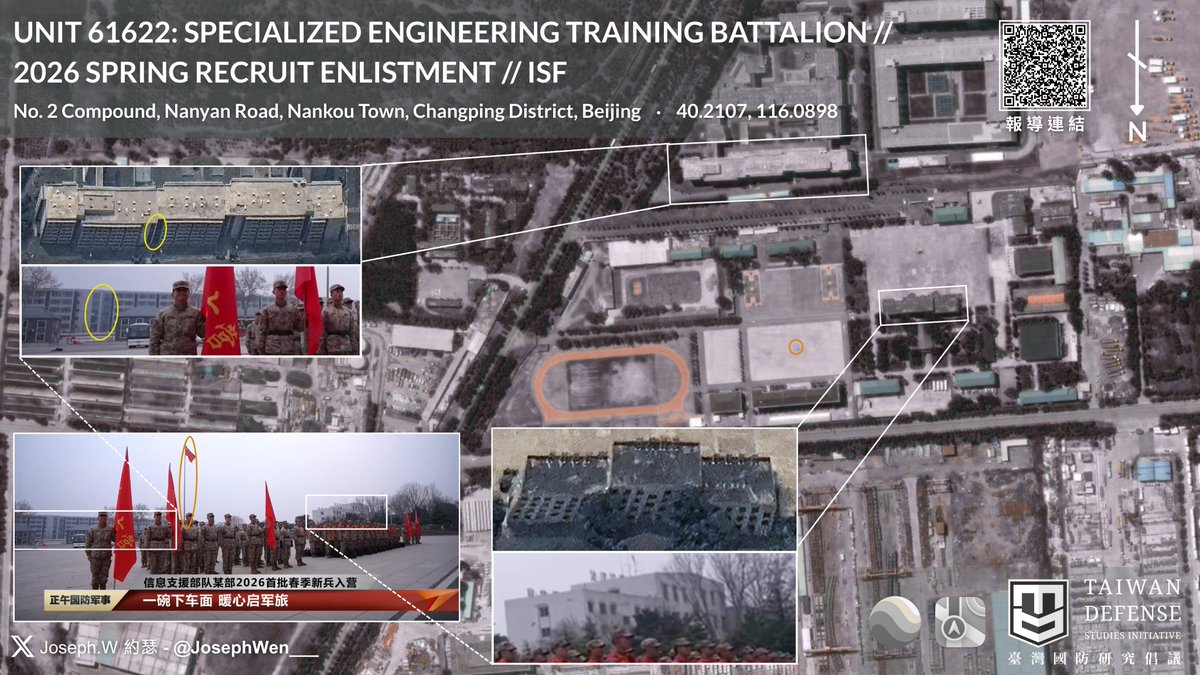
Although Changping is administratively part of Beijing, it directly borders the Zhangjiakou region, making the "general area" description plausible to the recruits while maintaining a layer of location masking.
Report Link:
https://t.co/t0GclRZom6
3/3
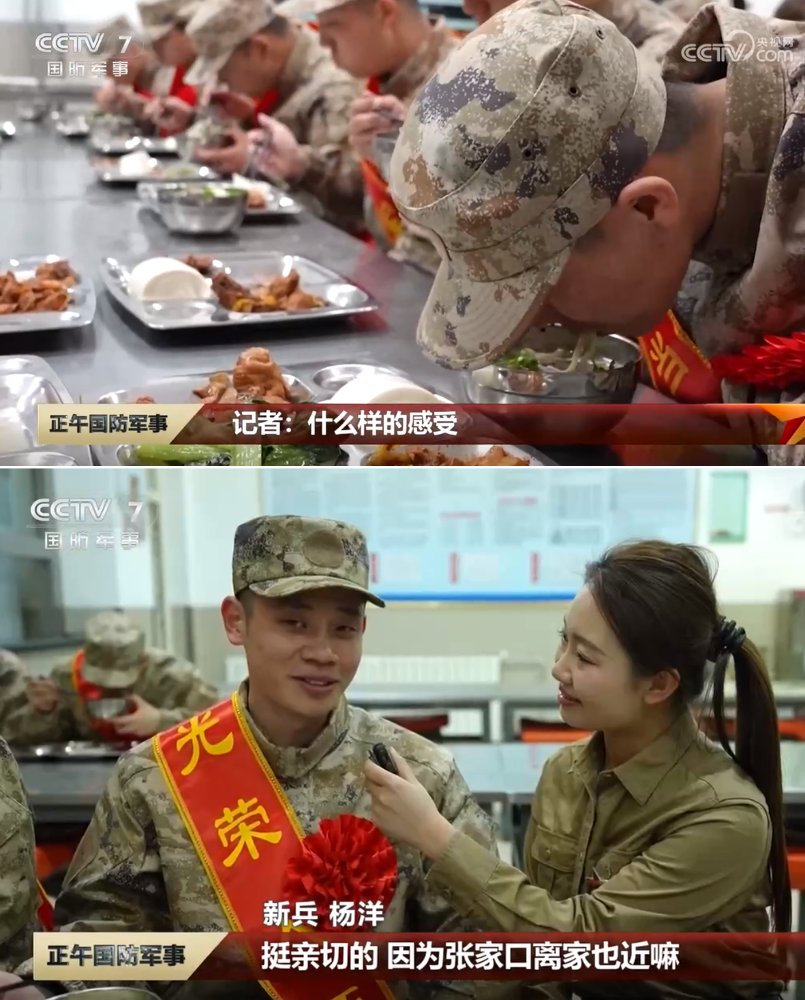
The first batch of spring 2026 recruits has officially arrived at the camps of the ISF Engineering Maintenance Specialist Training Battalion.
In the broadcast, an interviewed recruit stated that their camp is located in Zhangjiakou, but the actual site as being in Changping.
1/3
This discrepancy suggests a standard operational security practice within the PLA: recruits are not informed of their precise coordinates. Instead, they are only given a general vicinity.
2/3
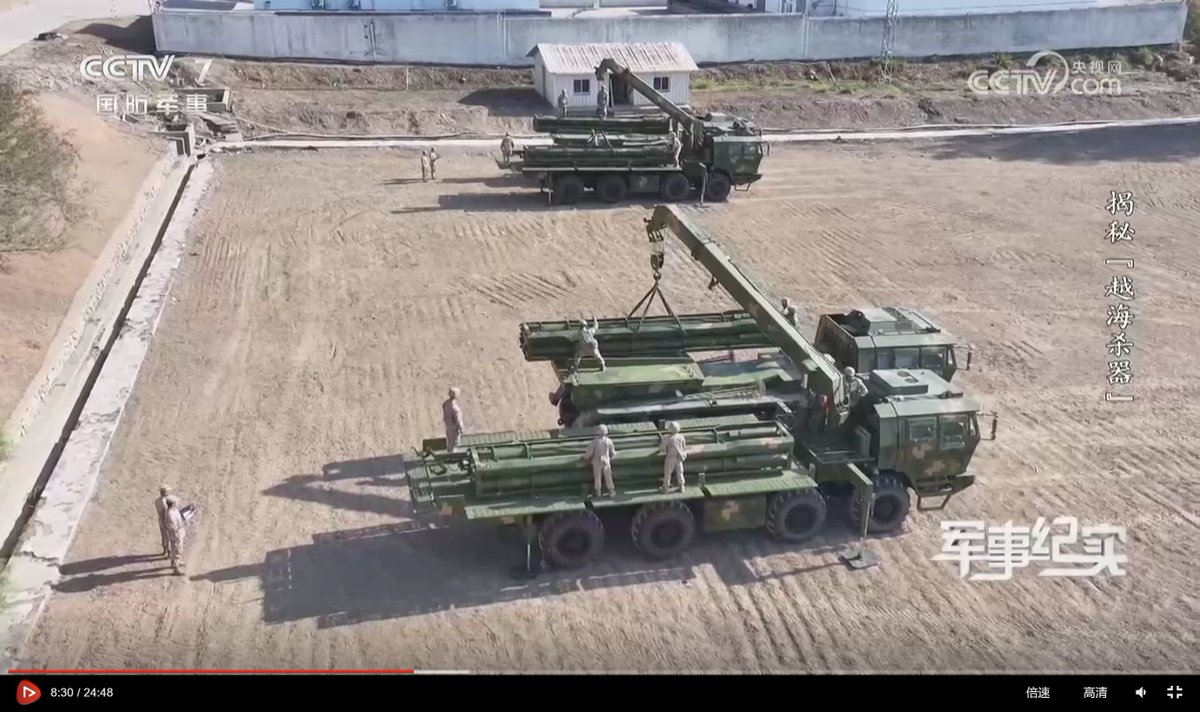
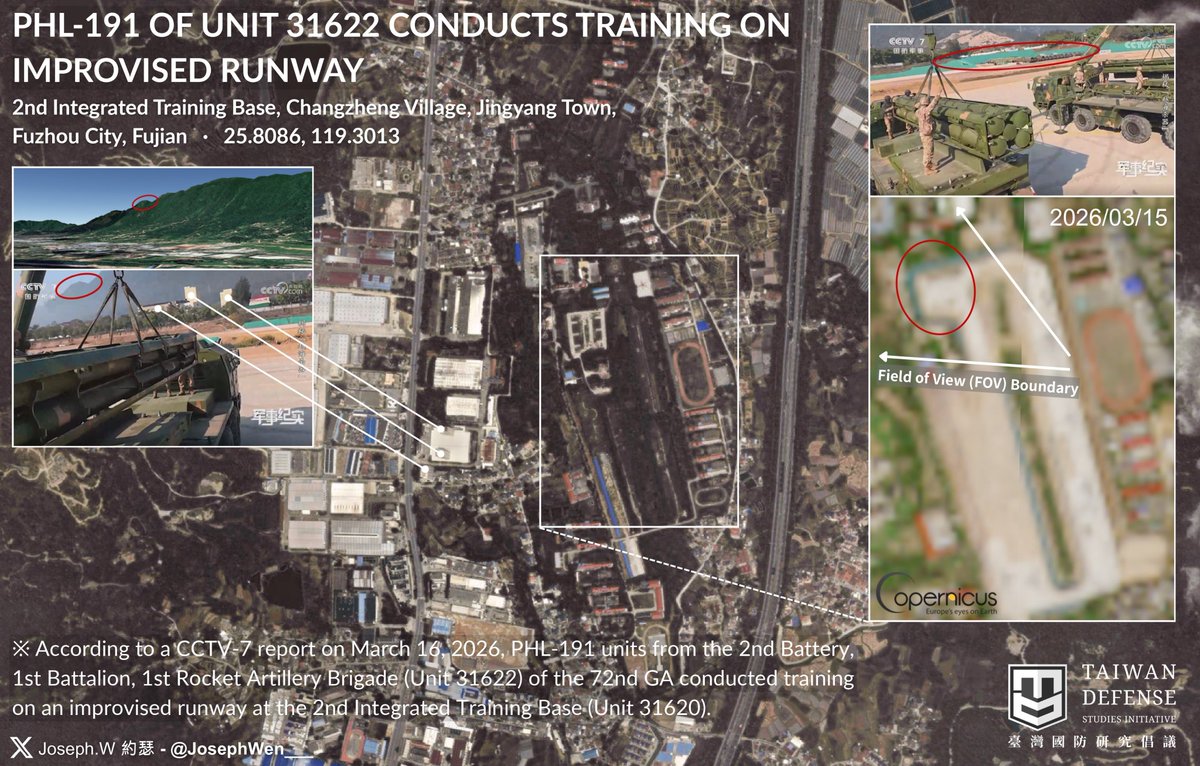
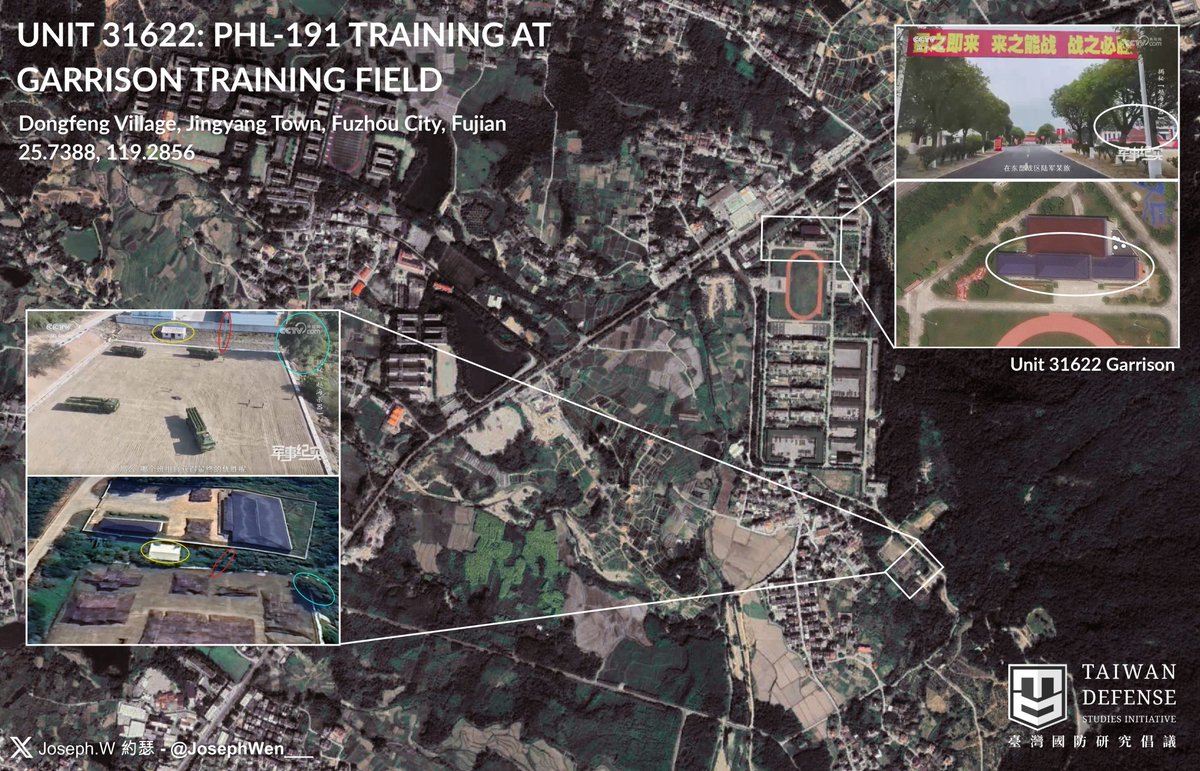
CCTV7 has reported on PHL-191 from Unit 31622 conducting drills on a newly constructed improvised runway at the 2nd Integrated Training Base.
This report also indicates that the training base may have been renovated to include an improvised runway.
1/3