Global heating is rapidly altering marine ecosystems.
Novel interventions are gaining traction to sustain ocean systems and ocean-dependent societies, but they come with risks. 💥
New @ScienceMagazine explores these interventions and their implications.
https://t.co/o0jvMmaGgA
The Brief draws on our new @ScienceMagazine paper here: https://t.co/ocPSgCL5iX Proud collaboration with @GrettaPecl@robert_p_streit and others from the amazing Governing Changing Oceans team
Novel ocean-based climate interventions are advancing faster than policies can keep up.
New research by @TH_Morrison calls for coordinated science, funding, policy & community engagement to ensure these solutions support global climate goals. @arc_gov_au https://t.co/SI6GqnmhDG
Global heating is rapidly altering marine ecosystems.
Novel interventions are gaining traction to sustain ocean systems and ocean-dependent societies, but they come with risks. 💥
New @ScienceMagazine explores these interventions and their implications.
https://t.co/o0jvMmaGgA
Researchers are warning that the rapid emergence of novel ocean-based climate interventions has outstripped the capacity of governments and communities to respond appropriately. 👩🔬🌊🌏
Read the full story here 👉📰 https://t.co/YU9XpnbdEn
It's a collaboration amongst 24 international scientists, brought together in a SNAPP team:https://t.co/ptpiF3rQFT
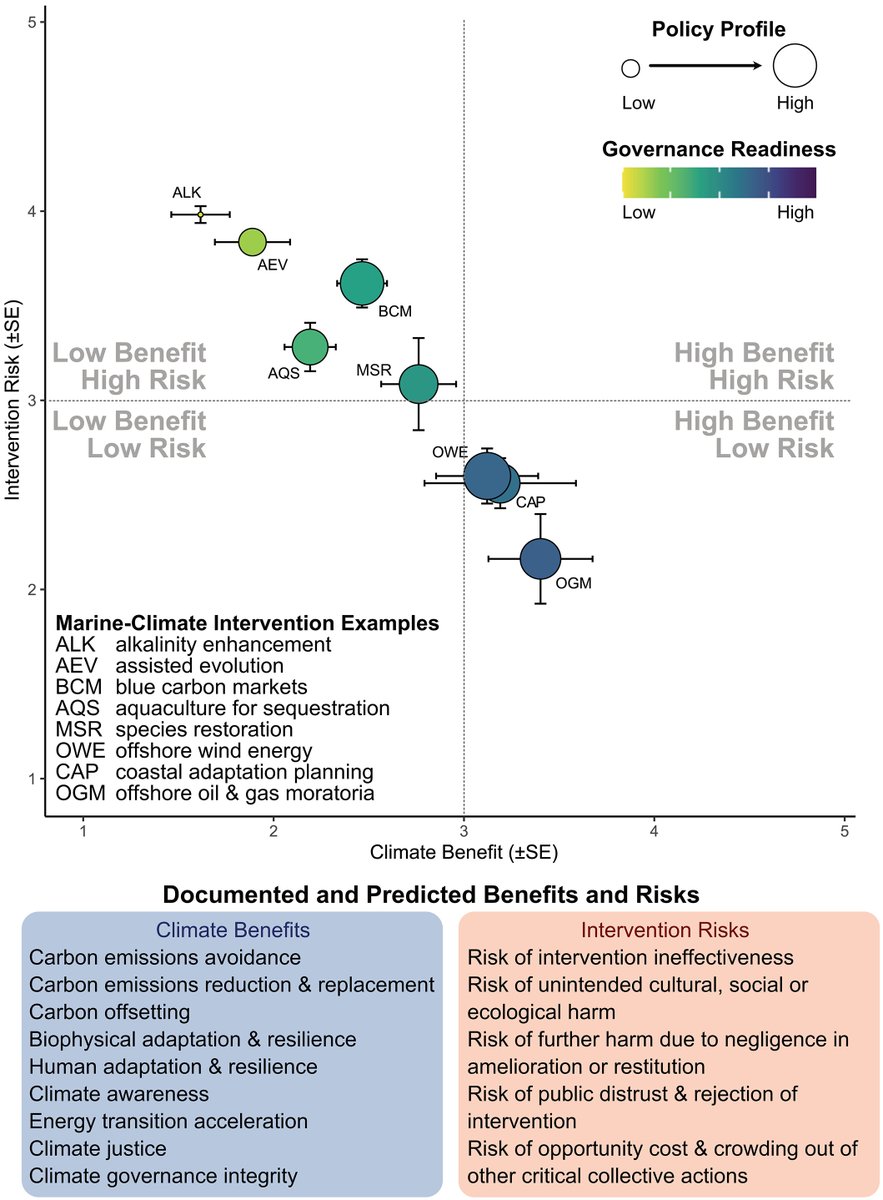
It introduces an overview of the diverse set of “novel marine-climate interventions”, in virtually every ocean basin 🌎🌍🌏 across 8 main intervention types:
Scoring examples of interventions across...
“Climate Benefit”,
“Intervention Risks”,
“Governance Readiness”, &
“Policy Profile” ...
...shows not all are created equal.
The paper outlines:
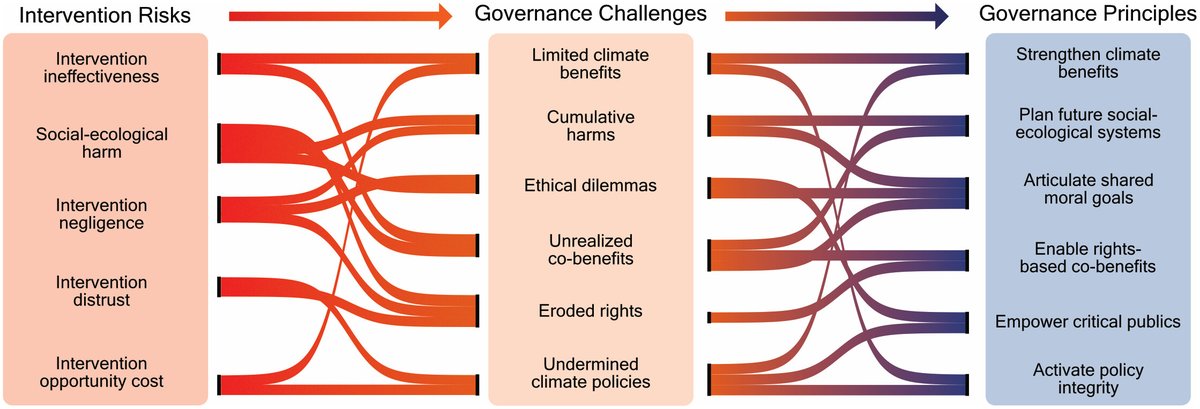
1️⃣Why the space of marine climate interventions poses particular challenges,
2️⃣ What these specific challenges are, and...
3️⃣ Which principles for governance can help address these challenges and risks.
In sum:
“Risks include opportunity cost, whereby overhyped interventions can crowd out less hyped but more effective solutions.”
https://t.co/li3ffZOI86
“The very real hazard of maladaptation, whereby intervention risk outweighs climate benefit, could accelerate a parallel social- ecological crisis.”
https://t.co/li3ffZOI86
“To avert unintended consequences and secure benefits for climate, oceans, and people, maritime nations must implement responsible transformation governance principles with skill and haste.”
https://t.co/li3ffZOI86
In a new #ScienceReview, researchers delve into the risks associated with rapidly emerging marine-climate intervention approaches.
Learn more: https://t.co/mFd3QYvLjl
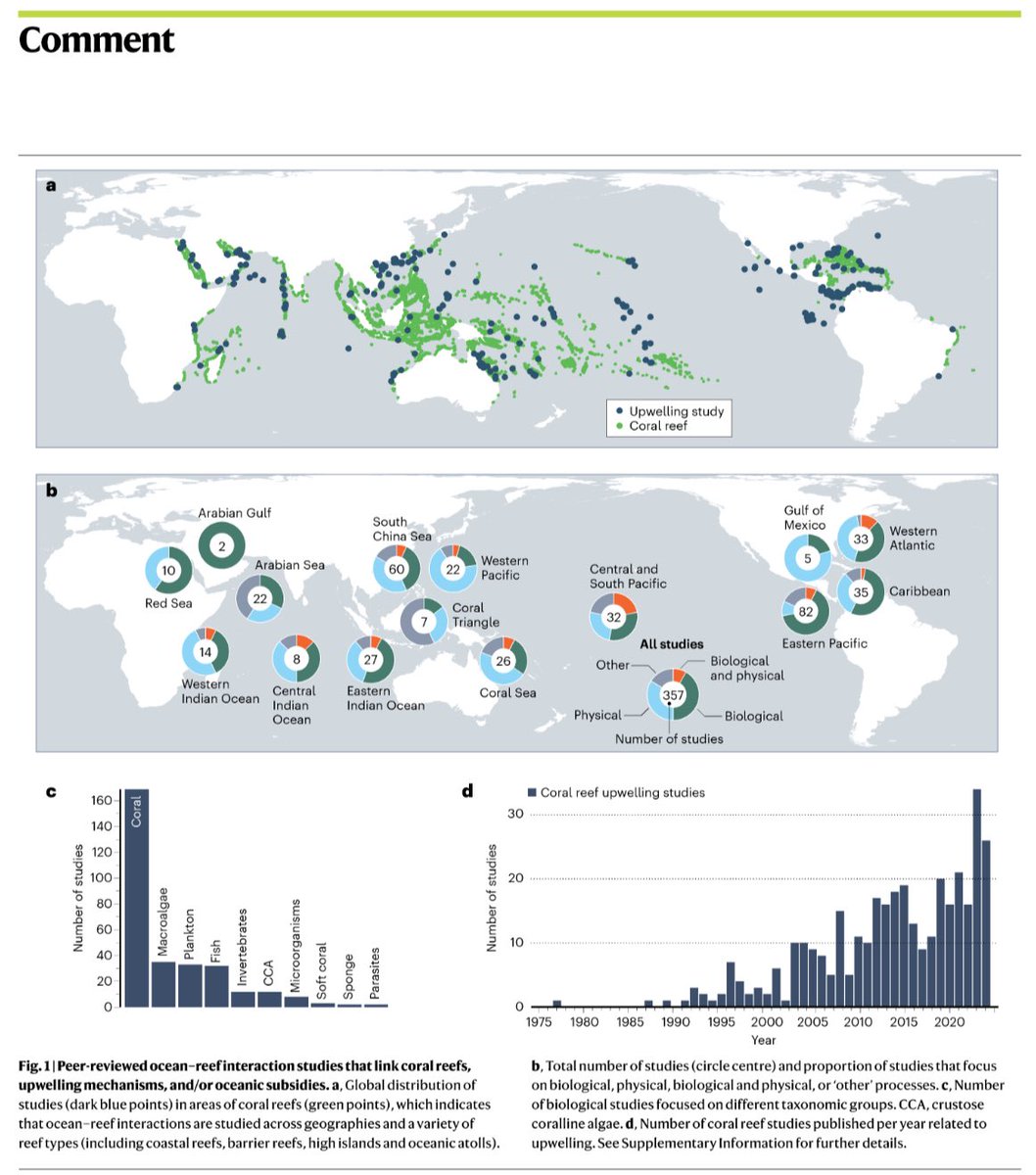
📣 Ocean-reef interaction studies: Relevant across geographies (a), but understudied (b), biased towards coral studies (c), small but growing base of coral reef upwelling studies (d) https://t.co/Dmp1YPz6PV
In a new #ScienceReview, researchers delve into the risks associated with rapidly emerging marine-climate intervention approaches.
Learn more: https://t.co/mFd3QYvLjl
Global heating is changing marine systems. 🌊 🌡️
In response, novel interventions are gaining traction fast.
They aim to sustain ocean systems and ocean-dependent societies - but come with risks. 💥
Now in @ScienceMagazine
More below 👇 & paper here: https://t.co/li3ffZOI86
Work examining the feasibility of glacier interventions must be codesigned in partnerships between scientists and current and future rights holders and stakeholders in harm’s way, write @TH_Morrison@UniMelb & colleagues from @NASAGISS, @otago, + @ucsc.
https://t.co/sd6ADQX0uY