With Greenland back in the headlines, it seems like a good time to tell the story of one of the most extraordinary men ever to cross its frozen wilderness.
His name was Peter Freuchen.
He stood 6'7", explored the Arctic by dogsled, lived among the Inuit, lost a foot to frostbite, escaped a death sentence, became a Hollywood celebrity and once saved himself from certain death with a knife made from his own frozen feces.
Born in Denmark in 1886, Freuchen initially studied medicine at the University of Copenhagen. But the conventional life wasn't for him. At 20, he joined an expedition to Greenland, working as a coal shoveler for the opportunity to go north.
He fell in love with the Arctic. In 1910, Freuchen and fellow explorer Knud Rasmussen established the Thule trading station in northwestern Greenland, which became a base for expeditions into some of the most unforgiving territory on Earth.
Freuchen didn't just visit Greenland. He made a life there. He learned the language and customs of the Inuit, hunted and traveled alongside them, and married an Inuit woman with whom he had two children.
The Arctic nearly killed him more than once. During one expedition, Freuchen became trapped beneath hardened snow and ice. Unable to reach his tools, he later claimed that he fashioned a crude chisel from his frozen feces and used it to dig himself free.
Years later, severe frostbite attacked his left foot. He amputated several of his own toes before eventually losing the foot entirely. Freuchen simply kept going.
He became a journalist and author, and his knowledge of Greenland eventually brought him to Hollywood. MGM adapted one of his books into the 1933 film Eskimo, and Freuchen worked as a consultant and writer.
Imagine the sight of him. A 6'7" Danish Arctic explorer with an enormous beard and a wooden leg walking around Hollywood in the 1930s.
Maybe the most amazing chapter of his life came during WW II. Freuchen despised fascism and became involved with the Danish resistance after Germany occupied Denmark.
The Germans eventually arrested him. Freuchen was sentenced to death, but he escaped and made his way to Sweden.
In 1945, Freuchen married his third wife, Dagmar Cohn, a Danish fashion designer. The couple later settled in America. In one of the strangest final chapters imaginable for the Arctic explorer, he appeared on the television quiz show The $64,000 Question. He won the grand prize.
Peter Freuchen died of a heart attack in Alaska in 1957 at the age of 71. Part of Greenland now bears his name, Freuchen Land.
Explorer. Author. Resistance fighter.
Men like this once walked the earth.
🚨 BREAKING: Claude has a feature called ADHD Executive Function Mode.
You can use it to work with your brain’s dopamine, improve focus, and get a week’s worth of work done in just 4 hours.
Here are 7 powerful prompts to access it: 👇
Everyone's already got Quinn Hughes signing in New Jersey next summer. The brothers reunite, Jack and Luke and Quinn all on one blue line and one power play, and the Devils become a superteam overnight. I get it. It's the best storyline in hockey. But the more I look at it, the less I think it actually happens. I'll lay out why.
Start with last year. The Canucks and Devils reportedly touched base on a Hughes trade, and New Jersey never pushed it across the finish line. Their cap and a couple of no-trade/no-move contracts made it messy, and they let it go. My personal read is that Quinn wanted Jersey. When the team with both his brothers on it had the chance and passed, I think that stuck with him. Players remember who came for them and who didn't.
The bigger problem is money, and it's not close. The Devils are projected to have about $16.8M in cap space next season, and that's with only 16 roster spots filled. They still need to fill out the rest of the lineup with that same money. Quinn hits UFA as a Norris-caliber defenseman, and his max next summer is roughly $22.7M a year. Jersey can't even fit the max, let alone build a roster around it.
So what would it actually take? Quinn would have to come in well under market just to fit, and even then there'd be almost nothing left for depth. That means a hometown discount on the biggest contract of his career, which also sets the market for every elite defenseman after him. Guys don't do that, and their agents definitely don't let them. A small discount is possible. The discount Jersey needs isn't happening.
Meanwhile, look at what he already has in Minnesota. The Wild are first in the Central and #2 in the NHL's power rankings, and they're doing it while missing Faber, Gustavsson, both Folignos, and Spurgeon. That's a big chunk of their core on the shelf, and they're still near the top of the league. When those guys come back, this is a real Cup team. Why leave a contender to start over somewhere that can't afford you?
Then there's Brock Faber, and this is the part people sleep on. When he's healthy, Quinn isn't finding a better partner anywhere in the league. Faber can jump into the play and drive offense right alongside him, but he's also a legit shutdown defender. That combination lets Quinn take every risk he wants, because he knows Faber has the back end covered. Players love that kind of pairing, and you don't find it twice.
Put it all together. New Jersey passed on him once. They can't afford him without gutting the roster. And they can't offer him a better team or a better partner than what he has right now. The brothers thing is a great story, and I'd watch every second of it. But Quinn Hughes is staying in Minnesota.
Tell me I'm wrong
@minnesotawild
Twelve years ago, my wife sent one of her students to America for a year.
Shun was 16. Quiet. He had never left Japan.
He was placed with a couple on a cattle ranch in Wyoming. Walt and Carol. Married 38 years.
Carol was the one who signed them up. She wrote the letters. She picked out his room.
Five months before Shun arrived, she died.
The exchange program called Walt to cancel.
Walt said, "She signed. We'll keep it."
At the airport, Walt was holding a sign. WELCOME HOME, SHUN. Carol had made it in January. He held it up with both hands, the way you hold something that isn't yours.
In the first week, Walt said eleven words. Shun counted.
Four of them were "Yep."
Walt couldn't cook. Carol had done all of it for 38 years.
So he drove two hours to the nearest Asian grocery and came home with a 25-pound bag of rice and a rice cooker. He read the manual at the kitchen table in his reading glasses, like a man defusing a bomb.
The first batch could have held bricks together. He served it anyway. They ate it in silence.
By Christmas, the rice was perfect. Shun found out why later. Behind the barn were four empty 25-pound bags. Walt had been practicing at night, after Shun went to bed.
Every morning: a peanut butter sandwich, crusts cut off with his pocketknife. Badly.
Shun asked him once why he cut the crusts.
Walt thought for a long time. "Carol always did."
Shun didn't like peanut butter. He never said so. He ate every one.
In October, Shun got homesick. He cried in his room with the door shut, quietly, the Japanese way.
Walt didn't knock.
In the morning, Shun opened his door and found Walt asleep in a kitchen chair in the hallway. Boots still on. He had sat there all night.
He never mentioned it. Neither did Shun.
At church that fall, Walt introduced him to the pastor:
"This is the Japanese."
By Christmas:
"This is Shun."
One night in April, Shun went out to the barn and heard Walt talking. Nobody was there but Carol's old horse, Dolly.
Walt was brushing her.
"He got an A in math. He eats everything I make. Even the rice. He's a good kid, Carol. You'd like him."
Then, quieter:
"I think I'm doing it right."
In June, at the airport, Walt carried Shun's bags to the counter and told the woman checking them:
"This is my boy. Take care of him."
Shun bowed. All the way down. The way you bow to your father.
Walt looked up at the departure board for a long time. Then he said, "Yep," and walked out.
From the gate, Shun could see the parking lot. Walt's truck didn't move for an hour.
Somewhere over the Pacific, Shun opened his lunch bag. One last sandwich. Crusts cut off. Badly.
Under it, an envelope. Inside, a copy of Carol's application.
He knew the handwriting. It was the same as the sign.
Question 9: Why do you want to host a student?
"My husband doesn't know how to be alone. Please send someone he can take care of."
Clipped to it, a sticky note. Handwriting Shun had never seen, because in ten months Walt had never written him a single word:
"Thought you should know whose idea you were."
Shun still didn't like peanut butter. He ate every bite. He cried all the way to Tokyo.
Shun is 28 now. He calls Wyoming every Sunday. Walt is 76. He still uses about eleven words a call.
Four of them are still "Yep."
Last month, Shun's son was born. He sent Walt a picture.
Walt wrote back. The longest message he has ever sent:
"Teach him to cut the crusts. Better than I did."
Shun says everything he knows about being a father, he learned from a man who said eleven words a week.
The sandwiches said the rest.
Even though I'm having a really good day, so far my day has been surrounded by 💩. I'm quoting a post from earlier today. A documentary on how🧻 is made. It's really not a documentary, it's more of a mockumentary. This comedian really knows how to make you think about💩 and stuff. 🤣🤣🤣
*Maturity taught me that* not every woman is a Proverbs 31 woman. And honestly, that’s okay.
*Some women are Deborahs* — called to lead, speak boldly and stand on the front lines.
*Some are Ruths* — loyal, humble and faithful even when nobody is watching.
*Some are Esthers* — positioned for influence, with courage rising when the moment calls for it.
*Some are Marys* — chosen to surrender and carry a purpose they didn’t fully understand.
*Some are Hannahs* — shaped by prayer, waiting, tears and a faith that refuses to die.
*Some are Abigails* — wise, discerning and brave enough to step in before things fall apart.
*Some are Miriams* — worshippers, leaders and women who know how to praise God after surviving battles.
*Some are Rahabs* — women with complicated pasts who prove that your beginning does not have to determine your ending.
*Some are Naomis* — women who have lost so much, yet somehow find the strength to begin again.
*Some are Lydia’s* — business-minded, resourceful women who use what they have to make room for others.
*Some are Priscillas* — women who teach, guide and build alongside others.
*Some are Mary Magdalene’s* — women whose lives were transformed by God and who carried their testimony boldly.
*And then there are Jezebels* — a reminder that influence without humility, power without accountability and manipulation can destroy everything around you.
*The Bible didn’t give us only one type of woman.*
*It gave us leaders.*
Warriors.
Mothers.
Worshippers.
Entrepreneurs.
Intercessors.
Survivors.
Women who waited.
Women who fought.
Women who failed.
Women who were restored.
And women whose lives became warnings.
*So stop expecting every woman to look* the same, love the same, lead the same or walk the same path.
*You don’t have to be another woman*. You just have to become the woman God created YOU to be. ❤️🔥🙏🏾
What an interesting read...........
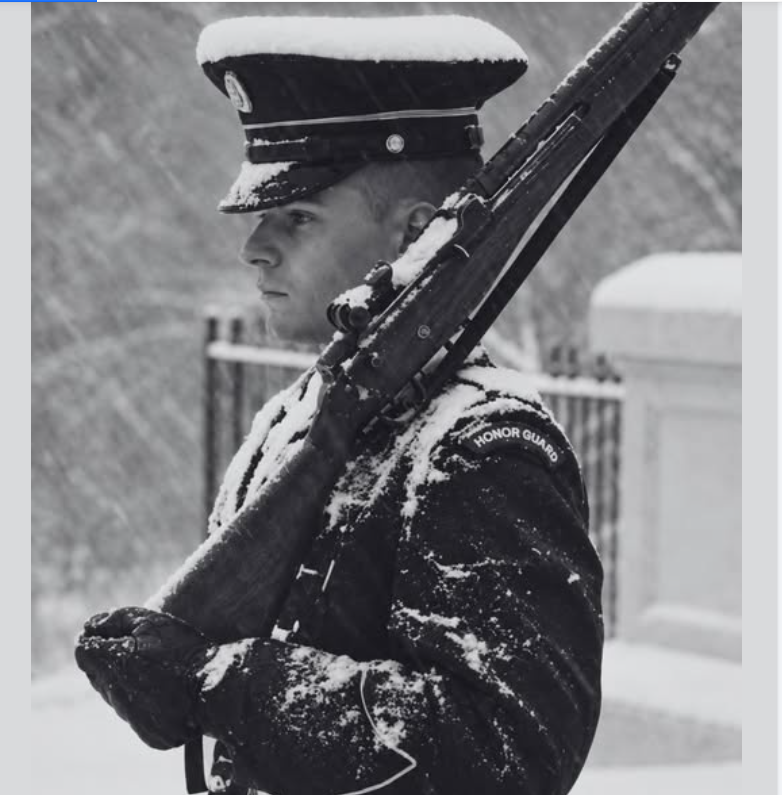
On Jeopardy the other night, the final question asked: “How many steps does the guard take during his walk across the Tomb of the Unknown?”
All three contestants missed it.
Tomb of the Unknown Soldier
1. How many steps does the guard take during his walk across the Tomb and why?
He takes 21 steps — symbolizing the 21-gun salute, the highest military and foreign tribute.
2. How long does he pause before turning to walk back and why?
He waits 21 seconds, again in honor of the same tradition.
3. Why are his gloves damp?
They are lightly moistened to ensure he never loses his grip on his rifle.
4. Does he keep his rifle on the same shoulder, and if not, why?
He always carries it on the shoulder farthest from the Tomb. After each crossing, he performs an about-face and moves it to the outside shoulder.
5. How often are the guards changed?
Every 30 minutes, 24/7, 365 days a year.
6. What are the physical requirements for a Tomb Guard?
Applicants must be between 5'10" and 6'2" and have a waist no larger than 30".
Other expectations of the Guard:
They devote two years to the Tomb, live in the barracks beneath it, and must refrain from drinking alcohol on or off duty for the rest of their lives.
They can never swear in public or dishonor the uniform or the Tomb.
After two years, they earn a wreath pin signifying their service — fewer than 400 are currently worn.
If they violate the code, they must relinquish the pin.
Their shoes have thick soles to protect against extreme temperatures and metal heel plates that create the crisp click when they halt.
Uniforms must have zero wrinkles or lint and are inspected in a full-length mirror.
For the first six months, guards do not speak to anyone and do not watch television.
Their off-duty time is spent studying the 175 notable individuals buried at Arlington National Cemetery, memorizing who they are and where they rest.
Among them: President Taft, Joe E. Lewis, and Audie Murphy, the most decorated WWII soldier.
Every guard spends five hours daily preparing their uniform.
ETERNAL REST GRANT THEM, O LORD, AND LET PERPETUAL LIGHT SHINE UPON THEM.
When Hurricane Isabel approached Washington, D.C. in 2003, Congress shut down for two days. The guards were offered permission to suspend duty due to danger.
They replied: “No way, Sir!”
Drenched and marching through the storm, they insisted that guarding the Tomb is the highest honor, not just a task.
The Tomb has been continuously guarded — day and night — since 1930.
God Bless and Keep Them
I don’t often encourage sharing posts, but I would be honored if this one reached as many people as possible. We should always feel proud of the men and women who serve, wherever they are stationed.
Duty – Honor – Country
IN GOD WE TRUST — with Herbert F Wieland.
Obsessed with this guy who finds the most boring average looking men in Boston and then street harasses them (“who let this DADDY outside?!”), and they absolutely LOVE IT and are beaming from the attention. Much to consider here