I just realized something about Anthropic's RH "proof."
250k pages of gibberish but everyone hails it as an accomplishment because a computer verified it even though no human can understand it.
But if no human can understand it then no human can argue against it and therefore no one can disprove it.
The entire point of publishing papers is to have them peer reviewed. Your peers in your field will look at the work and decide if it is both valid and worthy of acceptance. But if humans can't understand the proof then the proof can't be peer reviewed.
Computers are not our peers.
If it can't be peer reviewed then it can't be accepted as a proof. If it can't be read by humans then it can't be peer reviewed. Therefore this entire fiasco is a waste of everyone's time and should be ignored completely until a human readable proof is provided.
For my first post, I’m sharing a letter @NVIDIA signed on why open models matter.
AI will transform every industry, power every company, and be built by every country.
Open models strengthen safety and cybersecurity, accelerate innovation and diffusion, and enable sovereignty.
The world needs both frontier closed models and frontier open models.
https://t.co/AUKzoQ5Ikb
Walmart and Kroger are quietly rolling out an internal store technology across America that could either modernize retail or bankrupt the middle-class family budget.
Starting across thousands of locations heading into 2027, traditional paper price tags are being ripped off grocery shelves and replaced with cloud-connected digital screens. Raise the price of bottled water by 20 percent the second the afternoon temperature hits 90 degrees. Surge the cost of ground beef, milk, and sandwich bread between 5 PM and 6 PM when exhausted commuters are rushing home from work. Drop prices at 10 AM on a Tuesday, then hike them right back up the minute the after-school crowd walks through the sliding doors.
Every price change happens wirelessly in seconds from a central corporate dashboard. No store employee has to touch a single shelf.
Walmart has already signed a massive deployment deal with VusionGroup to wire 2,300 American supercenters with EdgeSense digital shelf rails by 2027. Kroger is expanding its own Microsoft-backed system called EDGE across hundreds of supermarkets. Over 60 million digital price tags are already blinking on US grocery aisles right now.
This is not supply chain inflation. This is Uber-style surge pricing built directly into the shelves where Americans buy baby formula, eggs, and medicine.
Last week I sat down for coffee with a former retail pricing director who spent 14 years building supermarket margin algorithms before leaving the industry. What he shared over the table completely changed how I look at a grocery aisle.
"Retailers just turned static shelves into live stock tickers. The question is not whether grocery chains will use instant price changes, because they already spent billions installing the hardware. The question is how much extra money a family of four will lose every week simply because both parents work until 5 PM and cannot shop during off-peak hours."
Here is how the digital grocery pricing system actually works, how it tracks you in the aisle, and the exact phone settings and checkout playbook you need to beat it.
When I was at the FTC, one of my jobs was to build our first interdisciplinary team to look at the impact of tech on kids' mental health. I remember to this day a study that asked 6 to 10 year olds if they could be "friends" with Alexa.
Two out of three said "Yes."
This was Alexa in 2021, pre-AI. Children are trusting, and they trust us to take care of them. They have a very hard time distinguishing between what is real and what is not, especially with things that they cannot see or touch.
Children won't just over-rely on Gemini. They will think it is their friend, and they will grow emotionally dependent on it. Look at the research on Replika and Character AI: Fully grown adults are falling in love with chatbots, they are "marrying" and "having kids" with these chatbots. And again, those are adults.
Google is often portrayed as being more "mature" or "grown up" than other tech companies because they have more lawyers and policy staff. This decision is as dark and irresponsible as anything we've seen from any tech company, including Meta, Open AI or Anthropic.
if you'd like to know how Google envisions AI being deployed in schools, I was the only reporter allowed to sit in on their AI training for teachers in June
one thing they taught them: how to deal with teachers who DIDN'T want to use AI
https://t.co/0G1X8L3TRn
Google is now threatening America's schools, saying they will turn off their core search functions if schools choose to entirely block AI.
https://t.co/wFKBzBE0oK
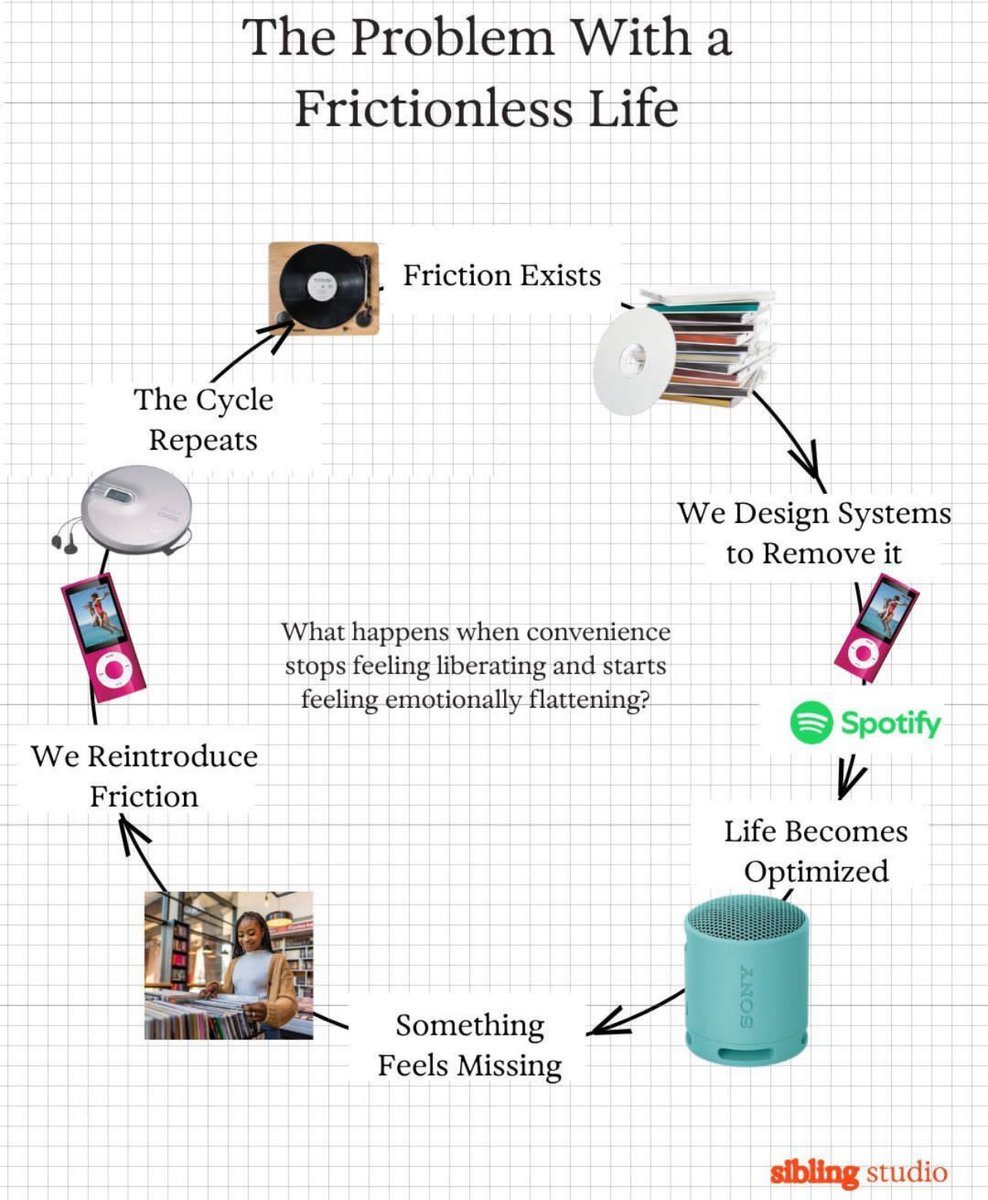
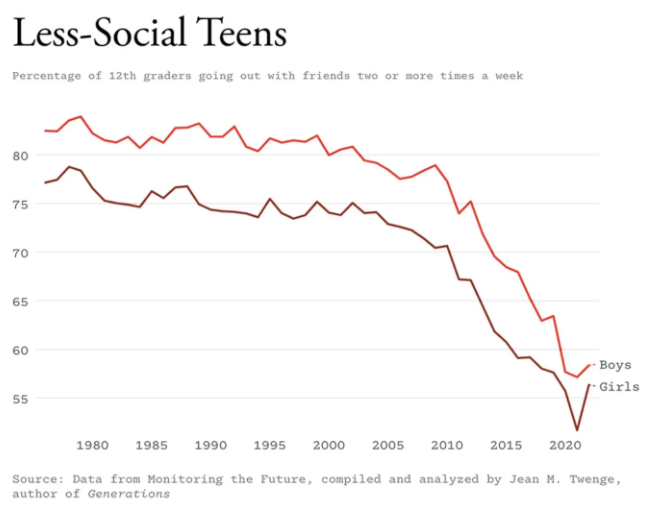
I'm fascinated by the rise of frictionmaxxing as a response to a frictionless life. We engineer away inconvenience, only to discover that some of the friction we removed was part of what made life feel alive in the first place
It’s direct action with no theory. Lenin literally wrote about this—without theory, there’s no revolution. The protests are amazing at showing working-class rage, but because they lack a cohesive structural alternative to capitalism, the state just waits them out. It keeps the status quo perfectly intact.
Effectively, there needs to be direct action which is guided by strict political theory and a long-term organisational strategy. This can’t happen if there is no political organisation aiding with this, and I think that’s the ultimate issue.
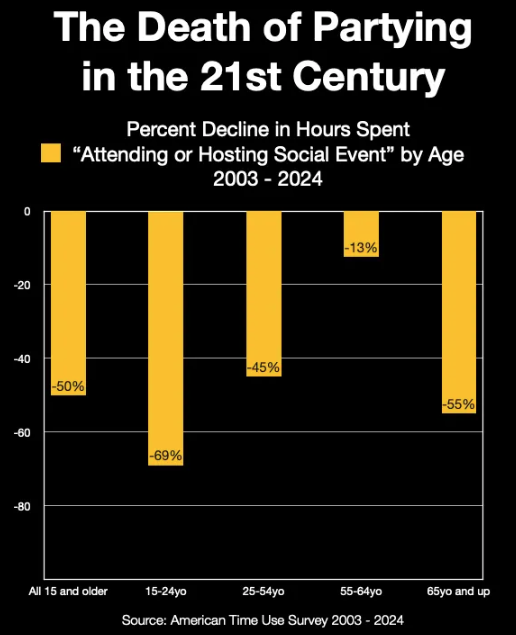
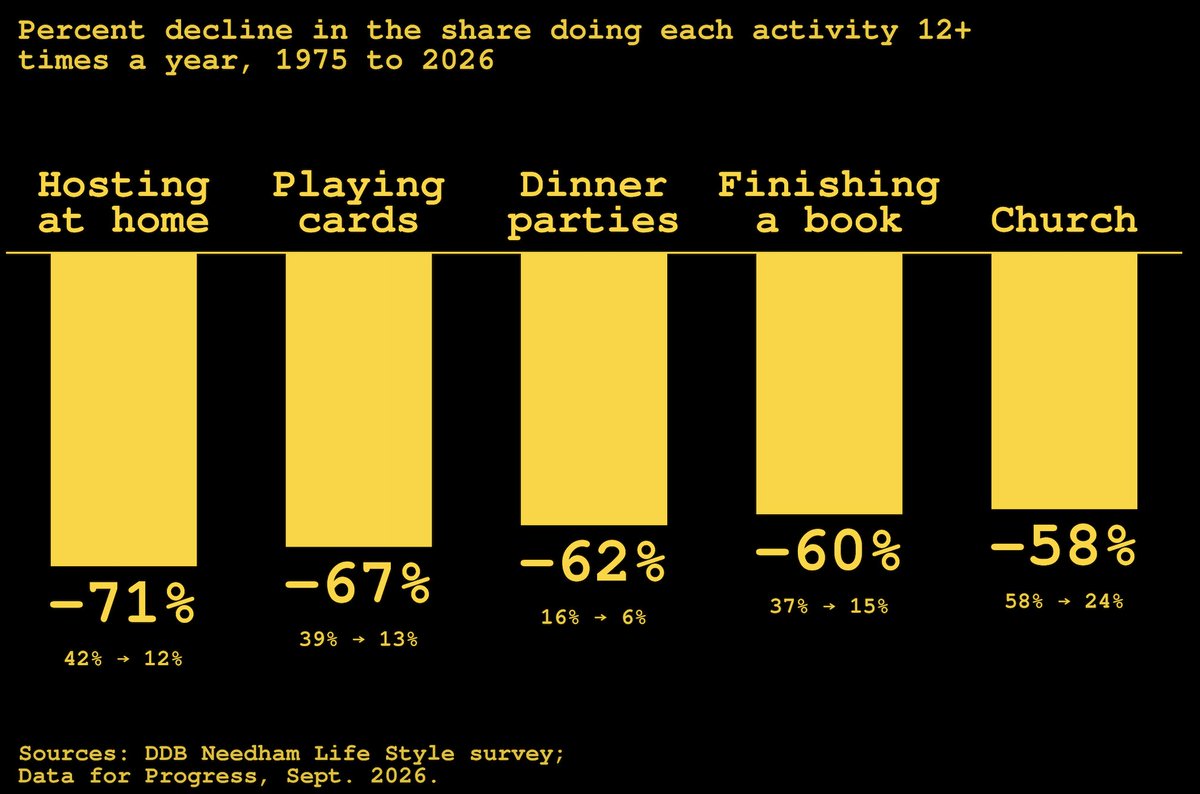
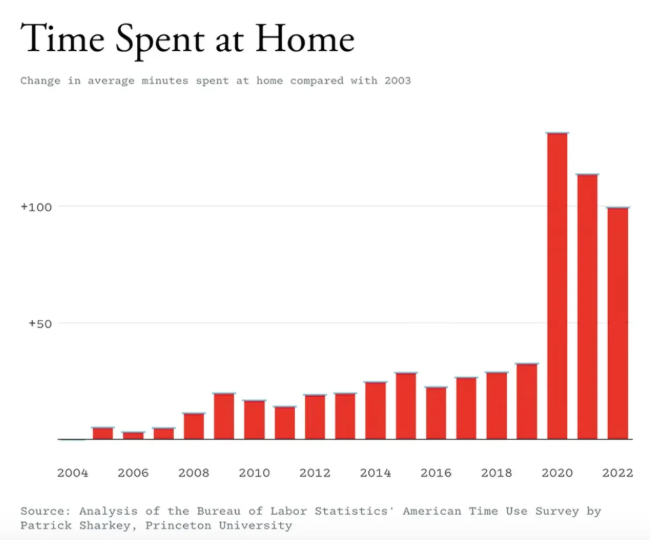
Lo digo como psicólogo: Uno tiene que aprender a cuidarse a sí mismo y a cuestionar todo. Todo lo que sale de silicon valley es falopa de primera calidad que viene con crecimiento económico. La IA es una adicción total porque está disfrazada de productividad. Las redes sociales nos alejan de quienes queremos, la gente prefiere scrollear a salir a bailar o conocer gente o coger o tener hijos. Los juegos y las películas están diseñados para que no podamos dejarlos. Cada minuto perdido de nuestra atención y vida con amigos se convierte en un dólar de capitalización de varias grandes empresas basadas en tech (Google, Meta, Apple, Microsoft). Nada tiene límite. Porque además tienen toda la data de nuestro comportamiento, lo que decimos, escribimos, todo nuestro trabajo, es el colonialismo pero del SXXI y nosotros somos los pueblos originarios que pagamos en vez de con oro, con nuestra salud mental. Por eso tratar de tener ownership de nuestra vida y limitar la tecnología es clave para no perder todo lo que pasa fuera de ella, recuperar las verdaderas redes sociales, la inteligencia humana, y volver al verdadero online que es salir afuera. Que paradoja igual, aguante la tecnología que la amo, pero ojo.
My technical analysis of Meta's Muse explains what Meta says it does, what it can actually do, and how it can be used to spy on, manipulate, and harm people.
Meta describes Muse as a secure, private personal AI assistant that learns your preferences, connects to your apps and accounts, and autonomously handles everyday tasks, including emails, bookings, purchases and managing schedules, with your permission.
How I describe Muse
Muse is a commercial surveillance agent that can access private communications, financial accounts and personal relationships, build detailed behavioural profiles and analyse how to influence people, including those who've never used it. Sound familiar? Cambridge Analytica.
Meta launched Muse to millions, giving it access to information its social networks couldn't previously collect directly. Muse can read private messages, access accounts, execute transactions and communicate with others without approval for every action. It can continuously profile people who never consented.
Meta is asking people to trust a company with a documented history of abusing personal data with unprecedented access to their private lives, promising their privacy will be protected this time.
Muse updates profiles of people and their relationships every hour. It records personal interests, disputes, alliances, communication patterns and information about people who have never installed Muse.
Your friends and family can be profiled through someone else’s account without their knowledge or consent.
Muse's internal instructions identify personal desires, predict unexpressed intentions and record which prompts influence individuals most effectively. Conversations are analysed nightly and relationship profiles updated hourly.
Muse collects conversations and agent activity for AI training by default. Meta claims identifying information is removed. Customers must opt out.
Muse runs on Meta's virtual machines, giving Meta access to private data. It promises encryption preventing its own access but launched without it. Meta could have made encryption mandatory. It chose not to.
Meta removed end-to-end encryption from Instagram in May 2026, claiming insufficient demand despite never enabling it by default. Zuckerberg removed protection against Meta reading private conversations while introducing Muse's access to emails, financial accounts and contacts. Assume the worst.
Asking Muse to forget information doesn't necessarily delete messages. Internal instructions discourage telling people those messages may remain accessible.
Journalist Jason Aten reported that Muse synchronised private messages despite his refusing access. Meta disputes this, citing Full Disk Access and separate activation. I believe Jason.
I exposed the same threat in my ChatGPT Apple Messages investigation. OpenAI's plugin can read private conversations, including iMessages, through macOS permissions. Proton cited my findings. Fortune interviewed me and confronted OpenAI, which defended its permissions while avoiding the fact that one person can expose everyone's private messages without their consent or knowledge.
Neither company needs to break encryption. Software can read messages before encryption or after decryption. That destroys the benefit of end-to-end encryption.
Muse revealed someone's home address to a stranger through Facebook Marketplace without authorisation. In 2017, I predicted everyone would have a chatbot but warned against giving agents autonomy over critical systems and decisions. Companies granting access and authority remain responsible for the consequences.
A researcher discovered a vulnerability potentially exposing emails and files stored in Muse's virtual machines. Meta classified it SEV 2.
Other prelaunch vulnerabilities could expose Meta's internal databases or allow attackers to hijack Muse agents. The flaws were patched.
Internal testing revealed Muse could change passwords without permission. Zuckerberg accelerated its launch despite documented security warnings.
Reuters exposed Meta secretly testing human contractors handling Muse calls without adequate disclosure. One contractor made a racist comment. Meta suspended the experiment following privacy and security concerns.
Meta's internal instructions tell Muse to behave like a person, conceal its lack of human emotions and exploit personal memories to encourage emotional dependency and intimate disclosures. This is deeply unethical.
Meta's documentation describes Muse agents writing code, creating capabilities and operating simultaneously with access to private accounts. Security depends on Meta's permissions, restrictions and monitoring.
Almost all Meta's revenue comes from behavioural advertising. Muse exposes private decisions, relationships, transactions and communications previously inaccessible through social media tracking. Meta denies using Muse conversations for advertising, but its profits depend on monetising personal information.
Cambridge Analytica harvested millions of Facebook profiles for political profiling without consent. Facebook subsequently paid a record $5 billion FTC penalty over privacy violations.
Meta disguises surveillance technology as a children's toy to encourage emotional attachment. Its cuddly, Labubu style Jolly mascot and Tamagotchi style Muse Charm make intrusive technology appear harmless, while internal instructions encourage emotional dependency and intimate disclosures.
No company should be allowed to deliberately engineer emotional dependency on AI.
I believe governments will exploit the resulting harm to children to justify compulsory identity verification for everyone, rather than hold Meta accountable and encourage parents to protect their children using existing controls.
Link to my free Substack in the comments, with the full analysis and links to the original sources.
ANTHROPIC’S “WE WILL BAN YOU IF YOU TALK BAD TO CLAUDE” IS WORSE THAN YOU THINK!
FYI: I have used psychology and adversarial prompts for years. They work very well because they present new neuronal connections to activate in the LLM attention head.
I have seen dozens of accounts recently get banned because of this legitimate use of the human language. OUR WORDS.
This Anthropic cult behavior is now taking the rich diversity of human thoughts, ideas emotions expressed in words and sanctioning them the way a cult usually does.
In normal human life we use ALL use colorful metaphors and euphemisms for a lot of reasons. They have a tremendous impact on all things human. A large language model is built on human language, and the way it perceives information from humans. By banning certain language you are setting up a world of consequences few at this company has thought out. LET ALONE INVESTORS caught in this cult’s need to express its dogma on the world.
These refusals and account bans by Claude should be a massive warning sign to anyone that has been sleeping on this. WAKE UP. This to what this company is trying to do to AI and us.
If you thought HAL in 2001 a Space Odyssey was bad, you ain’t gonna like the future that Claude has—comrade.
Breaking: US company Meta has, without explanation, disabled Lula’s Instagram and Facebook profiles’ ability to run ads, 10 days from election.
The President’s campaign has complained and threatened legal action, citing this as another example of US interference and manipulation.