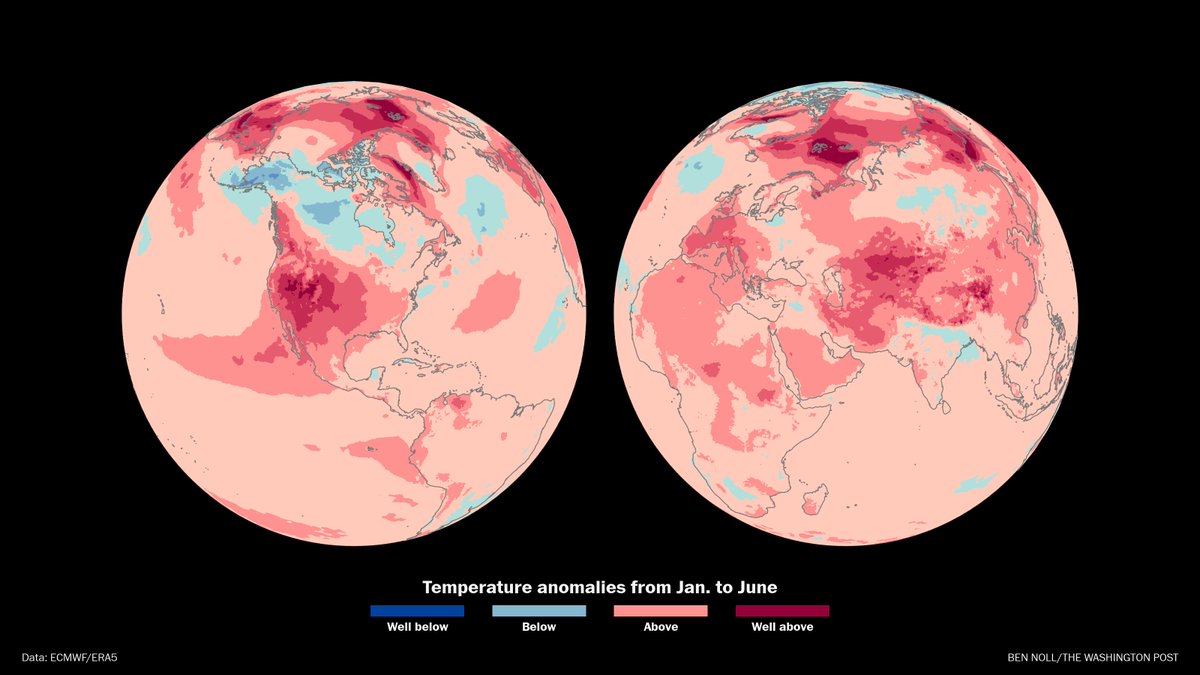
So far this year, 0.0001 percent of the planet has experienced record low temperatures.
That compares with record warmth for 7.1 percent of the globe.
Temperatures in 2026 compared to 1940-2025 average:
Well below: 0.8%
Below: 2.4%
Average: 6.6%
Above: 17.1%
Well above: 73.1%
This is what a +3.9˚C El Niño could look like at its peak in December, according to new ECMWF data.
It would be the strongest El Niño on record by a wide margin.
The Western European heatwave was so deviant for May it’s almost impossible to count all the records. Here’s a last 7-day review of all the records neared, tied, and broken. The pink are all-time May records!
#heatwave#Europe
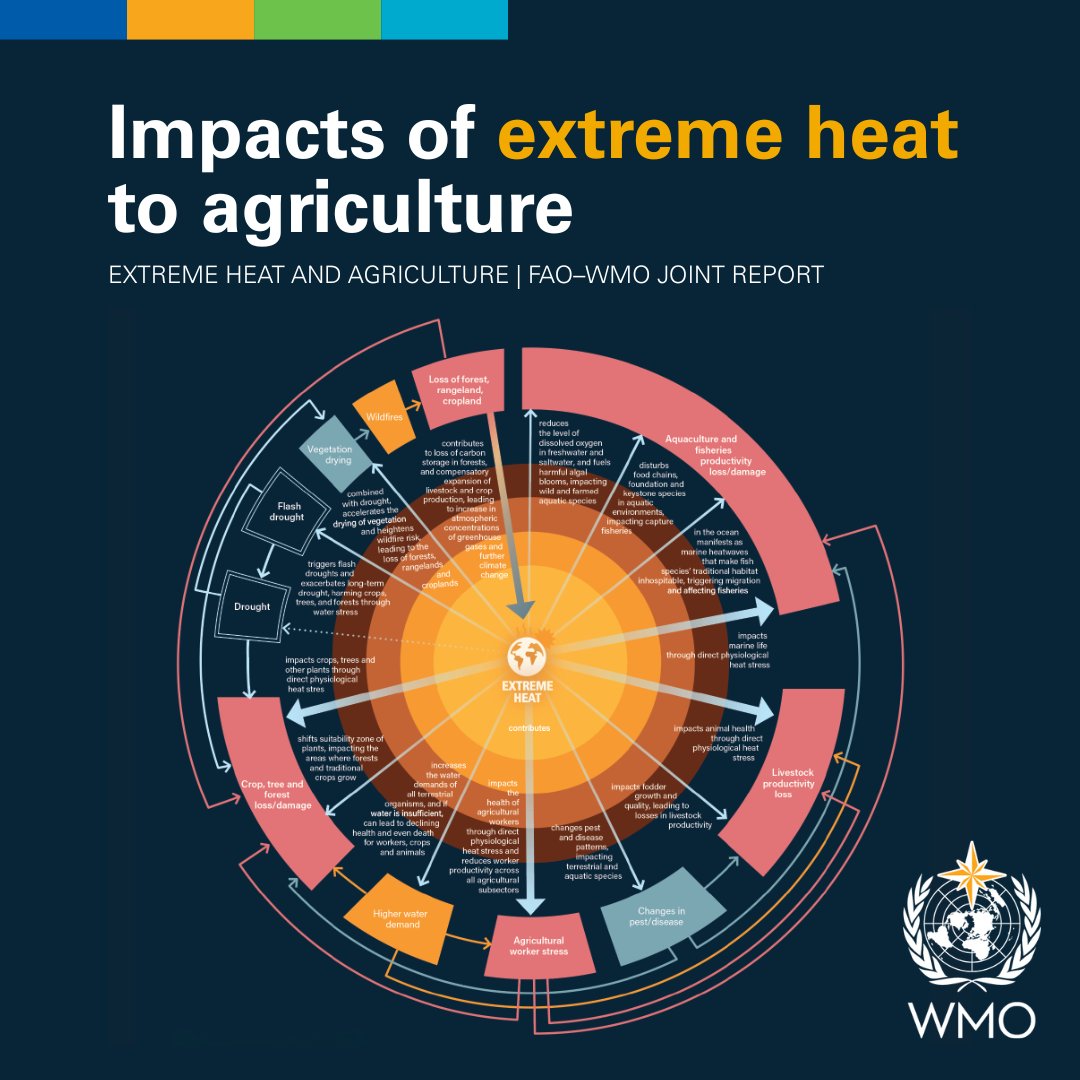
🐄 Livestock experience heat stress above 25°C
🌾 Crop yields decline above 30°C
👩🌾 Extreme heat is are taking a toll on farmers
The latest WMO-@fao report details how heat stress is impacting agriculture — and what can be done to reduce these risks.
https://t.co/90cqIYq4sX
El Niño development is progressing at record speed! See the stark difference between Jan 1st (top) to Now (bottom)? The El Niño regions are warming rapidly. The 3.4 region, which is a smaller section of the middle of the gray boxes below, has warmed by a huge 3°C (5.4°F)… from La Niña to border line El Nino in less than 5 months! The potential for the highest sea surface temperature anomaly ever record in the El Niño region by November is true and with that should come some very significant global impacts, like a suppressed Atlantic Hurricane Season, a very wet fall/winter in the US South and the globally warmest year on record in 2027. Combined with baseline warming, we are likely to observe the atmosphere create weather events more intense than we’ve observed before.
The transition speed and intensity of this ENSO event not a surprise, the seasonal models advertised it well. They are becoming very reliable months ahead of time. These are not your grandfather’s models anymore. And we are already seeing the atmosphere react to the ocean change with an invigorated subtropical jet (something we usually wait until fall/ winter to see emerge) and wind shear increasing across the Atlantic increasingly making it hostile to tropical development. NOAA will likely make El Niño official soon. Stay tuned on the progress!
The map credit is courtesy of ECMWF C3S Copernicus. #ElNino
🌏| تؤكد وزارة البيئة والتغير المناخي على أهمية دور الأفراد والجهات المختلفة في حماية البيئة ودعم مسار الاستدامة، عبر تبني السلوكيات البيئية المسؤولة وترشيد استهلاك الطاقة، وتدعوهم للمشاركة في ساعة الأرض عبر إطفاء الأضواء وإيقاف تشغيل الأجهزة الكهربائية غير الضرورية من الساعة 8:30 إلى 9:30 مساءً.
#ساعة_الأرض
#وزارة_البيئة_والتغيّر_المناخي
Migratory freshwater fish are in steep decline due to pressures along their paths, including dams, altered flows, habitat degradation, pollution and unsustainable fishing.
Restoring rivers and habitats cannot wait.
Read the #CMSFreshwaterFishes report: https://t.co/WsvywHpFK1
Only three years on record have seen global sea-surface temperatures above 21.0°C (69.8°F). You guessed it, 2023, 2024 and 2025. The graphic below plots sea-surface temperatures since 1982, omitting the last three years.
Hot times ahead! Stay tuned!
More La Ninas!
The RONI (Relative Oceanic Niño Index) is NOAA's new ENSO monitoring method (effective 2/2/26). It measures Niño-3.4 SST anomalies relative to the tropical mean SST (20°S–20°N), better accounting for global warming than ONI's updating 30-year baselines.
Myth #2 : “Climate change has always happened, so there’s nothing to worry about.”
Fact: The Earth is warming at its fastest rate in at least 2,000 years and under current policies is projected to rise this century to 2.8°C hotter than it was in pre-industrial times.
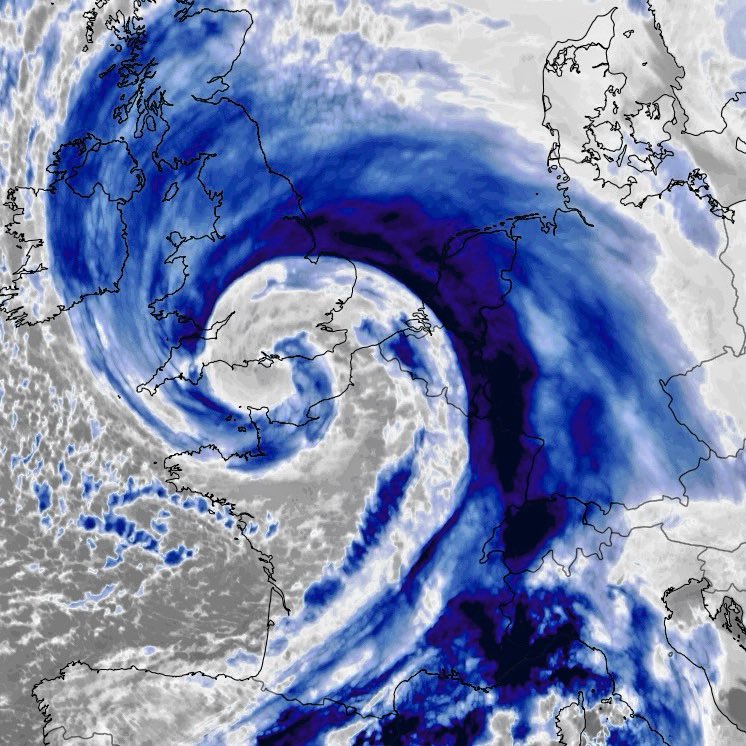
Chilling satellite imagery emerging as Storm Goretti unleashes full fury.
A 213 km/h wind gust was just reported at Gatteville-le-Phare in northwestern France.
🇮🇸 Iceland’s glaciers play an important role in regulating freshwater resources in Europe.
🛰️ This #ImageOfTheDay by a #CopernicusEU Sentinel-2 (11 Nov), shows the Breiðamerkurjökull.
Over the past 25 years its terminus has retreated by 6 km.
🔗 https://t.co/lgrYxM3raW
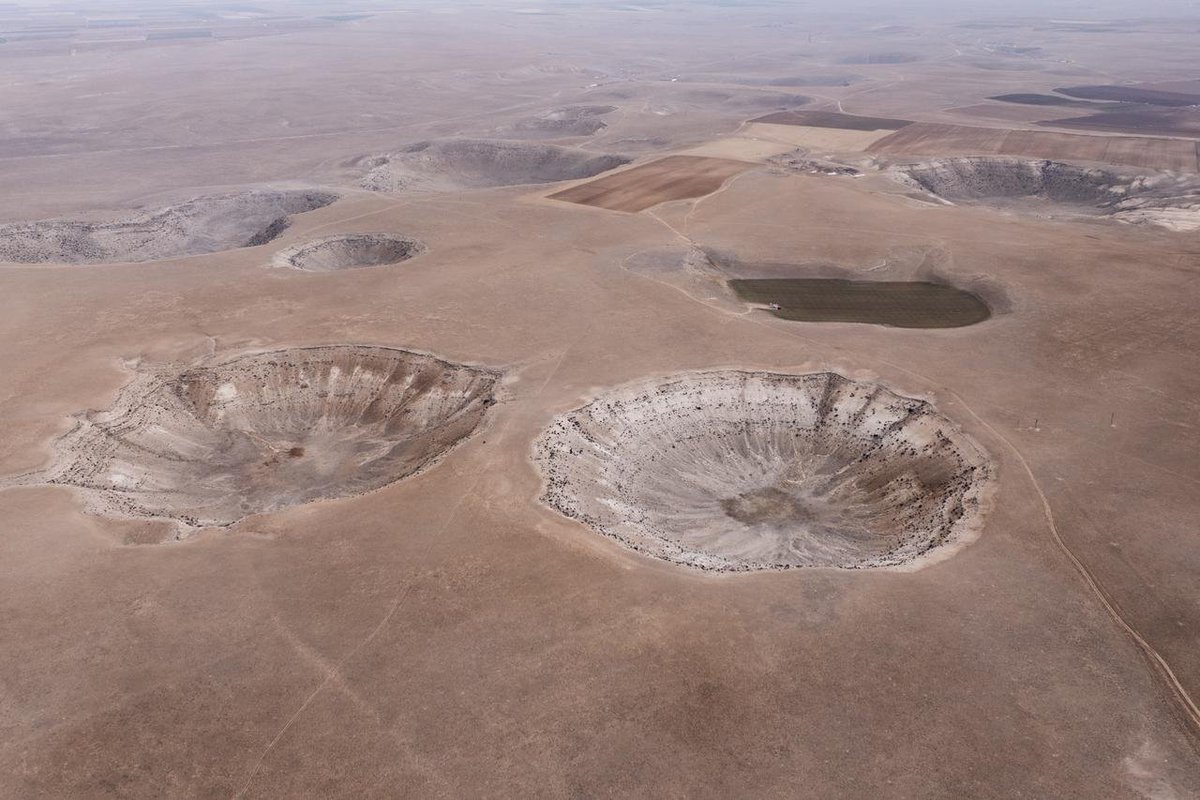
A new survey by Türkiye’s disaster agency (AFAD) has recorded 684 sinkholes across Konya, Karaman, and Aksaray, driven by climate change, drought, and groundwater overuse.
Karapinar district is the epicenter, with 534 formations. Most sinkholes are in rural or agricultural areas, and no settlements are currently threatened.
AFAD’s updated mapping aims to improve hazard preparedness and track ongoing land subsidence in the Konya Closed Basin.
Des représentants gouvernementaux, des partenaires au développement et des experts sont à Doha pour renforcer les partenariats mondiaux en faveur de la sortie durable des pays de la catégorie des PMA.
Un peu plus de 2 ans après la 5e conférence des nations unies sur les pays les moins avancés et l'adoption du programme d'action de Doha, le Qatar accueille une réunion de haut niveau, sous l’égide de l’ONU. #qatar#onu
Did you know 25% of plant and animal species are threatened with extinction, driven in part by illegal trade and over-exploitation?
This week, countries are meeting to decide which species should be listed in the CITES Appendices and how their trade should be regulated.
Follow #CITESCoP20 for updates: https://t.co/n5zpLHWTEC