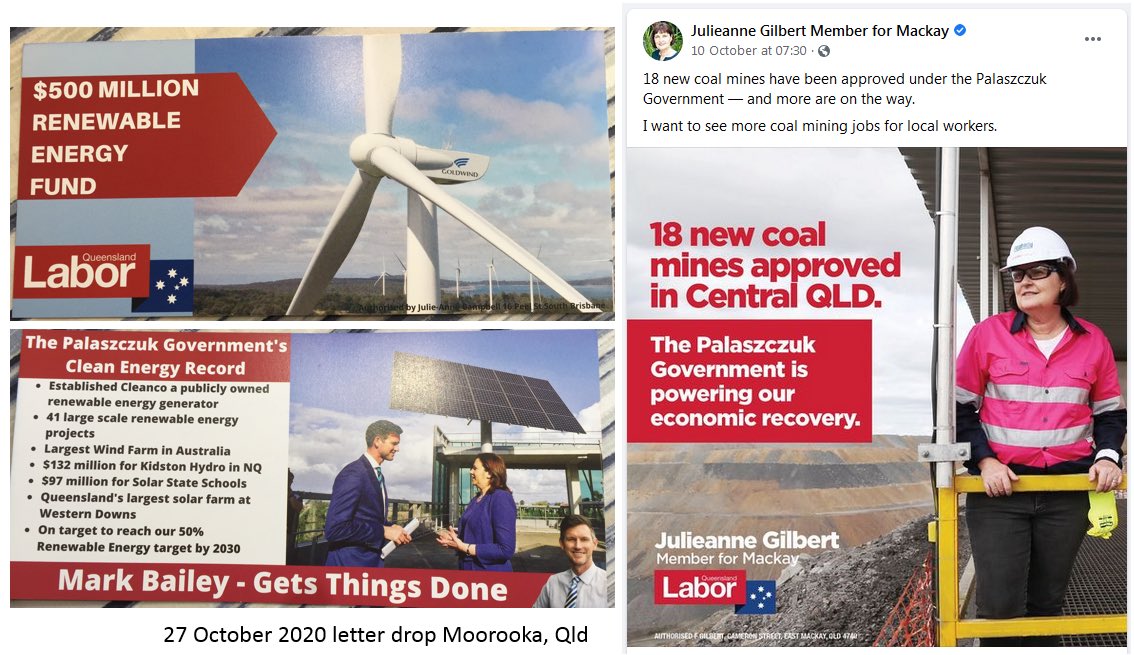
Dear @QLDLabor I hope you realize the hypocrisy of these 'opposing' ads. This is exactly how not to create a coherent energy nor industrial policy for the state. @MarkBaileyMP@JGilbertMP @AnnastaciaMP
@Cambridge_Uni I implore you to open the colleges to our city's homeless. They should not be on the streets while so many colleges sit empty. #covid19#cambridge
@JohnDaley_ is on the money with his Endgame C. It’s far better than the UK’s disastrous trial of Endgame D(o nothing) and I would hope @ScottMorrisonMP considers it. I’m happy to be stuck in the UK if Australia can avoid the UK’s mistakes https://t.co/sWUKLxhMwF
An good read for any of you interested in energy policy @TechPolicyMPhil
Climate policy needs negative carbon-dioxide emissions from @TheEconomist https://t.co/J2VQIbJpO4
German fears of a Chinese economic take-over may lead to a shift in German industrial policy to make it harder for german manufacturers to be acquired by foreign entities.
#techpolicy19w8 https://t.co/rkTNdsPoh6 via @financialtimes
In Australia (where workers have a compulsory 'pension' fund), ethical superannuation is on the rise, but with that comes the risk of greenwashing... "There is nothing to stop anyone calling their fund “ethical”, “green” or “sustainable”” #techpolicy19w7 https://t.co/1UqxgjXzCV
Not directly related to #techpolicy19w6 but an interesting read nonetheless about the lack of regulation in online UK political advertising.
“We’re now in an era when no two people will see the same campaign. We’ve lost our shared political space.” https://t.co/TT8nH1BQI7
An interesting article highlighting the differences between Jeremy Corbyn's broadband plan and Australia's NBN... despite their similarities, the NBN was a vastly different project #techpolicy19w6 https://t.co/niFtbN7u9c
I tweeted about this a few weeks, but it seems even more appropriate now. An interesting example of the triple helix model in action in India... but in this case, it's military replacing universities. #techpolicy19w5 https://t.co/ROaMrCeygC
Robert Reich, a former US secretary of labor & professor of public policy at UC Berkeley, presents an alternative argument for why tech giants like Facebook and Twitter should be broken up. His reasoning: they undermine democracy. #techpolicy19w4 https://t.co/BhNN1GjTzL
A few years ago breaking up big tech was unthinkable, but no longer... a window of opportunity has emerged and it seems like on a matter of time before its opened. But what’s on the other side may surprise us all... #techpolicy19w3@TheEconomist https://t.co/sA3AoAUDbD
After reading this article, I can't help but feel Overton Windows are like Maslow's Hammer... "to a man with a hammer, everything looks like a nail." #techpolicy19w3@TechPolicyMPhil
https://t.co/OuJe2vpBUr via @politicomag
This is the article alluded to in TP1 lecture 3. It’s a good example of policy pushback in a highly regulated society. @TechPolicyMPhil #techpolicy19w2
German Greens push for speed limits from @TheEconomist https://t.co/PNtKGJgjFB
An interesting development in my home country Australia, where engineers and engineering consultancies are ditching the profitable fossil fuels sector...
A real life example of the sustainability vs profit debate #techpolicy19w2 @TechPolicyMPhil https://t.co/F73x9LSK9F