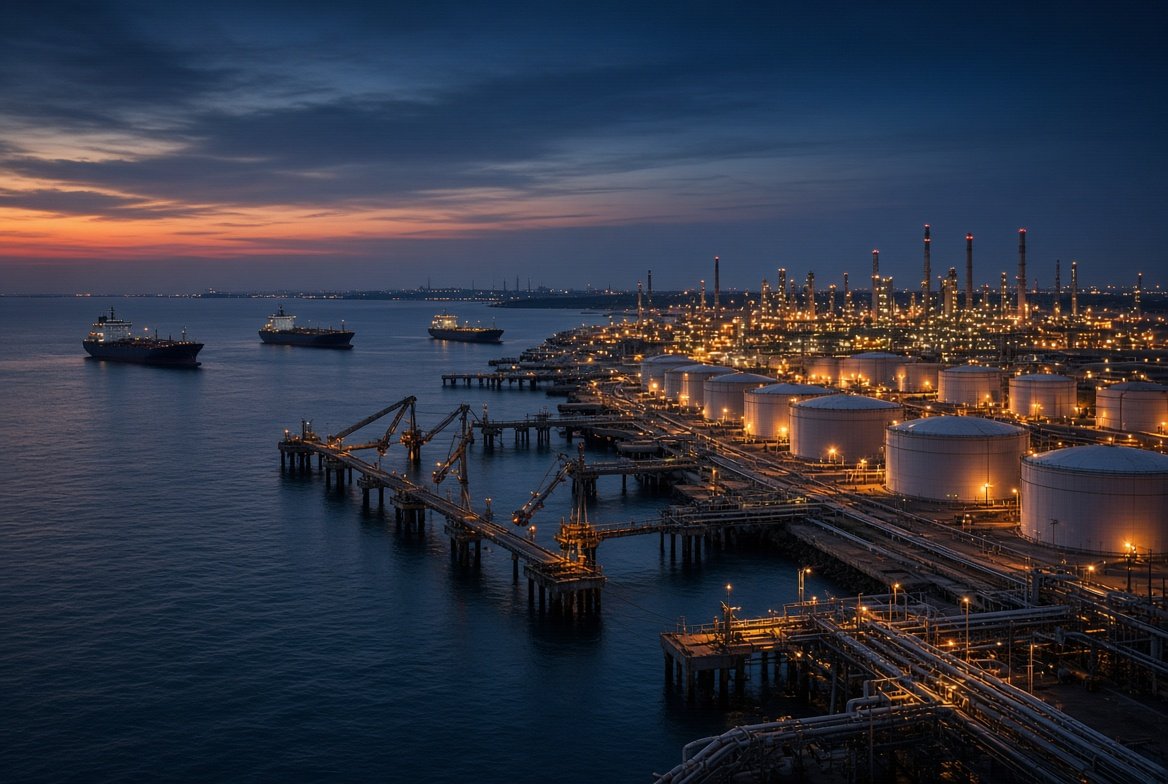
Iran’s oil is still on the coast. China is still the buyer that is not taking it.
UANI counted 51 laden tankers along the Iranian shore on 6 October, and no crude clearing the Gulf of Oman since the blockade returned in July. Hormuz traffic this morning is about a tenth of normal. China is holding its own fuel at home. Russia is holding diesel. The barrels Tehran needs to sell have nowhere to go while those two stay shut.
UANI, 6 October
China’s holiday ends today. October fuel exports are still not cleared.
Refiners went into Golden Week without permission to ship gasoline, diesel and jet fuel beyond Hong Kong and Macau. PetroChina had already cancelled October cargoes. Beijing has tied a restart to domestic stocks getting back to pre-war levels. Russia’s diesel export ban runs through the same month.
Asia is waiting on a decision Beijing has not made.
Reuters, 1 October; The National, 7 October
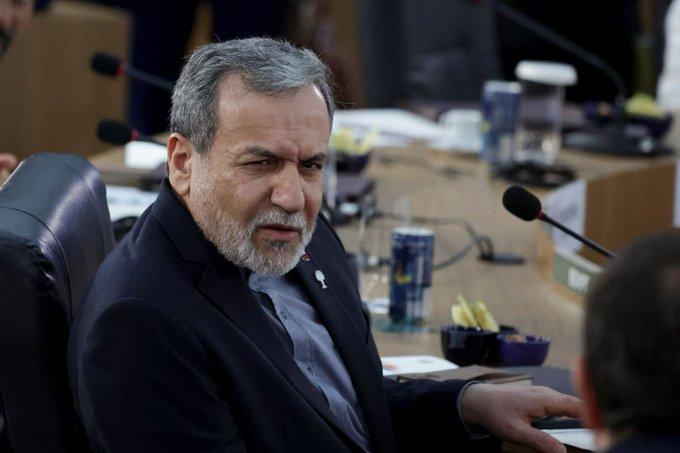
Iran’s hardliners have filed to impeach Foreign Minister Araghchi over his New York meeting with Steve Witkoff.
Euronews says the motion is in the parliamentary system and has not been sent to the board. The MPs, led by Amirhossein Sabeti, say the 22 September talks had no approval. The head of the Supreme National Security Council says they did, and that Araghchi was sent to set Iran’s conditions: lift the blockade, release frozen funds, end the war. Trump already rejected that offer.
The minister carrying the Hormuz file is now the one parliament is being asked to remove.
Euronews, 7 October
Iran’s crude is stuck on the coast. China’s refiners are the buyer that is not taking it, and they are also keeping their own fuel inside the country.
UANI counted about 50 laden Iranian tankers along the coast on 5 October, and no crude clearing the Gulf of Oman since the blockade returned in July. Russia is doing the same thing on diesel. The two biggest alternative suppliers are holding barrels at home while Iranian crude waits offshore.
Source: UANI
China has halted fuel exports for October. Russia has kept its diesel ban in place through the same month.
Beijing has not cleared cargoes beyond Hong Kong and Macau, and PetroChina cancelled October gasoline and jet shipments. Moscow extended its diesel ban after refinery hits. Both are holding product at home while Hormuz traffic sits at a fraction of normal.
Asia is the market that feels both decisions at once.
CNA
Iran’s parliament has registered an impeachment motion against Foreign Minister Araghchi. It has not moved.
Tasnim says the motion is filed but has not been sent to the presidium, so the formal process has not started. The same parliament is lining up a confidence vote for the proposed defense minister, Mehrdad Akhlaghi, likely on 18 October.
Araghchi is the minister who has been carrying the Hormuz talks.
China did not step off Iran after the Trump meeting.
A new read of the 24 September summit says Beijing still takes the vast bulk of Iran’s seaborne oil. August flows were 534,000 barrels a day, down from about 1.4 million last year, but the buyer did not change. Xi offered dialogue language. He did not offer a cut.
Al-Monitor, 5 October
Iran's foreign ministry just put the burden back on Washington. Baghaei says securing the Strait of Hormuz now requires concrete US action, not Iranian concessions.
That's a shift. Iran spent months being blamed for disrupting the strait. Now Tehran is saying the US has to move first.
BREAKING: Chinese troops line up for Russia’s Tsentr-2026 exercise as military ties tighten
Chinese troops just joined Russia's largest war game, built specifically on lessons from Ukraine.
47,000 troops took part in Tsentr-2026, Russia's new anti-drone and ground robot systems on display, with Putin himself observing. Moscow says the drills apply real Ukraine war combat lessons to defending against attacks from Central Asia.
https://t.co/e4CD5FZhrx
Iran's top general just said any new war would "burn everyone involved." He's also denying the nuclear program moved anywhere near a military stage.
Both claims land the same week Western intelligence assessments keep pointing the other way on enrichment levels. A warning this direct from Iran's most senior military officer isn't posturing for a domestic audience, it's a message aimed straight at Washington and the Gulf states weighing another strike.
This is Iran's war. China is deciding how much of its own rivalry with Washington to fight through it.
China buys 13 to 14 percent of its oil from Iran and stays one of Tehran's most important economic partners through the war. It also has bigger trade ties with Saudi Arabia and the UAE, the countries Iran is fighting.
That split explains Beijing's posture. China won't abandon Iran, and it won't fully back Iran either, because full backing costs relationships worth more than Iran is.
https://t.co/jesfLqr27j
An Iranian state TV pundit just said China cut Iran off after secretly giving it satellite imagery, the same kind used to kill three American soldiers.
The pundit, close to Iran's security circles, says Beijing told Tehran directly: don't come back until the problem with the US is resolved. China denies providing any military satellite support.
Xi told Trump China won't sell weapons to Iran. Washington has already sanctioned Chinese companies for doing exactly that.
China's government makes the promise. Chinese companies keep doing the business anyway. Beijing gets to deny involvement while its firms do the work...
https://t.co/y1NkjZBTow
Iran and Russia just met in Moscow to review their cyber and internet-control cooperation agreement.
Officials from each country's foreign ministry information security departments, not defense ministries, reviewed progress on implementing their bilateral information security deal.
That term usually covers cyber defense and control over domestic internet infrastructure, the same category of cooperation China has run with Iran for over a decade on surveillance and censorship technology.
https://t.co/vnaMtLjeKD
China just pulled fuel off the global market for the second time this war, and this time it's not alone.
Chinese refiners have suspended fuel exports beyond Hong Kong and Macau until Beijing gives new guidance, with PetroChina canceling most of its October gasoline and jet fuel cargoes. This comes right after exports had actually recovered, up 12.7 percent year-on-year in August with jet fuel exports hitting a record.
China did this once before, in March, six days into the war, prioritizing domestic supply as Gulf crude stopped arriving reliably. Restrictions eased by mid-July. Now they're back, right as the broader picture gets tighter everywhere else.
Russia has extended its own diesel export ban. Gulf product exports are running at roughly 58 percent of pre-war levels. China just became the third major supplier pulling barrels inward at the same time.
Beijing says this is about protecting seven-year-low domestic inventories, not politics. But every major fuel exporter choosing self-preservation simultaneously is its own kind of signal, regardless of intent, and the real test is whether exports resume when Golden Week ends on October 7, or whether "until further notice" becomes the new normal.
China just wrote Russia's wartime mistakes into law, before the war even starts.
China revised its Defence Mobilisation Law on August 28, the first update in 16 years, and it reads like a fix-list for everything Russia got wrong in Ukraine.
Russia criminalized "false information" about its military eight days into the war. China's new law adds that power in advance, before mobilization even happens.
Russia's weapons factories ran short on sanctioned Western parts. China's revision now mandates supply chain audits for military production, ahead of time.
Russia seized foreign companies like Danone and Carlsberg once they tried to leave. China's law gives the state the same power, with zero carve-out for foreign firms, and freezes all legal disputes the moment mobilization is declared.
https://t.co/JN954TkJsK
Kudos to @aliciakearns of @HouseofCommons for keeping the spotlight on the long-arm of Iran backed terror in Britain. This is not just limited to the IRGC. Iran’s ministry of intelligence has also engaged in or supported acts of terror, kidnapping, surveillance, or trans-national repression abroad and should be proscribed by @FCDOGovUK as a terrorist organization.
The @USTreasury for example has previously subjected the MOI to at least 4 different executive orders (13964, 13224, 13572, 13553) over the years. This is not excessive. This is merely keeping pace with a threat and protecting US interests and security.
We have long argued at @FDD for even expanding these penalties to include listing as an FTO: https://t.co/p6ualk1VzE
Great to see allies arguing for the same across the pond.
Iran's own parliament is pushing to leave the nuclear treaty. Russia just told them not to.
Peskov said the Kremlin wants Iran to stay in the NPT, after Iranian officials floated a "triple-urgency" withdrawal bill and more than 30 former officials signed a letter calling for exit.
Iran leaving the NPT would end IAEA inspections entirely. That's the outcome Russia doesn't want.
Moscow needs Iran unpredictable, not uncontrolled. A nuclear-armed, fully unmonitored Iran isn't leverage anymore, it's a partner nobody, including Russia, can read or restrain.
https://t.co/sxbjKKFuFs
China's Iranian oil comeback just stalled, and analysts think part of the demand it lost may never return.
Chinese crude imports rebounded 22 percent in July and 6.2 percent in August after months of war-driven weakness, but that recovery is losing momentum as the conflict enters its eighth month. Rystad Energy estimates 200,000 to 600,000 barrels a day of transportation fuel demand may not come back this year at all, Energy Aspects puts the permanent loss closer to 300,000 barrels a day.
China's own stockpiling strategy is what kept global oil prices from spiraling earlier in the war, buying cheap, holding reserves, buffering the market. That buffer has limits, and the IMF has warned that a full return to pre-war import levels would deepen the drag on global growth well beyond current forecasts.
China accelerating a shift away from gasoline and diesel wasn't caused only by the war. It just sped up a transition already underway, and Iran's oil trade is what's absorbing the permanent hit from it.
https://t.co/vazDh16COs