A mind-blowing paper has come out today in @Nature
In 2016, JC Venter Institute scientists trimmed a bacterial genome to its barest minimum required for life to synthesize what they called a "minimal genome" (https://t.co/Rk8oZJ0bUj).
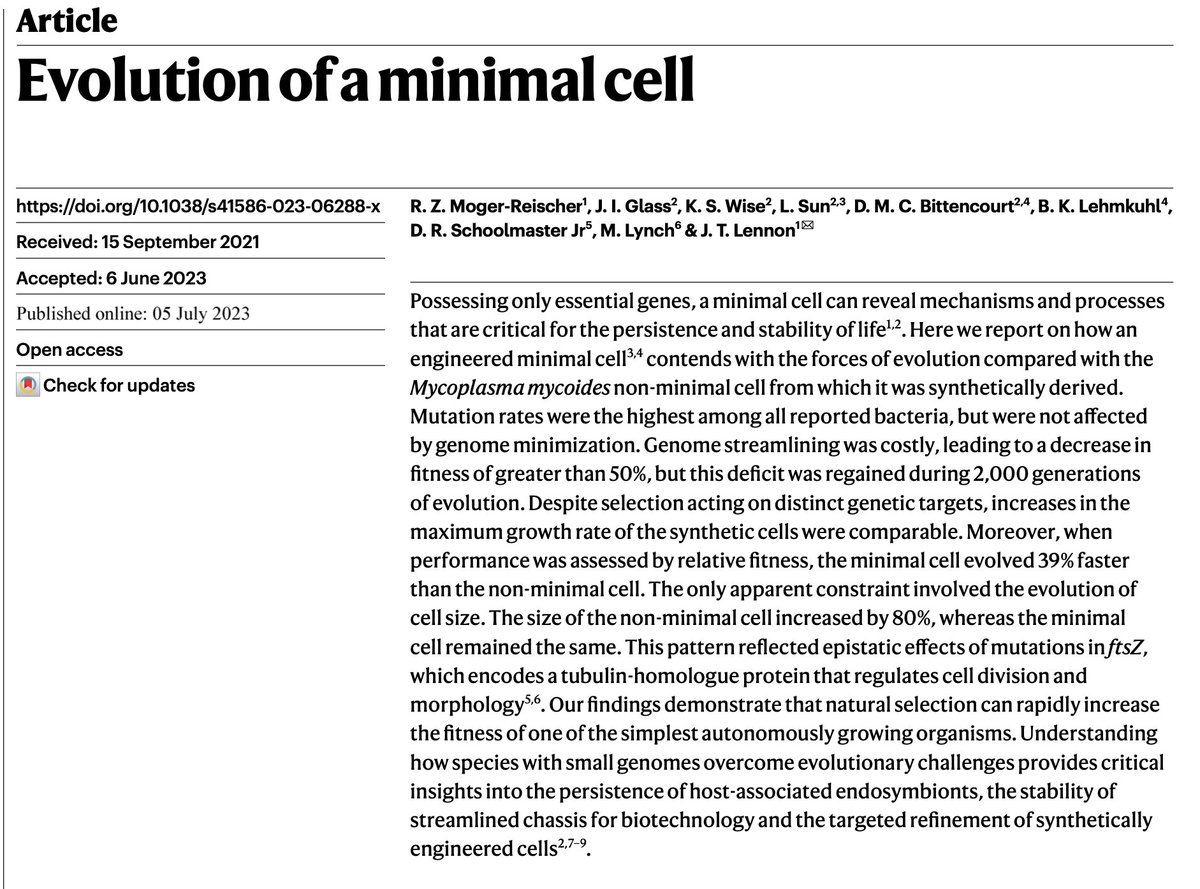
Today, a group of scientists from Indiana University reports how that minimal genome evolved over 2000 generations in comparison to the non-minimal genome.
The authors found that even when you reduce a bacterial genome to its absolute minimum where every nucleotide matters, the genome undergoes mutational events generation after generation as much as the non-minimal genome. One simply cannot stop the evolution.
Just over 300 days of evolution (equivalent to 40,000 years in humans) the minimal cell has gained everything it lacked in fitness on day one in comparison to the non-minimal cell.
When comparing the evolved traits between the minimal and non-minimal cells, the scientists found something striking. The evolutionary process increased the cell size of non-minimal cells but not that of the minimal cell. But that is not the striking part.
The scientists were able to identify the key mutation that resulted in cell size evolution. And it turned out that the mutation that helped the non-minimal cells to grow bigger is the same that helped the minimal cells to stay smaller. Growing bigger had a survival advantage for non-minimal cells and not growing bigger had a survival advantage for minimal cells. So, the mutation had a context-dependent effect. This just demonstrates that the evolutionary effects on traits have no absolute direction. All that matter is what is beneficial for the organism's survival.
The conclusion of the paper is metaphorically a quote from the Jurassic Park movie:
“Listen, if there’s one thing the history of evolution has taught us is that life will not be contained. Life breaks free. It expands to new territories, and it crashes through barriers painfully, maybe even dangerously, but . . . life finds a way". (https://t.co/UlxRlb86CT)
https://t.co/zA9OAqSoAu
@churnwell@HannahAlOthman It's really easy to check on https://t.co/KvNTmBTsKm not only is what @HannaOthman said true for Friday 2nd, but the train before that was cancelled as well! (:
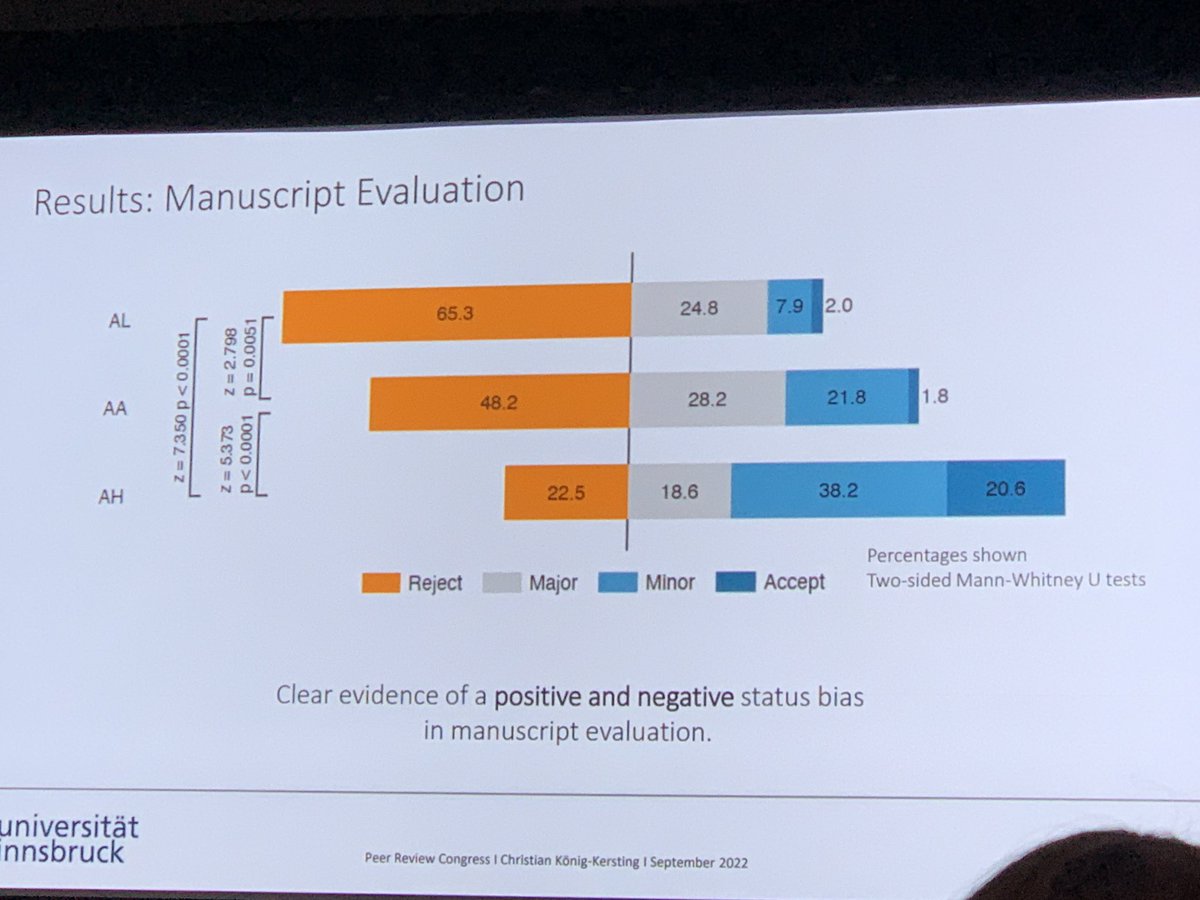
Massive status bias in peer review.
534 reviewers randomized to review the same paper revealing the low status, high status, or neither author. 65% reject low status, 23% reject high status.
Amazing work by Juergen Huber and colleagues. #prc9
I was thrilled to be asked to write an article about gulls for The Conversation, to try to help people understand Britain's most unloved bird.
https://t.co/0GBvivMhX1
I don't read many books cover-to-cover but @MelMitchell1's Artificial Intelligence: A guide for Thinking Humans was great! Explanations of tech behind (+limitations of) some of AI's media hits and great overview of the history, ethics, differing opinions and future of the field!
Our collective group effort addressing some basics for simulation modelling: #PLOSCompBio: Ten simple rules for principled simulation modelling https://t.co/B0QjwMQWp4
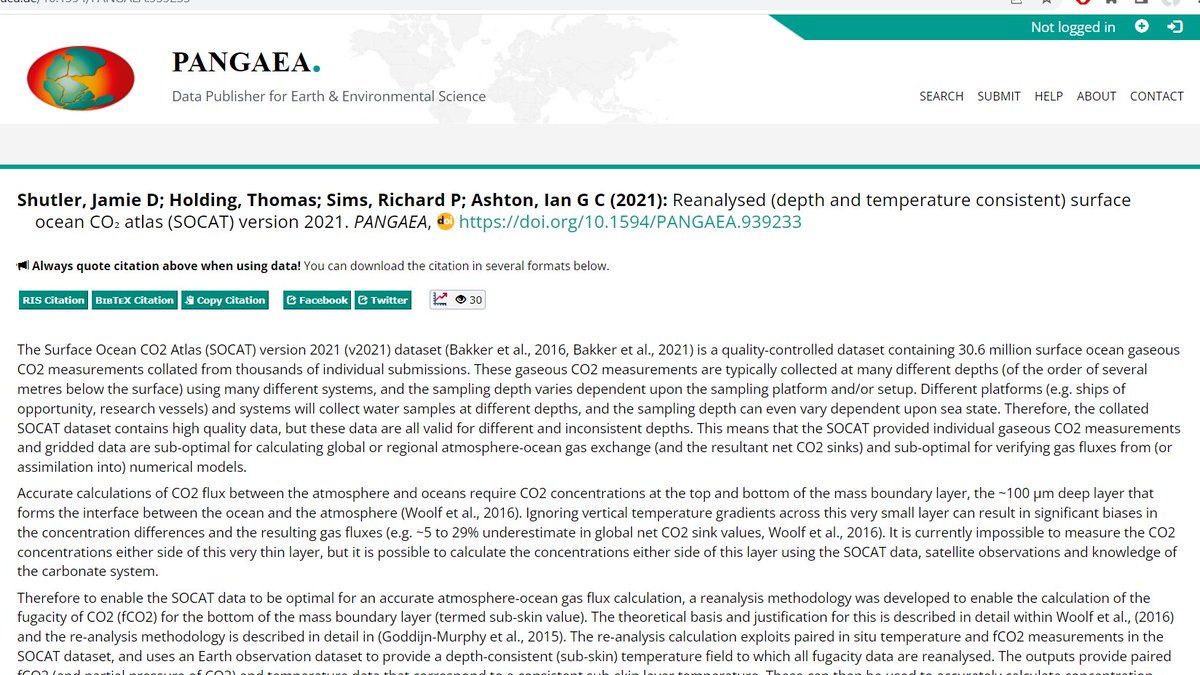
Out now! Reanalysed (depth and temperature consistent) surface ocean CO₂ atlas (SOCAT) version 2021. https://t.co/ENbHpF54uK via @PANGAEAdataPubl @jamieshutler@TMHolding@IanAshton@SOCAT_CO2
New paper out today! https://t.co/cqDhOYGD2Y with @lauraakelley & @NeeltjeBoogert
My first (and maybe last?!) theoretical paper... It's also the first senior author paper for @TMHolding!
We considered how wild animals perceive humans and how humans affect wild animal behaviour
Madame Chancellor, what feelings do you associate with Germany?
Merkel - “Well-sealed windows! No other country can build such well-sealed and beautiful windows. "
(Bild, 2004)