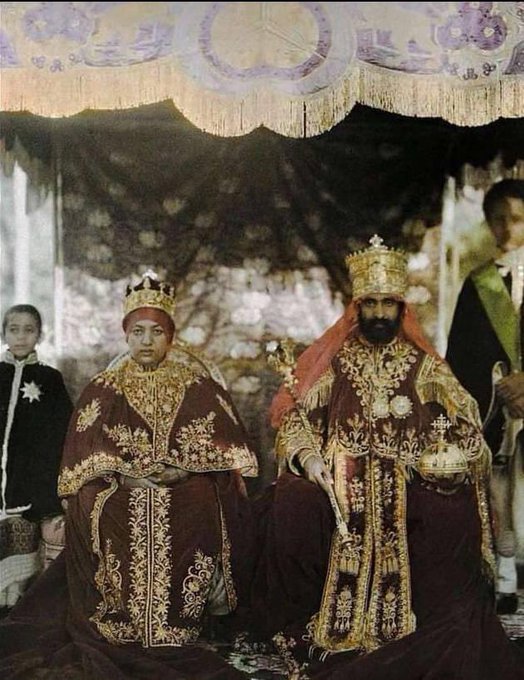
The story of America cannot be told without the story of Black America.
As the nation marks 250 years since its founding, EBONY looks back at the people, movements, and defining moments that shaped this country. As well as the generations who refused to be written out of its history.
Tap to explore 250 years of Black America: https://t.co/LZDIk6jzKc 🖤
They killed Lumumba and dissolved him in acid because he refused to kneel. Not for ideology — for nationalising resources and choosing African sovereignty over Western control.
They didn’t just murder the man. They tried to erase the example for the entire continent.
The same powers still fear any leader who puts the people first.
The resistance remembers.
I’ve seen more teenage girls in the news lately defending children from pedos than any other demographic. I think these girls are just finally fed the fuck up.
As America prepares to celebrate 250 years, I want us to be honest about what we are celebrating.
America is 250 years old. Black freedom is not.
In 1776, when this nation declared that all men were created equal, our ancestors were enslaved.
In 1865, slavery was abolished, but freedom was immediately challenged by Black Codes, racial terror, and eventually Jim Crow.
In 1965, nearly 200 years after the Declaration of Independence, the Voting Rights Act finally gave the federal government the tools to protect Black Americans’ access to the ballot box.
And today, we are still fighting over voting rights, representation, education, economic opportunity, and whether this country will continue moving toward its promise or retreat from it.
So yes, celebrate America’s 250th birthday.
But do not ask Black Americans to pretend we are celebrating 250 years of freedom.
We are celebrating survival.
We are honoring resistance.
We are remembering the generations who fought to force America to expand the meaning of the words it wrote in 1776.
America is 250 years old.
Our freedom is not.
And the work of making those words true for everyone is still unfinished.
Colombia has the third-largest African diaspora population in the Americas (after Brazil and the United States). Accounting for up to one-third of the country's population, Black Colombians are concentrated heavily along the Pacific and Caribbean coasts, and have deeply shaped the nation's culture, music, and history.
Love to our Colombian family 🇨🇴
WONDER WOMAN!!!
Pili Hussein is said to be a woman who pretended to be a man because women weren't allowed to mine in her country, Tanzania.
Miners didn't know she was a woman until she was falsely accused of räpê. She was accosted and checked. Then they saw she was a woman.
After earning so much from her mining activities, she built home for her father, a home for her mother and a home for her twin.
Currently, she owns a mining company with 70 employees.
Hard work and determination pay.
Fatima, a beloved teacher in Luxembourg, was fired for speaking out against the kiIIing of children in Gaza.
Her students and their families organized a peaceful demonstration demanding justice and her immediate return to the classroom. ✊
Powwow dances are beautiful expressions of Indigenous spirituality, history and culture. There are a variety of regional dance styles performed by men, women and children across North America. For all dancers, spiritual centre of a powwow is always the Circle — a revered area blessed by a spiritual leader. Dancers must only enter Circle from east, as they walk in direction of sun. In addition, powwow dances, drum music and singers and regalia are sacred elements of celebration, meant not only to entertain, but also to tell important stories about personal and cultural history.
Term “powwow” derives from Pau Wau, meaning “medicine man” in Narrtick, a language spoken by Algonquian peoples in Massachusetts. English settlers began misusing word to refer to meetings of Indigenous medicine men and later to any kind of American Indian gathering. American Indians have since reclaimed term.
Although powwows are said to originate with Plains Indigenous peoples, cross-cultural exchanges have produced various regional variations to powwow dances. Most well-known of Northern styles (originating from northern Great Lakes and Great Plains regions) include men’s and women’s Northern Traditional Dances. Most well-known Southern styles (originating from central and western areas of Oklahoma and southern Plains peoples, including Kiowa, Comanche, Pawnee, Ponca), include men’s Southern Straight Dance and women’s Southern Cloth Dance. Some dances, namely men’s and women’s Fancy Dances, women’s Jingle Dance and men’s Grass Dance, are less geographically specific in modern times because they have been adapted in different ways by both Northern and Southern communities.
There are also dances that are specific to certain First Nations, or that commemorate certain events or elements of nature. For example, Chicken Dance (Northern Plains), Crow Hop (Crow of Montana) and Rabbit Dance (Sioux) are regional dances that originate from observations of nature and animals. Sneak-Up Dance (Plains) and Smoke Dance (Haudenosaunee) are warrior dances. Hoop Dance (Anishinaabe) incorporates anywhere from one to 30 hoops in a story-telling dance. There are many other types of regional and ceremonial dances performed by various First Nations at some powwows.
Most powwow dances are performed by individuals. There are dances for couples as well, such as Owl Dance (Northern Plains). Friendship Dances or Round Dances (Anishinaabe/Northern Plains) are intertribal dances that are open to general public, allowing both Indigenous and non-Indigenous peoples to celebrate together in song and dance. During Round Dance, all participants join hands and circle dance area, facing centre of circle. At times, Métis dancers (often performing the traditional jigging dance), Inuit dancers and dancers from Indigenous nations outside Canada and United States, such as Mexico, Australia, New Zealand, among others, are asked to perform at powwow celebrations. In this way, powwows can be a forum for cultural exchanges.
Powwows can be defined as traditional or competitive. Traditional powwows are held in local communities, and do not have dance and drum group competitions. Competitive powwows have dance categories for women, men and children. Dancers who score the highest in their category receive awards or cash prizes. At contest powwows, dance categories can be gender- and age-specific. For example, jingle dress dance is typically performed by women, while Smoke Dance was historically performed by men. However, with resurgence of two-spirit traditions, and progression of women’s rights movements in 20th Century, some powwow organizers and First Nations allow dancers of opposite sex to participate in traditionally male or female specific dances. Most dances are also categorized by age: adult, teenager/youth and “tiny tot” (children). Panel of judges evaluating the competitive dances scores performers based on dance category as well as regalia and dancing abilities.
#archaeohistories