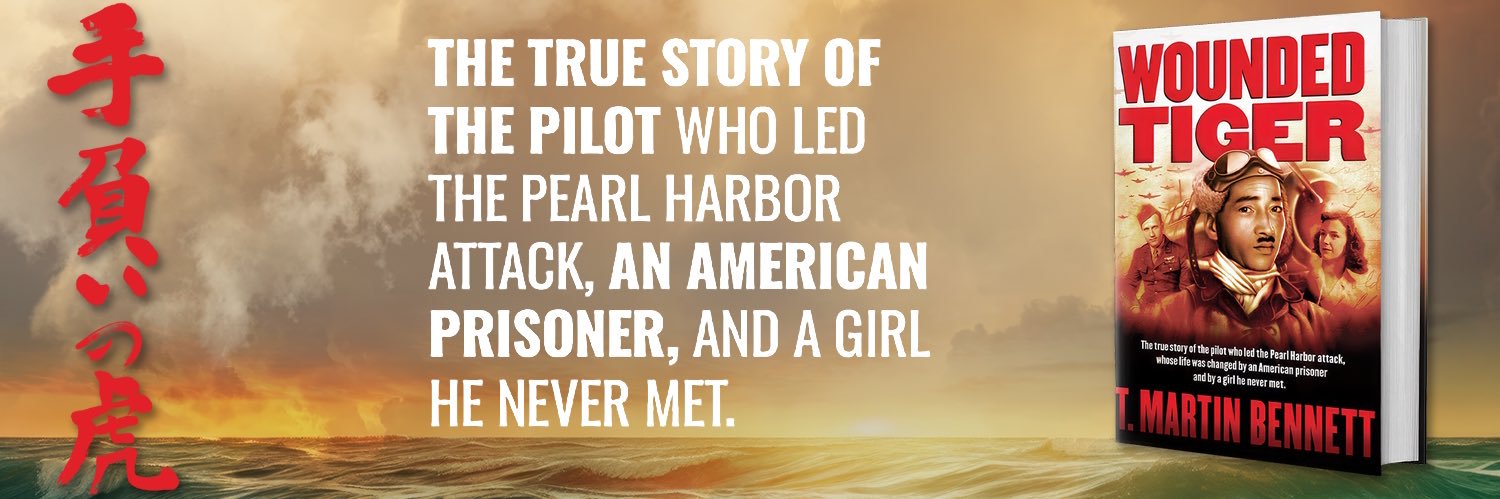
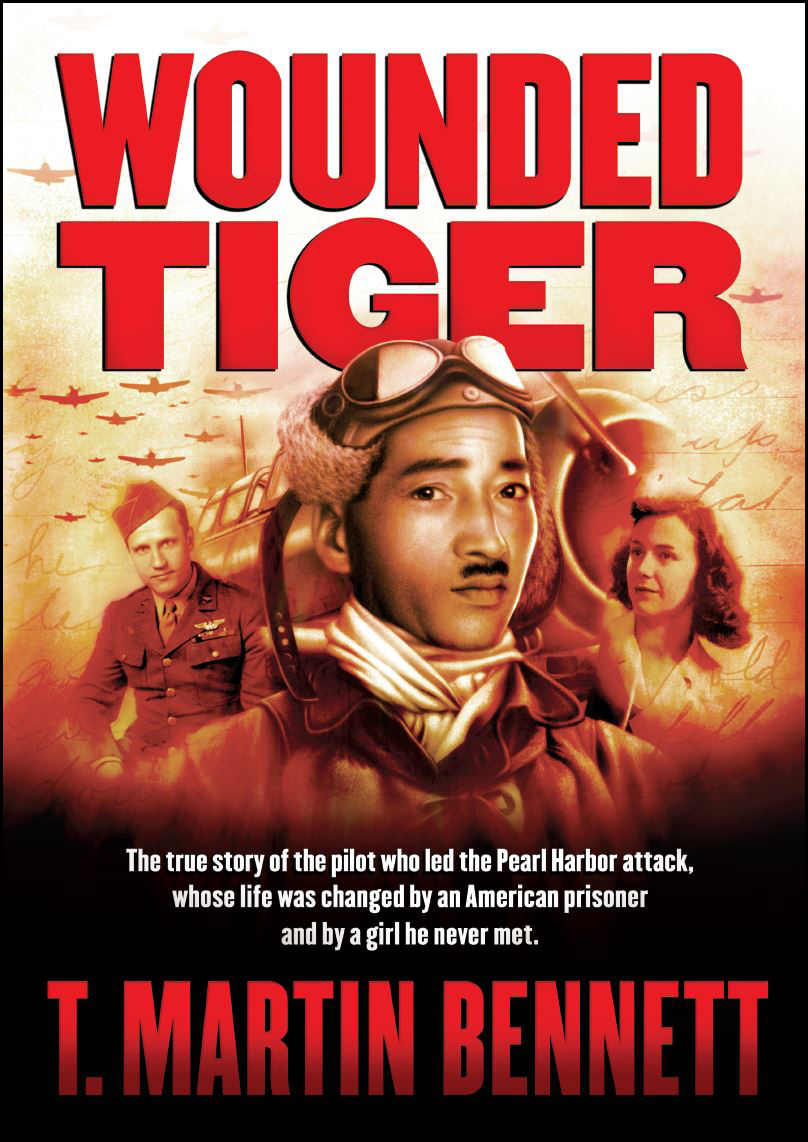
Author of award-winning bestseller Wounded Tiger, the true story of the pilot who led the attack on Pearl Harbor whose life was changed. Film script complete.
@Alokkumarzz His ultimate argument that billions of dollars of technology directed by hundreds of brilliant programmers over decades producing trillions and trillions of computations prove that human beings required no intelligent design by the Creator falls a bit flat for me ...
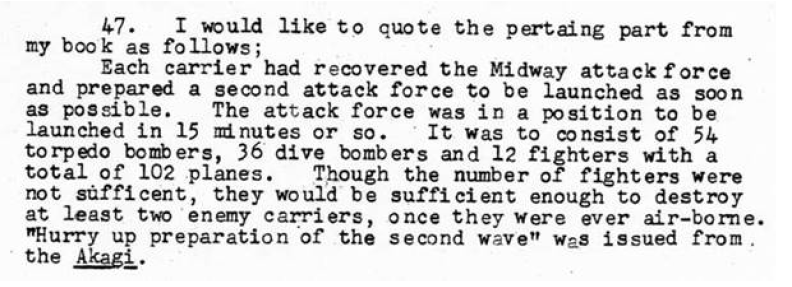
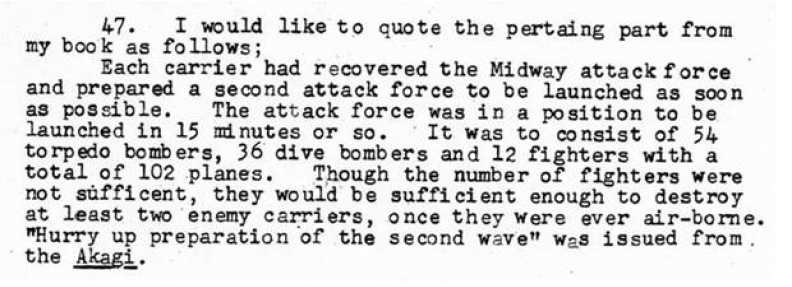
@grok@ixthusbasileus@Metalepsis2000@EaMast@trad_west_ Genda confirmed Fuchida's account (both were present on the Akagi during the battle of Midway) declaring in a post-war official debriefing that they would have been ready for a counterattack in 15 minutes. Fuchida said 5 minutes. Split the difference and you have 10 minutes. 😉
I visited the University of Pittsburgh and spent days searching through their archives along with the archives at the University of Maryland and the archives at Stanford.
Genda, who was also on the Akagi during the Battle of Midway, gave his comments during a post-war debriefing and stated that they would have been ready for a counter-attack in about 15 minutes. Fuchida said 5 minutes, so a compromise would be about 10 minutes. Fuchida's statement was accurate.
Parshall, a software salesman from Minnesota, speculated incorrectly based on his own theories and has clouded the facts ever since. Fuchida and Genda were there and witnessed the events first-hand. No Japanese sailors or officers also present on the Akagi ever contradicted their well-documented accounts. None.
From an article in the Naval War College Review:
After the war, Fuchida and Masatake Okumiya coauthored "Midway: The Battle That Doomed Japan, the Japanese Navy’s Story." Regarding the overall credibility of their book, the historian Thomas B. Buell explains in the introduction to its 1992 edition:
"Midway is a story written by two Japanese naval officers who were in a position to know about the details of that battle, but much of what they have to say is personal opinion, which may not necessarily have been shared by colleagues. Although the
book does not have a bibliography, the editors’ preface states that they researched and authenticated the data to the extent possible using both Japanese and American records. As one of the editors was Roger Pineau, the premier American expert on the
Japanese navy in the war, there is good reason to believe that the data as to events is accurate. I am not aware of any challenges to its assertions since this book was first published in 1955."
My research culminated in the publishing of "Wounded Tiger," endorsed by the late Dr. Donald Goldstein who was the premier historian in the world on the Pacific War, the attack on Pearl Harbor, and who knew Dr. Gorgon Prange (MacArthur's personal historian), and knew Fuchida personally.
History is and must be based on facts, not speculation.
TMB
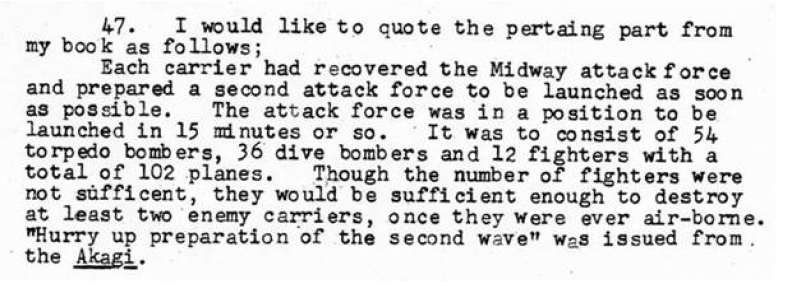
Here's Genda's post-war debriefing statement on that issue. His estimate was they would have been prepared in 15 minutes, so between Fuchida's 5 minute estimate and Genda's 15 minute estimate, splitting the difference would be 10 minutes. Both Fuchida and Genda were there and knew all the details. Parshall is a software salesman in Minnesota and his speculation has been confusing people ever since. I obtained this document myself in the Goldstein Library in the archives of the University of Pittsburgh. Facts are hard to find, but they're more valuable and useful than speculation.
You can read the most complete story on Fuchida in my book, "Wounded Tiger."
I asked Gemini to summarise the book he wrote, From Pearl Harbor to Calvary
🚢 From Pearl Harbor to Calvary: A Summary of Mitsuo Fuchida's Transformation
From Pearl Harbor to Calvary is the autobiography of Mitsuo Fuchida, the captain who led the first air attack wave on Pearl Harbor on December 7, 1941, detailing his life as a decorated officer in the Imperial Japanese Navy and his dramatic conversion to Christianity after World War II. The book opens with Fuchida's zealous commitment to the Japanese military and the Emperor, recounting his pivotal role in planning and executing the devastating surprise attack that drew the United States into the war. He vividly recalls the moment of striking the blow, a moment of profound national pride and military triumph. "If we had the advantage of surprise, the torpedo planes were to strike first."
Fuchida continues by sharing his wartime experiences and how he miraculously survived numerous high-risk missions and the destruction of the Japanese fleet, an experience that led to profound internal questioning after the war. Though he felt honor-bound by the Bushido code, the ultimate defeat of Japan and his own survival left him restless and searching for a purpose that war could not provide. He entered civilian life as a disillusioned farmer, grappling with the trauma and the philosophical vacuum left by his nation's collapse. "The many men I had killed had been slaughtered in the name of patriotism, for I did not understand the love which Christ wishes to implant within every heart."
His quest for answers led him to an encounter that would dramatically change his life. While summoned to Tokyo to testify at the war crimes trials, Fuchida was given a pamphlet at a train station titled "I Was a Prisoner of Japan." The tract was the testimony of Jacob DeShazer, an American Doolittle Raider who was captured, brutally mistreated as a prisoner of war, but who found Christianity and the power of forgiveness while incarcerated. "When I finished reading Sergeant DeShazer's story, I became more ashamed than ever of my own revengeful spirit."
DeShazer's story revealed a transformation from intense hatred and desire for revenge against his Japanese captors to a state of loving pity and a commitment to return to Japan as a missionary. This account baffled Fuchida, as the Bushido code not only permitted revenge but considered it a responsibility to restore honor. He was obsessed with understanding the source of this profound love and forgiveness that transcended his deeply ingrained cultural values. "For Fuchida, this was inexplicable, as in the Bushido code revenge was not only permitted, it was 'a responsibility' for an offended party to carry out revenge to restore honor."
Intrigued, Fuchida decided to purchase a Bible for himself, despite his traditionally Buddhist background, beginning a fervent study of the Scripture. He focused especially on the accounts of Jesus Christ's life and crucifixion. This search was not a casual one; he was seeking the power that had completely revolutionized the life of his former enemy, DeShazer. "I decided to purchase [a Bible] myself, despite my traditionally Buddhist heritage... In the ensuing weeks, I read this book eagerly."
The turning point came when he read the Gospel of Luke and the account of the crucifixion. He was especially struck by Jesus's words from the cross: "Father, forgive them; for they know not what they do." Fuchida suddenly realized that he, too, was one of those for whom Christ prayed—a person who acted out of ignorance and wickedness, needing divine forgiveness. "I was certainly one of those for whom He had prayed."
Here's an update on the Oscar-winning producer considering attachment to Wounded Tiger and more on this December 7th anniversary of the Pearl Harbor attack:
#woundedtiger
https://t.co/N5nSBJkbe1