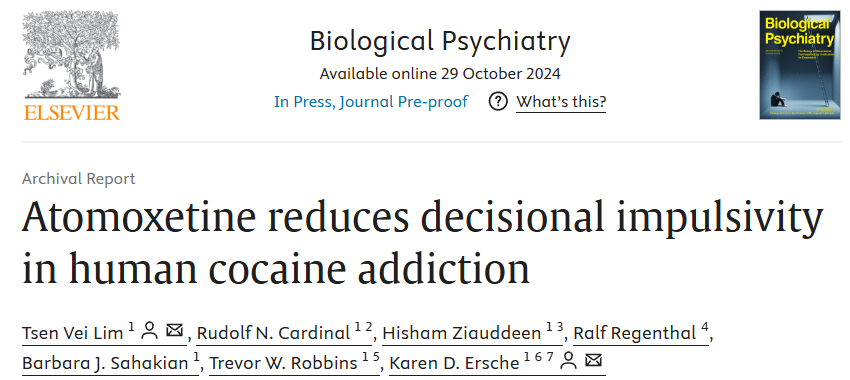
Delighted to share our latest work in @BiologicalPsyc1 featuring the use of computational models to study how atomoxetine modulates decision-making in human cocaine addiction. @psychiatry_ucam
https://t.co/madjQQMonC
Everyone knows THC as the bad cannabinoid when it comes to psychosis
Today's cannabis has higher THC content than ever (high potency), which as a result pushes down the concentration of other cannabinoids like CBD
Jess very kindly removed the ums, ers and head scratching to make me (almost) sound articulate. It's been a hugely enjoyable first few months and I'm incredibly grateful to get to work for the @SSA_Addiction in this role.
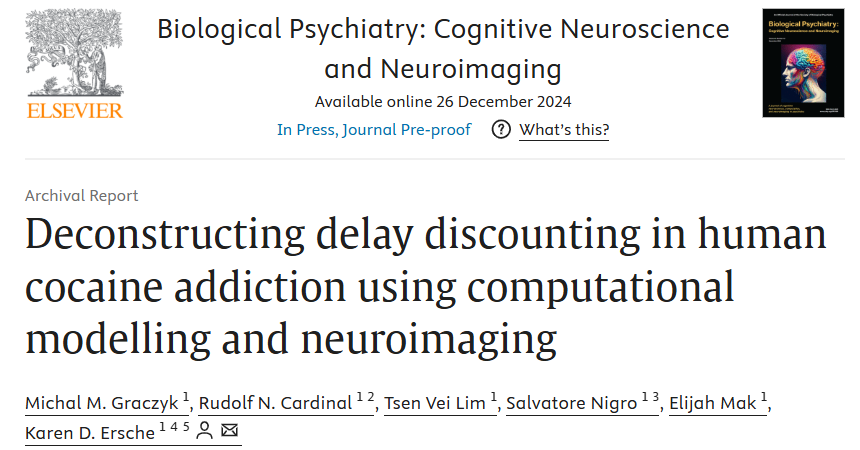
Our new paper, led by the outstanding @mmgraczyk, shows that modelling decisional randomness (i.e., choice sharpness) in cocaine addiction explains delay discounting better than standard methods.
Congratulations Michal on the paper! @psychiatry_ucam
https://t.co/PqDId1NUFy
🔥🔥SAVE THE DATE!!🔥🔥
Join us for the 3rd annual Computational Psychiatry Conference https://t.co/1W5Yh8fcw4 July 14-16 2025 in Tübingen, Germany!
Abstract submissions for symposia now open. Poster abstract submissions open in January. See you in Tübingen!
@xiaosigu @dr_rick_adams@Sonia_Bishop@docqhuys@TobiasUHauser #cpconf2025
One to save 💾 especially with New Years Resolutions around the corner, wanting to either make or break habits with neuroscience-backed tricks! 🧠
Happy to have co-authored this review out now in @TrendsCognSci , with more to come from Team Habit 🫂 @ParnianRafei@eike_kofi
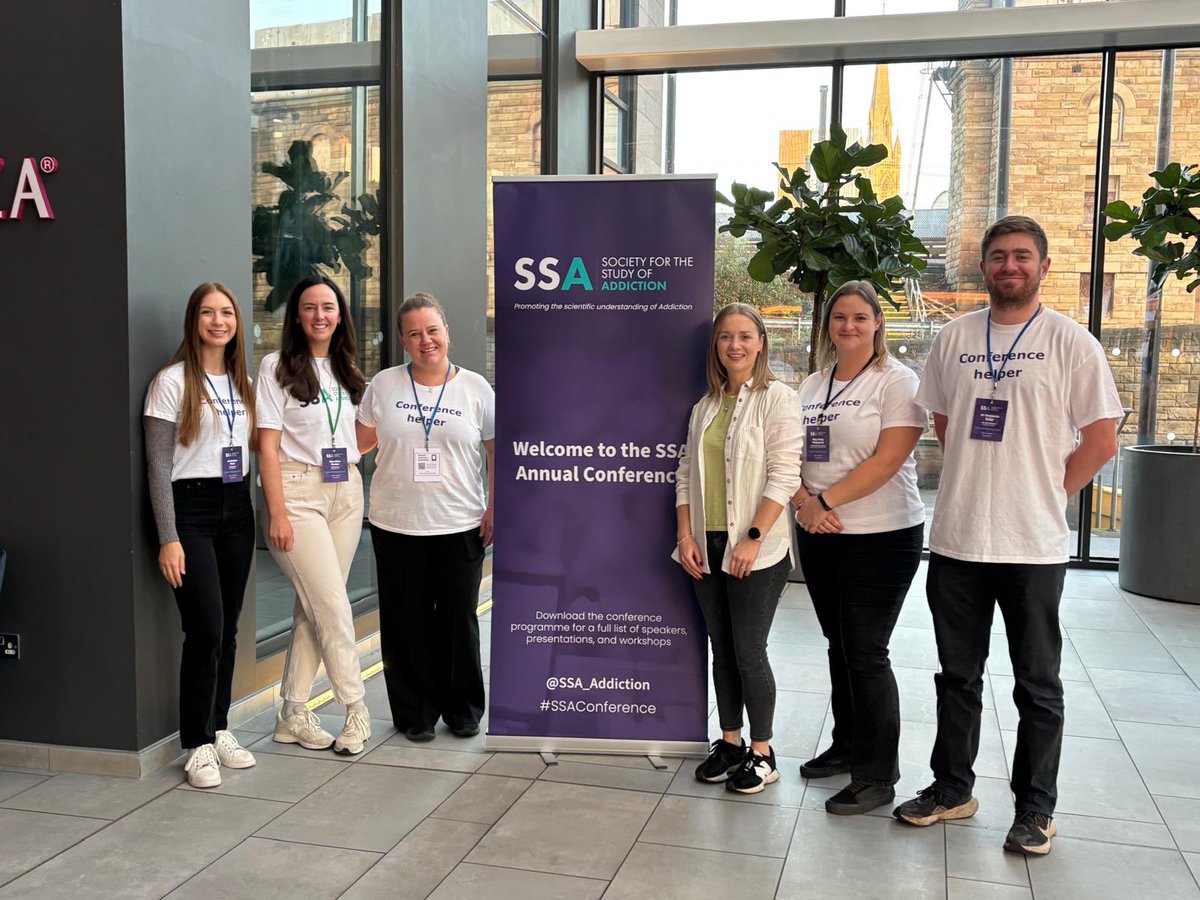
Excellent, well-organised, and impactful @SSA_Addiction annual conference! Can't understate the importance of dialogue within our community and I was really inspired by the varied work done by many! A real pleasure to attend and looking forward to the next one 😊
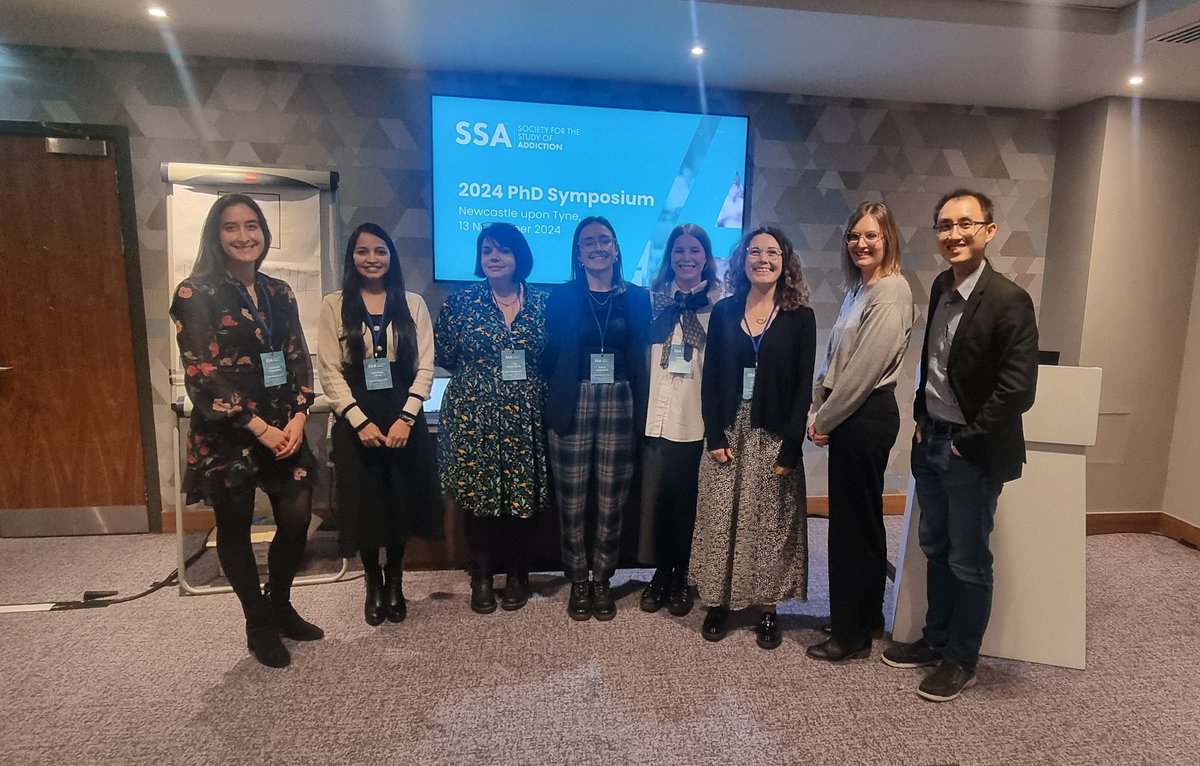
It's a wrap! @ssa_addiction PhD symposium 2024 was a blast! Very much enjoyed the many high quality and inspiring talks by doctoral candidates in our field. Thank you for involving me in the organization committee. Truly a pleasure!
#SSAPhD24
Huge thank you to the (twitterless) Prof Karen Ersche for her guidance and supervision, other co-authors for their contribution, funders, and most importantly, the participants who made this study possible.
#computational#psychiatry#addiction#neuroscience
Remarkably, atomoxetine was very selective in its effect, in that it selectively reduced decisional parameters related to impulse control, whilst not credibly affecting parameters related to value or probability.
Our study not only highlights the potential benefits of atomoxetine in managing impulsivity in cocaine addiction, but also showcases the utility of computational models in dissociating selective effects on behaviour that are not typically observable.
Given that atomoxetine has often been demonstrated to reduce impulsive choices in preclinical studies, we administered a single 40mg atomoxetine in a randomised placebo-controlled experimental medicine study.
Using the model, we showed that persons with cocaine addiction were less likely to favour higher likelihoods, less likely to use subjective value to guide decisions, and more impulsive when placing bets.
Cocaine addiction is often associated with risky decision-making, but the neurocognitive processes underlying this deficit are not always clear. Here, we examined decision-making with the Cambridge Gamble Task, and deconstructed behaviour using a validated computational model.
Delighted to share our latest work in @BiologicalPsyc1 featuring the use of computational models to study how atomoxetine modulates decision-making in human cocaine addiction. @psychiatry_ucam
https://t.co/madjQQMonC
🚨New preprint 🚨
**A computational model of reward learning and habits on social media**
🧵
We develop a computational reward learning model of real-world social media data, which infers the separate goal-directed and habitual cognitive processes driving posting...
Does Drug Intake Despite Adverse Consequences Really Measure Compulsivity?
There’s a big debate in addiction research: is drug use despite adverse consequences (like punishment) a standalone measure of compulsive behavior, or just part of a larger addiction profile? This new study from the lab suggests it’s the latter — tightly connected to other addiction behaviors.
https://t.co/2n3fpmIyKb @eLife@UCSDHealth@PsychiatryUcsd@UCSDPharmacy
Excited to share our publication that has characterised aging brain correlates of computationally-derived cognitive profiles in a diverse non-WEIRD sample.
I’m elated that this important work was undertaken in my home country, Malaysia 1/
https://t.co/7WLih5pO61