I'm thrilled to announce that our Preclinical Addiction Research Consortium just got upgraded to a brand new P50 NIDA Center of Excellence, and became the Polysubstance Addiction Research Center. Seven years in the making! https://t.co/2jj8ChIzVm
We're studying cocaine, oxycodone, and alcohol in the same individuals, from genes to brain to gut. Then we test whether changing the biology changes the behavior.
So thankful for this amazing team: Christine Cheng, Francesca Telese, Lieselot Carrette, Ben McKenna, Cristina Llorente, Bernd Schnabl, Giordano de Guglielmo, Kathleen Fisch, Abraham Palmer, Nick Hollon, and Lisa Maturin and Paul Schweitzer, who keep it all running.
I'm immensely thankful for the support of NIDA
Enough celebrating. Back to work!
https://t.co/qoXzBrLndK
@NIH@NIDAnews@UCSanDiego@PsychiatryUcsd
Susan Collins proposes a 1% increase in NIH budget and keeping existing indirect cost protections for universities and the same multi-year funding cap in the latest FY27 draft bill. Some may find it reassuring, and it is to some degree, but the truth of the matter is these flats or lower-than-inflation increases make it impossible for labs to sustain their research.
Addiction and mental health research are barely getting any increase..
NIDA +$5M (+0.3%)
NIAAA +$0M (flat) Where is the love?
NIMH +$10M (+0.5%)
https://t.co/uea9F5tgLo
Fantastic news!
A 40% drop in drug overdose from the peak in July 2023 with synthetic opioid (fentanyl) deaths down 20%, heroin deaths down 35%, meth deaths down 15%, and cocaine deaths down 6%. This is the lowest in the last 10 years.
It is unclear what caused this drop, likely a combination of many factors including removal of buprenorphine x-waiver jan 2023), OTC naloxone (march 2023), drug cartels realizing that killing customers was not a great business (mid 2023), china cracking down on fentanyl/precursor (late 2023), tightening the border (mid 2024), Pills containing lethal dose of fentanly decreased greater public recognition of the problem, etc...
My take is the biggest contributing factor is probably that drug cartels have decreased their use of fentanyl. The proportion of fentanyl-laced pills with high dose of of fentanyl (2mg) has dramatically decreased from 76% to 29% and the purtity of fentanyl decreased from 20% to 10%.
https://t.co/v4l4dDwfsj
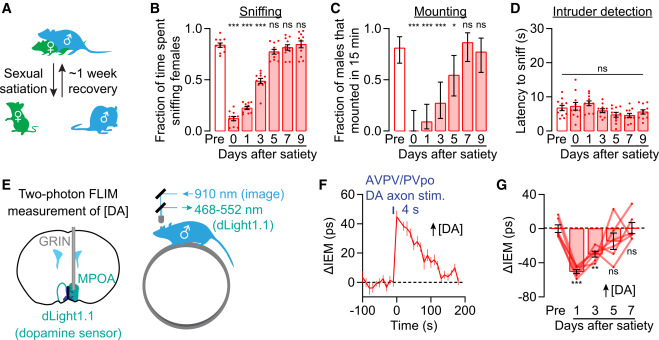
Fascinating paper. In mice, mating motivation disappears after successful copulation and it takes 7 days to return to normal.
The cause of this drop in motivation is a big drop (50%) in dopamine release from the hypothalamus. Firing rate drops first, suppressing motivation for 1-2 days then the neurons' capacity to synthesize (TH: -70%) and release dopamine falls, continuing suppression until day 7.
This link between low dopamine release/function with low motivation for natural reward is exactly what you would see during alcohol/drug withdrawal but in a different region, the striatum. Now the big difference is that here the dopamine dysfunction returns to normal after a week, but it may continue for months after drug withdrawal.
Obviously there is a HUGE natural selection pressure on getting that hypothalamic dopamine circuit back to normal in a few days that you wouldn't have with drug withdrawal. I wonder if we could actually hijack the molecular mechanisms that restores it and apply it to the mesolimbic dopamine circuits.
https://t.co/5wqEcNMVZv
Impressive results from Altimmune Phase 2 (RECLAIM) data with pemvidutide a glucagon/GLP-1 dual receptor agonist in alcohol use disorder.
42% of treated patients achieved zero heavy drinking days vs. 17% on placebo, with reductions in PEth and hepatic fibrosis markers.
The incretin good news continues to come in for addiction treatments!
https://t.co/vCgB2jkeKL
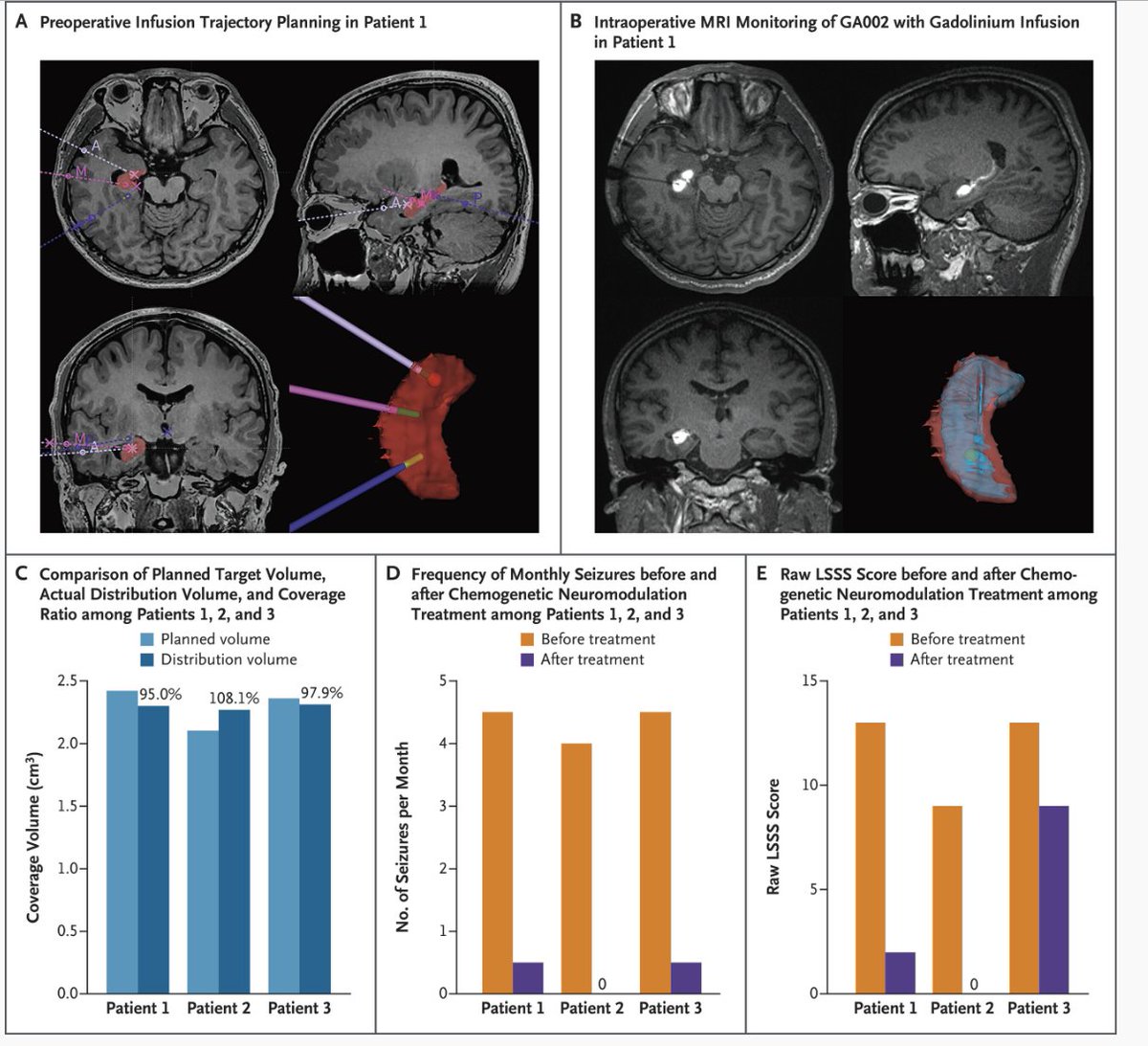
Look at these effect sizes ! WOW
Extraordinary results! The era of chemogenetics to treat brain and mental disorders has finally arrived.
Huge props to @zenbrainest for creating the DREADDS technology, Nobel Prize needed here.
Obviously this type of approach will be restricted to th roost debilitating diseases at first but I can see a path where dreadds could be used in the most severe case of addiction, particularly if we figure out a peripheral administration of AAV ( that part didn’t work to well so far but I have no doubt that it will work at some point.
https://t.co/OEXxtco0iY
Psychoplastogens, non-hallucinogenic compounds that preserve the plasticity effects of classic psychedelics, are the hottest things right now.
Cool review, showing how important animal models are to the discovery of these mechanisms.
Animal models are not proxies for the human trip, but they are valid platforms for the molecular and cellular mechanisms.
This 👇 100%
https://t.co/qjE1GDryBK
Blocking CYP2D decreased oxycodone reward in rats, suggesting that the oxycodone-to-oxymorphone conversion in the brain is what drives oxycodone seeking. Very clever use of propranolol 24h before testing to produce indirect inhibition of CYP2D through its own metabolism while limiting the acute beta-blocker effect, i didn't know propranolol could do that, you learn everyday.
It suggests that individual differences in CYP2D activity could partly explain why some people find oxycodone more rewarding than others, and perhaps use CYP2D as a pharmacological target for treartment
https://t.co/eAVFmTa3bx
Childhood trauma is assoicated with ~15% lower cannabinoid receptor type 1 (CB1R) availability (PET) in the brain in adults. The biggest effect was in the amygdala and hippocampus, which are very much involved in stress regulation, but surprisingly not the frontal cortex.
Goes well with the hedonic allostasis framework, but it's unclear where the causality is here, and it's difficult to identify what the relationship with psychiatric symptoms or cannabis use or even CB signalling is.
The great thing is these results are very much in line with several preclinical models, so we should be able to identify what the causality is in animal models, and who knows, perhaps onde day coming up with a way to reverse it. As long as NIH supports animal research...
https://t.co/aZMUmG5S5T
Important paper showing the complex interactions between THC pharmacokinetics, pharmacodynamic, sex, and history of cannabis use.
It's interesting to see how frequent users were much more efficient at smoking (or had an inefficient clearance), reaching much higher THC level. Woudl love to see the data plotted as behavioral effect normalized to change in THC level (per ng/ml); I'd expect to see a much clearer picture of tolerance of high/negative effect and much lower tolerance, if any to the motivational effect (like/take again) per ng/ml.
https://t.co/dc1XyqrZ6a
Lots of debate this week on whether journals should ban AI in peer review.
We actually tested this in our new preprint, and the results were pretty clear to me.
For context, I've reviewed for most of the big journals and evaluated 1,000 human reviews as an editor. I love to read and evaluate science.
TLDR: From now on I won't do any peer review without AI. For clinical trials, I'd even call human-only review dangerous 🧵
Very sad to hear about the passing of Boris Tabakoff. Boris had an incredible career and influence in the alcohol research field. We've had an ongoing collaboration for over a decade and I always enjoyed our discussions and was looking forward to our lunches at RSA and SFN.
You will be missed by many, rest in peace Boris.
https://t.co/bKOWeNtCNQ
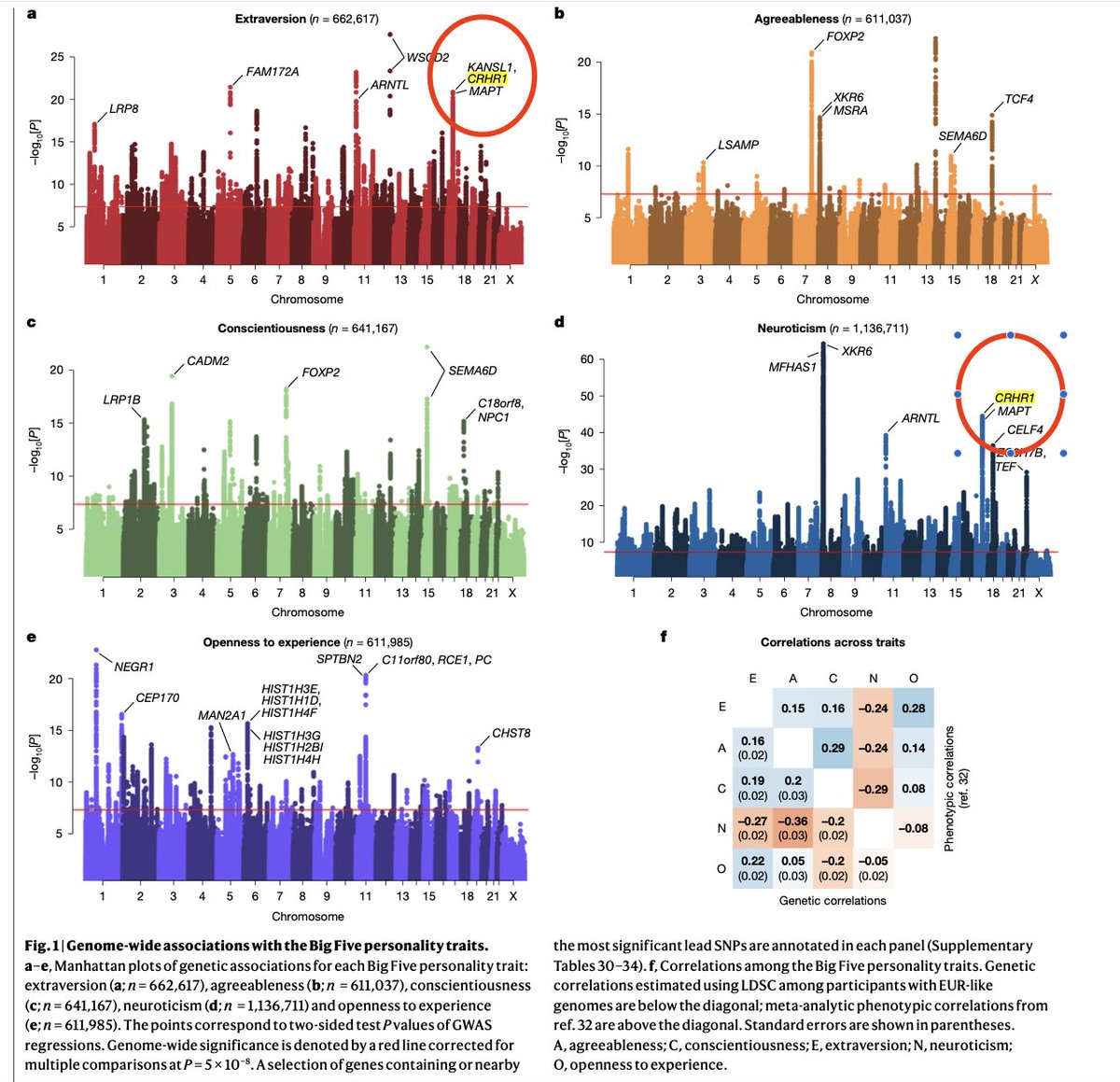
👀look who's here, showing up as a GWAS hit on extraversion and neuroticism... our good old friend CRHR1, the main receptor for CRF.
For the last 40+ years, animal research has consistently demonstrated the role of CRF in animal models relevant to extraversion and neuroticism (stress, addiction, anxiety, depression, emotion regulation, aggression and social behaviors).
But the contribution of CRF to mental disorders in general was contested because of a handful of failed clinical trials (with just a few compounds). Many in the field claimed that CRF was a dead target, that animal research couldn't translate to human.
Turns out these results suggest that animal research may actually translate beautifully to human. Perhaps the problem is not how animal research doesn't translate to human trials of mental disorders, but how human mental health issues don't translate well into clinical trials... (there are lots of other explanations too, would love to see a trial including this gene variant for example)
Nice revival of the CRF hypothesis!
Telehealth websites are prescribing GLP-1s off-label for alcohol and substance use disorders. Off-label use is legal and common without FDA approval (as long as there’s no false advertising and patients are properly monitored). I'm not too worried as the potential upside looks large with relatively low risk. The real question is whether these platforms are carefully following patients or just cashing in. the latter is likely.
https://t.co/hzkmuEqSQA
Prop 38 will set scientific research back in California by sending billions to an shady mostly empty institute started by sponsor of Proposition
This institute could get $4 billion from a ballot measure. With just three workers, is it ready? https://t.co/1rb039oPe4