A rigorous, policy-relevant journal on national & international security, brought to you by @utsystem in association with @StraussCenter and @ClementsCenter
Volume 9, Issue 4 of the Texas National Security Review is now available! This issue tackles complex challenges at the intersection of history, strategy, and statecraft.
Read it all now: https://t.co/B44qEPETu2
#NationalSecurity#Strategy#ForeignPolicy
The "smart bomb trap" warns that precision strikes inevitably draw the US into costly ground wars. In our latest, Shawn T. Cochran analyzes the historical record and argues this narrative is unsubstantiated.
https://t.co/y8dxeLZrIf
@RANDCorporation | @HQAirUniversity
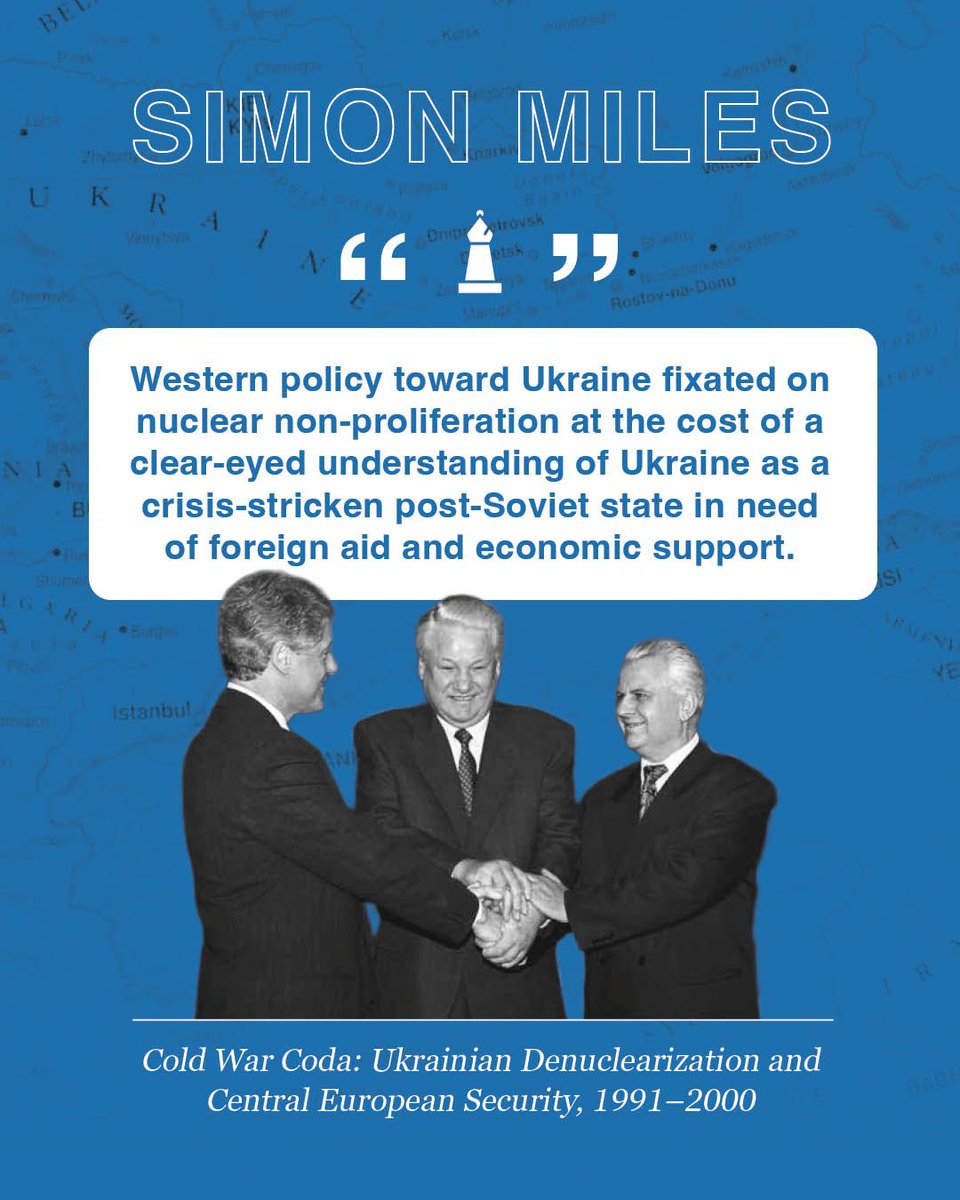
Did a singular focus on nuclear weapons leave Ukraine economically vulnerable?
Simon Miles argues that 1990s Western diplomacy prioritized non-proliferation over comprehensive stability. This narrowed focus missed a crucial opportunity to bolster Kyiv.
https://t.co/do3xVWRAUG
Ensure rigorous scholarship stays at the top of your research.
Add our site to your preferred Google searches to easily find our featured work from leading experts: https://t.co/nfvs9DHHxc
#NationalSecurity#Strategy#Statecraft
Simon Miles explores how the West prioritized nuclear nonproliferation in Ukraine above all else in the 1990s. He argues that this narrow focus came at the steep cost of Kyiv's economic security and regional stability.
A timely read: https://t.co/do3xVWRAUG
@DukeSanford
In our latest podcast episode, Dr. James Kwoun highlights the unique role of intelligence analysts in integrating open-source scholarship with classified data to resolve conflicting insights.
Listen to the full conversation: https://t.co/uGthQQBpxI
Why is geopolitical surprise so difficult to predict?
In the intro to our new issue, Francis J. Gavin argues that navigating international uncertainty requires deep historical perspective and intellectual agility.
https://t.co/wPzUyNkQ61
#NationalSecurity#ForeignPolicy
Should the intelligence community bridge the gap with academia or embrace it?
James Kwoun joins our podcast to discuss how combining intelligence analysis, social science, and history yields better policymaker judgments.
https://t.co/uGthQQBXng
#IntelligenceCommunity
How do we prepare for strategic surprise? In the intro to our upcoming issue, Francis J. Gavin examines how historical scholarship helps statecraft navigate uncertainty.
https://t.co/wPzUyNkQ61
#NationalSecurity#ForeignPolicy#Statecraft
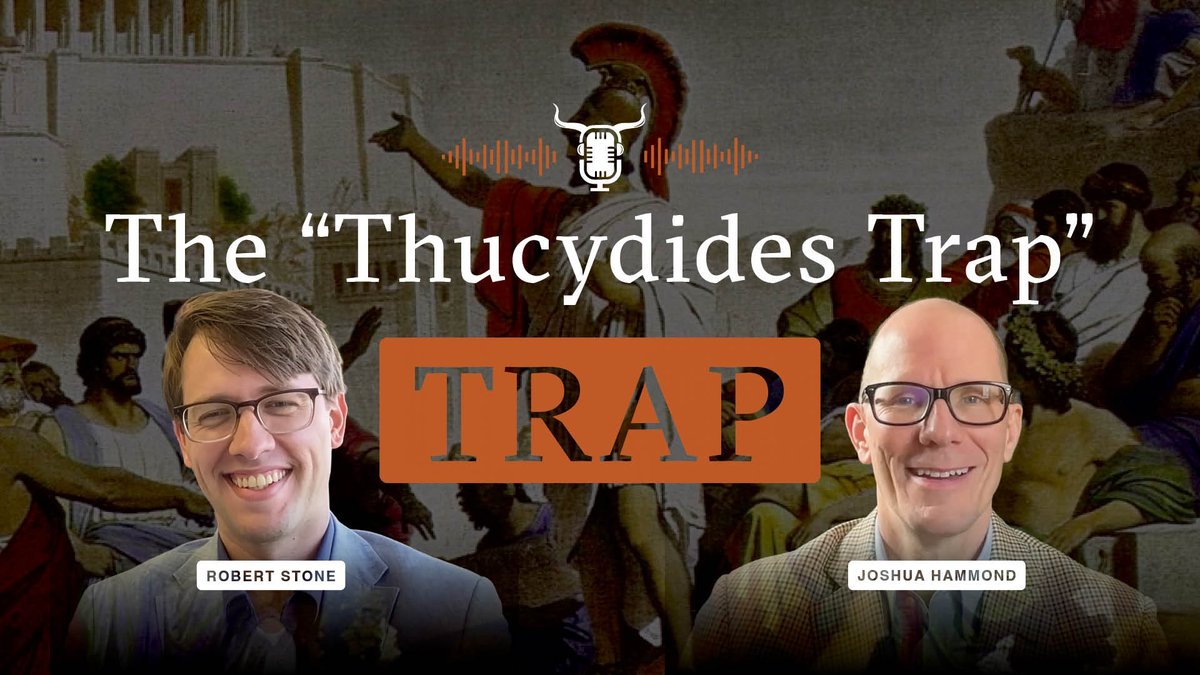
Hamilton's Dr. Robert Stone and his co-author Cmdr. Joshua Hammond joined the Horns of a Dilemma podcast (@TXNatSecReview) to discuss their article, "Trapped by the Tradition: Reading Thucydides on Strategy and Policy,".
In the podcast, they challenged simplified “fortune cookie” interpretations of Thucydides, showing how translation choices and selective readings have distorted key concepts of power, necessity, and democratic decision-making in war.
Listen to the full conversation here: https://t.co/NtgzHN9dDG
Is war between the US and China inevitable, or are strategists falling for the "Thucydides Trap" trap?
Joshua Hammond explains why returning to the original Greek text provides a more nuanced takeaway.
https://t.co/onJfy1UDbW
#Thucydides#ForeignPolicy#Podcast
Are we oversimplifying ancient strategy?
On our latest podcast, Dr. Robert Stone and Cmdr. Joshua Hammond describe how a nuanced reading of Thucydides yields vital, practical insights for contemporary strategy.
https://t.co/onJfy1U5mo
#Strategy#InternationalRelations#Podcast
How did 1990s partisan politics recast George H. W. Bush as a realist?
As @HelfontSamuel explains on Horns of a Dilemma, the narrative that Clinton invented "nation-building" while Bush was a strict realist ignores history.
Listen now: https://t.co/ENLtyw23HC
#ForeignPolicy
Was George H. W. Bush a hard-nosed realist or a prudent liberal internationalist? Dr. Samuel Helfont (@HelfontSamuel) challenges conventional wisdom and unpacks the myth vs. memory of Bush 41’s foreign policy.
https://t.co/ENLtyw23HC
#Podcast#InternationalRelations
Should we stop trying to "bridge the gap"?
James Kwoun from @NDU_EDU argues that intelligence analysis, social science, and history should embrace their differences to improve national security outcomes.
https://t.co/7Sw5lGpr1X
#Intelligence#SocialScience#Analysis
Volume 9, Issue 4 of the Texas National Security Review is now available! This issue tackles complex challenges at the intersection of history, strategy, and statecraft.
Read it all now: https://t.co/B44qEPETu2
#NationalSecurity#Strategy#ForeignPolicy