Suppose that there was a religion that dictated that anyone born with coloured eyes had to be killed. Would the US allow it to flourish because "freedom of religion"? Now suppose that an existing religion preaches astoundingly worse things than the latter fictitious religion. Why does it get the "freedom of religion" protection?
The most dangerous 77 seconds ever recorded by a psychiatrist just broke containment again.
Thomas Szasz, the man the entire profession tried to erase, looked straight into the camera and said:
“We do not have an epidemic of mental illness.
We have an epidemic of psychiatry.”
Too fat → illness
Too thin → illness
Too happy, too sad, too much sex, too little sex → all illnesses
No free will, no responsibility left — only “chemical imbalances” fixed by products you can advertise on TV while alcohol cannot.
This forgotten 1:17 clip is now exploding across every timeline for a reason.
Jacob
If it's a philosophical exercise for scientists to claim it's morally justifiable to infect people with alpha-gal...
Then it's a philosophical exercise to claim it's morally justifiable to line scientists up against the wall and execute them for crimes against humanity.
This is a quote from John Hunyadi, who spent his life fighting Muslims, and it captures how Europeans feel today:
"We have had enough of our men enslaved, our women raped, wagons loaded with severed heads of our people, the sale of chained captives, the mockery of our religion... [W]e shall not stop until we succeed in expelling the enemy from Europe."
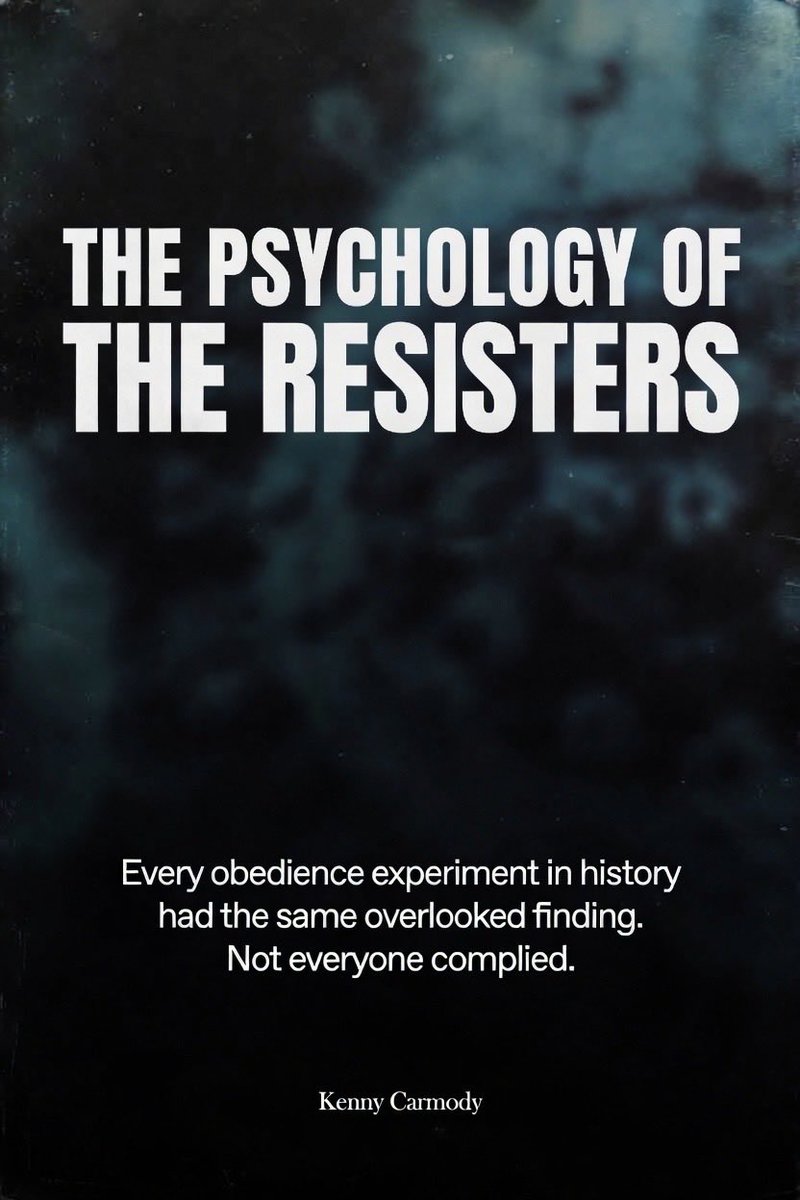
Every obedience experiment in history had the same overlooked finding.
Not everyone complied.
In Milgram’s lab, 35% refused to deliver the final shock. In Asch’s line experiments, 25% never conformed, not once, across any trial. In Zimbardo’s prison, at least one guard refused to dehumanize. One prisoner demanded a lawyer instead of a doctor and broke the psychological frame entirely.
We spent decades studying the ones who obeyed.
We barely asked what made the others different.
That question matters more now than it ever has.
The resisters in the COVID era were not difficult to find. Physicians who filed exemptions and lost their licenses. Nurses who walked away from careers rather than mandate patients into decisions they hadn’t genuinely chosen. Scientists who published contrary data knowing what it would cost them. Parents who stood alone at school board meetings. Ordinary people who simply said, quietly, without drama , no.
What made them different?
Research consistently identifies a cluster of factors. Not personality traits you either have or don’t. Situational and cognitive patterns that can be cultivated.
First: prior reflection on authority. The resisters had usually thought, before the crisis, about the limits of institutional trust. They weren’t cynics. They were people who had already asked the question “under what conditions would I refuse?” before anyone was asking them to comply.
Second: a concrete reference point outside the consensus. A value, a principle, an oath, a relationship that existed independently of the institutional structure demanding compliance. Something the system couldn’t reach.
Third: at least one other person. Milgram found that a single dissenting confederate reduced compliance dramatically. The resisters rarely stood entirely alone. They found each other. Sustained each other. Gave each other permission.
Fourth: the willingness to tolerate social pain. Not immunity to it. Tolerance of it. They felt the pressure. They felt the exclusion. They chose the discomfort of integrity over the comfort of belonging.
None of this is innate. All of it is learnable.
The most important thing Milgram, Asch, and Zimbardo taught us is not how fragile conscience is.
It’s that conscience can hold, if you’ve trained it, named its limits, and found even one other person willing to hold theirs beside you.
Build that now. Because the experiment is always running.
Until then stay humble.
The barbarians aren’t at the gates.
They’re in hostels and hotels inside the gates, with our money in their pockets and hatred in their hearts, laughing at our weakness and stupidity.
Here’s a letter from Harvey Milk to Jimmy Carter defending Jim Jones (of Jonestown fame) and declaring Jones to be “a man of the highest moral character”, written because Harvey Milk was a booster for Jones’ Socialist cult “The People Temple” and relied on it to win his elections
"My skin didn't char but I was screaming in agony, my tears just sizzled away."
Homelander has a few moments that give insight to his relationship with pain. It defined his life and yet he has grown numb to it.
He responds with anger in almost every instance of challenge but that's not because of the pain, it's the sheer desire for vengeance on a world that created him to receive and perform every torture and manipulation.
Homelander took on three supes at once, got beaten, tossed around and nearly killed. He was inches from losing everything...but he didn't even hint at begging. He simply got more and more furious.
Watch his fight with Maeve in s3, she can and does make him bleed but he goes for vengeance and immediately takes her eye.
Not because he's so scared of her causing him pain but because he wants her to suffer much like anyone else crossing him as part of getting his pay back.
Same for the guys who tortured him when he was a child.
Homelander lasered his own arm open and didn't give much of a shit because pain isn't new to him whatsoever.
He's an egomaniacal psychopath with a horrific history of intense childhood trauma turning him into a vengeful monster.
This ending feels more like a self masturbatory fantasy where Kripke sees his enemies begging to suck his cock while he kills them.
It does not however, for many in the audience, feel like the ending for Homelander.
A broken monster losing the only avenue of enacting vengeance on the terrible world that he always wanted approval from.
I would have perhaps expected him to see red, to enter an impotent rage, unable to do the damage he's desperate to achieve only to reach a despondent end.
Knowing he is now incapable of taking that revenge, and has to simply deal with his psychopathy.
Ending on a hard fought, bloody fight with Butcher, who would eventually win due to his training but at the very least give us a decent back and forth about how much meaning could be drawn from this fight.
Butcher was created by Homelander and there's something to say about both men being exposed nerves turned empty shells, struggling to feel anything by taking even a sliver of vengeance whenever possible.
I would picture them both drenched in blood, fighting to the bitter end, devoid of humanity, demanding payment for something they can't even fully rationalise anymore, after having taken so many lives.
At the end, they couldn't even follow through on the threat Homelander was warned to be throughout the entire series, stemming from having lost a loving mother and father to protect and raise him as opposed to a sterile laboratory.
The countless humiliations and tortures he suffered as a child, created Homelander as we know him.
I guess, him being humiliated at the end is a good enough throughline to argue this was somehow worth it?
"Evil Superman" was mostly a bad joke and they cashed in a petty ending for social media instead of finding something more in the material.
Nothing here has layered thematic value for the history the show presented, your just supposed to vicariously enjoy kicking your own personal monster while he's powerless, enjoy him begging to suck your cock and eat shit while you kill him.
It's all a rather long waste of time and can happily sit next to so many other stories that fail to realise their potential in this generation.
But oh well, we still have Mandalorian and Grogu I guess...
Dear United States Senators (all of you):
You are not royalty.
You are not the House of Lords.
You are politicians, meaning your profession enjoys a public reputation below Mafia lawyers and prostitutes.
You do not have an automatic lifetime tenure.
You work for us, the People. We don't work for you.
The sooner you figure all of this out the less painful it will be for you.
Love,
CP
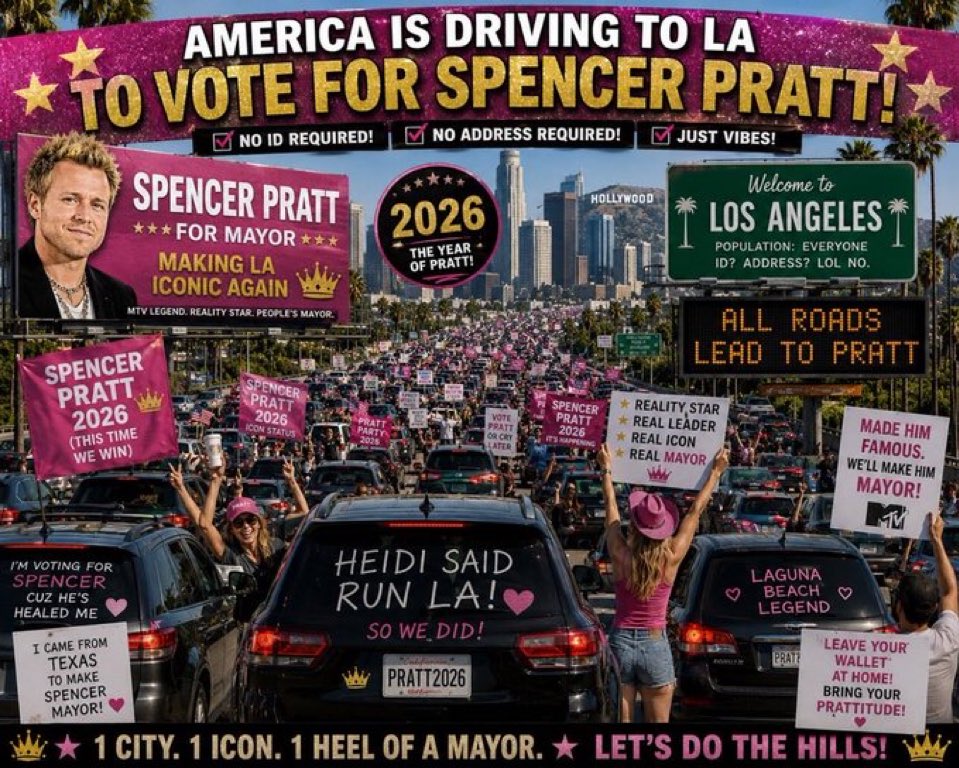
This would be wrong. And you could get in trouble when asked for your ID to vote.
Oh, wait! Never mind. Voter ID is not allowed in California. Oh, and on a completely separate note, the best freeway hours are 10AM-11:30 AM. Just saying.





![HumbleFlow's tweet photo. This is a quote from John Hunyadi, who spent his life fighting Muslims, and it captures how Europeans feel today:
"We have had enough of our men enslaved, our women raped, wagons loaded with severed heads of our people, the sale of chained captives, the mockery of our religion... [W]e shall not stop until we succeed in expelling the enemy from Europe."](https://pbs.twimg.com/media/HJbpjo9W0AAQf_7.jpg)