Thrilled to share our work on the largest-ever genetic study of fibromyalgia! This was a massive international effort, and I'm very grateful to our 52 co-authors and the 2.5 million people who made this research possible.
https://t.co/jQ0mTYDa2n
@RNASeqBlog@ColumbiaMed Thank you for sharing our study! We hope this work contributes to a more complete understanding of Alzheimer’s disease by capturing molecular signatures across ancestries and cell types.
We identified cell-type-specific Alzheimer’s disease signatures shared across ancestries, revealing conserved disease mechanisms that may improve the generalizability of biomarkers and therapeutic targets.
#Alzheimers#SingleCell#Neuroscience#Genomics
https://t.co/fdWPOqA9zJ
A huge team effort by the amazing folks in Dr. Vilas Menon’s Lab at #ColumbiaUniversity. We are deeply grateful to all the donors and their families who made this work possible.
We identified cell-type-specific Alzheimer’s disease signatures shared across ancestries, revealing conserved disease mechanisms that may improve the generalizability of biomarkers and therapeutic targets.
#Alzheimers#SingleCell#Neuroscience#Genomics
https://t.co/fdWPOqA9zJ
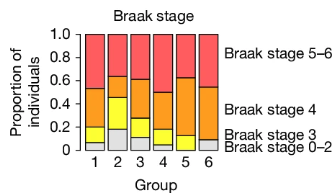
5) Moving beyond uniform Alzheimer’s definitions, we identified six donor subtypes based on cellular composition and continuous transcriptional programs not explained by pathology or cognition, providing a more nuanced view of Alzheimer’s biology for patient stratification.
Transcriptional profiles of immature neurons in aged human hippocampus track Alzheimer’s pathology and cognitive resilience: Cell Stem Cell https://t.co/uaWOxeclRd
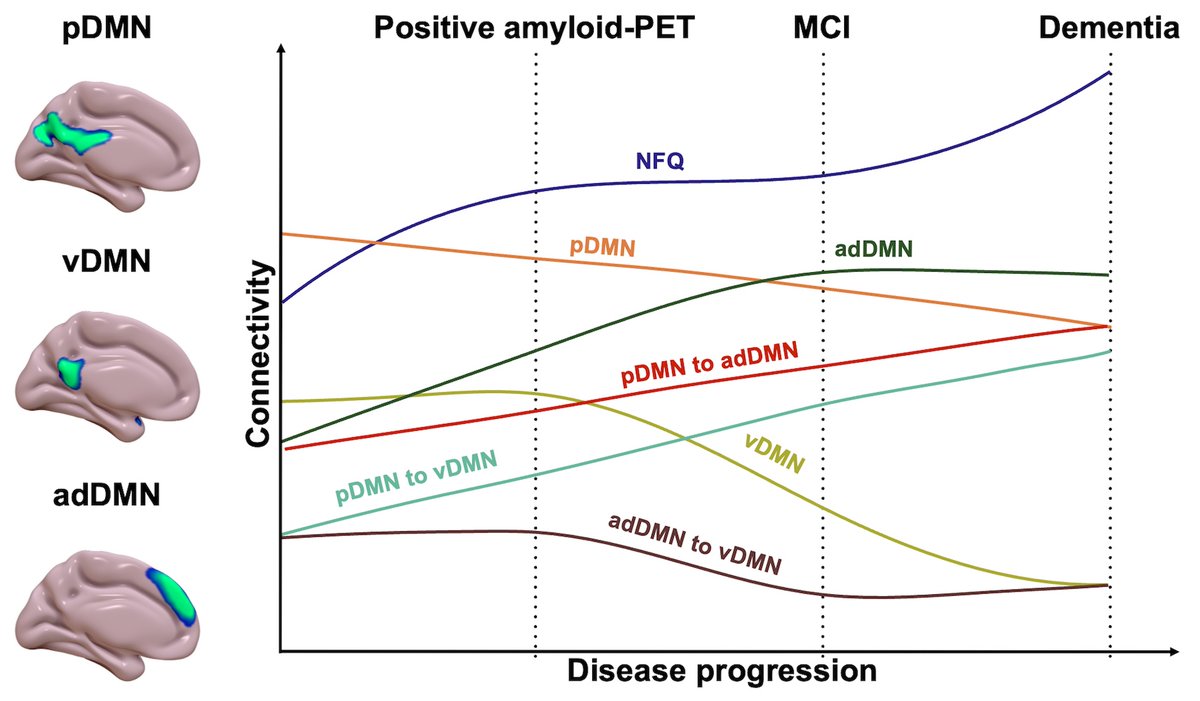
Corriveau-Lecavalier et al. show that patterns of default mode network dysfunction predict future conversion to amyloid positivity, mild cognitive impairment, and dementia, emphasizing the role of network dyshomeostasis in Alzheimer’s disease. https://t.co/B14bNHaYdf
Tau extent outperforms tau load as a predictor of #neurodegeneration in #AlzheimersDisease
Arthur C. Macedo, Lydia Trudel, Seyyed Ali Hosseini...Pedro Rosa-Neto @mcgillu
https://t.co/BFVLUynooZ
https://t.co/QQS4yRjlJ5 On the cover: In this issue of Neuron, Du et al. @DuSiling show that repeated microglial depletion enables peripheral monocytes from both the blood and skull bone marrow to infiltrate the brain and engraft as monocyte-derived macrophages with distinct identities. Inspired by a passage from the Zuo Zhuan (“The first beat of the drum rouses the soldiers’ spirits; the second weakens their resolve; by the third, they are exhausted”), the artwork depicts three rounds of microglial depletion gradually exhausting the endogenous microglial niche. The two advancing armies represent distinct peripheral sources of invading cells: one arriving from the blood, illustrated by the army bearing the red flag, and the other emerging from the skull bone marrow, portrayed as descending from the mountains. Artist credit: Ying Xu.
Distinct transcription factors control tissue adaptation and effector function in infant and adult memory T cells @NatImmunol@DonnaFarber3@Columbia
https://t.co/EetWTCBRxX