Of the world’s roughly 3.74 billion workers, about 400 million work in the public sector. These are the people who deliver essential services, from running hospitals and teaching children, to building bridges. Public institutions also shape the conditions businesses need to invest, innovate, and create jobs. In our latest blog, we explore how stronger regulation and public procurement can help markets thrive and deliver better outcomes for firms and citizens alike.
What makes public institutions work better?
Evidence from new @wbg_gov report points to capable staff, timely payments, strong information systems & stable management helping reduce delays & uncertainty and improve private sector outcomes.
https://t.co/SL3sySIAOh
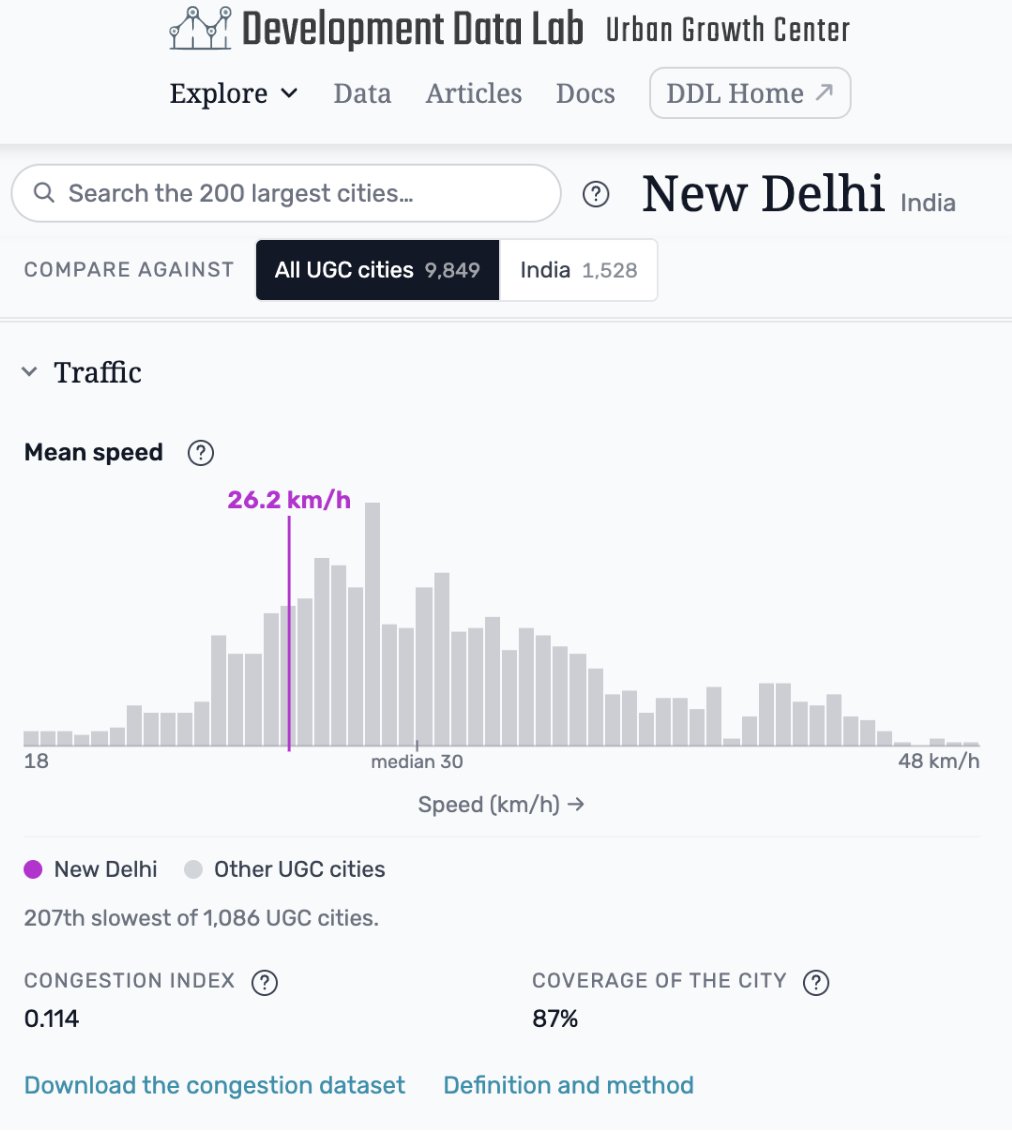
New @devdatalab data just dropped for the 10,000 biggest cities in the world.
Air pollution, traffic and congestion, Doing Business indicators.
We're adding new data every few months.
Let's make it easier to study what works and what doesn't in LMIC cities.
Firms create jobs, income & innovation but they need a capable public sector to deliver infrastructure & services, maintain safety & establish predictable rules.
The quality of the public sector directly shapes firms’ costs, risks & opportunities. https://t.co/ZGBSJoVEIZ
ANNOUNCEMENT: Michael Kremer appointed as World Bank Group Chief Economist and Senior Vice President for Development Economics. https://t.co/B1hXFzHOnl
For two years @pmarca has been making up an obvious lie about a Biden WH meeting that led him to support Trump. I and others have repeatedly asked him to reveal who was in the meeting to try to verify his wild claims. Now the truth is out: https://t.co/4CbttSyd5v
A thriving private sector needs effective public institutions.
Join us on 9/22 to explore how stronger institutions can enable private sector development, create more & better jobs, and expand economic opportunities. https://t.co/B6KUdoQwTG
A thriving private sector needs effective public institutions.
Join us on 9/22 to explore how stronger institutions can enable private sector development, create more & better jobs, and expand economic opportunities.
https://t.co/B6KUdoQwTG
Thank you to the APSA section on South Asian Politics for recognizing my book, Building Social Mobility, with the Francine Frankel Award. Congratulations to @amilliff and Emily Russell for the recognition of their papers. @APSAtweets@CUP_PoliSci
https://t.co/lTad9DTFFi
🚨 We're hiring for a 10-month Research Manager position in northern India 🚨
Bhumi Purohit, Anustubh Agnihotri, and I are looking to hire for a project on the intersection of social media + government accountability
Application due before Sept 10th: https://t.co/jiWXsOTog4
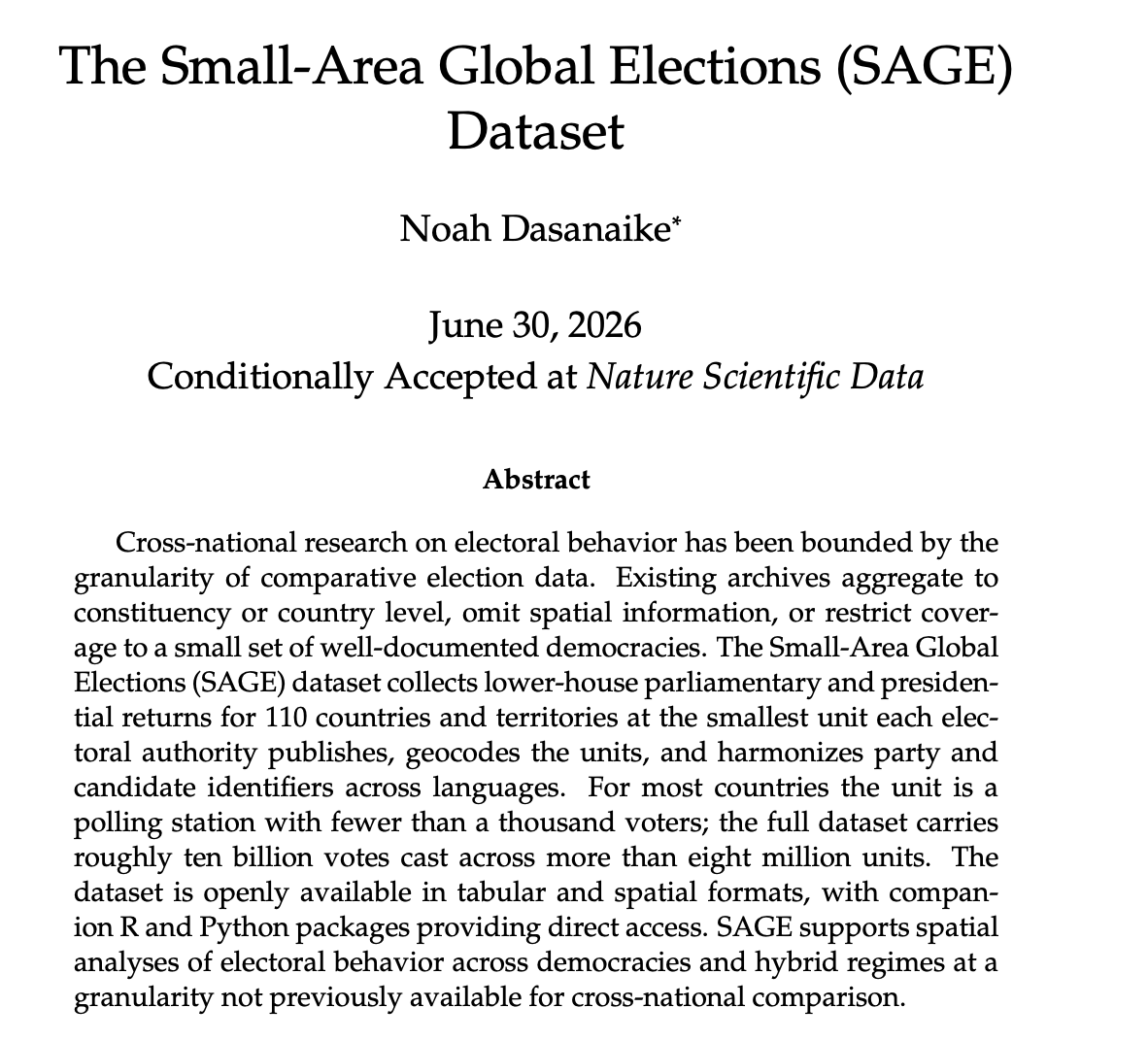
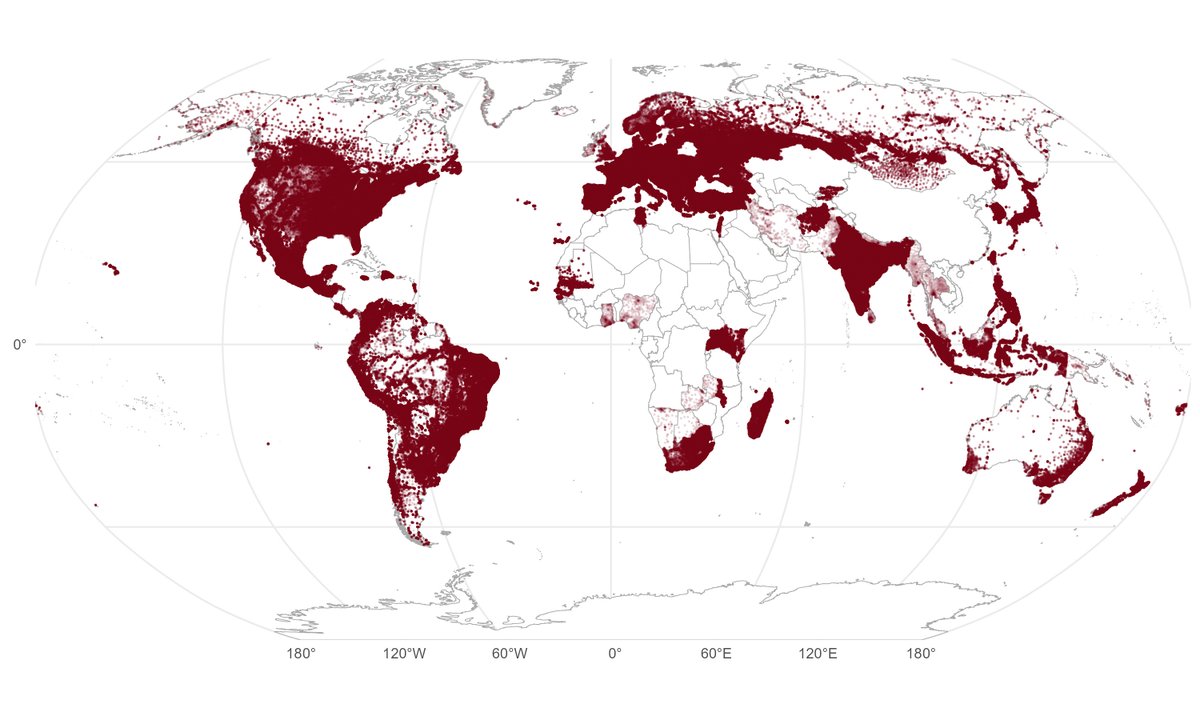
I'm proud to finally announce the first release of the Small-Area Global Elections (SAGE) dataset, encompassing global, granular, standardized, geocoded, polling station or equivalent-level election results for 110 countries, conditionally accepted at Nature Scientific Data. (1/n)
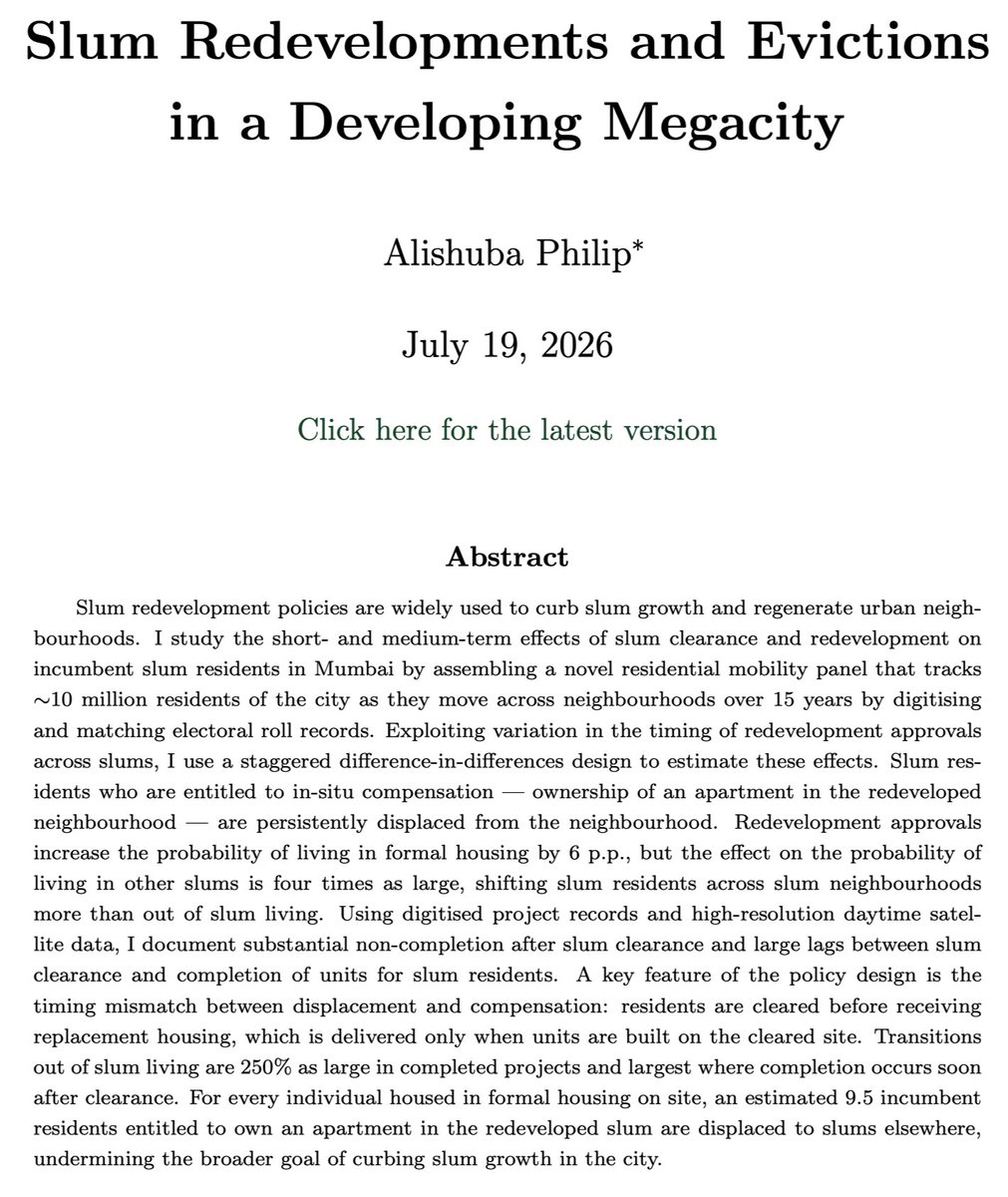
Mumbai has an elegant solution for slums: relocate residents to tall buildings on some of the slum real estate, develop the rest.
This is an elegant solution to the perpetual slum dilemma: cast out the poorest, or accept low value land use in perpetuity. Did it work? 1/
@SeanGailmard This is true of all institutions, but the problem seems particularly bad in academia (not just in terms of ideology but also simply taste for problems and ideas). Why do you think so? My guess is academia is particularly disconnected from other insts
We couldn’t find a usable set of boundaries for 10,000+ global cities, so we (@devdatalab) developed our own and made them open for research.
We were kind of shocked this didn’t exist already. A thread 1/