@unibcarlson The changes made lean more towards appropriation with the changes being more on the political or moral side, instead of sticking to Shakespeare or making Shakespeare as an adaptation.
@unibcarlson The film accomplishes the opposite of an adaptation, “‘a derivation that is not derivative – a work that is second without being secondary.’” Ex Machina takes the elements it wants without sticking to Shakespeare.
@unibcarlson "Blood hath been shed ere now, i’ th’ olden time,/Ere humane statute purged the gentle weal;/Ay, and since too, murders have been performed/Too terrible for the ear. The time has been/That, when the brains were out, the man would die,/And there an end" (III.iv.91-96).
@unibcarlson “There is no art/To find the mind’s construction in the face/He was a gentleman on whom I built/An absolute trust” (I.iv.13-16). key word: face
@unibcarlson Nunn utilizes Shakespeare’s Twelfth Night and adapts it. "Thus, an
adaptation is 'a derivation that is not derivative – a work that is second without being secondary'" (Desmet & Iyengar 11). Few changes were made as Nunn stays close to the source material.
@unibcarlson Olivia: “Why then, methinks ‘tis time to smile again./O world, how apt the poor are to be proud!/If one should be a prey, how much the better/To fall before the lion than the wolf!” (III.i.108-111)
@sredschoolacc @unibcarlson Viola is unsure that Olivia will even see her, as Cesario, because everyone says she is so grief stricken and sad. Orsino is saying that Viola should go as far as she has too to gain entrance and availability to talk to. No need to be civil or sane.
@unibcarlson Viola: "Most radiant, exquisite, and unmatchable beauty- I pray you, tell me if this be the lady of the house, for I never saw her. I would be loath to cast away my speech; for besides that it is excellently well penned, I have taken great pains to con it" (I.v.133-136).
@unibcarlson If I've upset you, please brush it off. It doesn't matter in the grand scheme of life, think of it like a dream. That way, we are forgiven and you have not suffered. No harm no foul, don't you agree? Goodnight, all will be right.
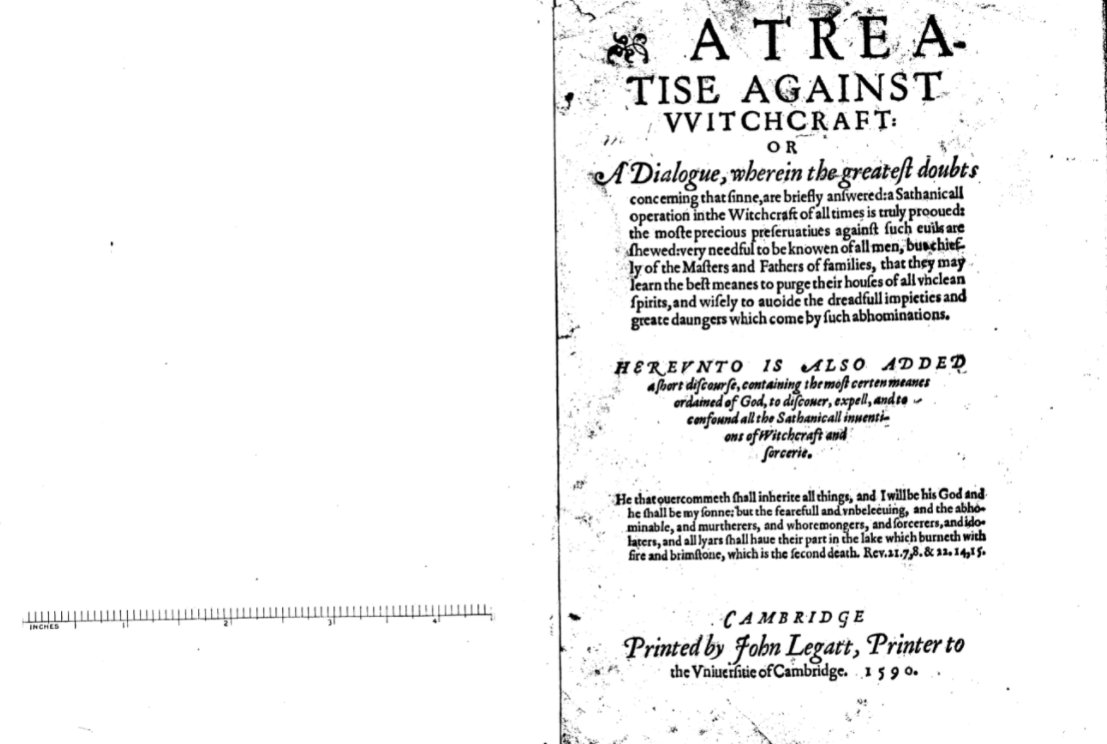
@unibcarlson I found about what I expected, most of the advice given was to stay away from these dark and other worldly things while remaining religious and reading the word of God. It's interesting to see how the connotations of witches and witchcraft have changed from 1590 to present.
@unibcarlson While researching more about fairies in this time period I came across the text "A Treatise Against Witchcraft: A Dialogue." I thought this was interesting to see the advice and warnings that were spread to the common people of the time.
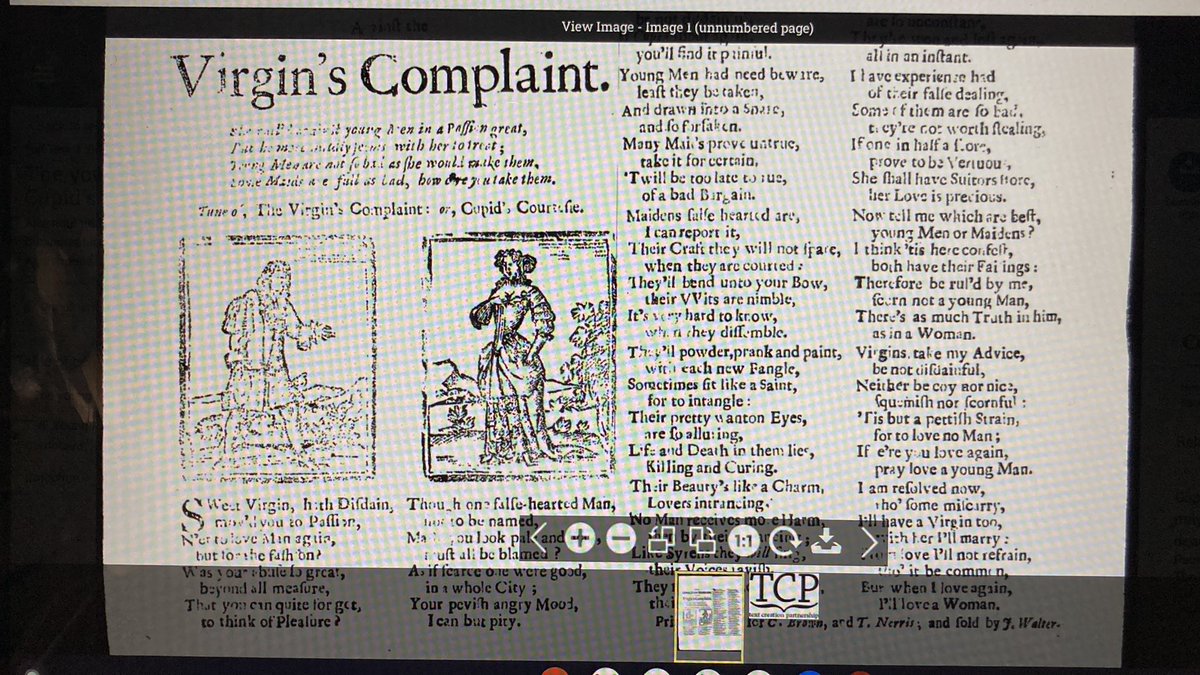
I found it interesting that the titles of the poem showed a woman’s displeasure as a courtesie of Cupid. The poem itself was also of interest as it contained advice to women “be not disdainful” and comparing young men to all Women.
@unibcarlson R: "Would’st thou withdraw it? For what purpose, love?" J: "But to be frank and give it thee again./And yet I wish but for the thing I have./My bounty is as boundless as the sea,/My love as deep; the more I give to thee,/The more I have, for both are infinite" (II.i.136-141).
@unibcarlson Mer: “Why, is not this better now than groaning for love? Now art thou sociable, now art thou Romeo; not art thou what thou art, by art as well as by nature. For this driveling love is like a great natural that runs lolling up and down to hide his bauble in a hole”(II.iv.74-78).
@unibcarlson@carpentercmu355 R gives three options of love, purged love, and vexed love, giving them each their own definition. "Fume of sighs," "Sparkling in lovers' eyes," and "loving tears," all reflect back onto the physical body as where love is expressed. Negative association of destruction. what else?